

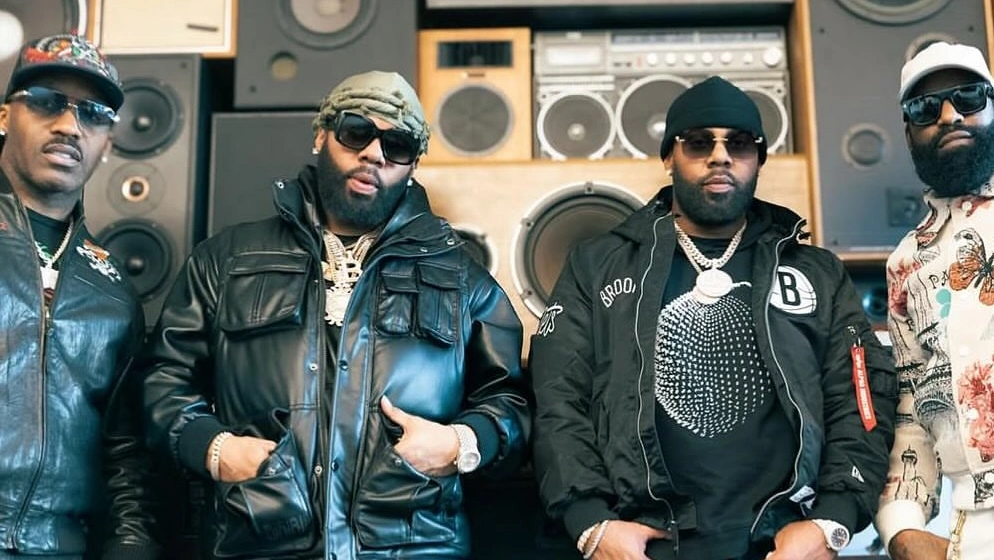
Brandon Casey of Jagged Edge moved a civil lawsuit accusing him of sexually assaulting a young girl in Philadelphia more than two decades ago out of Pennsylvania state court and into federal court on Thursday (Nov 19). In that same filing, he denied each and every allegation of wrongdoing in the complaint. The suit, filed in September in the Philadelphia Court of Common Pleas by a woman who is now 29, alleges that Casey assaulted her on five occasions between 2003 and 2007, when she was between 6 and 10 years old. None of those allegations has been tested in court, and Casey has called every one of them untrue.
Leron E. Rogers of Fox Rothschild, who represents Casey, said in a statement on Monday (Nov 23) that his client "flatly rejects the untrue allegations of battery and sexual assault set forth in the civil Complaint." The statement went well past a denial. "Mr. Casey will not be pressured by headlines, and he will not stand by while his name and reputation are attacked," Rogers said. The defense, he added, intends "to pursue sanctions and every other available remedy against the Plaintiff and her counsel for bringing claims we believe have no basis in fact." Rogers also said the events are alleged to have happened roughly 20 years ago, that the defense knows of nothing that corroborates them, and that he would say nothing further out of deference to the court.
According to the complaint, the plaintiff met Casey at a community event in Philadelphia in 2003, where she says she showed him a song she had written called "Walked Out of Heaven." She alleges that he later sought her out and assaulted her repeatedly, and she says the abuse left her with severe emotional distress, depression and anxiety that followed her into adulthood.
The filing itself is narrower than the headlines around it. The complaint brings a single count of civil battery, the claim Pennsylvania law uses for an intentional, harmful or offensive touching of another person. One count can carry all five alleged incidents, because each would be the same kind of wrong committed by the same man. It names no other defendant, no record label, no management company and no venue, which means the case rises or falls on whether a jury would believe one woman's account of what happened between her and one singer. She seeks compensatory and punitive damages, with the emotional harm she describes folded into the money she asks for rather than pleaded as a separate claim.
The dollar figure on the complaint reads "more than $50,000," a number that sounds strangely small for allegations this grave until you know how Philadelphia's civil courts sort their cases. Every civil action in the Court of Common Pleas valued at $50,000 or less goes first to compulsory arbitration before a panel of three lawyers, so a plaintiff who wants a judge and a jury pleads above that line as a matter of routine. The figure that tells you what the plaintiff believes the case is worth sits in Casey's own removal notice, which says her attorney demanded $15 million from him before the suit was ever filed.
That demand is also the reason the case now sits in a federal courthouse. A defendant can move a state-law claim into federal court when the two sides live in different states and more than $75,000 is in dispute, and a $15 million demand made before filing answers the second half of that test on its face. Removal changes the judge, the procedural rules and the pace of the case, though it changes nothing about the underlying claim, which remains a Pennsylvania battery claim decided under Pennsylvania law. The plaintiff's lawyers can ask the federal judge to send the case back to state court if they believe the move was improper. The first rulings may well concern where the case belongs rather than what happened.
The 20-year gap between the alleged assaults and the lawsuit is the detail most readers will fix on first, and it is one the law has already addressed. Pennsylvania gives people who say they were sexually abused as children until age 55 to bring a civil suit, under a 2019 amendment to the state's limitations statute that applied to claims that had not yet expired when it took effect. Before that change, the cutoff was age 30. A plaintiff who is 29 today would have been inside either window, so the age of the allegations does not by itself put this suit outside the law, though Casey's lawyers remain free to challenge the complaint on any ground the court allows.
Then there is the song. Jagged Edge released "Walked Outta Heaven" in the fall of 2003 as a single from its fourth album, Hard, and the ballad climbed to No. 6 on the Billboard Hot 100 that December, one of the biggest records of the group's career. Its published writing credits list three people: Brandon Casey, his twin brother Brian Casey, and Bryan-Michael Cox, who also produced it. The plaintiff is not among them. The complaint accuses Casey of taking her song without credit or payment, yet it brings no copyright claim and no claim that she is an author of the work.
That absence deserves a close reading, because authorship is not something a court awards in passing. A songwriter who believes her work was taken has to bring that claim directly, in federal court, with proof of what she wrote and when. Registration with the Copyright Office is usually the first step toward the remedies that make such a suit worth filing, as HitsCulture's guide to copyright registration laid out last week. The song appears in this complaint as part of the plaintiff's account of how she says she came to know Casey, and Casey's lawyers have pointed to that same gap in arguing that the suit has no basis.
Jagged Edge formed in Atlanta in the 1990s and built its run on the Casey twins' songwriting under Jermaine Dupri's So So Def label. "Let's Get Married" and "Where the Party At" were among the records that made the group a fixture of R&B radio at the turn of the century. Brandon Casey has also written for other artists across a long career, so a dispute over who wrote one of his biggest songs touches the core of his professional reputation as well as his personal one. The case before the federal court is a civil one, and it seeks money damages rather than any criminal penalty.
Both sides have now put their positions on paper. The plaintiff has described five alleged assaults and the injuries she says they caused, and Casey has answered with a denial of every allegation and a public promise to pursue sanctions against her and her counsel. A civil case built on events from two decades ago will be decided by what each side can prove, not by which side spoke first.
The next filing on the docket belongs to Casey's lawyers, who must now answer or move to dismiss the complaint in the U.S. District Court for the Eastern District of Pennsylvania, the federal court that covers Philadelphia and its surrounding counties.


Comments (0)
No comments yet — be the first to share your thoughts.
Leave a comment