

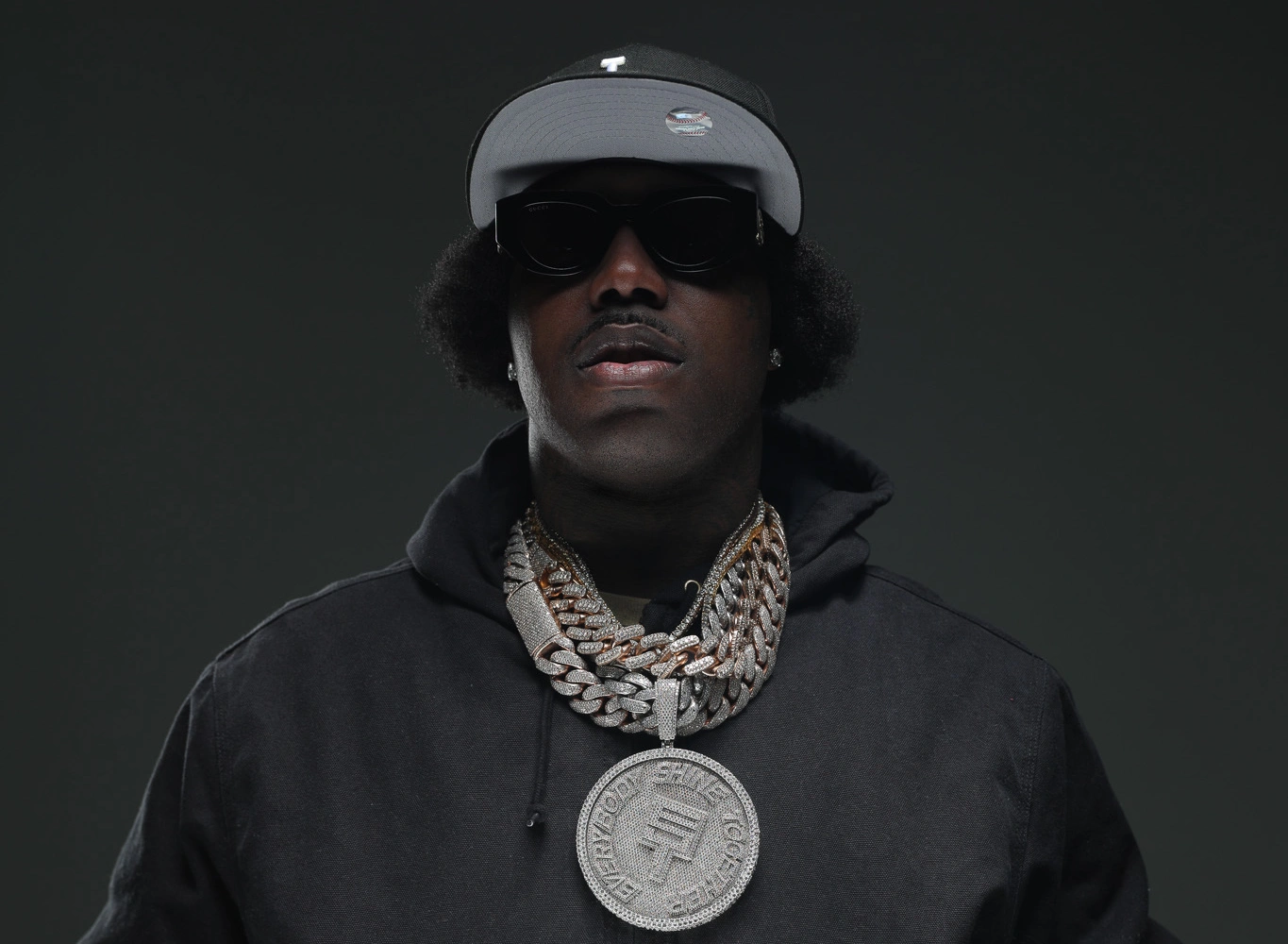
Some rappers demand attention every Friday. Others release the music, step back, and trust listeners to catch up.
EST Gee has built his career in the second category. His latest single, "Call Spitta," does not arrive with a costume change, a mysterious social-media blackout, or a desperate attempt to manufacture a moment. It arrives with bars.
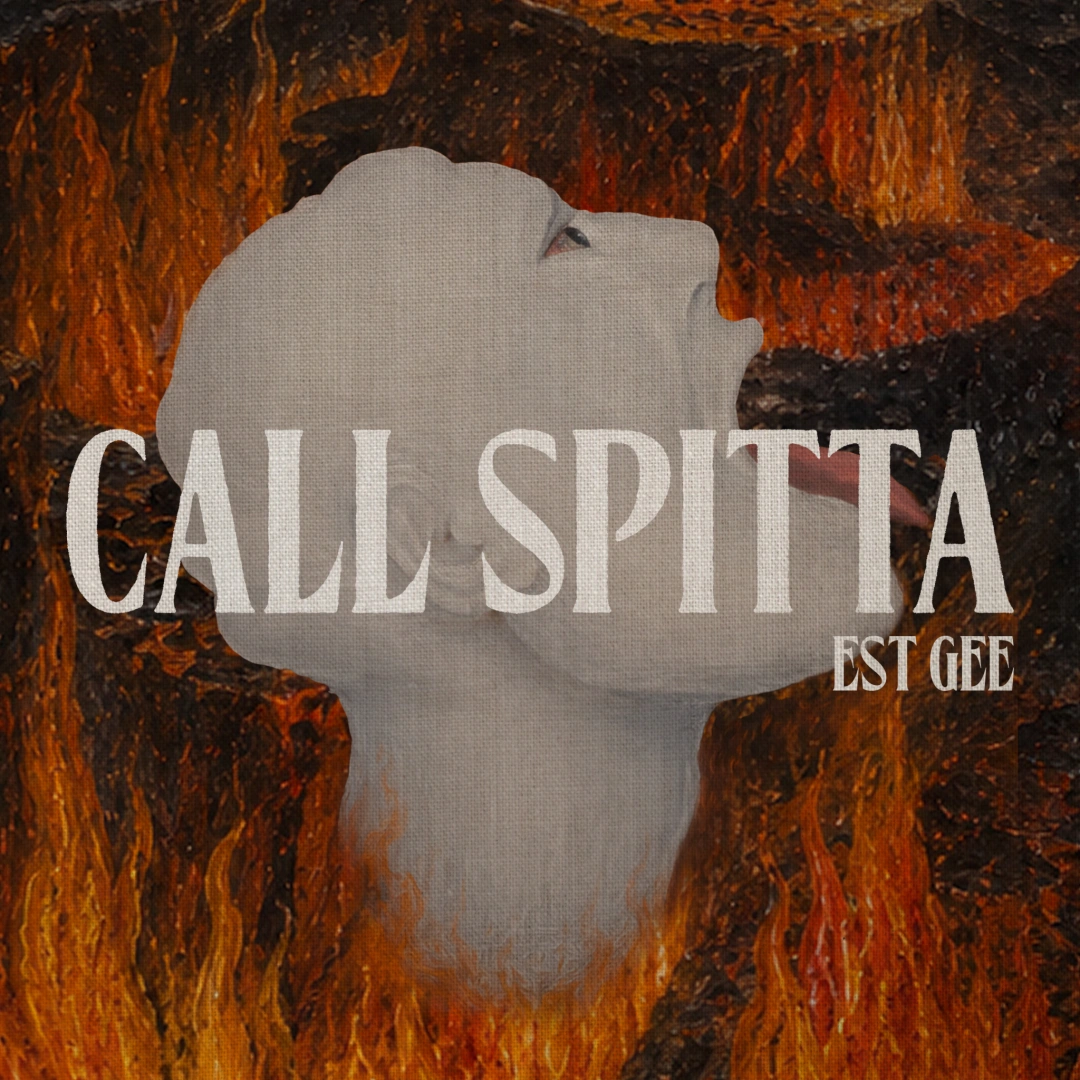
Released July 10 through CMG and Interscope Records, "Call Spitta" serves as an early preview of Gee's forthcoming project, Bigger Than the Devil. The track is lean, bruising, and confident enough to leave unnecessary decoration at the door.
In a rap climate increasingly organized around viral clips and algorithm-friendly hooks, Gee continues to invest in something less flashy and more durable: precision.
A Beat Smart Enough to Stay Out of the Way
The production behind "Call Spitta" is intentionally restrained. Rather than crowd the record with layers of effects, the instrumental leaves room for Gee's clipped delivery, sharp observations, and tightly packed writing.
That space matters. A minimal beat can expose a rapper who does not have much to say. In Gee's case, it gives the details more room to breathe.
One of the record's defining lines arrives when he states, "Y'all did it flaw when it was y'all, now it's our turn."
The line does not land like a complaint. It sounds more like an accounting correction. Gee is not asking anyone to acknowledge the shift. He is announcing that the rotation has already changed.
Throughout the song, he returns to familiar territory: loyalty, money, suspicion, hard-won progress, and the consequences attached to moving through the world carelessly. Yet the writing avoids cartoonish exaggeration. Gee's best verses often sound less like action scenes and more like after-action reports.
The chaos has already happened. He is explaining who moved correctly, who did not, and what the mistake cost.
The Video Turns Success Into Surveillance
The official video, directed by Diesel Filmz, extends the song's atmosphere without overcomplicating it.
Gee appears on a balcony overlooking the city, inside a warehouse filled with inventory, and in a studio surrounded by platinum plaques. These are familiar symbols of success, but the visuals do not play like a carefree victory lap.
Surveillance cameras remain visible. Close allies stay nearby. Gee carries himself with the calm of someone who understands that reaching a higher level does not remove pressure. It simply changes where the pressure comes from.
The balcony suggests distance. The warehouse suggests business. The plaques confirm the work. The cameras make sure nobody gets too comfortable.
That visual restraint has become a strength of the Diesel Filmz and EST Gee partnership. Their videos rarely need elaborate narratives because Gee's presence already supplies one. He looks like a man who has seen enough to know that celebration and caution can occupy the same room.
EST Gee Is Coming Off a Relentless Run
"Call Spitta" follows a productive 2025 that included the releases "Supreme Sanders" and "Thug Club." Both records reinforced Gee's reputation for detailed street writing, disciplined flows, and an ability to turn small observations into larger warnings.
He also released My World, a 14-track project that kept its guest list unusually limited. Yo Gotti appeared as the lone featured artist, leaving Gee to carry the majority of the record through his own voice and perspective.
The project included songs such as "Take My Time Geeski SH Feb 23," "GEESKI SHAKE July 13," "Tug of War March17," and "Above the Rim 0529." Across those records, Gee moved between patience, ambition, grief, loyalty, and the uneasy emotional residue of success.
My World was actually his second full-length project of 2025. Earlier that year, he released I Ain't Feeling You, which included collaborations with Lil Baby, Travis Scott, Veeze, Rylo Rodriguez, and BloodHound Q50 on the expanded edition.
That volume might suggest an artist unloading music simply to keep the streaming machine fed. The records, however, have continued to reinforce a recognizable artistic identity instead of blurring it.
Gee's catalog is expanding without losing its center.
Bigger Than the Devil Carries a Heavy Title
The title Bigger Than the Devil arrives with built-in weight. It sounds spiritual, confrontational, and deeply personal before the public has even seen a full tracklist.
Whether the project will focus on faith, survival, ambition, temptation, or the burden of success remains unclear. "Call Spitta" offers one useful clue: Gee appears more interested in refining his approach than reinventing it.
That choice runs against an industry that often pressures established artists to package every release as a complete personality overhaul.
New era. New logo. New haircut. New carefully deleted Instagram grid.
Gee has generally skipped the theater. His evolution has been quieter. The production gets sharper. The settings grow larger. The plaques multiply. The voice at the center remains recognizable.
There is value in that kind of continuity. Growth does not always require abandoning the qualities that made listeners care in the first place.
Why EST Gee Still Occupies a Distinct Space
Gee first developed his voice through independent mixtapes before breaking nationally with Bigger Than Life or Death in 2021. The project reached No. 7 on the Billboard 200 and helped establish the Louisville native as one of the strongest emerging voices in Southern street rap.
That breakthrough led to collaborations with Lil Baby, Young Thug, Lil Durk, Future, Jack Harlow, and other major artists. It also helped solidify his reputation as a rapper's rapper, an artist whose technical control and authenticity often earn respect inside the industry before broader audiences fully catch on.
In 2022, Gee released I Never Felt Nun, which reached No. 8 on the Billboard 200. He also joined 42 Dugg for the collaborative project Last Ones Left and became an increasingly visible part of the CMG roster alongside Moneybagg Yo, GloRilla, Mozzy, and Yo Gotti.
What separates Gee from many of his peers is not simply the darkness of his subject matter. Plenty of rappers describe danger. Gee is particularly skilled at explaining the systems, relationships, calculations, and emotional discipline required to survive it.
His music is not only about what happened. It is about why it happened, who failed to read the room, and who was prepared when the room changed.
HitsCulture Take
"Call Spitta" is not pretending to be the song of the summer. It is not chasing a dance challenge, a meme, or a thirty-second hook designed to do all the heavy lifting.
Instead, it doubles down on the qualities EST Gee already does exceptionally well: vivid storytelling, measured confidence, and the ability to make restraint feel threatening.
The beat leaves space. The video avoids empty spectacle. Gee delivers each line like a man reviewing numbers that have already been settled.
That approach may not produce the loudest rollout in rap, but it often produces music that survives longer than one weekend's feed.
With Bigger Than the Devil on the horizon, "Call Spitta" suggests Gee has no intention of softening his perspective or complicating a formula that still works. He remains focused on pressure, progress, and the suspicion that follows both.
In an industry forever searching for the next reinvention, there is something refreshing about an artist who simply keeps becoming more precise.


Comments (0)
No comments yet — be the first to share your thoughts.
Leave a comment