

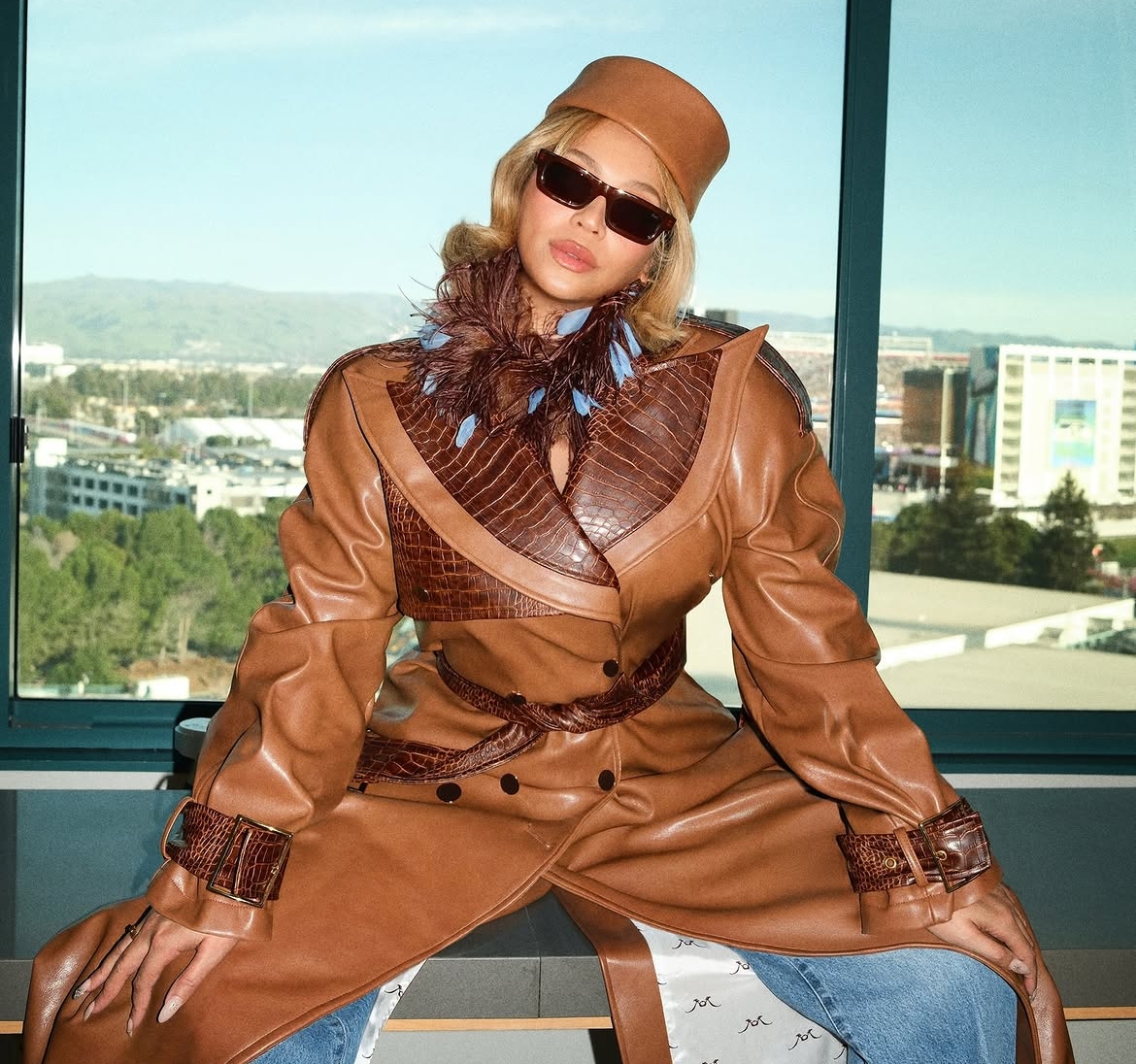
Parkwood Entertainment framed Beyoncé's Fourth of July surprise as a gift to the BeyHive: an unreleased song, formally titled "Morning Dew (Donk)," dropped to open a 60-day countdown to the September 4 reissue of B'Day, her 2006 sophomore album. The reissue lands on Beyoncé's 45th birthday. The math is elegant. The narrative is airtight. Every outlet that covered the drop, from Rolling Stone to Variety, ran with the frame Parkwood handed them.
Here's the part that got glossed over: "Morning Dew" isn't a B'Day-era song.
According to the song's own paper trail, "Donk" was cut during the 2013 sessions for the Beyoncé self-titled visual album, registered with ASCAP under the working title "Donk" in October 2014, leaked as a snippet in 2021, then leaked in full in September 2023, where it went viral on TikTok before her camp ever officially acknowledged the song existed. That is a decade-old self-titled outtake being repackaged as a B'Day artifact for the reissue campaign. It is one of the slickest catalog moves anyone has pulled in mainstream R&B this year, and once you clock it, you can't unclock it.
What Beyoncé actually pulled off
She let a leaked 2013 song sit for nearly three years after it went viral. She waited until the leak's memory aged into nostalgia. She timed the official release to a countdown pegged to her 45th birthday and the 20th anniversary of a completely different record. And she attached the whole gesture to a reissue campaign that will now, by association, be received as a fuller B'Day 20th anniversary statement than it actually is.
That is not a scandal. That is legacy engineering. And it works because the BeyHive doesn't do straight-line memory. Fans build eras out of atmosphere, not chronology. If "Morning Dew" feels adjacent to B'Day's brass-forward, kinetic pop-R&B, then culturally, that is where the song now lives. The frame is the release.
The Cheeky Blakk sample nobody else clocked
The most interesting credit on this record has been buried in the metadata. Morning Dew (Donk) contains elements of "Twerk Something," a 1994 New Orleans bounce record by Cheeky Blakk. That is a real receipt. That is Beyoncé, in 2026, pulling from the same well she has been drawing from since "Get Me Bodied": Southern Black regional dance music that mainstream pop has spent three decades borrowing from without ever paying interest on the loan.
Cheeky Blakk was one of the first women to break out of NOLA bounce, a genre that spent thirty years pumping through second-line parades, ninth-ward block parties, and strip clubs before the industry finally acknowledged the mine it had been quietly excavating. The Cheeky Blakk sample is not a novelty. It is Beyoncé reaching back to a NOLA bounce lineage that runs through her entire party-record decade, through "Formation," through the Big Freedia features on Renaissance, and now through a song titled "Donk," a word that means one thing in bounce vernacular and another in Southern car culture, both of which she is invoking on purpose.
Neither the sample nor the title is a coincidence. This is Beyoncé continuing a twenty-year project of routing pop through Black Southern musical traditions and quietly stamping the origin on the record, even when the general audience never bothers to ask where the sound came from.
Why B'Day is the album that gets skipped
Time for the tastemaker call. Line up her studio albums in order. Dangerously in Love. Then B'Day. Then I Am… Sasha Fierce, 4, Beyoncé, Lemonade, Renaissance, Cowboy Carter. B'Day is the record the culture speeds past to get to the self-titled visual album. That skip is a mistake, and it needs to stop.
B'Day is the album where Beyoncé stopped taking suggestions. Written and recorded in roughly three weeks, it pushed Rich Harrison, Sean Garrett, Rodney Jerkins, and The Neptunes to produce fast, hard, and specific. "Ring the Alarm" is a public breakdown converted into a pop weapon. "Get Me Bodied" is a functional crowd-instruction manual. "Irreplaceable" is the record that quietly proved she could sit inside a country-adjacent guitar loop years before Cowboy Carter made that pivot official. It is also, by most sensible accounting, the album that survived the sophomore trapdoor more decisively than almost any other second record in modern R&B.
The 20th anniversary reissue is a bid to correct the ranking. Beyoncé is telling the culture: go back and hear this one again, not as a stepping stone between the debut and the visual album, but as the moment she stopped being a group member and started being a director. "Morning Dew" is bait for the reappraisal. The song itself does not need to be from that era. It just needs to point back at it.
The vault problem she is quietly solving
This release also solves a problem most legacy artists refuse to solve, which is that if you do not manage your own vault, someone else eventually will. Aaliyah's estate spent nearly two decades letting her catalog rot in licensing purgatory before her music finally reached streaming. Prince's vault has been posthumously mined for releases his living self would have burned. Michael Jackson's estate has been in court over whether posthumous vocals were even his.
Now add the AI problem. Fake Drake and fake Weeknd features have already proven that in 2026, a plausible-sounding leak moves faster than the actual artist can respond. If Beyoncé had waited another year to officially release "Donk," we would already be in a world where AI-generated "vault tracks" from her sessions flood the internet and quietly rewrite what her archive is supposed to sound like.
An official vault release is a copyright claim on her own history. It says: this is the version. Everything else is a fake.
What the release buys her that a new album can't
Beyoncé hasn't dropped a new studio album since Cowboy Carter in March 2024. The rumored third act of the Renaissance and Cowboy Carter trilogy has still not been announced. A vault drop is a specific tool for a specific problem. It keeps her in the news cycle without spending the next album's chip.
Rihanna has been playing this game for a decade. Frank Ocean plays a related version, releasing fragments and one-offs while Blond hardens into a monument in his absence. Beyoncé has never been comfortable disappearing between albums the way those two are. "Morning Dew" is her version of the patience move. It buys her another six months of headline without touching what the next album has to be.
What we actually hear
The song itself is a smooth, rhythmic, roughly four-minute R&B track built on a bouncy, groovy pulse. The lyric video, directed by Cliff Watts, repurposes 2007 footage from Beyoncé's Sports Illustrated Swimsuit cover. That is a deliberate temporal blur. She is folding 2006, 2007, 2013, and 2026 into one aesthetic gesture and daring the listener to sort out which era the song is supposed to belong to.
Lyrically, she is playing a younger version of herself. She references sneaking a locker full of pictures of her partner, angling for an A in biology, watching Purple Rain. That, too, is deliberate. She is not embarrassed by the young-love voice. She is showing you she can still access it, ten albums in.
None of that makes "Morning Dew" a great song, necessarily. It makes it a smart one. There is a difference.
The B-side era, but with a strategy
Everyone in the catalog-mining business is trying to do what Beyoncé just did, and most of them are botching it. Deluxe editions get dumped with three demos and a remix nobody asked for. Anniversary reissues arrive padded with bonus tracks that feel like scraped drawer bottoms. The formula is being run into the ground by artists who think the audience just wants more content.
Beyoncé is showing the rest of the room how to actually do it. Pick a real song. Wait for the leak-era memory to age into nostalgia. Time the release to a countdown. Attach it to a legacy album that could use the reappraisal. Bury a Southern Black music receipt inside the credits so the culture nerds can find it. Direct the video with footage from a different year. Refuse to explain the timeline.
That is not a vault dump. That is Renaissance-level rollout craft applied to a single unreleased song. And it works because she is the only mainstream artist in her tier with the discipline, the catalog depth, and the fanbase attention span to pull it off.
Everyone else is running the same play. Beyoncé is the one holding the ball.
Comments (0)
No comments yet — be the first to share your thoughts.
Leave a comment