

Opinion
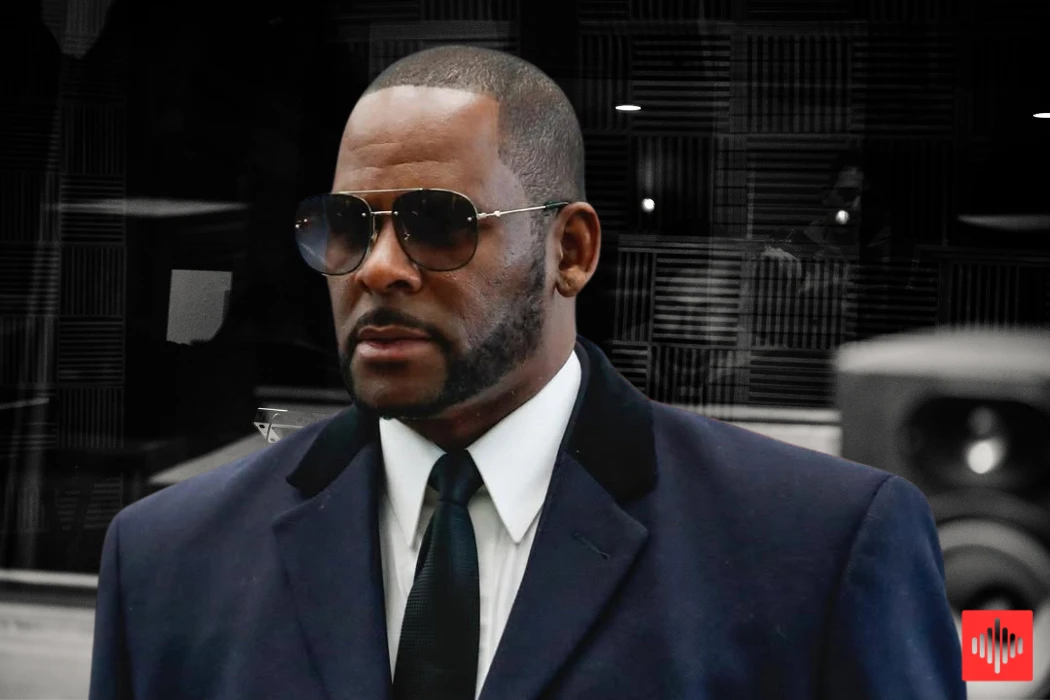
The filing landed the way these things do now, quietly, through a federal office, and then loudly, through a TikTok clip that split into two camps within hours. R. Kelly, serving 30 years on federal convictions for sex trafficking and racketeering, has asked President Donald Trump to commute his sentence. Not pardon it outright. Commute it. The distinction matters less to the public reaction than the ask itself, which is the same ask his legal team has been making, in one form or another, for more than a year.
What is new is the paperwork. What is not new is the pitch.
The Request, Precisely
According to court records made public this week by the Department of Justice's Office of the Pardon Attorney, first reported by the Chicago Tribune, Kelly's attorneys have formally submitted a request for commutation. It is currently listed as pending. Kelly, whose legal name is Robert Sylvester Kelly, was convicted in September 2021 on a superseding indictment that included racketeering and Mann Act violations tied to the sexual exploitation of children, and sentenced the following June to 30 years. A second Chicago case in February 2023 added a 20 year sentence for child pornography charges, with all but one year running concurrent to the first. Barring intervention, he is due for release in 2045, at 79 years old.
He is currently incarcerated in North Carolina, moved there from Chicago in 2023. In the time since, his team has built a parallel narrative running alongside the appeals process, one involving an alleged murder plot, a sworn declaration from a dying inmate, claims of intercepted legal mail, and a hospitalization his lawyers described as a near fatal overdose administered by prison staff. None of that is part of this week's filing. All of it is the atmosphere the filing was dropped into.
Notably, the DOJ's pardon office released the fact of the filing without releasing the filing itself. The underlying documents attached to the sealed clemency petition remain undisclosed, which means the public knows a request exists and knows almost nothing about the argument it actually makes. That is a strange amount of murkiness for a story that has otherwise produced wall to wall coverage. A conviction built on public trial testimony is now being contested through a process the public cannot read.
The Borrowed Language
Attorney Beau Brindley has been explicit, in public, about why he thinks Trump is the right audience for this. Long before the formal commutation request existed on paper, Brindley was telling reporters that Trump's own history with prosecutors gives him a unique frame of reference for Kelly's situation, that a president who has spent years describing his own legal troubles as persecution is uniquely positioned to recognize persecution in someone else's case. It is a tidy piece of political matchmaking. It is also, functionally, an attempt to resolve a federal sex trafficking conviction through vibes rather than facts.
The strategy is not unique to Kelly. It is the same grievance politics playbook that has moved from cable news greenrooms into clemency filings over the past several years: reframe a conviction as a conspiracy, cast the defendant as a target of a corrupt system rather than a person a jury found guilty, and appeal directly to a chief executive who has shown a personal appetite for that exact framing. Brindley said it plainly last year, telling reporters he would ask the president for help because, in his words, "we need him." That is not a legal argument. That is a request for solidarity between two men who each describe themselves as victims of the same machine.
What gets lost in that framing, deliberately, is the specificity of what a jury actually found. This was not a process crime. It was not a technicality. Two separate federal juries, in two different cities, heard testimony and returned convictions on trafficking and the sexual exploitation of children. A presidential clemency request that leans on persecution narrative rather than the trial record is, by design, asking the public to stop thinking about the specifics and start thinking about the vibe.
Why "Commutation" Is Doing Careful Work
It is worth sitting with the word choice for a moment, because it is doing quiet strategic work. A pardon would erase the legal consequence of the conviction entirely, a public declaration that the government believes the punishment should not exist at all. A commutation is narrower. It leaves the conviction on the books and shortens only the time served. That distinction lets Kelly's legal team make a more modest sounding ask, one framed around health, safety, and the length of a sentence rather than a request to be declared innocent. It is a request built to sound reasonable to an audience that might balk at full exoneration but could be talked into mercy.
That framing matters because it changes the emotional register of the request without changing the facts underneath it. Nothing about what the two juries found becomes less true because the ask in front of the president is smaller than a pardon. The Mann Act and racketeering convictions from 2021, and the child pornography conviction added in Chicago in 2023, remain intact either way. What shrinks is only the number of years attached to them, and only if the request succeeds.
Who Gets a Name, and Who Gets a Pseudonym
One person in this story has a public face this week: a man in a prison hallway, flanked by attorneys, becoming a viral clip. The people whose testimony built the racketeering conviction against him do not have that same visibility, by design and for their own protection. Kelly's goddaughter, whose testimony was central to the case, took the stand under the pseudonym Jane. She and the other women and girls at the center of the trial do not get a formal filing with their name on it circulating through federal databases and cable news chyrons this week. They get, at best, a line in a wire story about someone else's bid for freedom.
That asymmetry is not incidental. It is the through line of nearly every high profile clemency fight involving sexual abuse. The person requesting mercy gets a legal team, a media strategy, and now a direct appeal to the most powerful office in the country. The people whose survivor testimony secured the conviction in the first place get, at most, a renewed round of public litigation over whether they should be believed all over again, conducted largely without them. A commutation does not just shorten a sentence. It reopens a public argument that the survivors did not ask to have reopened, on a timeline they do not control.
The Quiet Part
Here is the part of this story that is, so far, mostly an absence. As of this writing, no major label executive, no prominent artist, no institution that spent two decades profiting from Kelly's catalog has said anything on the record about this filing. The public reaction has been loud and immediate, splitting sharply between people demanding his release and people insisting the industry not forget why he is there. But that reaction is happening almost entirely on TikTok and in comment sections, not in statements from the people who once sat across a boardroom table from him.
That silence should sound familiar. It is the same silence that let "I Believe I Can Fly" play at graduations for years after the first allegations surfaced in the late 1990s. It is the same silence that kept his catalog on radio playlists through multiple settlements before Surviving R. Kelly forced a public reckoning in 2019. An industry silence around an artist's conduct was never really about uncertainty. It was about convenience, and convenience does not require a statement. It just requires nobody picking up the phone.
The absence of comment this week is not proof of indifference. But it is, at minimum, a missed opportunity for anyone in the music business who spent the last several years positioning themselves as having learned something from the reckoning around Kelly, Diddy, and the broader industry accounting of the past decade. If the lesson actually took, this was the moment to say so. So far, nobody has.
It is worth remembering how long the industry's silence lasted the first time. Allegations against Kelly circulated publicly for more than two decades, through a 2002 indictment, an acquittal, multiple civil settlements, and years of continued radio play and touring, before Surviving R. Kelly forced a reckoning in 2019 that finally made the conduct impossible to ignore. The lesson of that timeline was supposed to be that silence has a cost, that looking away for long enough eventually becomes its own kind of complicity. A commutation fight is exactly the moment that lesson gets tested again, in public, and so far the test is going the same way it always has.
What a Commutation Would Actually Say
None of this determines what the Office of the Pardon Attorney will recommend, or what Trump will ultimately do with a request that is, by his administration's own history with clemency, not obviously off the table. But it is worth being precise about what a commutation would communicate, regardless of the legal mechanics. It would tell the two federal juries that convicted Kelly that their verdicts were negotiable in the right political climate. It would tell survivors of abuse by powerful men that the sentence a jury imposes is only as durable as the defendant's ability to find the right audience for a persecution story. And it would tell an industry that spent years insisting it had changed exactly how little that change actually cost anyone with the power to make a phone call.
The request is pending. The decision belongs to one office and, ultimately, one president. The reckoning it is testing belongs to everyone who spent the last several years claiming they had already had it.


Comments (0)
No comments yet — be the first to share your thoughts.
Leave a comment