

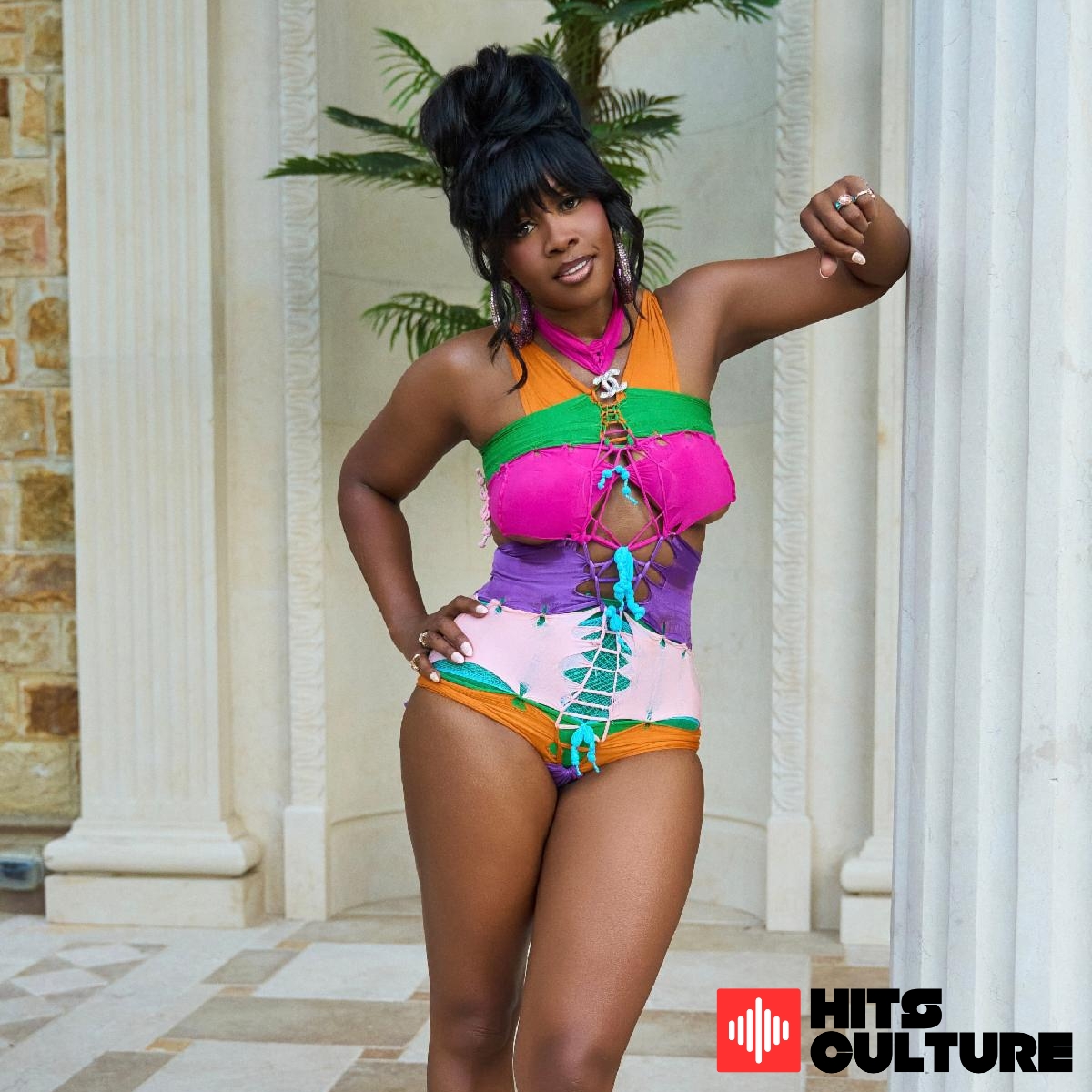
Remy Ma wants you to know she is having the best summer of her life. The video for "Put Em On" opens with her waking up inside a mansion, and from there it never really slows down. Matching silk robes, a pillow fight, a house full of women counting money and trading jokes before the outfits change and the real party starts outside. It plays out as a full house party visual, dancers on the lawn, a car wash scene played for pure vanity, Remy leading the choreography herself like she has something to prove to nobody but her own mirror. She has called this her soft girl era, and on its face, the phrase reads like a woman finally exhaling.
"I wanted to be back outside with my girls, laughing, dancing, playing games, talking trash, and just enjoying the summer," Remy said of the video. Director Nimi Hendrix built the entire shoot around that idea, describing the goal as making the set feel less like a production and more like an actual invite to Remy's own kickback, chemistry that was not staged because it did not need to be.
Fat Joe, the man who signed Remy into Terror Squad after Big Pun's death and effectively built her first platform, showed up publicly to co-sign the rollout, posting the video to his own page and calling her family before telling fans to run the numbers up. It is a small detail, but it matters. The people who watched her career start are the same ones showing up now, which tells you this is not a manufactured rebrand chasing a trend. It is a continuation of a relationship the culture has watched for two decades.
The Same Summer She Was Still Swinging
Here is what makes the timing interesting. "Put Em On" is landing in the same stretch in which Remy's "W.Y.F.L." freestyle became one of the more talked about moments in viral freestyle culture this year, an Instagram Reel that pulled more than 90,000 comments on its own, packed with pointed bars aimed at her husband Papoose and at boxer Claressa Shields. That is not the register of a woman easing into softness. That is a woman still fully capable of drawing blood on wax, weeks before or after directing a music video about pillow fights and good vibes.
Hip hop has a long, tired habit of asking its women to pick a lane. You are either the vixen or the villain, the girl having fun or the one settling scores, and the industry tends to treat any overlap as a contradiction that needs explaining. Remy Ma is not explaining anything. She released a freestyle sharp enough to dominate a news cycle and a visual soft enough to sell a mansion-party fantasy, inside the same season, without treating either one as the real her and the other as a mask. The Bronx swagger that made her a Terror Squad standout in the first place was never just aggression. It was range, and this run is her cashing that range in on her own terms.
Male rappers get to run this same split without a second thought. A man can drop a victory lap single one week and a pointed diss the next, and nobody frames it as a contradiction, just a full week of content. Women in rap rarely get the same benefit of the doubt. Soft is read as retreat. Sharp is read as bitter. Remy Ma landing both in the same stretch, on her own terms, without either one canceling out the other, is the actual news here, more than either individual release.
Twenty Years Later, Same Blueprint
There is a second story sitting underneath the first one, and it is about math nobody sent out a press release for. "Put Em On" arrives roughly twenty years after Remy's debut album, There's Something About Remy: Based on a True Story, released February 7, 2006, the record that turned a Grammy nominated feature on Terror Squad's "Lean Back" into a solo career built on singles like "Whuteva" and "Conceited." That album came out of the same instinct on display in this video, a fearless, unbothered confidence that never once asked permission from the room.
The road between that debut and this video was not a straight line. A conviction stemming from a 2007 shooting sent Remy Ma to prison for six years, a stretch that would have quietly ended most careers before they really started. She came home in 2014 and rebuilt from close to zero, eventually landing "All the Way Up" with Fat Joe, a Grammy nominated record that reintroduced her to a generation that barely remembered her debut. Every chapter since has followed the same pattern. Something takes her off the board, and she puts herself back on it louder than before. "Put Em On" is just the newest entry in that pattern, not an exception to it.
Twenty years is usually the point where hip hop starts asking an artist one of two questions: reinvent, or step aside gracefully. Remy Ma has answered by doing neither. In the span of a few months she starred in Lifetime's Don't Trust the Girls Upstairs, reunited with fellow New York veterans French Montana and Max B on "Ever Since U Left Me (Big Bronx Remix)," set social media on fire with a single freestyle, and now delivered a video that plays like a victory lap with no finish line in sight. That is not a comeback built around one album cycle. It is a multi-hyphenate comeback spread across television, nostalgia records, viral freestyle culture, and now a feel-good visual, four different fronts, one unmistakable presence running through all of them.
She is not the only one of hip hop's New York veterans treating an anniversary like a jumping-off point this year. Jay-Z just turned a weekend at Yankee Stadium into a formal, institutional coronation built around thirty-year and twenty-five-year album milestones. Remy's version of the same math is smaller, looser, and arguably more honest about what longevity actually feels like day to day. It is closer to what Tank has been proving with his own two decades of quietly stacked staying power than to a stadium victory lap. Nobody needed to build Remy a monument. She built the party herself and put her own name on the door.
The Takeaway
What "Put Em On" actually documents is a woman who no longer feels the need to soften her edges to be likable or sharpen them to be respected. The soft girl era label is real, but it was never a departure from the artist who has spent two decades trading bars with anyone who tests her. It is proof that after twenty years, Remy Ma has earned the right to be all of it at once, joyful and unbothered on one record, lethal on the next, with no explanation owed to either side. That kind of cultural authority cannot be manufactured by a rollout calendar. It has to be earned, and Remy Ma has a paper trail on it going back to a debut album most of her current audience was not alive to buy in stores.


Comments (0)
No comments yet — be the first to share your thoughts.
Leave a comment