

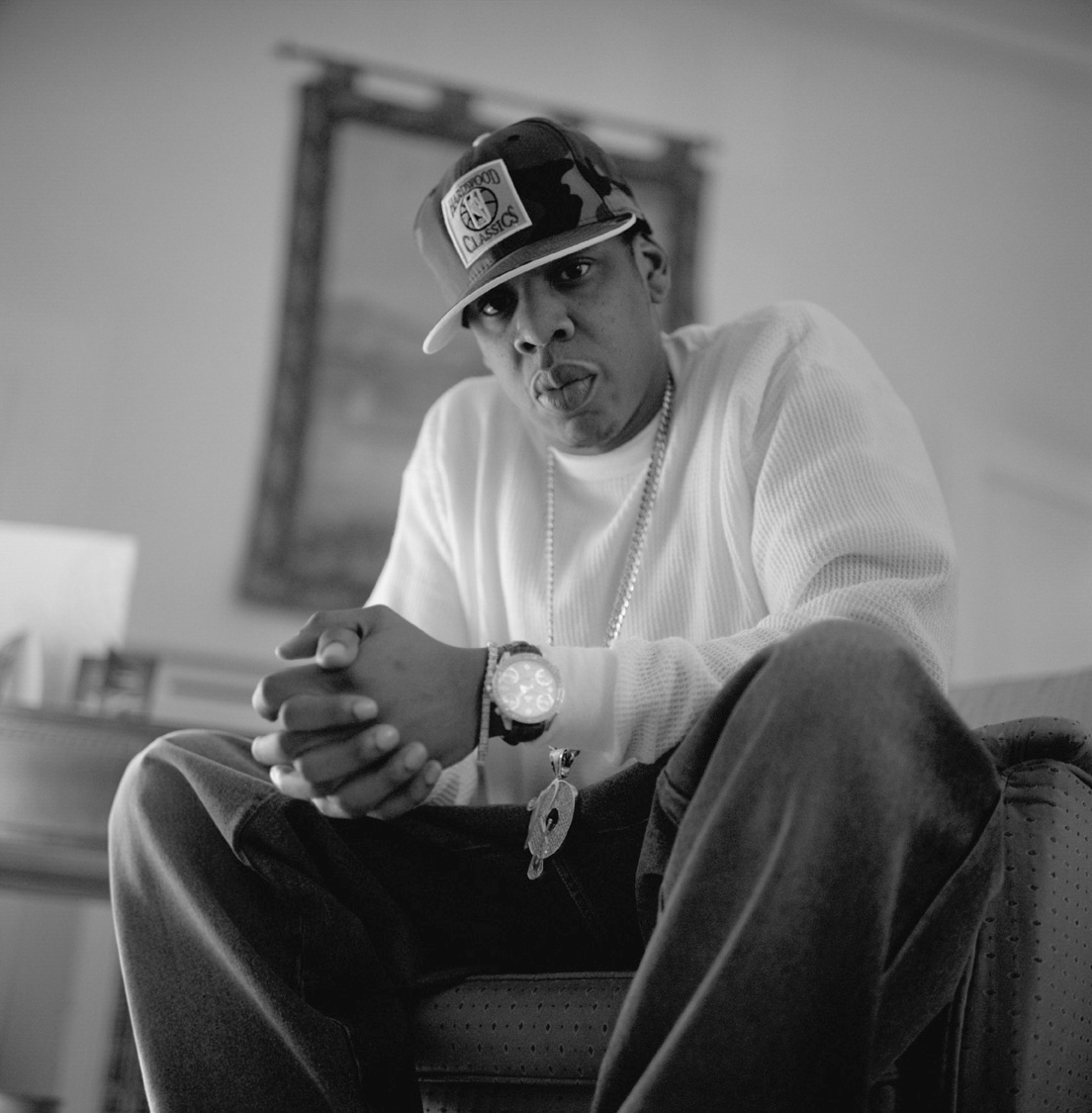
The image that will outlast the weekend is not the marquee numbers or the freestyle that lit up every timeline. It is a fourteen-year-old girl at a piano bench in the Bronx, playing "Feelin' It" while her father, thirty years into his career, held a stadium built for baseball still. Blue Ivy Carter did not upstage the surprise appearances by Beyoncé, Nas, Eminem, Pharrell, or Rihanna. She did something quieter. She sat down at an instrument and let the room understand what the whole three-day run was actually about.
Jay-Z's three sold-out nights at Yankee Stadium, celebrating the 30th anniversary of Reasonable Doubt and the 25th of The Blueprint, will be remembered as the moment hip-hop was formally granted the residency treatment American rock and pop have taken for granted since Elvis at the Sands. That is the win. There is also a coffin inside the trophy, and it is worth naming.
Hip-Hop's First Kennedy Center Moment
Look at the ingredients. An 18-piece string section. A live band. A screen playing archival footage from the artist's youth. A creative director, Willo Perron, who told Wired the shows were "more about storytelling" and that the statement piece was Jay-Z himself. Two of the three nights were built entirely around single-album performances, a form Springsteen, U2, and Pink Floyd used to close their touring careers, not build their prime years.
This is the arena-rock retrospective template, and it just crossed over. Hip-hop has been in stadiums for a decade, but stadium tours and a formal, catalog-driven, string-augmented, anniversary hip-hop residency are two different animals. What Jay-Z did across three nights in the Bronx is closer to what the Rolling Stones did at the Beacon than to a headline slot at Rolling Loud. He was not selling a new album. He was selling a career, presented as a canon, on the stage of America's most institutionally validated sports venue. It is the same catalog logic that made the business framework he built off these albums the industry standard for a generation of artist-entrepreneurs.
None of this is a knock on Jay. He is 56, he earned the reverence, and he executed the form with more discipline than most rock institutions manage on their farewell tours. But the same weekend that certifies hip-hop as canonical is the weekend that folds it into the museum. The residency is the last stop before the boxed set. Once a genre gets its Kennedy Center honor, the next thing it gets is a wing.
The Freestyle Was a Magic Trick
Every music outlet led with the same story: on night one, Jay-Z aired his critics out with a freestyle that took shots at the boycott of his Target deal for the Reasonable Doubt reissue, defended his billionaire status, and included the line now running on loop across sports and hip-hop timelines: "they digging deep for narratives, it's embarrassing, they running outta characters, had to bring back up Kaep again." That was a reference to Colin Kaepernick and the NFL partnership that has followed Jay since 2019. It was rhetorically nimble, it landed on real fault lines, and it did the exact thing his May freestyle at the Roots Picnic did before it, which split hip-hop's generations down the middle. It forced the discourse into terrain he could control.
Which meant almost nobody wrote about the actual economics of the weekend. Here is what happened underneath the freestyle. Tickets first went on sale in March at a floor of $310, with more than 1.6 million fans in the queue, according to Roc Nation press. By early July, those same tickets had dropped roughly $100 to $200, with SeatGeek pricing seats as low as $183 in a widely reported Digital Music News report on slow sales. Only after the price came down did the door figures materialize. Night one moved 44,916 tickets, a new venue concert attendance record. Night two moved 45,832 tickets and broke that record set the night before. Both counts are historic.
Both things are also true. The demand existed. The price at the top of the sale did not match it. The record-breaking crowd is what the discount rail produced, not what the initial ask delivered. That is not a scandal. It is how the modern secondary market works. But it is the story hip-hop economics writers should be telling this week, and instead they are litigating a Target boycott and a Kaepernick line.
Which is exactly the point. If you are Roc Nation, and you are running a weekend where the top-line narrative you want is "record attendance, historic canon show, family moments," then a Target-and-Kaepernick freestyle is a gift. Every reporter chases the freestyle. The pricing story dies in a trade blog nobody outside the industry reads. This is not a conspiracy. It is stagecraft. The freestyle was the smoke; the door was the mirror.
The Guest List Was a Loyalty Ledger
The other tell was who showed up on stage. Beyoncé, singing Mary J. Blige's hook on "Can't Knock the Hustle." A daughter at the piano for "Feelin' It." Nas, on "Dead Presidents," a song that samples his own "The World Is Yours." Memphis Bleek on "Coming of Age." Jaz-O, the mentor from before there was a Jay-Z, on "Bring It On." Alicia Keys on "Empire State of Mind." Slick Rick opening night two. Eminem on "Renegade." Pharrell running a four-song medley of collaborations. LeBron James throwing up the Roc from the crowd.
Notice what is not on that list. Not a single active-era hip-hop star. No Drake. No Kendrick. No Future. No Travis. No Cole. No Tyler. No 21 Savage. The invitation went to family, mentors, and peers from the era when he was building the throne. It did not go to the artists currently occupying the market share underneath it. That was a message: this weekend is not a business meeting. It is a public settling of debts, delivered in front of 45,000 witnesses, to the specific people who were in the room in 1996, 2001, and the years that made both records possible. The current generation was not snubbed. It was not addressed. This was not for them.
The Museum Era Begins
Perron's screen ran images of a young Shawn Carter across the Bronx sky all weekend. Jay closed night one with a line that read like a Ken Burns cold open: the album that did 43,000 in its first week just put 45,000 in the seats. He is bringing the same show to Tottenham, Paris, and SoFi through the fall. The Roots Picnic retrospective with the Roots in May was the warm-up. The Yankee Stadium run was the coronation. What comes next is the harder question.
Because once the template exists, others will use it. Nas at Madison Square Garden for Illmatic at 35. Wu-Tang at Barclays for 36 Chambers at 33. Missy Elliott, OutKast, DMX estate shows, the Roc-A-Fella reunion night that will inevitably follow. That is good for touring revenue, good for surviving artists, and good for a genre that spent thirty years being told it was a phase. It also means the center of gravity for hip-hop's biggest revenue moments has shifted from the new release to the catalog show, the same drift that hollowed out rock's release schedule across the 2010s.
The daughter at the piano was the frame the whole weekend depended on: the child learning the instrument, the father staging the passage, a stadium of witnesses who understood without being told what was being handed over. Willo Perron kept the production stripped for a reason. When you are staging a coronation, you do not want spectacle. You want the audience to see the crown.
Comments (0)
No comments yet — be the first to share your thoughts.
Leave a comment