

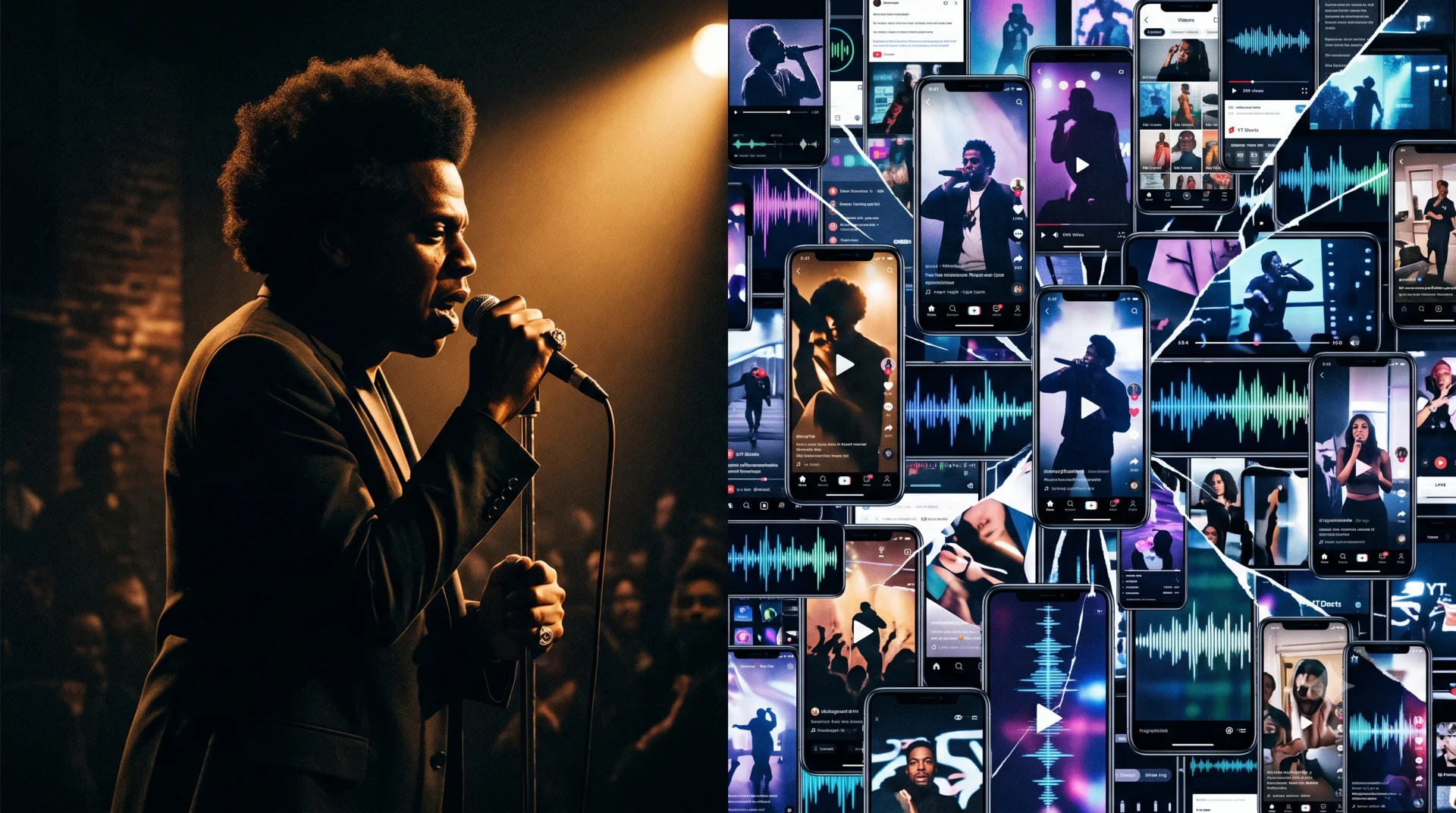
When JAY-Z walked onto the Belmont Plateau stage in Fairmount Park on Saturday, May 30, he did the one thing nobody at the 2026 Roots Picnic expected from a 56-year-old billionaire who had not headlined a U.S. solo set in roughly seven years. He rapped at the crowd, not for it. No hook to lean on, no radio record to ride, just a nearly four-minute freestyle delivered in a spoken-word cadence that asked the audience to keep up with a man who has spent thirty years assuming you already know the references. The older heads in the field roared. A large slice of the younger timeline shrugged, squinted, and asked what they had just listened to. That split is the actual headline here, and it tells you more about where the culture sits in 2026 than any of the diss bars do.
Here is the short version for anyone catching up: Hov opened with 2002's "Hovi Baby," pivoted into an unreleased verse that fans immediately read as shots at Drake, Nicki Minaj, Kanye West, Dame Dash, Jaguar Wright, and Tory Lanez's father, then slid into "U Don't Know" off The Blueprint. The set ran past two hours with Philly royalty (Jazmine Sullivan, Bilal, Meek Mill, State Property) filling it out. But the freestyle is what owned the weekend, and the way people reacted to it broke almost perfectly along generational lines.
The clearest snapshot of the divide came from Brooklyn's own Bobby Shmurda, who watched the clips circulate and publicly dismissed the whole thing. He compared Hov's delivery to Shakespeare as an insult, joked about a 56-year-old "going through identity" issues, and told the mogul to "go sit down old head." On the other side, DJ Miss Milan summed up the veteran camp in four words, calling JAY-Z the greatest rapper, while another listener drew a line in the sand: if you heard that freestyle and called it trash, do not bother debating rap with them.
Two audiences. Same audio file. Opposite verdicts. And that is the question worth sitting with, because the lazy framing is to say the kids simply cannot recognize greatness. The more honest framing is that we are watching two entirely different definitions of what rap is supposed to do collide in real time. To one camp, a verse is an argument you decode. To the other, a verse is a feeling you ride. Neither group is wrong on its own terms. They are just not speaking the same language anymore, and Saturday night made the translation gap impossible to ignore.
It is tempting, especially for anyone over thirty-five, to watch the confused reactions and conclude that music has been dumbed down to the point where listeners can no longer process lyrical intelligence. There is a real piece of truth buried in that take. The dominant strain of popular rap in the streaming era rewards melody, repetition, cadence, and vibe far more than dense reference-stacking. Short songs win on the platforms because shorter tracks get replayed more, and replays are the currency. An entire generation has been trained, by the algorithm, to value how a song makes them move rather than how many layers a single bar contains. When that listener meets a verse built almost entirely out of buried context, the circuitry that decodes it was never installed.
But "dumbed down" overstates the case and lets too many people off the hook. JAY-Z's freestyle was not hard because it was smart. It was hard because it was insular. Half of it only lands if you already know that on "Janice STFU" Drake told the older guard the jig was up, and that Hov spent his verse flipping that exact "the jig is up" line back at him, leaning on his old Jigga alias so the pun cut in both directions while he flexed his chart standing as the receipt. It only fully connects if you also know that "Un" points to a 1999 stabbing, that Nicki's TIDAL equity dispute has been playing out for months, and that Ye said unforgivable things about his children. That is not intelligence the average 19-year-old lacks the capacity for. It is institutional memory that a 19-year-old has no reason to carry. We covered the full architecture of those Drake shots in our complete breakdown of every diss hidden on Drake's Iceman, and even there, the bars required a decoder. Hov essentially showed up to Roots Picnic and assumed everyone had done the reading.
Lyricism, the kind Hov was flexing, is not a one-way transmission. It is a contract. The rapper compresses lyrics, and leaves listeners to do the work of unpacking it. Drake understands this better than almost anyone working, which is exactly why his three-album rollout was engineered to be picked apart for weeks. Music that demands decoding stays in the conversation longer, and the conversation keeps feeding the algorithm. Hov was making the same bet on stage, just without the studio polish that makes the bet feel safe.
The catch is that the contract only works if both sides show up. A generation raised on rage rap and ambient melody never signed it. That is not a moral failing, and we have made the case before that the new wave has its own kind of craft, even when the bar count is low, in our look at how artists like Nettspend and OsamaSon are rewriting the rules of what a rap song is allowed to prioritize. Texture over text. Energy over exposition. You can respect that evolution and still recognize that it leaves a listener unequipped to catch a Hov reference flying past at conversational speed with no beat to signal that something clever just happened.
This is the distinction that gets lost in the "kids are dumb" discourse. Attention spans did not shrink because young people got less capable. They reshaped because the entire delivery system changed. When a verse arrives as a fifteen-second clip on a vertical feed, stripped of album context and surrounded by ten other clips, the brain learns to grade music on immediate impact. A freestyle that withholds its payoff until you have cross-referenced three feuds and a decade of headlines is, by that standard, a failed piece of content. It does not perform. It does not resolve in the window the format trained everyone to expect. The generational disconnect is not about intelligence. It is about an ear that was conditioned by a completely different machine.
And here is the uncomfortable part for the idealists. JAY-Z knew all of this. A man that calculated does not stumble into a beatless, reference-dense verse by accident. He chose the format that he knew would alienate the casuals and electrify the people who still treat hip-hop as a text to be studied. The freestyle was a filter. It sorted the room into people who got it and people who did not, and the people who did not getting loud about it on social media was, frankly, part of the design. Provocation that sparks decoding is the oldest tool in his kit.
So, Disconnect or Decline?
The answer is disconnect, with a real but smaller streak of genuine erosion running through it. Music has not collapsed to the point where audiences are incapable of lyrical intelligence. The Kendrick wave, the Mariah the Scientist and Leon Thomas R&B surge we have tracked all year, the appetite for decoding Drake bars, all of it proves the appetite for craft is alive. What has eroded is the shared literacy, the common archive of references and the patience to dig for a payoff, that used to let one verse land across an entire room. Bobby Shmurda hearing Shakespeare where his elders heard a victory lap is not proof that one of them is broken. It is proof that the culture is now two cultures wearing the same name, and that a JAY-Z freestyle at Belmont Plateau is one of the rare moments they are forced to stand on the same hill and admit it.
The kids didn't fail the test. There's just not one test anymore. And the sooner the conversation accepts that, the sooner we can stop pretending every generational standoff is a poll on whether rap is dead, and start asking the better question: who is going to build the bridge between the people who read lyrics and the people who feel them, before the two stop bothering to share a genre at all.
Comments (0)
No comments yet — be the first to share your thoughts.
Leave a comment