

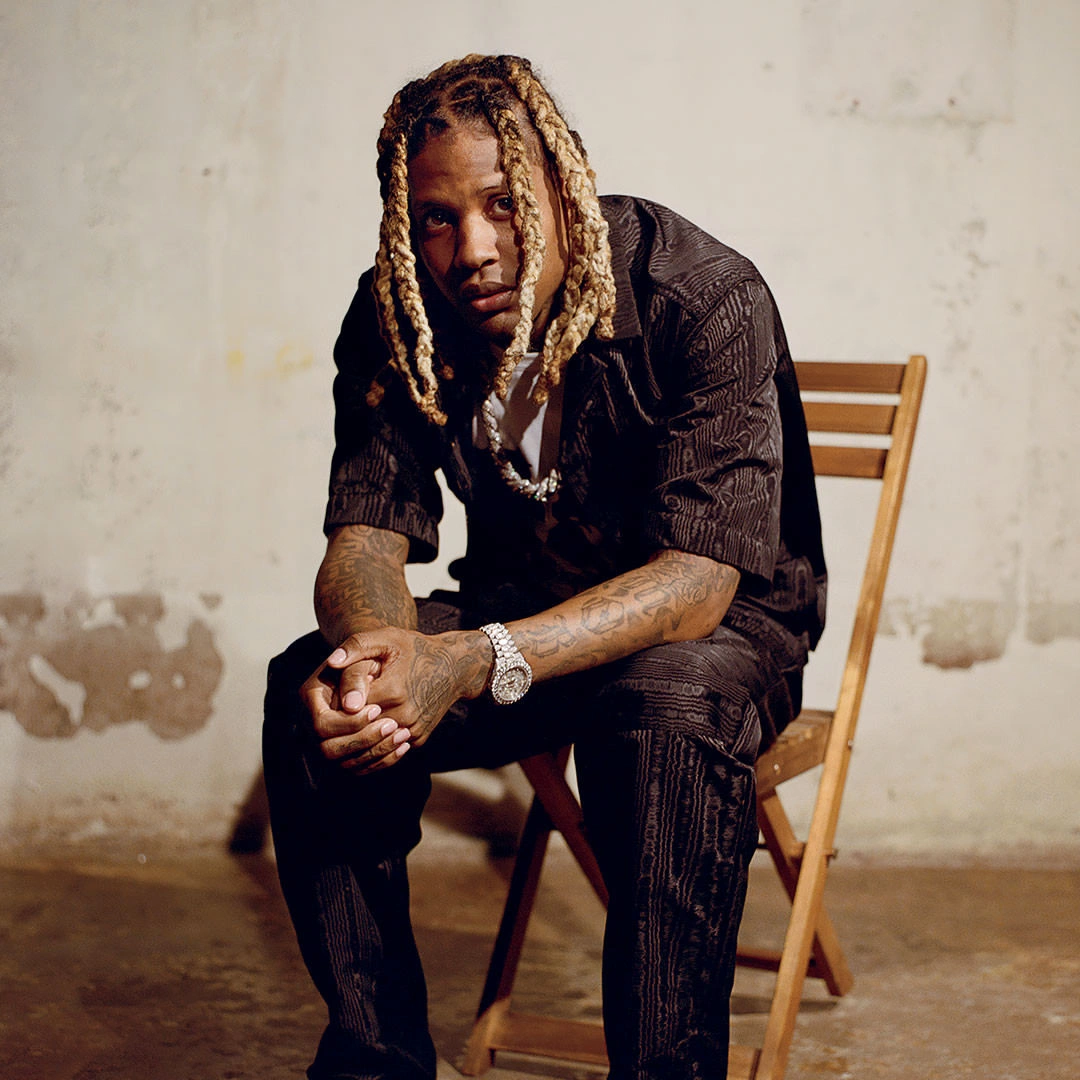
A courtroom headline can move faster than the ruling underneath it. That is especially true when the defendant is a famous rapper, the charges are serious, and millions of fans are following the case through clips, reposts, and accounts that treat every procedural turn like a final verdict.
On Tuesday, July 14, 2026, U.S. District Judge Michael W. Fitzgerald handed Chicago rapper Lil Durk a genuine win, and then spent forty minutes making sure nobody in the courtroom mistook it for a bigger one than it was. The judge granted Durk's motion to sever two newly filed allegations, a January 2022 killing in Chicago and a February 2019 attempted murder in Atlanta, from the federal murder-for-hire trial set to begin August 20 in Los Angeles. Both had been folded into the case only last month, inside a third superseding indictment prosecutors filed with weeks to go before jury selection.
That is Lil Durk's legal victory, described precisely. It is also where the precision needs to start, because what actually happened in that Los Angeles courtroom is narrower and stranger than the headlines circulating since.
What the Judge Actually Decided
According to reporting on the hearing, prosecutors added the Chicago and Atlanta allegations, racketeering counts involving violent crimes and firearms possession, in a new indictment filed just weeks before trial. Durk's attorneys argued the timing made the case impossible to prepare for on schedule. Rather than delay the long-scheduled August trial to accommodate the new material, or throw the new charges out entirely, Judge Fitzgerald split the difference: the original case proceeds August 20 as planned, and the newer allegations move to a separate trial with no date yet set.
The distinction matters because severed charges are not dropped charges. Nothing was dismissed. The government did not lose its case. It lost the ability to try everything at once, and it lost that ability because, in the judge's telling, prosecutors had already made their bed. Durk's legal name is Durk Banks. He was arrested in Florida in October 2024 and has been held without bail since.
The hearing itself was tense. Judge Fitzgerald pressed prosecutors on why they waited so long to bring the Chicago allegations, part of a third superseding indictment filed with the rest of the new material, over an incident involving the killing of an alleged rival gang member that Banks was never separately charged in but that the government says he rewarded with a cash payment at a music studio afterward. When an assistant U.S. attorney tried to argue the incident belonged in the Los Angeles trial, the judge cut in with a line that captured the entire ruling in one breath: "You treat that as a feature, and I treat that as a bug."
The subtext was plain. The judge suggested prosecutors wanted the newer, uglier allegations bundled into the original trial precisely because a jury hearing everything at once might be more inclined to convict, and he was not going to let that calculation dictate how the case was tried. His stated goal, in his own words on the record, was making sure both sides got a fair trial, not a maximally damaging one.
Banks' defense team, led by Drew Findling alongside Christy O'Connor and Marissa Goldberg, has now also added Brian Steel, the attorney who represented Young Thug through Georgia's marathon YSL racketeering trial. Their argument in court leaned on something simple: Banks has already spent nearly two years in custody preparing to fight one case, and forcing him to simultaneously absorb a second, wider one on short notice was not how a fair process is supposed to work.
The August 20 trial is still happening. Nothing about Tuesday's ruling touches the core allegation: that Banks orchestrated a murder-for-hire plot against fellow rapper Quando Rondo, whose legal name is Tyquian Terrel Bowman, in retaliation for the 2020 killing of Durk's close friend and collaborator, Dayvon "King Von" Bennett. Prosecutors allege that on August 19, 2022, a group of gunmen tracked Bowman to a Los Angeles gas station near the Beverly Center and opened fire with multiple weapons, including a machine gun. Bowman survived. His cousin, Saviay'a Robinson, did not. Her mother, Andrea Robinson, testified at an earlier hearing about the grief of losing her only child, a moment the court record still carries even as the legal fight over evidence continues around it.
Banks has pleaded not guilty and denies using coded language to arrange the killing. None of that changes with severance. The presumption of innocence still applies, the burden of proof still sits with the government, and the trial that will test both is still five weeks out.
Rap audiences have become accustomed to receiving legal news through accounts built for speed and certainty rather than accuracy. A hearing happens in the morning, a clip goes up by lunch, and by evening the internet has produced a verdict the court itself has not reached. A charge being severed becomes a charge being dropped. A judge criticizing a prosecutor becomes proof the whole case is collapsing.
We have watched this pattern before from the opposite direction. When R. Kelly's legal team recently asked a sitting president to commute a 30-year sentence, the filing itself was thin, but the surrounding noise, borrowed grievance language dressed up as legal argument, drowned out what the paperwork actually said. Hip-hop court coverage keeps making the same mistake in both directions: treating incomplete information as certainty, whichever way the certainty leans.
The Road Ahead
Both sides now have to agree on a date for the second trial, covering the counts the judge just severed. Prosecutors have separately asked the court to grant anonymity to the sixteen jurors seated for the August 20 trial, citing security concerns, a request the judge said the court will address at a follow-up hearing. And if Banks is acquitted in Los Angeles next month, his attorneys could eventually argue that a second trial on closely related conduct raises double jeopardy concerns, though that fight, if it comes, is still down the road.
None of this resolves the case. It resolves the shape of it. Lil Durk won a real and meaningful fight over how his murder-for-hire trial will be tried. The government's larger case against him, in Los Angeles and in whatever courtroom eventually hears the severed charges, is still very much alive.
Durk's legal team got something substantial this week: a narrower trial, more time to prepare for the newer allegations, and a judge on the record expressing real skepticism about the prosecution's timing. That is worth calling a win.
It is also worth finishing the sentence. The severed charges remain pending. The August 20 trial remains scheduled. Banks remains presumed innocent, and the government still has to prove, in front of a jury, what it has so far only alleged in filings. In a media environment addicted to instant conclusions, the most honest read of this week is also the least dramatic one: a real procedural win, inside a case that is nowhere near over.
Comments (0)
No comments yet — be the first to share your thoughts.
Leave a comment