

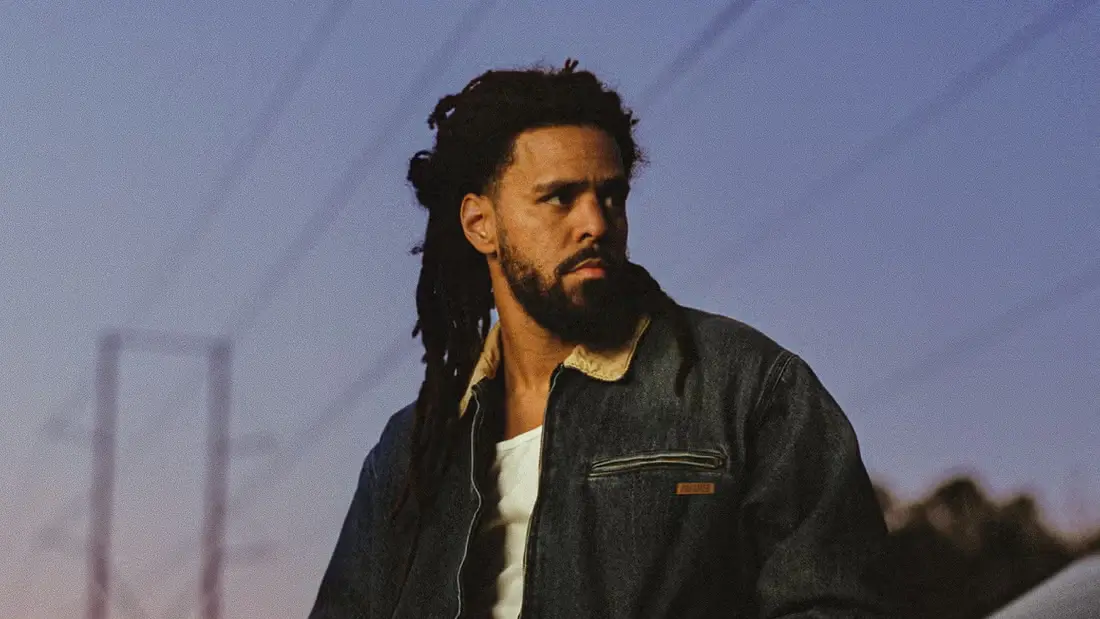
The day after The Fall-Off arrived on Friday (Feb 6), J. Cole went on X and described his release plan the way a man describes a road trip. "In the trunk of my car [are] boxes of The Fall-Off CD's," he wrote, and that Saturday the Trunk Sale Tour began, with Cole selling discs out of the back of his old Honda Civic. "Cop a CD from me or just show love," he added. Nine days after release the album was his seventh No. 1 on the Billboard 200, on 280,000 first-week units, and 113,000 of those units were pure sales.
Underneath it ran a pre-order campaign that Cole's team and Interscope built on EVEN, the direct-to-fan platform that on Tuesday (Sept 29) opened EVEN STUDIO, a version of the same tools that lives on an artist's own web address. For a working artist the lesson is specific: the most valuable thing an album pre-order produces is the list of people who paid, and the 2026 version of the playbook is built to keep that list with the artist while the sales still register on the charts.
What follows breaks down what Cole's campaign did, what STUDIO changes, how the money compares with Bandcamp, and how an independent act with a few thousand real listeners can run the same sequence at its own scale.
What the Fall-Off Numbers Say About Who Bought
Luminate's first-week tally divided Cole's 280,000 units into 113,000 in album sales, 166,500 in streaming-equivalent units drawn from 169.5 million on-demand streams, and 500 in track-equivalent units. Vinyl accounted for 80,000 of the sales, about 71 percent, and it was the biggest vinyl week of his career. Whether any of the trunk CDs reached that count has never been settled by Cole or the label.
Through an artist’s lens, the defining stat isn't streaming volume, it's the 113,000 pure sales. Streaming is often passive background noise, but a vinyl pre-order requires intentional commitment weeks before release. With Luminate's 2025 report showing direct-to-consumer sales driving over half of first-week US physical sales in R&B and Hip-Hop, control of a rap record's opening numbers has officially shifted from big-box retailers to the artist's own web store.
The same pattern held after Cole's streaming curve flattened, a split this desk documented in August when his streaming numbers cooled while UBS Arena never did. The people who fill a room are the people who pre-order colored vinyl, and they form a far smaller and far more valuable group than any monthly listener count.
The Pre-Order as a Data Product
EVEN's pitch to the majors has always centered on the buyer rather than the sale. When Universal Music Group signed a multi-year deal with the platform in February, letting UMG acts sell vinyl and merch through EVEN on the label's own direct-to-consumer infrastructure, EVEN pointed to two hip-hop campaigns. One was Cole's tenth-anniversary run for 2014 Forest Hills Drive, which EVEN says returned the album to the Billboard top 15. The other belonged to Wale, a Def Jam pilot artist whose project reached the top 20 with direct sales in the mix and whose owned fan audience, by EVEN's count, grew more than 300 percent in a single week.
Those are company figures and should be read as such, though the mechanism behind them is not in dispute. A fan who pre-orders through EVEN receives music immediately, the artist receives that fan's contact details and purchase history, and the next announcement reaches that buyer without anyone paying a social platform to boost a post. "Superfans are the foundation of sustainable artist careers," EVEN founder and chief executive Mag Rodriguez said when the UMG agreement was announced.
STUDIO, which opened by invitation, moves that arrangement off EVEN's app and onto a page the artist controls. Under the launch terms, buyers of an album pre-order can unlock up to four tracks right away, with more early music released across the campaign, and qualifying redeemed sales can be reported to Luminate in the United States and to the Official Charts Company in the United Kingdom. Payouts arrive daily, and artists keep ownership of their fan data. "STUDIO gives artists a destination of their own," Rodriguez said, describing it as a product the company will "build and operate for them."
The company says more than 500,000 artists across 3,000 labels and distributors in over 110 countries have been onboarded since its April 2024 launch, and in late September it hired Josh Remsberg, formerly of Warner Records, as head of commercial partnerships. The checkout supports more than 30 payment methods in 140 currencies, which matters to any rap or R&B act whose second-biggest city sits in London or Lagos.
Where the Money Goes on Each Platform
Bandcamp remains the benchmark for independent direct sales, and its terms are published. According to Bandcamp's own fee schedule, the company keeps 15 percent of digital sales until an artist reaches $5,000 in sales, then 10 percent for as long as the trailing twelve months clear that mark, and it takes 10 percent on physical goods, with payment processing typically adding 4 to 6 percent. On Bandcamp Fridays the company waives its revenue share, and the next one falls on Friday, Nov 6.
EVEN has not published a fee schedule for STUDIO, so an artist weighing the two should get the per-sale cut in writing before planning a campaign around it. The larger difference is structural. A Bandcamp sale lives inside Bandcamp's storefront and follower system, while a STUDIO sale sits on the artist's domain and can feed a chart report, which explains why a label-backed album would choose it and a self-released tape might not need to.
Neither platform replaces the merch table, where the margins follow a different set of rules that our touring economics guide walks through venue cut by venue cut. What both change is the timing of revenue, since a pre-order pays out before release week, the stretch in which most independent artists spend the most and earn the least.
How to Run the Cole Sequence Without a Major
Build the list before the record
Cole's trunk tour worked because his audience already knew where to look for him, and an independent artist's version of that is a mailing or text list gathered at every show and every release. A reason to sign up helps, whether an unreleased demo, a presale code or first access to a vinyl variant, and the twelve months before an album are when the list should grow, since the pre-order campaign is where it finally gets asked to pay.
Give the buyer something on day one
The instant-track mechanic in STUDIO exists because a pre-order that delivers nothing for six weeks feels to the buyer like a loan. Bandcamp offers the same idea through pre-order tracks that unlock ahead of the album, and an artist planning a ten-song record can budget three or four songs as incentives, scheduling each one as a fresh reason to email the people who already paid.
Price for the 113,000, not the 169 million
The vinyl share of The Fall-Off makes the case for a physical tier even at small scale. A run of a few hundred records in a variant color, or signed, gives the most committed buyers a higher price point and gives the artist a shipping address for each of them. For an act moving 300 units, the address list is worth more than any chart position, and the price of each variant should reflect what the most loyal tenth of the audience will pay rather than what a casual listener expects.
Show up in person after release
The trunk sale began the day after release, when streams were at their peak and about to decay. A physical appearance in the first or second week renews attention among the buyers most likely to bring a friend, and a record-store signing, a barbershop pop-up or a free show for pre-order holders does the same job at a budget an independent act can carry.
What the Streaming Services Still Have Not Built
Spotify's long-discussed superfan add-on, reported under the working name Music Pro at up to $5.99 more per month, had still not launched by May of this year. An artist waiting for a streaming service to sort its most loyal listeners into a paying tier is waiting on a product calendar written in Stockholm, and any revenue from that tier would arrive after the service and the label take their shares.
The direct-to-fan tools are already live, and their price is a cut of each sale plus the work of building a list. Cole has sold records in every format a major label can manufacture, and in February he still chose to stand next to a Honda Civic with boxes of CDs. STUDIO puts the pre-order half of that playbook on an artist's own web address, while the trunk half has never cost more than gas.
Comments (0)
No comments yet — be the first to share your thoughts.
Leave a comment