

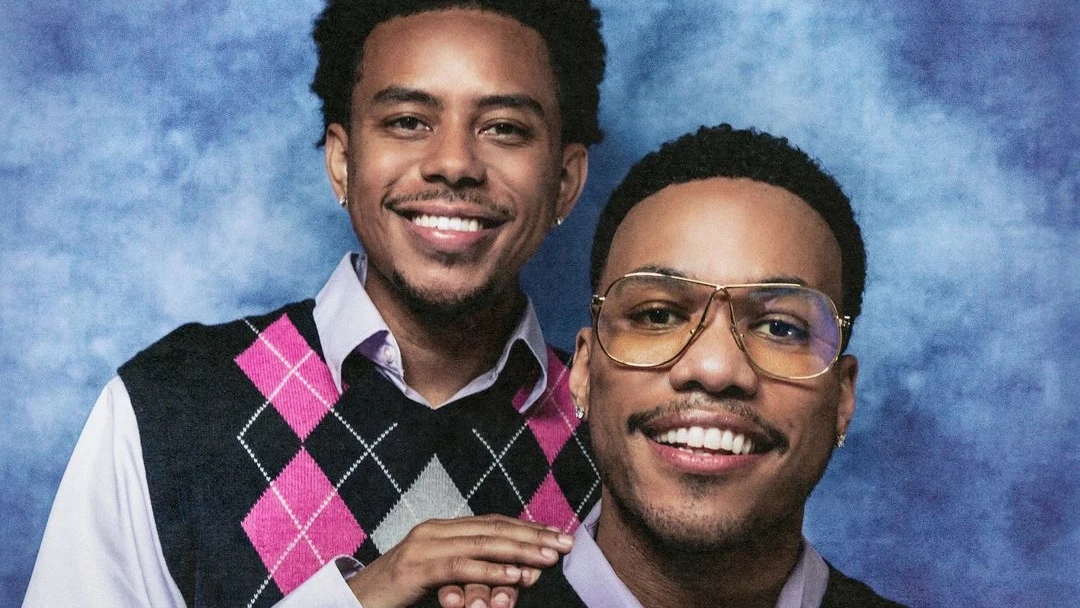
Bill Withers held one note for 18 seconds on "Lovely Day" in 1977. Nearly half a century later that Columbia single sits under Anderson .Paak and Cordae on "A Good Day," which arrived September 16 ahead of their joint album, due October 23 through APESHIT, Mass Appeal and EMPIRE. Behind the soul-drenched Withers loop sit two separate owners. The composition belongs to the Withers and Skip Scarborough songwriting interests, and the master recording belongs to Sony, which controls the Columbia catalog.
That split is the first fact every working artist needs before a sample leaves the session file. Sample clearance is two negotiations with two parties who want different kinds of money, and a record is cleared only when both of them have signed.
For an artist planning a release this fall, the short answer is to clear the master with whoever owns the recording and the song with whoever publishes it, with both agreements in writing before the track reaches a distributor. The budget should assume a share of your own income rather than a single check.
Two Copyrights Live Inside Every Loop
A recorded song carries two copyrights at once. One protects the composition, meaning the melody and lyrics that a songwriter wrote and a publisher administers. The other protects the sound recording, the specific performance captured on tape or in a file, which usually belongs to a label. Lift four bars of the original audio and you have used both, which is why a straight sample needs a master use license from the label and a separate license from every publisher that controls a piece of the song.
Publishing is where the paperwork multiplies. A 1970s soul record can carry three or four writers, each represented by a different publisher, some of them since sold to catalog funds that did not exist when the song was cut. Every one of those shares has to agree, and a single holdout can stop the release.
The master side is often simpler to locate and harder to price. Labels that absorbed older catalogs, as Sony did with Columbia, run licensing departments that field these requests daily, and their answer depends on how recognizable the portion is, how much of the new track leans on it, and how big the release looks.
Replay, Interpolate, or Lift the Master
Artists have three routes to the same feeling, and each one changes who sits at the table. The Bay Area producer Tone Capone showed the cheapest route on "I Got 5 On It." As HitsCulture reported this month, Capone did not sample Club Nouveau's recording. He took the melody at a slower tempo and recorded his own version, with the bass pushed up and doubled on electric piano. The only true samples came from Audio Two's "Top Billin'" and Kool & the Gang's "Jungle Boogie."
Replaying the part removes the label from the Club Nouveau side of the deal because none of the original recording is used. It does not remove the songwriters. Capone told TheWrap that publishing on the record went to him, Club Nouveau founder Jay King, the group's producers, the writer Michael Marshall and the Luniz. That is how an interpolation works in practice, since the melody is still their song, so the publishers take a share even when every note was played fresh.
The federal statute explains why an artist cannot route around that with a mechanical license. Section 115 of the Copyright Act lets anyone cover a song once it has been released, but the law says the arrangement "shall not change the basic melody or fundamental character of the work," according to the text of 17 U.S.C. 115. A new song built on an old hook changes its character by design, so the compulsory license that covers a straight cover version does not reach it, and the publisher has to consent.
Deborah Mannis-Gardner, whose DMG Clearances has handled samples for some of the largest records in hip-hop, outlines the choice as a yes or no question. "When people come to me and say I've got a 'Blurred Lines' situation, I say you either have an interpolation or you don't," she told Synchtank in a 2018 interview. An artist who is unsure, she added, should bring in a musicologist before the record ships.
What the Owners Ask For
No trade body publishes a rate card for samples, and every quote is negotiated against the specific use. The numbers Mannis-Gardner has put on the record give an artist a starting frame. "If it's a small vocal snippet, we try to keep that at 5% on the publishing, and 1% PPD," she told Synchtank, referring to a royalty calculated on the wholesale price the label receives. "On the master side, they ask for a percentage of revenue earned from the recording of the new song."
Those percentages come out of the new song, which means the artist is selling a slice of the record before it earns anything. Mannis-Gardner also told Synchtank that owners now routinely ask for a percentage of ownership in the new copyright rather than income alone, so a heavily sampled track can end up with the original writers holding more of the composition than the people who made it.
Prices have also climbed with the catalogs. "Back in that day, we used to be able to get James Brown for a $500 buyout," Mannis-Gardner told Okayplayer in February 2023. In the same conversation she explained why several songs on the De La Soul reissues were replayed rather than sampled. A copyright holder "might financially drain you," she said, and "a sampled master holder takes a percentage of artists' net or gross receipts for third party licensing, and you want to leave a piece for yourself."
Her practical warning to artists is blunt. "Don't ever try to do a sample clearance yourself," she told Synchtank, because the work runs on relationships with licensing departments that answer familiar callers faster.
The Court Cases That Set the Price
Sampling moved from a gray area to a licensing market because of three rulings. In 1991 Judge Kevin Duffy of the Southern District of New York opened his opinion in the Biz Markie case, Grand Upright Music against Warner Bros. Records, with the words "Thou shalt not steal," found that the unlicensed use of Gilbert O'Sullivan's "Alone Again (Naturally)" infringed, and referred the matter to a U.S. attorney, according to Cowan, Liebowitz and Latman's account of the case. No charges followed, and Biz Markie titled his next album All Samples Cleared!
In 2005 the Sixth Circuit went further in Bridgeport Music against Dimension Films, holding that even a tiny piece of a sound recording requires permission. The opinion supplied the line the industry still repeats, "Get a license or do not sample," as quoted in WIPO Magazine's review of sampling law.
On June 2, 2016, the Ninth Circuit split from that rule in VMG Salsoul against Ciccone. The case turned on a 0.23-second horn hit from "Love Break" that appeared in Madonna's "Vogue," and the court held that a use is de minimis only if the average audience would not recognize the appropriation. The circuits still disagree, which is why labels and distributors treat every audible sample as one that needs a license regardless of where the artist lives.
A License Covers the Uses It Names
De La Soul's catalog is the costliest lesson on record about scope. The group's early albums were cleared for physical release, and when Tommy Boy later brought DMG in to clean up the catalog, the label determined it "did not have the right for digital releases," Mannis-Gardner told Okayplayer. The music stayed off streaming services for years.
After Reservoir Media acquired the catalog in 2021, her team started over in January 2022. The work took one year, she said, and the albums reached streaming on March 3, 2023, with a handful of samples replayed where a holder was unwilling or the cost was too high. "Sometimes you have to replay, sometimes you have to interpolate," she said.
For an artist signing a clearance today, the De La Soul history means reading the grant of rights line by line. A license should name every format and territory the record will reach, including streaming, video platforms, and sync placements, and it should state whether the permission survives a remix, a deluxe edition, or a later sale of the master.
Building Clearance Into the Release Plan
The work starts in the studio, where the producer notes the source of every sampled or replayed element while the session is still open, because reconstructing a sample's origin months later is slow and occasionally impossible. From there the artist or manager identifies the label that owns the master and every publisher on the composition, using the performing rights organizations' repertory databases and the credits on the original release.
Clearance requests go out before the song is announced, since a holder who hears a finished single on radio has more leverage than one who hears a demo. A track that goes live uncleared can be taken down from every platform after it has already built an audience, and the artist gives up the leverage that a quiet, pre-release request carries.
The budget should be written as percentages as well as dollars. An artist who plans for a master royalty, a publishing split and an advance on each side can decide early whether a replay or an original part serves the record better. Tone Capone made the same calculation in a Bay Area studio in the mid-1990s.
When Your Record Is the Sample
The clearance economy also pays the artist on the other side of the deal, provided the paperwork exists. Michael Marshall, whose writing sits inside "I Got 5 On It," did not know he held publishing on the song until he hired a lawyer. BMI began paying him in 2005, with nothing for the decade before, according to HitsCulture's reporting.
After Jordan Peele built the 2019 film Us around the song, Capone told TheWrap his payments rose nearly 400 percent, and Marshall said clearance requests multiplied, including one from the NBA for its All-Star Game. "I don't mind any of it, because it helps the record stay alive," Capone said.
Registering every split with a performing rights organization and a publishing administrator is what turns a request from the NBA into a check. The artists who collect on a thirty-year-old record are the ones whose names were on file before anyone asked.
Comments (0)
No comments yet — be the first to share your thoughts.
Leave a comment