

Trippie Redd put tickets on sale Friday (Sept 25) for the Non-Disclosure Agreement Tour, a 21-show run with VIP packages listed venue by venue on Ticketmaster. It opens November 2 at The Fillmore in Minneapolis and closes December 22 at the Aztec Theatre in San Antonio. The album behind it, NDA, debuted at No. 50 on the Billboard 200 with roughly 17,000 equivalent units, a number that our announcement coverage printed alongside the routing.
Three days after those tickets went up, word came that Live Nation's longtime legal chief, Michael Rowles, would step into an advisory role. His replacement, Da-Wai Hu, spent ten years in-house at Amazon and now serves as general counsel at Chewy. Hu takes over on November 2, while the company fights a jury verdict that found it monopolized concert ticketing.
For an artist building a first real run of clubs and theaters, both stories point at the same ledger. Touring economics for developing artists come down to four decisions that are mostly settled before the van leaves. They are the agreement type on each show, the commissions off the top, the merch terms at each room, and the cost of moving people between cities. What follows is how each one works, with the numbers that are on the public record.
The Deal Memo Decides the Night
Every show on a routing sheet carries a deal, and the deal decides whether a sold-out room pays the band or pays the building. The simplest form is the guarantee, a flat fee paid regardless of how many tickets move. Agents push for one on dates where a young act has no sales history to lean on.
A door deal shifts that risk onto the artist, as the worked example in tourmanager.info's settlement guide shows with 100 fans paying $10 each. After a $300 house nut for the room's fixed costs, the artist takes 70 percent of the remaining $700, which comes to $490 on a night that grossed $1,000.
The versus deal, which the same guide defines as a guarantee versus a percentage of net box office receipts after expenses, pays the artist whichever figure is greater. A strong walk-up night can push the payout past the floor. Promoter profit deals go further, pairing a guarantee with 85 percent of the net once the show clears a split point. That point is built from the artist fee, the show costs and a 15 percent promoter profit.
Settlement happens at the end of the night, when the tour manager and the promoter's rep reconcile the gross, the expenses and the deductions line by line. House nuts, catering, security and credit card fees are all negotiable in the memo, and much harder to contest at midnight in a production office.
Everyone Gets Paid Off the Top
Commissions come off gross, not profit, and that single reality reshapes a tour budget. The tour-budget template widely used by working road crews models management at 15 percent of gross and booking agents at 10 percent. Business managers typically take another 5 percent and legal around 2 percent, so close to a third of a settlement check can be spoken for before a hotel room is booked.
The same template budgets per diems at $25 to $35 per person per day and adds 18 to 20 percent of payroll for employer taxes. It also holds a contingency of 5 to 10 percent for breakdowns and the rental van that needs new brakes in Ohio. A standard US tour bus sleeps 12, which is the math that turns a five-piece band plus crew into a second vehicle.
Those vehicle costs have climbed hardest. Peter Jideonwo, who manages Lil Durk, told Okayplayer that he paid about $40,000 to rent a tour bus in the mid-2010s and that the price has since tripled. "Everything is way higher. Staffing is way higher. Airplane tickets are nuts," he said.
The pressure shows up in who is still on the road. A Chartmetric study reported by Music Business Worldwide in May 2025 sampled 1,000 artists per career tier and counted anyone playing ten or more shows a year as a touring artist. The share of mid-level acts meeting that bar fell from 19 percent in 2022 to 12 percent in 2024. Acts coming in from abroad face a separate line item, since the same report put US visa fees for musicians at $1,615, up from $460.
Cancellations rarely come with those numbers attached. T-Pain said as much in a 2019 Instagram post: "Most artists lie. Whenever concerts get canceled or tours get canceled, it's for low ticket sales."
The Merch Table and the Venue's Cut
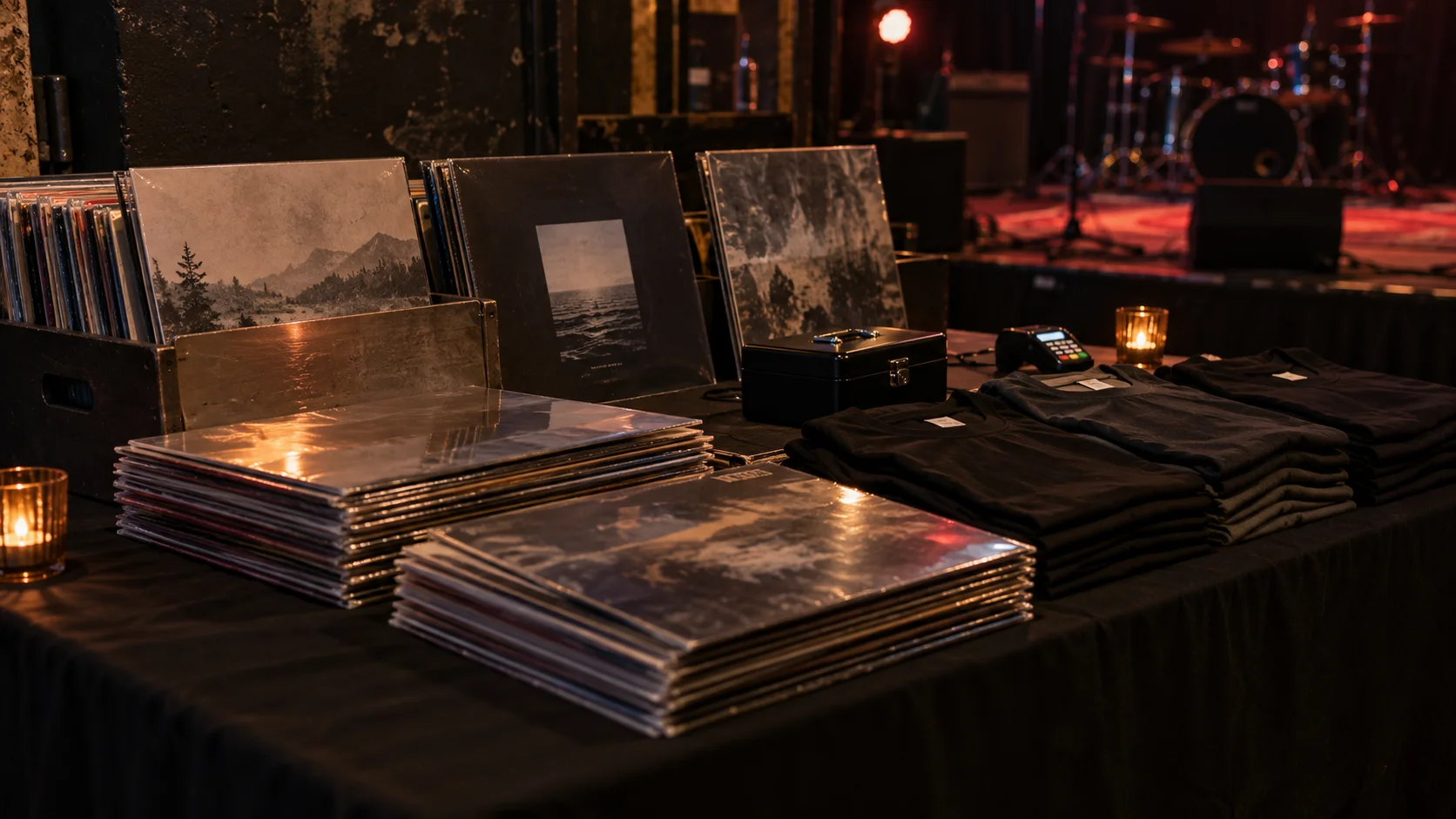
For most acts at the club level, the merch table is where the tour turns a profit or fails to. Venue cuts of 15 to 35 percent are common, with some artists reporting fees as high as 40 percent. Deal memos often set separate rates for soft goods like shirts and hard goods like vinyl, so a band that sells mostly records can face a different number than one selling apparel.
The Canadian rapper Rollie Pemberton, who records as Cadence Weapon, laid out the artist side of that formula in an op-ed for The Globe and Mail. Artists pay to have shirts and albums made and shipped, he wrote, yet "we're often forced to arbitrarily fork over anywhere between 15-35 per cent of our merch sales to venues." His verdict on that split was blunt: "The current arrangement is patently unfair."
In September 2023, Live Nation launched a program with Willie Nelson called On the Road Again. Its participating US clubs stopped taking a percentage of merch sales, so artists keep 100 percent of merch profits for each show. The clubs also began paying acts an extra $1,500 per show toward fuel and travel. KQED counted more than 75 Live Nation clubs in the United States and Canada in the program at launch. The company framed it as a cost problem, saying that "travel costs take one of the biggest bites out of artists' nightly profits."
Chief executive Michael Rapino said at the launch that the company wanted "to support artists at all levels on their touring journey, especially the developing artists in clubs." By March 2024, Live Nation said the program had paid tens of millions of dollars to more than 4,000 artists, with no set end date.
The National Independent Venue Association answered with a warning at the time, saying such measures can "squeeze out independent venues which provide the lifeblood of many artists on thin margins." On a routing sheet that mixes corporate clubs and independent rooms, merch terms can change from one night to the next, and the settlement sheet is where that difference shows up.
The Ticket Fee Is Now a Courtroom Number
The fee a fan pays at checkout has become a figure fixed by a jury. On April 15, 2026, a federal jury found for the plaintiff states on all claims in their antitrust case against Live Nation and Ticketmaster. According to a Paul, Weiss analysis of the verdict, jurors found residents of those states were overcharged by $1.72 per ticket for primary concert ticketing. Live Nation said the award covers tickets sold at 257 venues, about 20 percent of all tickets, over five years, and estimated single damages below $150 million before trebling.
The federal government had already walked away from that trial. In March, the Justice Department reached a settlement that included a $280 million fund contingent on state approval and a cap on ticketing service fees at 15 percent. New York and 26 other states, along with Washington, D.C., declined to sign. "The settlement recently announced with the U.S. Department of Justice fails to address the monopoly at the center of this case, and would benefit Live Nation at the expense of consumers. We cannot agree to it," New York Attorney General Letitia James said.
That settlement remains under federal court review under the Tunney Act. The states that won at trial have asked for remedies including the divestiture of Ticketmaster and the sale of Live Nation-owned amphitheaters, and the company continues to contest the verdict.
What to Settle Before the Routing Goes Out
The questions a developing act needs answered are the same ones a seasoned tour manager asks before a single date is confirmed. Which shows are guarantees, which are door deals, and where does the split point sit on any versus or promoter profit deal? Is the venue merch cut written into each memo, and does it treat vinyl differently from shirts? Are commissions calculated on the gross or on the net, and does the budget carry a real contingency line?
ScHoolboy Q is spending October in theaters that hold 2,000 to 4,000 people, with stops at Brooklyn Paramount and the Fillmore in Washington, behind a record from 2016. Our playbook on his career traced that run to a catalog built for repeat listening rather than a current campaign.
The deal memo, the merch sheet and the settlement are the three documents that decide whether that kind of run pays for itself. Da-Wai Hu takes over as Live Nation's general counsel on November 2, the same night Trippie Redd opens his tour at The Fillmore in Minneapolis.

Comments (0)
No comments yet — be the first to share your thoughts.
Leave a comment