

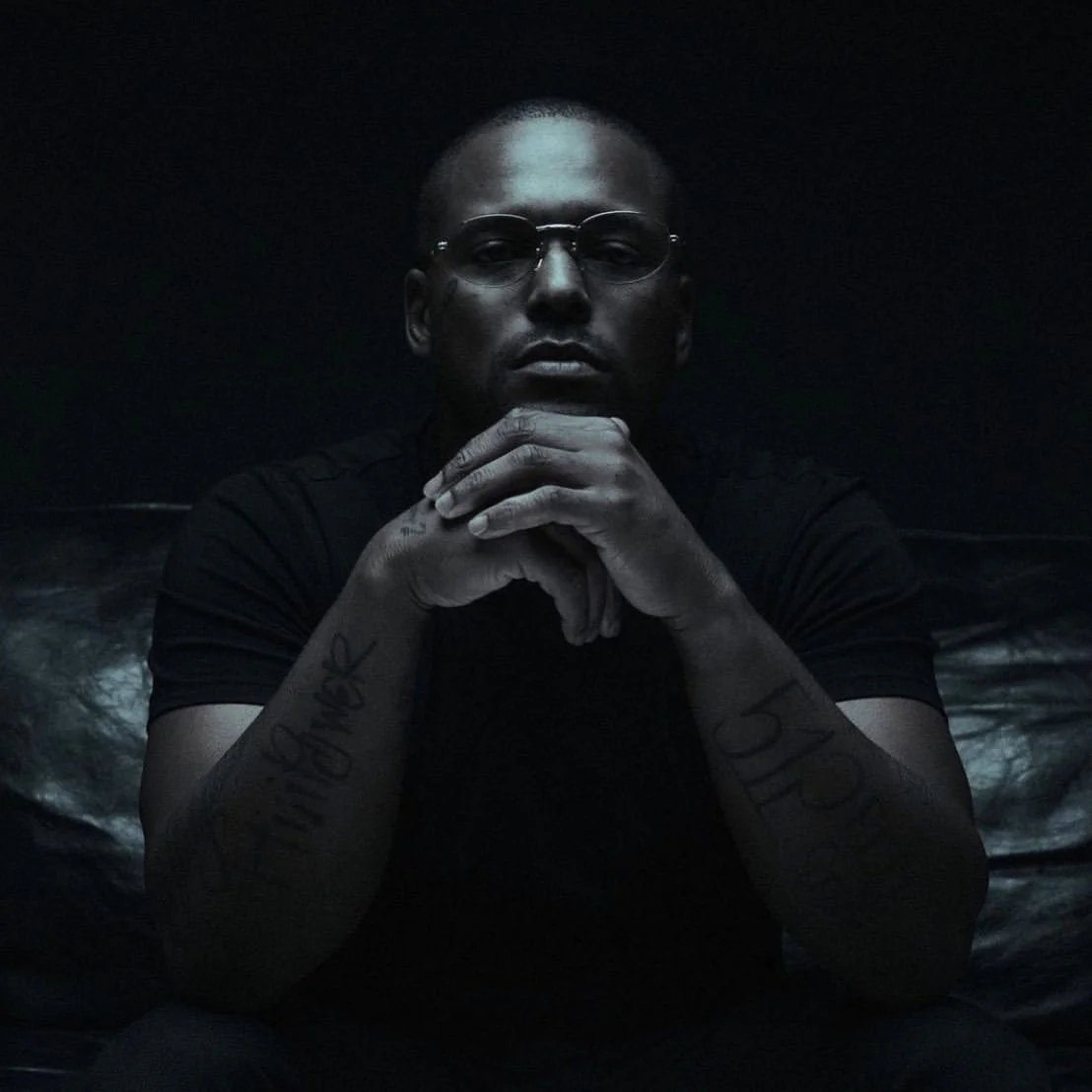
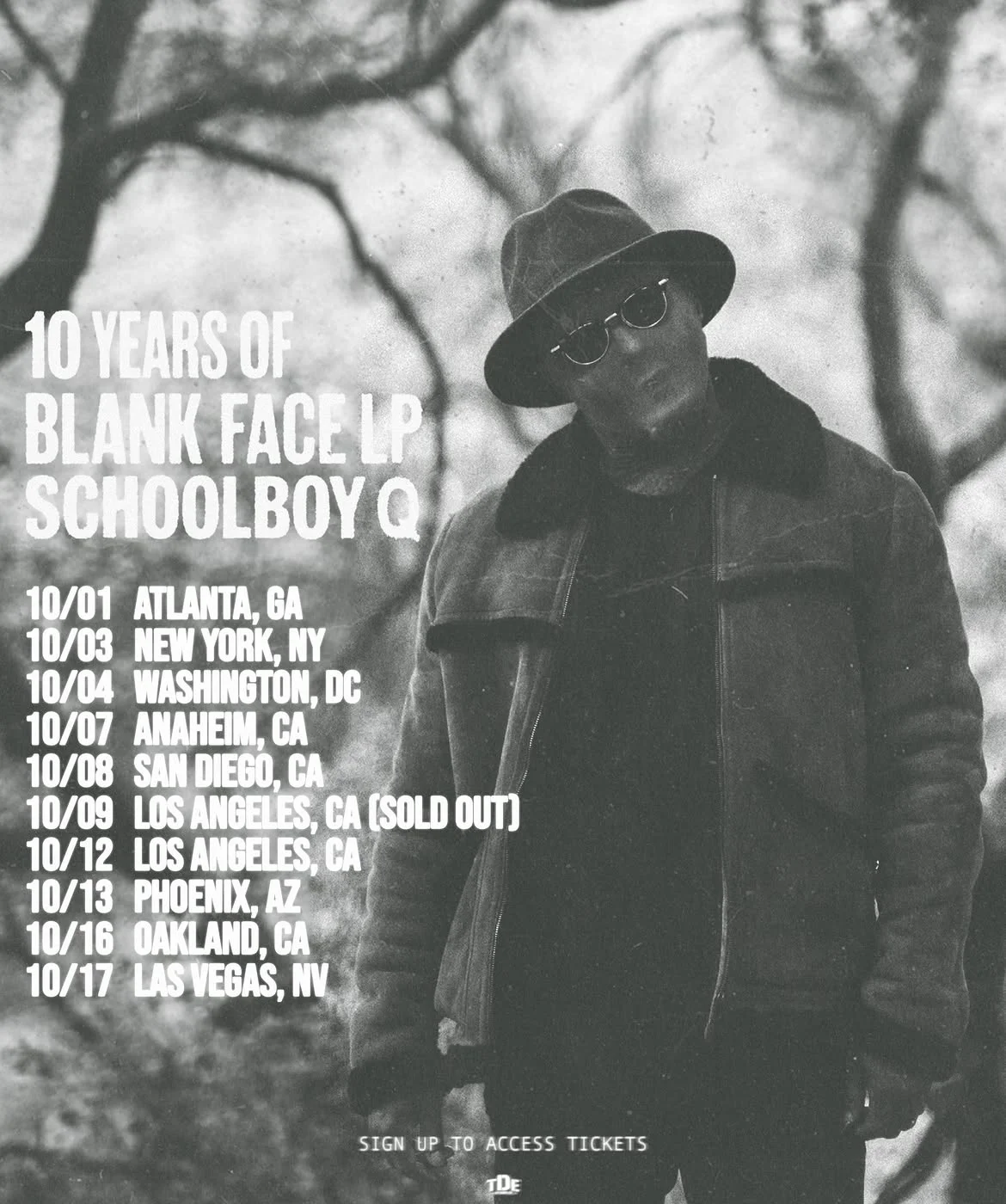
In October, ScHoolboy Q will play ten rooms behind an album that came out in 2016. No new single in rotation, no radio record, no album on shelves. The Hollywood Palladium filled fast enough that a second Los Angeles date got added at The Novo, and the trek runs through Brooklyn Paramount, the Fillmore in Washington, and the Fox in Oakland, per the dates published when the run was announced on August 3.
For an artist reading this, that is the outcome worth studying. Not the albums. The position. A working rapper in his late thirties who can fill two thousand seat rooms on demand, with no current release and no promotional cycle propping him up, has solved something most careers never solve.
What follows is the reverse engineering. Four decisions he made, what each one cost at the time, and which of them transfer to an artist without his particular circumstances.
Decision one: he treated the label relationship as infrastructure, not a stepping stone
He signed with Top Dawg Entertainment for Setbacks in 2011 and he is still there. Asked in February 2024 about leaving, his whole answer was two words: "Never leaving."
Fifteen years at one company is close to extinct in rap. The default artist career strategy now is to treat the first deal as a launchpad, build leverage, and renegotiate or exit within two album cycles. That instinct is not wrong, and it has made some artists rich.
What it does not buy is the thing Q spent his stability on. Between CrasH Talk in 2019 and Blue Lips in 2024, he released nothing. Five years. An artist mid-negotiation, or one album into a new deal, cannot go dark for five years. New A&R needs a return. New marketing needs a campaign. Somebody has to justify the advance internally, every quarter, to people who did not sign you.
The transferable version has nothing to do with loyalty as a virtue. When you evaluate a music label relationship, price the option to disappear. Ask what happens to your priority status if you deliver nothing for three years. Ask who at the company would still be there. If the honest answer is that a gap kills you, then you are not buying a partner, you are renting attention, and you should structure the rest of your career around that fact rather than pretending otherwise.
Decision two: he built inside a group that outclassed him
Q came up as one quarter of Black Hippy, alongside Kendrick Lamar, Jay Rock, and Ab-Soul. Everyone focuses on what that association did for his visibility. The more useful part is what it did to his standards.
Setbacks peaked at number 100 on the Billboard 200. Habits & Contradictions peaked at 111. By any commercial read, those were failures, and they are the two records his longest fans still argue for hardest. He was optimizing for a room, not a chart, and the room happened to contain someone about to become the most decorated rapper of the era.
Music peer group competition is the cheapest artist development available and almost nobody structures for it deliberately. The move is not to find famous friends. It is to place yourself where the weakest thing you make gets heard by three people who will tell you it is weak, before it reaches an audience. If the most talented person you regularly play music for is you, your ceiling is already set.
The caveat matters. Kendrick's ascent lifted the whole TDE roster in a way no one could have engineered. You cannot plan to be adjacent to a generational artist. You can plan to be the least skilled person in your circle, and that is the part that transfers.
Decision three: he let the hits pay for the album
Oxymoron debuted at number one in February 2014 with 139,000 first week units and earned a Best Rap Album nomination. It carried "Collard Greens," later certified four times platinum, and "Studio," certified three times.
Those songs are the reason a casual listener can name him. They are also, and this is the strategic point, not what the album is about. Underneath the radio records sits a project narrated by a man selling OxyContin to feed his daughter, with a nastiness that never made it to the singles.
That is a deliberate structure and it is worth naming plainly. A crossover single strategy works when the accessible record buys distribution for the difficult record sitting next to it. It fails when the accessible record becomes the whole project, which is what happens to most artists who catch one. They chase the sound that worked, the next album is entirely that sound, and three years later they are a legacy act for a song they have grown to resent.
Sequence it the way he did. Make the thing you actually want to make. Then find, or commission, the two songs that will drag people to it. Do not let the two songs become the record.
Decision four: he took the chart hit instead of fixing it
Blue Lips came out March 1, 2024 and peaked at number 13, his weakest major label showing since the independent era. It also drew the strongest reviews of his career. Beats change under him mid verse. It is closer in structure to a jazz record than a rap album, and it is not trying to be liked.
He did not follow it with a remedial radio single. He did not re-release it with features. Two years later he is announcing a theater tour and a new album, and the critical acclaim that record bought is still working for him.
Most artists in that position spend the next eighteen months trying to undo the number. That instinct is expensive twice over: it burns a cycle, and it tells your audience that the numbers were the point. Creative control in music deals is worth very little if you exercise it once and then flinch at the first bad chart week.
The honest counterweight: he could absorb a number 13 because he already had two platinum singles and a Gold album behind him. An artist without that cushion may not survive the same choice. What transfers is the decision framework, not the risk tolerance. Decide in advance what a disappointing week actually costs you, and whether the record was worth it, before the week arrives and panic does the deciding.
What the October tour is actually proving
Ten theaters, two to four thousand capacity, no current single. Blank Face LP turned ten in July, and the tour treats it as a body of work rather than a source of tracks.
This is the compounding payoff, and it is the part artists underweight most. Building a music catalog is not about volume, it is about making at least one record deep enough that people are still living inside it a decade later. Blank Face LP runs seventy two minutes at a tempo that refuses to accommodate anyone. It was not built for playlists and it did not need them. Ten years on, it fills rooms.
Compare that to the alternative artist development timeline, where an artist releases constantly, feeds the algorithm, accumulates streams, and arrives at year ten with a large stream count and no room that will sell out. Our earlier reporting on why millions of plays still do not pay most artists' bills covers the financial half of that trap. The touring half is the same problem wearing different clothes: streams are rented attention, and a catalog people are emotionally attached to is owned attention.
Touring without a hit single is the clearest test of which one you have built. If your show cannot sell without a current release pushing it, everything you have is rented.
What to copy, and what not to
Copy the sequencing: build in a room that raises your floor, use accessible records to fund inaccessible ones, and make at least one project deep enough to outlive its cycle. Copy the willingness to underperform commercially on purpose, with the cost calculated in advance rather than absorbed in a panic.
Do not copy the assumption that a label will fund a five-year silence. His did, for reasons specific to that roster in that decade. Do not assume proximity to a generational talent is a plan. And be careful with the ownership lesson: TDE's 2012 joint venture with Interscope shaped what he could and could not do, and an artist looking at long term artist brand building from a genuinely independent position is running a different math problem entirely. The Nipsey Hussle model, which we mapped in our guide to the whole Marathon, gets to the same durability through ownership rather than through institutional patience.
Then there is Thank Que. He announced it on July 9 with a post that ran, in part, "Wrapping up this 12-song album called Thank Que." Twelve songs. No date, no features, no producers named, and no rollout apparatus attached.
An artist with a functioning catalog can announce an album with one sentence and let the tour do the marketing. That is not a flex. It is the return on fifteen years of decisions, most of which looked like underperformance at the time.

Comments (0)
No comments yet — be the first to share your thoughts.
Leave a comment