

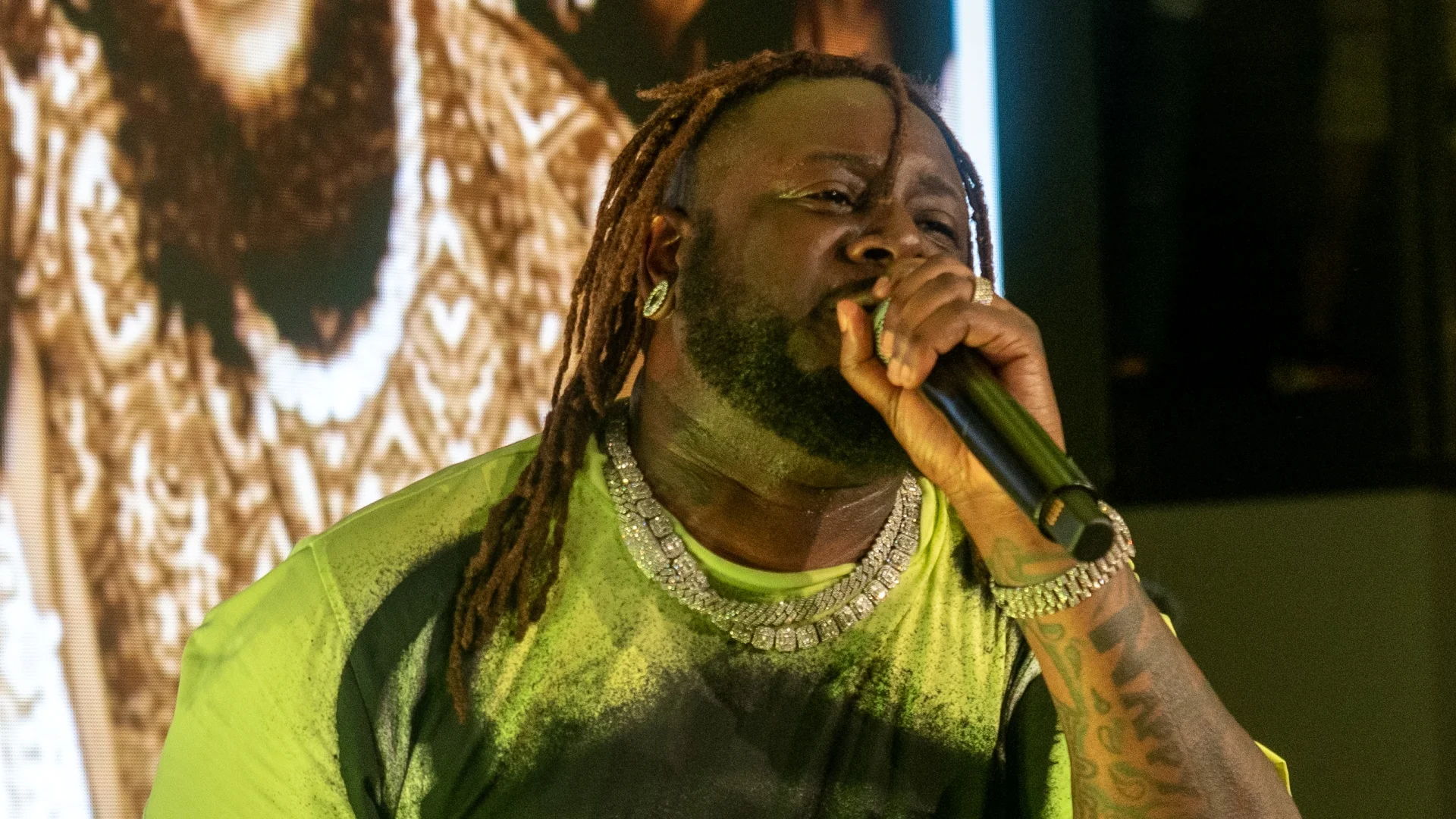
T-Pain used a recent Twitch livestream to explain why he sold the asset artists are often encouraged to protect above all else: his music catalog. Speaking directly to fans rather than through a press release or lawyer, the Grammy-winning artist described the decision as a practical response to an uncertain music economy and a long-term plan for his family.
The transaction itself was reported in early 2025, when HarbourView Equity Partners acquired T-Pain’s publishing catalog and select master recordings in a deal valued by multiple reports at roughly $100 million. His recent comments add important context. Rather than presenting the sale as a creative retreat, T-Pain framed it as a calculated decision about financial security, control and the needs of his three children.
"I’m not leaving my kids’ future in the hands of the music industry at f---in’ all," states T-Pain. "I know exactly what I want. I know exactly how much I want right now. I know exactly what I would need to live out the rest of my life, and if I get that and I’m satisfied with that and I’m content, I’m not looking for more."
Pain’s explanation was direct: he preferred a substantial, guaranteed payment to an unpredictable stream of future streaming royalties. He said the music catalog sale was not primarily a bet on the next decade of music consumption. It was a way to convert uncertain future income into money he could manage, invest and pass on.
That distinction is central to understanding catalog deals. Artists are not simply selling songs; they are weighing future earnings against immediate financial certainty. A catalog may generate revenue for decades, but that income can fluctuate with streaming rates, licensing demand, copyright disputes, platform policies and changes in public taste. For T-Pain, the appeal was knowing the value of the deal now rather than relying on variables he could not control.
T-Pain described the industry’s economic shift in terms that are easy to understand. A physical song purchase once generated a relatively clear payment, often close to a dollar for the consumer. Under streaming, each play typically produces only a small fraction of a cent, divided among rights holders and intermediaries. Artists also have limited influence over how platforms set rates or how listeners consume music.
"Let me tell you something," began T-Pain, 41. "When streaming started, nobody told us, or nobody came to any artist and said, ‘Hey, we’re about to put your s--- on streaming platforms. How much do you want your music to cost?’ Suddenly, out of nowhere and without anybody’s consent, all of our music went from a dollar a song to 0.003 cents per play. Nobody asked us s---."
That does not mean every catalog sale is automatically the right choice. It does show why revenue scale matters. As HitsCulture has explained, millions of plays still may not provide a sustainable income for most artists. Before considering a sale, rights holders should review their historical earnings, publishing splits, master ownership, tax obligations and the likely value of future licensing opportunities.
T-Pain appears to have made that calculation and chosen certainty. If a buyer offers a large lump sum for decades of publishing and recording income, an artist can use that capital to build investments, fund education, establish trusts or create other forms of generational wealth. The trade-off is that the artist gives up some or all of the future revenue attached to those rights.
Ownership of music rights is not the same as ownership of an artist’s identity or creative legacy. Selling music publishing rights and selected master recordings does not erase T-Pain’s role in creating the music that shaped late-2000s popular culture. Fans will continue to associate songs such as “Buy U a Drank” and the Epiphany era with him.
What changes is the financial and licensing authority attached to the rights. The catalog owner may control how songs are licensed for advertising, film, television and other commercial uses, subject to the terms of the agreement and applicable rights. That means T-Pain exchanged some future decision-making power for immediate financial security.
His Twitch explanation offers a useful lesson for other artists: catalog ownership is neither automatically sacred nor automatically disposable. The right choice depends on cash-flow needs, family goals, risk tolerance, contract terms and the ability to manage long-term income. T-Pain’s decision matters because he showed the reasoning behind the transaction, and made clear that selling the rights to the revenue does not mean surrendering the story behind the songs.
T-Pain’s catalog sale reflects a broader shift in the music business, not an isolated transaction. Investment firms increasingly view established music rights as durable, income-producing assets that can continue generating royalties even when financial markets are volatile. That demand helps explain why buyers are willing to issue nine-figure checks for songs with proven audiences and long commercial lives.
The catalog sales boom has attracted major capital from companies including HarbourView, Primary Wave, and private equity firms. These buyers compete for rights to recordings and compositions that listeners already know, reducing some of the uncertainty involved in investing in new music. The broader market is examined in Axios reporting on the 2026 surge, while HarbourView’s announcement confirmed its acquisition involving T-Pain’s catalog.
The central contradiction is difficult to miss. The predictable income that makes music rights attractive to investment funds is the same financial security many artists were told streaming would eventually provide. Funds are betting on the long-term value of songs; artists, in many cases, are still waiting for streaming revenue to reach the same level of reliability. For a clearer explanation of how those payments move through the industry, see our guide to how royalties actually work in 2026.
One detail helps explain why T-Pain was willing to sell. He has said that his work on Twitch, the live-streaming platform for gaming, conversation, and entertainment, has earned more than his music in recent years. That is a striking development for a hitmaker whose songs helped define an era. It does not diminish the value of those records; instead, it highlights the limits of the streaming economy, where enormous audience numbers do not always translate into dependable artist income.
Twitch also gives T-Pain a direct relationship with his audience. He can communicate with fans in real time, control his schedule, and build revenue without relying entirely on a label’s promotional system or streaming platforms’ payment structures. That independence changes the financial logic of a catalog sale. Rather than waiting for uncertain royalties over decades, an artist can convert a long-term asset into immediate capital while continuing to develop other income streams.
For artists considering a similar decision, the practical questions are straightforward: Which rights are included? Does the deal cover recordings, publishing, or both? How are future royalties calculated, and what control remains over licensing, sampling, and commercial use? Independent legal and financial advice is essential, because the headline price rarely tells the full story of a catalog transaction.
A sale can be financially rational and still carry cultural consequences. When investment firms accumulate songs that shaped a generation, particularly influential work from Black artists, decisions about licensing, marketing, and preservation may move farther from the musicians who created it and the communities that gave it meaning. That concern does not invalidate an artist’s choice, but it should remain part of the public conversation about music ownership.
The strongest version of the catalog market is one in which artists enter negotiations with accurate royalty statements, experienced attorneys, and a clear understanding of what they are transferring. Ownership is meaningful only when it is informed. Artists should review contract terms, audit payment histories, assess tax implications, and compare the proposed lump sum with realistic future earnings before signing.
What T-Pain’s catalog sale means for artists
The most useful lesson is not that every artist should sell. T-Pain appears to have evaluated an uncertain income stream, considered his family’s financial needs, and chosen a guaranteed return on his own terms. That is artist ownership in a broader sense: not simply retaining rights forever, but having the knowledge and negotiating power to decide whether keeping or selling them best serves the artist’s goals.
Younger musicians should focus on three priorities: know exactly which rights they control, understand how much those rights generate, and establish a realistic value before entering negotiations. Holding a catalog can create long-term income, but selling can provide liquidity, reduce financial uncertainty, and fund new projects. Neither path is automatically more respectable. The essential safeguard is making the decision with complete information rather than industry pressure, sentiment, or promises about future streaming growth.

Comments (0)
No comments yet — be the first to share your thoughts.
Leave a comment