

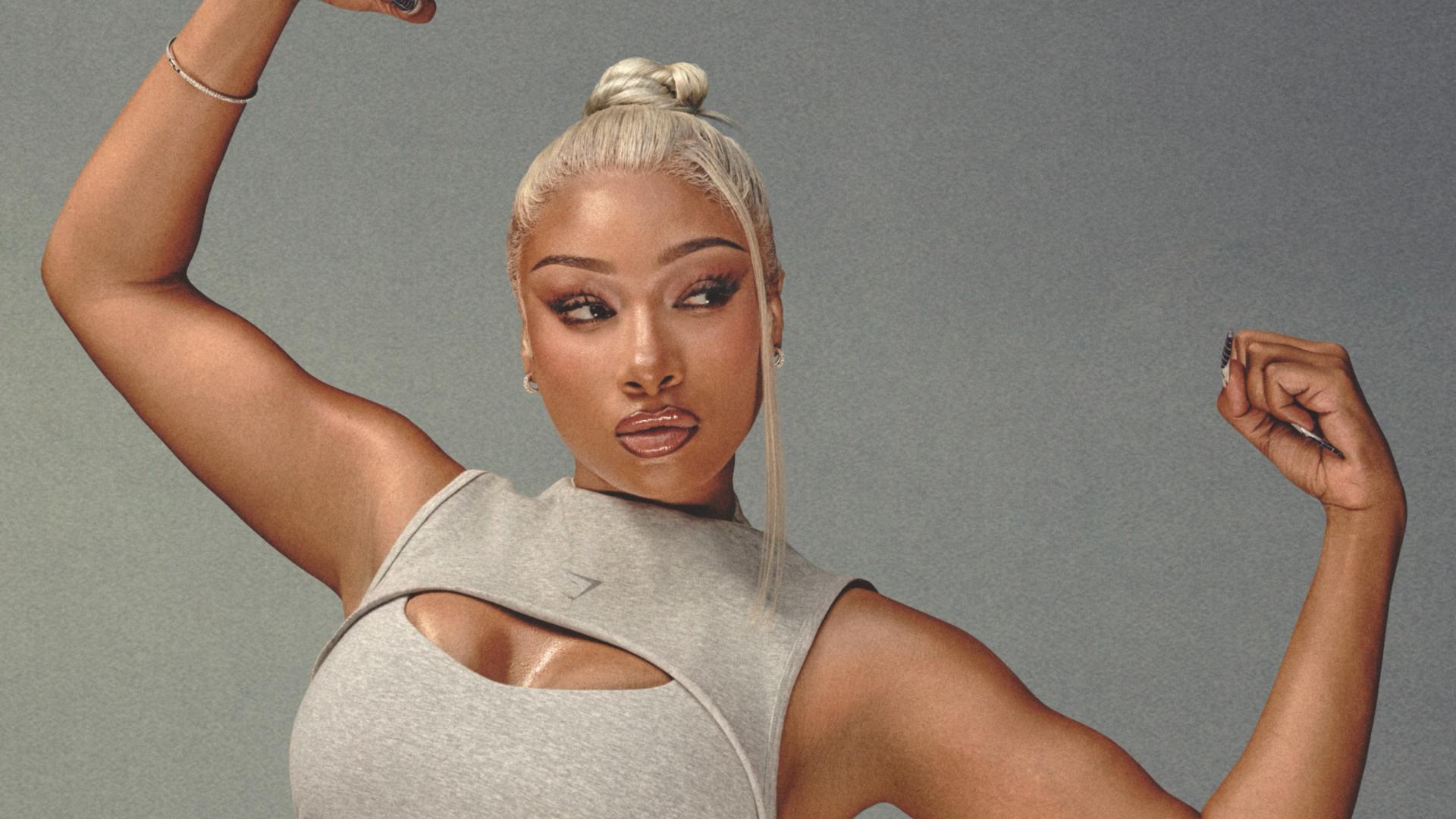
The announcement that landed on Friday (Aug 14) ran three paragraphs and one structural fact. Megan Thee Stallion had signed a distribution partnership with Interscope Records, and the Universal Music Group label would provide global distribution and strategic support for her upcoming releases. Her masters and her publishing would stay with her and her company, Hot Girl Productions. "I've always wanted to create music on my terms while building a legacy that extends beyond the industry," she said in the release. Roc Nation chief executive Desiree Perez added that "Megan has always approached her career with a focus on ownership, creative freedom and long-term impact."
Interscope is her third recorded-music home in eight years. She signed with the Houston label 1501 Certified Entertainment in 2018, sued it in 2020 over a contract she called unconscionable, and settled confidentially on October 19, 2023. In February 2024 she signed a distribution agreement with Warner Music Group that ran through Hot Girl Productions, and in August 2026 she moved that same company to Interscope. We reported the switch the week it happened in Megan Thee Stallion Switched Labels on Friday and Gave Up Nothing.
That three-step path is the most useful case study a working artist can study right now, because it walks through every major deal shape in a single career. A distribution deal pays a company to deliver and sell recordings the artist owns. A label services deal adds marketing muscle for a fee or a commission. A traditional record deal trades the copyright for an advance and the label's money. This guide explains what each one buys, what each one bills back, and which clauses decide whether ownership turns into leverage or into a larger invoice.
Three Deals That Read the Same on a Press Release
Curve, a royalty accounting platform that independent labels and distributors use to produce artist statements, publishes a plain-language breakdown in its Royalties 101 lesson on label deals. It describes distribution deals as covering digital or physical distribution and sometimes limited marketing. The distributor either charges a flat fee per recording and passes on 100 percent of the income or takes a commission, and "the artist keeps full ownership of their copyrights."
The same lesson defines a label services deal as an arrangement in which the artist hires a business for label-style work "in return for a fee or commission whilst retaining ownership of their copyright." The services are narrower than a full label's, and Curve notes the company is "less likely to provide an advance or cover upfront recording costs." That last clause is where most independent artists feel the difference first, at the moment the studio bill or the video budget arrives.
A traditional record deal runs the other way. The artist assigns the copyright to the label, at least for a period, and the label funds advances, recording, marketing and staff. Curve puts the economics plainly. "The label will share an agreed percentage of the recorded music earnings with the artist, though only after the advances and costs are partly or fully recouped," and "in a classic label agreement, the label will keep the majority of the revenue."
Megan’s Interscope partnership represents the top tier of distribution deals. For an artist of her stature, a major label’s distribution division delivers radio promotion, retail access, playlist pitching, and global priority that self-service uploaders cannot match. Yet the underlying framework remains exactly as Curve describes: the label earns a fee for its services, while the artist retains full ownership of the copyright.
The Ownership Line and What Crossing It Costs
The fights with 1501 show why the ownership line matters long after the signing photo. One of the disputes, filed in February 2022, turned on whether her 2021 release Something for Thee Hotties counted as an album under her contract. That question carries weight because record deals are built on delivery commitments the label gets to define. 1501 countersued, she filed a separate claim in August 2022 seeking more than $1 million in damages, and when the settlement came in October 2023, neither side disclosed whether money changed hands.
Under a distribution agreement that argument has nowhere to happen. Hot Girl Productions decides what an album is, when it ships and how many tracks it carries, and the distributor's job is to put it in stores. The trade is that the artist now owns the decisions a label used to make and pays for them.
Where the money moves when you keep the masters
Revenue under a distribution deal flows in a set order. Streaming services and stores pay the distributor, the distributor deducts its fee or commission, and the remainder goes to the artist's company, which then pays its own producers, featured artists, managers and staff. Nothing about that chain covers recording, mixing, mastering, videos, photo shoots, ad spend or a tour support budget, so every one of those lines is the artist's to fund unless the contract says otherwise.
Distributors that compete for established artists often offer an advance against future distribution income. Read that money the way a label advance is read. It is recouped from the artist's share before any further payment arrives, and if the contract lets the distributor recoup it across several releases, one slow record can hold back earnings from a strong one. The songwriting side runs on its own deals and its own fees, which we break down in our guide to publishing administration deals.
Who pays for the campaign
Label services companies sell marketing as a menu or as a percentage. When marketing is advanced by the services company, the contract should say whether that spend is recoupable, from which income, and whether the artist approves the budget before it is spent. A services fee that looks lean on paper can sit beside a recoupable marketing line large enough to absorb a release's first year of income, so the two numbers have to be read together.
Term, Retention and the Catalog That Has to Move With You
Every distribution agreement has a term, and most give the distributor a window after the term ends to keep distributing the recordings released during it. That window, usually called the retention period, decides how quickly an artist can consolidate a catalog with a new partner. Megan's own move shows the stakes. Her 2024 album Megan came out during the Warner agreement, and neither the August announcement nor any statement since has said whether Warner still handles it.
Three clauses settle the question in any contract. The term clause sets how long new releases must go through the distributor, and whether that term is measured in years or in a number of albums. The retention clause sets how long already-released recordings stay put after the term. The exit clause sets what an artist owes, often the unrecouped balance of any advance, to leave early or take the catalog with them.
Your Distributor Sees Your Data
The quietest clause in a distribution contract governs information. A distributor receives every sales report, every territory breakdown and every release date before the public does, which makes it one of the best-informed companies in an artist's business life.
European regulators treated that as a competition problem this year. On February 13, 2026, the European Commission approved Universal Music Group's $775 million purchase of Downtown Music Holdings, whose businesses include CD Baby, the FUGA distribution platform, Downtown Artist and Label Services, Downtown Music Publishing and Songtrust. The approval came with a condition. Universal had to sell Curve, because the Commission's main concern was that Universal could reach commercially sensitive data stored and processed by Curve on behalf of rival labels. Announcing the decision, Commissioner Valdis Dombrovskis said "a large number of companies will continue to offer their distribution services."
In a June 8 statement released by IMPALA, the European independent label association, Universal agreed to sell Curve to the digital rights agency Merlin and to Matt Spetzler's Jamen Capital. Merlin chief executive Charlie Lexton said "Curve provides an essential service to independent music businesses around the world." The sale closed in August.
An independent artist does not need a competition regulator to apply the same logic. The contract should say what data the distributor collects, what it can do with that data beyond paying the artist, whether the artist gets the same reports in the same detail, and whether the artist can audit the accounting. Owning the fan relationship outright is a separate tool, and our guide to J. Cole's direct-to-fan pre-order shows how artists keep that data on their own side of the ledger.
Before You Sign Any of the Three
Start with ownership, because everything else follows from it. If the copyright transfers, the deal is a record deal regardless of what the cover page calls it, and the questions become royalty rate, recoupment and reversion. If the copyright stays, the questions shift to fees, term, retention, recoupable costs and data, and the artist should price each one against the work the company is promising to do.
Next, run concrete numbers. Model a release using current streaming data rather than optimistic pitch-deck projections, deducting distribution fees and recoupable expenses to see the true payout for the creators. If an advance is involved, use that same model to calculate when it recoups, and determine how an unearned balance affects your next release.
Megan's next album, Act III, has no release date, and when it arrives it will be the first full project to run through the Interscope partnership. Every stream of it will pay Interscope a distribution fee, and every master on it will belong to Hot Girl Productions.
Comments (0)
No comments yet — be the first to share your thoughts.
Leave a comment