

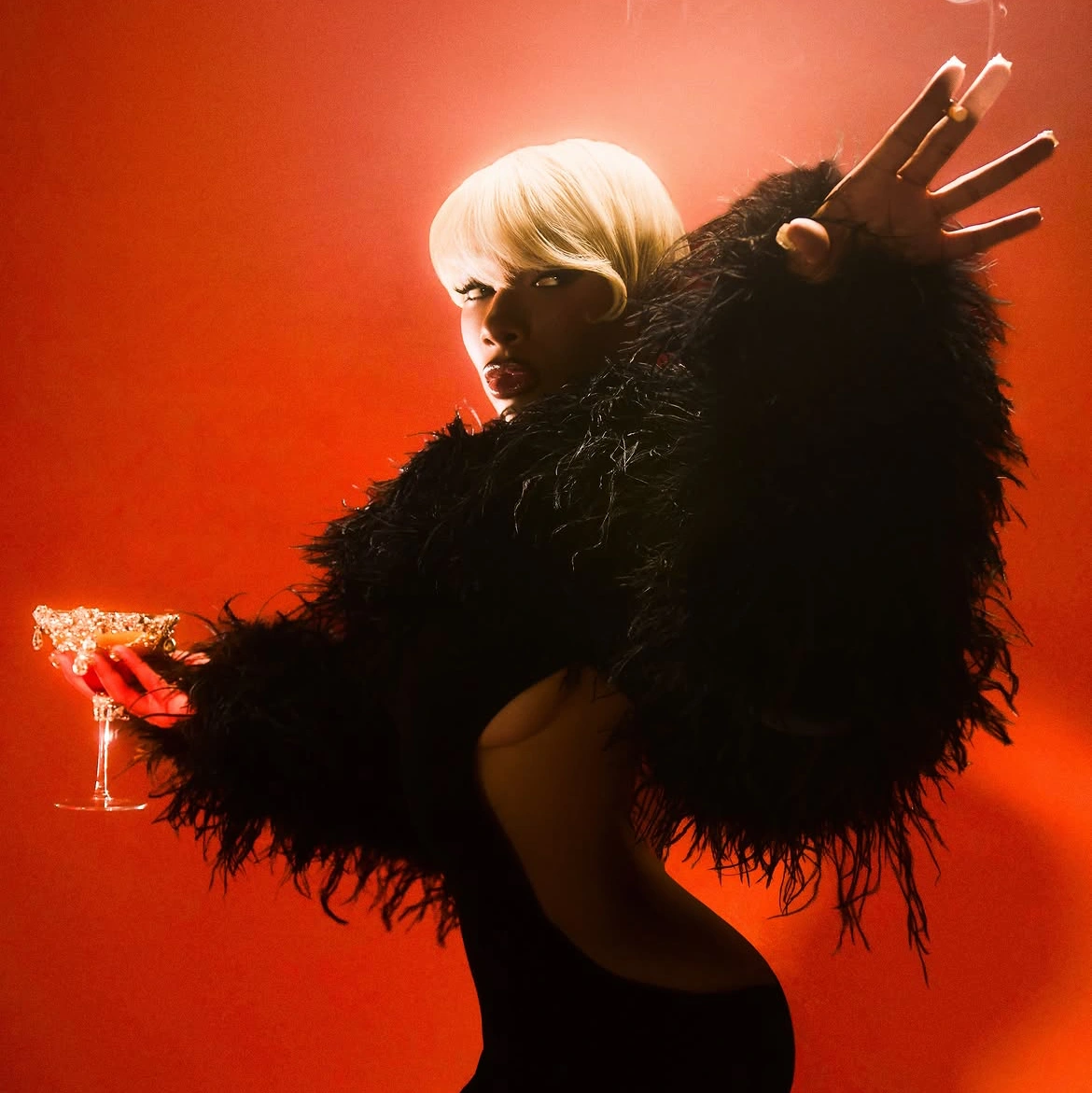
Megan Thee Stallion switched major labels on Friday and did not give up a thing.
The announcement landed August 14: Interscope Records, part of the Interscope Capitol Labels Group under Universal, is partnering with Hot Girl Productions, the imprint Megan owns. Interscope handles global distribution and marketing muscle. Megan keeps her masters. She keeps her publishing. Roc Nation, run by Desiree Perez, continues to manage her. The next album is titled Act III, and there is no release date yet.
Read the shape of that before the names. This is a distribution-only deal, and it is now the third consecutive arrangement of her career built the same way.
What she is actually buying
A traditional record deal is a loan with a costume on. The label fronts the money, recoups it out of your royalties, and holds the copyrights in the recordings at the end of it, sometimes forever. What Interscope is selling here is narrower and more expensive per unit: pipes, playlist relationships, radio, retail, international priority. The label takes a distribution fee. The artist ownership of masters stays where it started.
Megan said the quiet part in the announcement.
"Owning my masters & publishing and maintaining my independence as an artist is always my priority! Everything I’ve built has been about trusting my vision, owning my power, and never putting a ceiling on how far I can go."
Perez framed it as continuity rather than conversion.
"Megan has always approached her career with a focus on ownership."
And Steve Berman, vice chairman of Interscope Capitol, offered the label's half of the handshake.
"She has consistently redefined what it means to be a global superstar."
Berman's line is a compliment. It is also, structurally, a concession. The vice chairman of one of the largest label groups on earth is publicly welcoming an artist whose music publishing rights and recordings the company will never own. Fifteen years ago that press release does not exist.
The receipts on how she got here
Megan's first two albums came through 1501 Certified Entertainment with 300 Entertainment, then a Warner subsidiary. Her disputes with 1501 were long, loud, and settled in 2023, with both sides described as amicably parting ways. In February 2024 she announced a deal with Warner Music Group, also structured through Hot Girl Productions, also with full ownership of masters and publishing retained.
Nobody involved has explained what happened to that Warner arrangement. Warner is not mentioned in the Interscope announcement at all. We are not going to invent a reason, and you should be skeptical of anyone who does this week. What is verifiable is the pattern: she has now negotiated ownership-retained terms with two of the three majors, and the second one did not require her to give back what the first one let her keep.
That is the part that transfers. Independent artist leverage is not a personality trait. It is what happens when a catalog performs well enough that distribution becomes the only thing you still need to rent.
Three ownership stories reshaped the music business this week
Two days before the Interscope announcement, Colorado’s Artist Company Act took effect on August 12. The law, SB26-133, creates a limited liability company structure designed for creative businesses. Artist members must control at least 51 percent of the voting securities, while outside investors may hold economic rights and receive payments without gaining voting power. Any decision that materially affects the ownership, licensing, or transfer of the artistic work requires approval from a majority of the artist members’ voting interests.
The structure applies to music, film, writing, visual art, and digital work. Existing LLCs can also convert into the new form. That makes the law more than a technical corporate change. It establishes a framework in which artists can raise capital without automatically surrendering control of their work.
Viewed alongside Megan’s deal, the timing gives the week a broader significance. One superstar used a decade of commercial leverage to negotiate catalog control at the top of the market. A state legislature then created a corporate structure that extends the same principle to artists who may not yet have that leverage: investors can put money in, but they do not get the deciding votes.
News coverage has not settled on a single name for the structure. Different outlets have used A-Company, A-Corp, and ALLC. Until the terminology becomes consistent, the bill number, SB26-133, is the clearest reference.
That same Friday, another ownership dispute ended. A trademark case between Ronald Isley and the estate of his late brother Rudolph, filed in March 2023 in the Northern District of Illinois, was dismissed with prejudice. The result left Ronald as the sole owner of the Isley Brothers mark he registered in 2022. Rudolph died in October 2023 at age 84, and his estate continued the litigation. The terms remain confidential, but the outcome closed a dispute rooted in a 70-year partnership.
Three ownership stories unfolded within 72 hours, each at a different level of the entertainment business. Together, they point to a broader shift in who controls creative assets, how capital enters the business, and what artists can preserve for themselves.
Why creative ownership is becoming more important
The economics of the music industry no longer support the old trade as clearly as they once did. When a label was the only practical path to a pressing plant, radio promotion, video production, and national distribution, giving up master ownership could seem like the price of entry. Today, artists can buy distribution at several price points, reach audiences directly, and build marketing systems around their own platforms. Their catalogs can also become more valuable over time.
That makes it riskier to sell ownership before an artist knows what the work may ultimately be worth. The issue is not simply whether a deal generates a large advance. It is whether the artist retains the authority to license, transfer, protect, and benefit from the asset over decades.
We saw a related dynamic in the Nipsey Hussle estate this month, where ownership determined whether an estate could act rather than merely receive statements. The circumstances were different, but the lesson was similar: control gives an estate options, while passive participation limits them. Our analysis of the ScHoolboy Q career playbook shows another route to durability through institutional patience within a single label. Both models can work. Ownership determines who makes the final decision.
What artists should learn from these deals
The first lesson is sequencing. Megan did not begin her career with a major label partnership that allowed her to retain every asset. She entered an agreement that she later spent years litigating. The ownership terms associated with her current position came after streaming success, touring, awards, and the negotiating leverage those achievements created.
That matters because “just do a distribution deal” is not a universal strategy. Distribution agreements may preserve more upside, but they can also leave an artist responsible for marketing, staffing, accounting, release management, and campaign expenses. Without sufficient revenue and operational capacity, apparent independence can become a costly set of obligations.
Artists should also avoid assuming that favorable record deal terms are now standard. They are not. These arrangements are generally available to artists with an established audience, proven commercial performance, and the resources to finance campaigns. Colorado’s law is significant because it addresses the governance problem for creators who may need outside capital but cannot negotiate from comparable strength.
The portable principle is straightforward: separate the services an artist needs from the assets the artist owns. If distribution, marketing, or administration can be purchased without transferring the underlying rights, ownership should remain separate whenever the artist can responsibly fund that arrangement. From an artist-owned imprint at Interscope to a purpose-built LLC in Colorado, each example reflects the same strategic choice.
What to watch next
Act III has no announced release date. Megan’s team has described it as a reintroduction of her Tina Snow persona, with collaborations planned. The first meaningful test of the Interscope arrangement will not be its opening-week performance alone. It will be whether an artist who controls her masters, publishing, and imprint receives comparable distribution, promotion, and retail visibility to an artist whose copyrights are owned by the label.
Labels have a clear reason to support artist-owned structures when they can earn distribution and service fees without taking full ownership risk. However, the economics of collecting fees from a successful release differ from the economics of owning the master outright. That incentive is not equal on both sides.
For artists and investors, the practical advice is to examine the rollout rather than the announcement. Track who funds the campaign, who controls licensing, how expenses are recouped, and which party owns the rights after release. Those details will show whether this is a durable ownership model or simply a new label arrangement with updated language.


Comments (0)
No comments yet — be the first to share your thoughts.
Leave a comment