

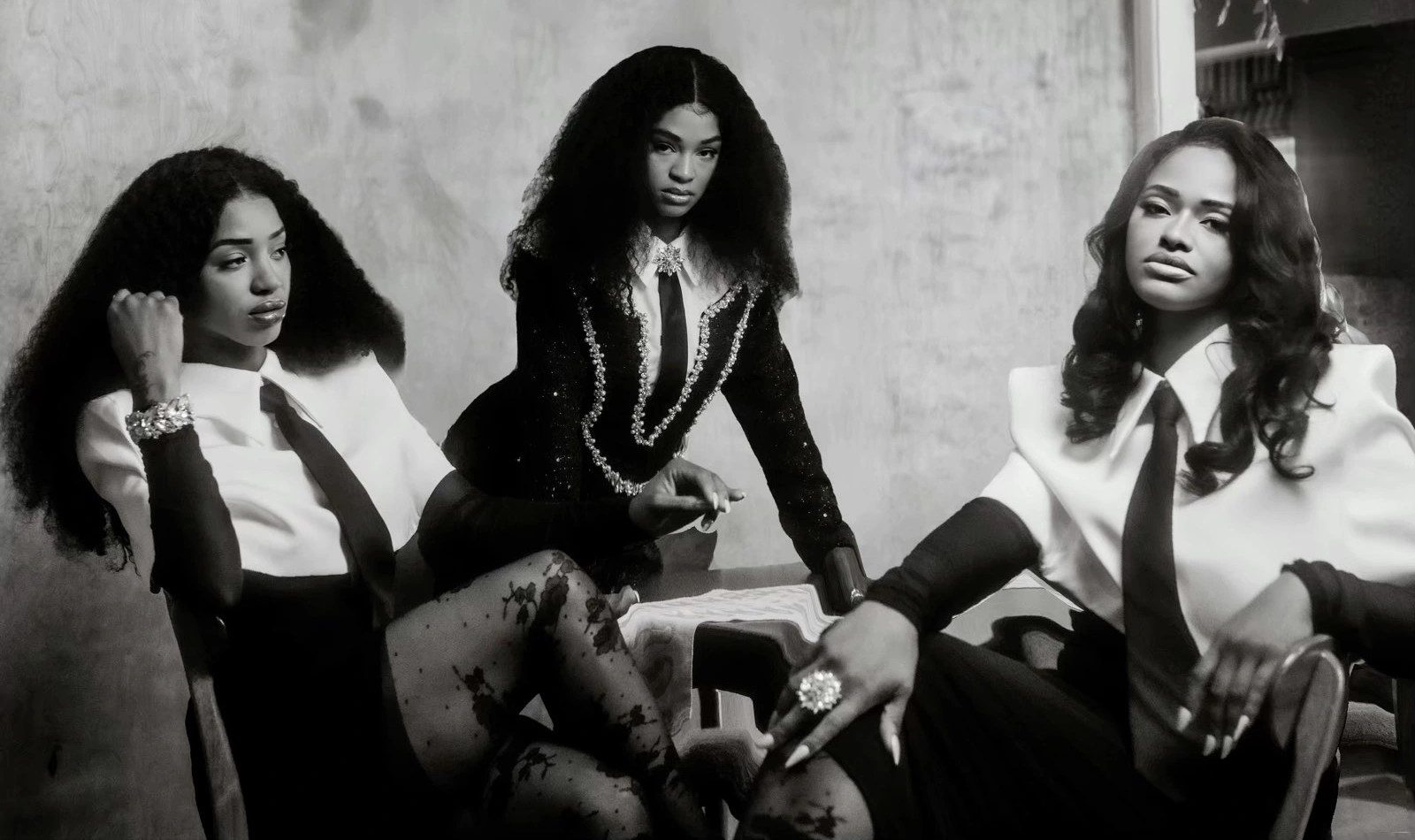
The first song on The Womack Sisters self-titled album is called "Chauffeur," and it is not a metaphor. Kucha, Zeimani and BG Womack wrote it out of the years they spent picking up strangers in Los Angeles for money. That is a strange line item on the resume of three women whose grandfather is Sam Cooke and whose uncle was Bobby Womack. Their debut effort, eleven tracks produced by Gabriel Roth, arrived Aug. 14 on Daptone Records.
The lineage runs through their parents. Cecil Womack, Bobby's brother, married Sam Cooke's daughter Linda. As Womack & Womack they cut "Teardrops" and a run of records that made them one of soul's most quietly influential husband-and-wife acts, before renaming themselves Zekkariyas & Zeriiya. The sisters and their four siblings grew up onstage behind them, in London, Amsterdam, Paris, Vienna, Zurich, Sydney, Nairobi, Bangkok, the Bahamas and West Virginia, among other stops. Nowhere stayed home for long.
They did not take the family name as a group until after their father died. What followed was not a coronation. They self-financed and self-released a debut single in 2016, then spent six more years assembling an EP. Legacy landed in 2022 and leaned contemporary, closer to the R&B on the radio than to anything in the Daptone catalog, though it did include a version of Cooke's "A Change Is Gonna Come."
The turn came through Roth, the Daptone co-founder whose Brooklyn operation has spent two decades proving that analog soul is a working method rather than a costume. Under his production, the sisters sound like they finally stopped negotiating with the present. The arrangements are built from live players, tape warmth and horn charts that leave space rather than filling it, and each sister gets her own room. Kucha takes "I Am Your Season" tenderly, declining every opportunity to oversing it. Zeimani handles "Didn't Mean Much to Me" with a rhythmic delivery that keeps its hurt at arm's length.
Their inheritance is really two inheritances, and they pull in different directions. Cooke moved gospel's intensity into pop without sanding off its feeling, and made refinement sound like transcendence. Bobby Womack made confession sound like the only honorable option available, ragged and funny and wounded, sometimes inside a single verse. Vintage soul music has always been an argument between those poles, between polish and mess, and the sisters' debut does not resolve it so much as live inside it.
What keeps the record from becoming a tribute act is that the writing stays local to their own lives. "If I Let You" is about the cost of moving too fast. "It reminds me of a time when I rushed into love because of attraction," Kucha said of the song, framing it as an argument for asking more questions. The album opens on the rideshare years and closes with "My Sisters and Me," a ballad that carries a faint trace of their grandfather's "What a Wonderful World." Its last refrain settles on the one relationship that outlasts everybody else who passes through.
Daptone was the correct home for this specific assignment. The label has never mistaken retro for shallow, and its catalog has made room for singers who understand that a record can be lush without being crowded. The alternative available to Sam Cooke's granddaughters was obvious and safe: a reverent covers project, familiar gestures, a press cycle built entirely on the surname. The version they made instead treats the history as raw material rather than an inheritance tax.
The live rollout has been aggressive for a debut. On release night the sisters played the Hollywood Bowl opening for Al Green. The following evening they were at Berkeley's Greek Theatre with Thee Sacred Souls and LA LOM, part of the Constellation Tour that has carried them across the United States and Canada this summer. Brooklyn dates follow in late September.
Thee Sacred Souls have become the most visible act in the current sweet-soul resurgence, threading doo-wop tenderness and lowrider devotion into a fan relationship that is entirely modern. LA LOM widen the frame further, folding cumbia, surf and Los Angeles dance-band tradition into instrumental sets that owe as much to migration patterns as to record collections. Put next to them, The Womack Sisters make the case that independent soul music is not one narrow lane but a crowded conversation about rhythm and regional memory.
The appetite is there. The same demand has played out across the year, from October London's Love Me For Me to Lalah Hathaway's "47th Street". Hathaway is another singer whose surname arrives in the room first. Listeners want songs that do not rush to explain their feelings away, and they are willing to sit with arrangements that take their time getting there.
Eleven songs is enough to establish a worldview, which is the actual threshold a debut has to clear. The Womack Sisters clear it, and they do it without asking anyone to grade on a curve for the family tree.
Three years ago they were driving. The Womack Sisters is out now on Daptone Records.
Comments (0)
No comments yet — be the first to share your thoughts.
Leave a comment