

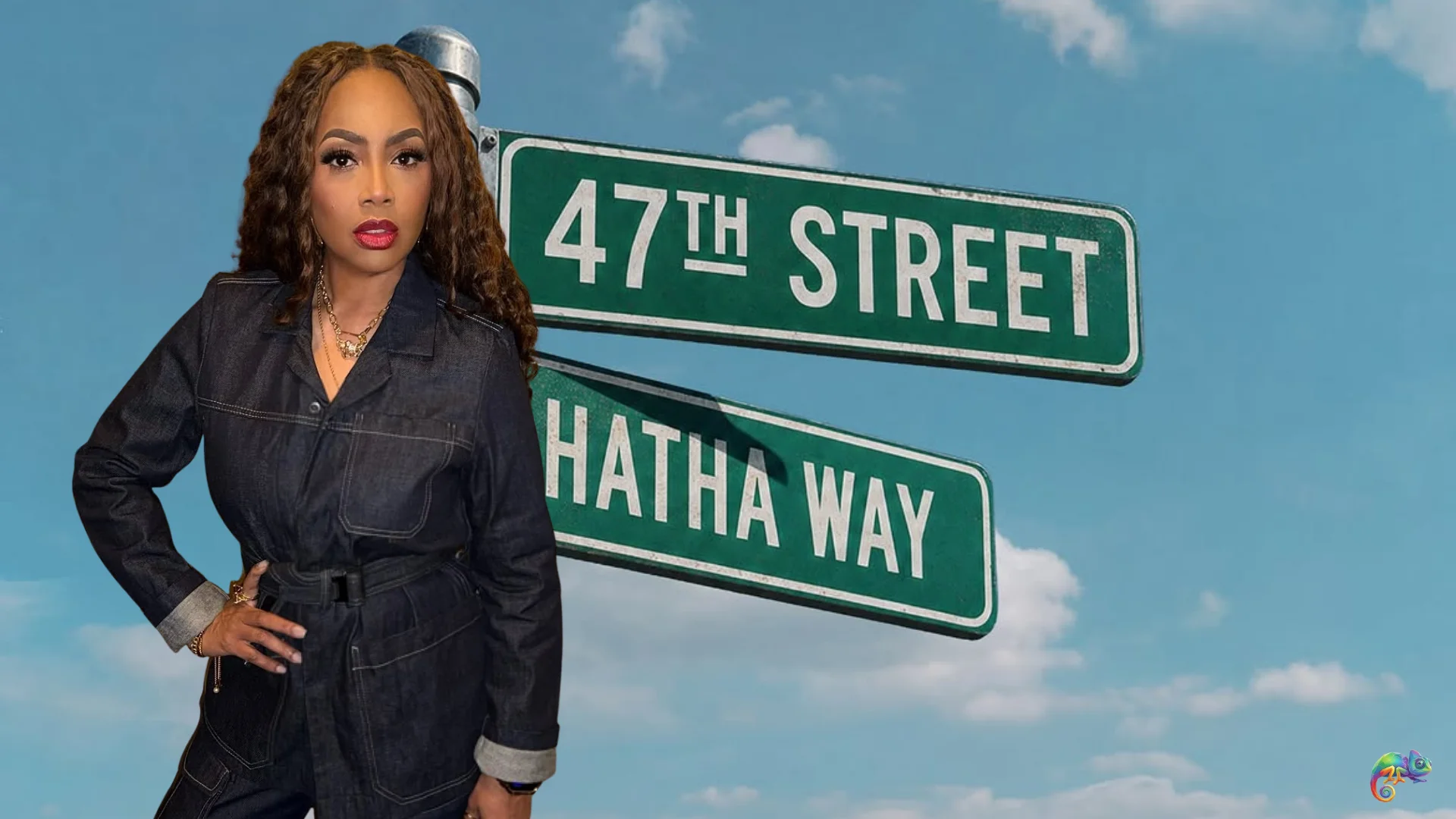
Lalah Hathaway's "47th Street" is not simply a new song with a neighborhood name attached. It is a homecoming gesture from one of modern soul's most technically dazzling and emotionally grounded voices, a record that places Chicago back at the center of an artist whose career has traveled far beyond it.
The five-time GRAMMY winner has long made the difficult look natural. Her instrument can move from a velvety low register to a soaring, melismatic peak without turning virtuosity into a stunt. Yet the power of "47th Street" is in its premise as much as its vocal command. Hathaway is taking listeners to the South Side corridor that helps explain the woman, the musician, and the cultural inheritance behind the sound.
Hathaway's new single arrives with an idea that feels almost radical in an era of frictionless playlists: a song can be rooted in a real place, and that place can hold more truth than a thousand generic declarations of authenticity. This is the same story we just shared about Dawn Richard. "47th Street" points toward Chicago as lived experience, not postcard backdrop.
For Chicagoans, 47th Street is not an abstract symbol. It is a major South Side thoroughfare crossing neighborhoods, commerce, public transit, family routines, faith communities, and the daily improvisations of a city that has given American music some of its deepest grooves. To invoke it is to invoke movement, memory, and a particular Black urban geography that cannot be reduced to a skyline shot or a tourist itinerary.
Chicago soul music has always been defined by the tension between polish and grit. The city's musical history includes gospel's spiritual lift, blues' plainspoken ache, jazz's restless intelligence, house music's kinetic liberation, and R&B's rich emotional architecture. Hathaway's work belongs in that sprawling conversation because she understands that soul music is a way of telling the truth with timing, tone, and restraint.
"47th Street" makes its strongest cultural case by treating home as a source of artistic scale. The song's title does not need to explain every block, business, or childhood detail to communicate its feeling. Its power is in recognition: the places that raise us keep speaking through us, even after the world learns our name.
Calling Hathaway a five-time Grammy winner is factually useful, but it only tells part of the story. Her awards reflect a career built on extraordinary musicianship, including her 2025 Grammy win for Best Traditional R&B Performance for "No Lie" with Michael McDonald. Her larger achievement is trust. Fellow singers, producers, and listeners know that when Hathaway enters a record, she will hear the emotional center of it.
That trust has made her one of contemporary music's great collaborators. She can lock into a bouncy, head-nodding pocket, float through an atmospheric slow-jam, or bring a song to a full stop with one impossibly precise harmony. Her flow is never about showing off the machinery. The technique serves the feeling.
That is why "47th Street" lands as more than regional nostalgia. It is another chapter in a career that has resisted the industry's urge to make artists smaller, simpler, or easier to categorize. Hathaway has remained soulful, adventurous, vulnerable, and musically exacting, qualities that still feel far too rare in mainstream R&B.
The name Hathaway necessarily carries musical history. Lalah is the daughter of the late, beloved singer-songwriter Donny Hathaway, whose recordings remain foundational texts in soul music. But the most compelling thing about her career is how thoroughly she has made her own lane. She honors the emotional seriousness associated with her father while refusing to become a museum exhibit for his legacy.
Her voice has its own grain, its own phrasing, its own sense of harmonic risk. In live settings especially, Hathaway can make a familiar standard feel newly unstable and alive, turning a note inside out until the audience realizes it has been holding its breath. That gift is not inherited reputation. It is years of listening, study, discipline, and a fierce commitment to expression.
"47th Street" works because Lalah Hathaway does not use Chicago as a brand. She uses it as a language.
The reference to a South Side street also expands the story beyond family mythology. It suggests a personal Chicago, one made of observation and belonging. The best hometown songs do not insist that a place is perfect. They understand that place leaves marks, and that those marks become part of an artist's delivery.
Hathaway's recent work has made clear that she is still pushing against creative complacency. Her 2024 album VANTABLACK brought together a wide field of musical voices and textures, from seasoned collaborators to contemporary innovators. The project showed an artist comfortable with rich arrangements, modern R&B dynamics, and a broad definition of soul.
"47th Street" feels aligned with that restlessness, even as it turns inward. There is no contradiction between forward-thinking production and an old-school sense of place. Chicago itself has always understood that paradox. This is the city of gospel choirs and house music, of jazz clubs and drill, of meticulously arranged vocals and raw street testimony. Hathaway's artistry thrives in the overlap.
For listeners arriving through a streaming recommendation, the song can serve as an entry point. For longtime fans, it offers a more intimate coordinate on a map they have followed for decades. Either way, it reinforces why Hathaway remains an essential R&B singer: she does not chase relevance by abandoning the parts of herself that made her matter.
What '47th Street' says about Chicago now
There is a familiar national habit of discussing Chicago only through extremes, usually triumph or tragedy, glamour or crisis. Its actual cultural life is more expansive than those blunt narratives allow. The city's neighborhoods are archives of migration, invention, labor, fashion, cuisine, language, family, and music. A title such as "47th Street" pushes back against the flattening by naming one piece of that lived map.
Chicago's South Side has produced world-changing art while being persistently misunderstood by outsiders. Hathaway's return to that setting, at least in spirit, feels timely because it restores texture to the conversation. The street is not merely scenery for a song. It is a vessel for memory, and memory is where much of soul music begins.
That is also the quiet lesson for younger artists building careers in a digital economy. Global ambition and local identity do not cancel each other out. The details of a neighborhood, a family phrase, a train route, or the music coming through a relative's speakers can become the thing that makes a record travel. Authenticity is not a marketing posture. It is the accumulation of details that cannot be copied.
"47th Street" invites listeners to consider their own coordinates. Every city has a road that means more than it appears to mean, a stretch of pavement that carries first loves, hard lessons, Saturday errands, church clothes, bus transfers, and the first proof that a larger life might be possible. Hathaway understands the emotional voltage in naming that road.
For a singer with her range, making a record about home might seem deceptively modest. In fact, it is one of the boldest things an artist can do. It requires choosing precision over abstraction and feeling over spectacle. With "47th Street," Hathaway turns toward the Chicago story that helped make her, and lets it speak in a voice that remains unmistakably her own.
For more on Hathaway's career and releases, visit her official website and explore her artist history through the Recording Academy.



Comments (0)
No comments yet — be the first to share your thoughts.
Leave a comment