

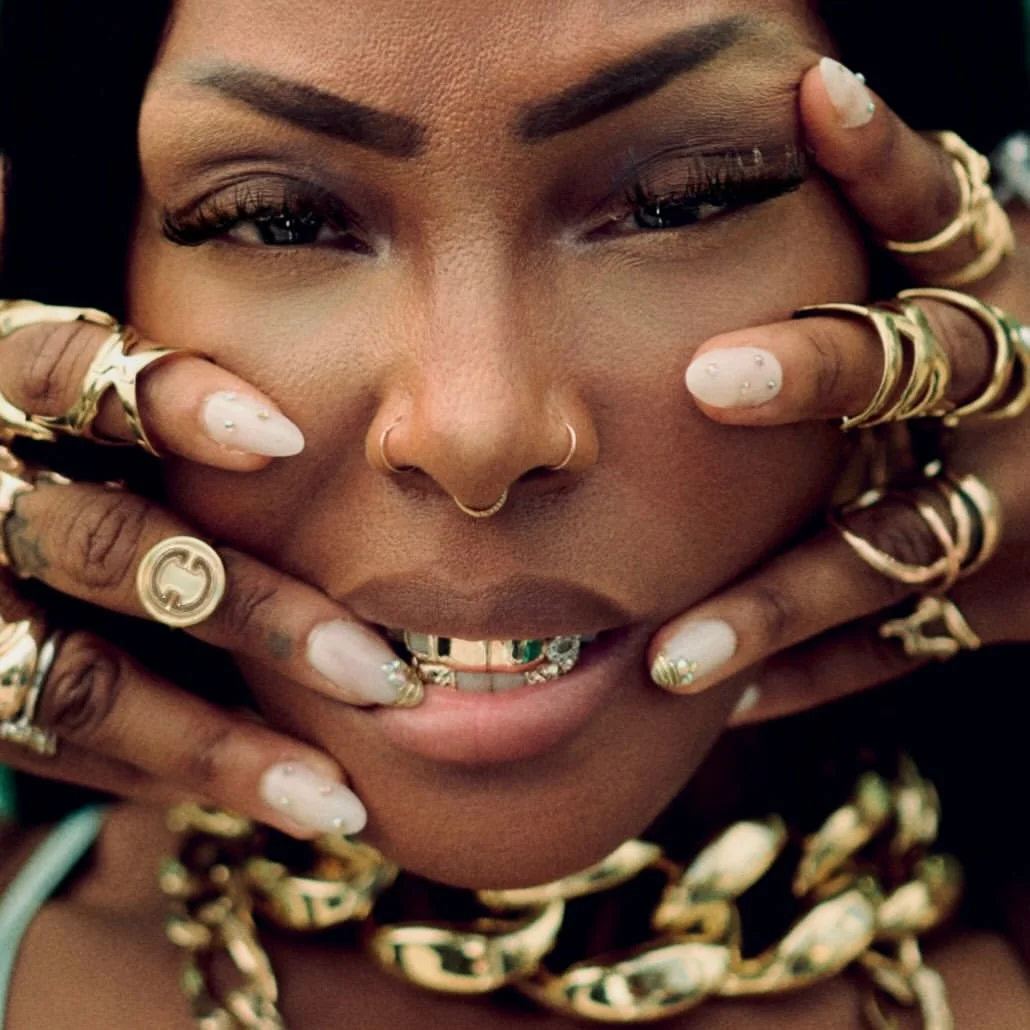
With her newly announced album creole culture and the new single 'enough' new single, New Orleans-born artist Dawn Richard is drawing a fresh line through a career that has always treated pop music as both a vehicle and a laboratory.
For longtime followers, Richard's next era lands with the welcome force of an artist returning to one of her deepest sounds. For new listeners, it is a chance to catch up with a performer whose path through the industry has been anything but conventional: reality-TV breakout, chart-topping girl group member, collaborator in a star-powered R&B trio, and finally one of the most consistently imaginative independent artists of her generation.
The immediate headline is simple. Richard has announced creole culture, and she has delivered 'enough' as its opening statement. The larger story is that her work has spent two decades proving that reinvention is not the same thing as abandoning your past. In Richard's hands, each new chapter tends to carry the fingerprints of the last one, then bend them into a new shape.
What 'enough' means in the Dawn Richard story
'enough' signals a decisive turning point. The concise title suggests a boundary, a public declaration, emotional release, or refusal to keep compromising oneself for an audience or industry. That layered meaning fits Richard’s work, which consistently resists easy resolution and leaves listeners confronting difficult feelings rather than offering a simple emotional escape.
The single is also significant because it introduces an album named for a cultural identity that is often flattened into aesthetics, food, or tourism. Creole music, as a broad cultural conversation, cannot be reduced to one sound or one history. It carries the marks of language, migration, family, place, survival, and exchange. Richard's New Orleans upbringing has always inspired her visual and musical world, especially in work that treats the city as a living source rather than a postcard.
It is too early to define an entire album from one song title and an announcement, but 'enough' offers a compelling reason to pay attention. The title signals that Richard remains in control of how listeners encounter her work, a defining approach since she moved beyond mainstream pop. Watch for further details on the album’s themes, release plans, and creative direction.
Before the solo experiments: Danity Kane changed the scale
Richard first reached a mass audience on MTV's Making the Band 3, where she became a member of Danity Kane. The group, assembled under Sean "Diddy" Combs, arrived in the mid-2000s with an unusually sharp mix of vocal personalities and pop-R&B ambition. Their self-titled 2006 debut and 2008's Welcome to the Dollhouse both opened at No. 1 on the Billboard 200, an achievement that placed the group in rare space for a modern girl group.
That period gave Richard the kind of training no conservatory can quite replicate. She learned television-era scrutiny, choreography, promotional cycles, studio precision, group dynamics, and the sometimes brutal economics of being a young woman in a packaged pop act. It also gave audiences an early glimpse of her intensity. Richard did not read as someone waiting to be assigned a lane. She read as someone already drafting blueprints.
Danity Kane's story, like so many stories built in the reality-TV furnace, came with fractures and public turbulence. Yet its cultural afterlife remains potent. The group made sleek, muscular pop music, and its success complicated the lazy industry assumption that a female R&B group had to choose between vocal credibility and commercial scale.
The Dirty Money detour that sharpened her edge
Richard's next major chapter was Diddy-Dirty Money, the trio she formed with Combs and Kalenna Harper. Their 2010 album Last Train to Paris was a glamorous, emotionally frayed fusion of R&B, dance music, and pop melodrama. It was built for neon, late-night regret, and the sort of expensive-looking mess that great club records know how to make beautiful.
For Richard, Dirty Money was a vital bridge. The project retained major-label scale while pushing her toward a more futuristic, left-field sensibility. Songs such as 'Coming Home' brought immense visibility, but the deeper lesson was artistic: she could navigate a high-profile collaborative world without losing the appetite for stranger textures and bigger concepts.
That appetite would become the engine of her solo career. Once Richard began releasing music under the DΔWN banner, she stopped sounding like an artist trying to find her place in contemporary R&B. She sounded like an artist making more room inside it.
The solo catalog: pop craft meets world-building
Richard's solo discography shows a deliberate evolution in sound and style. 2013's Goldenheart, 2015's Blackheart, and 2016's Redemption formed The Heart Trilogy, a three-album arc that blended electronic production, conceptual storytelling, elastic vocals, and a visual language that was every bit as considered as the music.
Rather than chase mainstream appeal, those albums examined it critically. Richard explored intimacy, desire, technology, grief, class, beauty standards, and female power without reducing them to easy inspiration. Her music paired sensuality with intellectual depth, often within a single chorus, creating records that rewarded close listening and challenged conventional pop expectations.
Then came 2019's new breed, a project rooted in New Orleans identity and the tensions of inheritance. 2021's Second Line pushed further into the sounds, movement, and communal spirit of her hometown, while 2022's Pigments, made with composer Spencer Zahn, explored a more ambient and compositionally expansive terrain. Taken together, these projects show why Richard's influence often exceeds the size of any one commercial moment. She has built a body of work for people who believe R&B can be architectural, regional, futuristic, intimate, and strange on purpose.
Her catalog also serves as motivation for independent R&B as a place of artistic possibility. Independence is too often idealized as freedom without friction. Richard's career offers a more honest version: freedom is hard work, and control comes with risk. But it can produce work that does not have to make itself smaller to fit a quarterly plan.
Why 'creole culture' matters now
The title creole culture places identity at the center of the conversation before listeners have even heard the full album. That is meaningful in a music marketplace that loves to borrow from regional cultures while ignoring the people, histories, and living communities behind the sounds. Richard has repeatedly positioned New Orleans as a foundation.
Her choice of title also arrives at a time when artists are increasingly expected to turn biography into content, preferably in bite-size form. Richard has generally resisted that flattening. Her work is personal, but it is not confession-by-algorithm. It asks the listener to enter a world, notice its details, and stay long enough to understand the tension beneath the surface.
A career worth discovering in full
New listeners should start with the obvious route, then take the scenic one. Hear the polish and pop reach of Danity Kane. Revisit the drama and dance-floor ache of Last Train to Paris. Then move through the solo albums in sequence, where the real contours of Richard's ambition reveal themselves. Her Bandcamp catalog is a useful doorway, and her work with Merge Records provides another lens on the later independent era.
creole culture and 'enough' now offer the next invitation. The listeners who have followed her from the beginning will recognize the commitment. The ones arriving now have the rare pleasure of discovering an artist with a whole universe already waiting behind the first song.

Comments (0)
No comments yet — be the first to share your thoughts.
Leave a comment