

There are some voices that simply do not belong to their era. They transcend time. They pass from car radios to kitchen speakers, from a parent's favorite cassette to a child's first playlist, carrying the strange and beautiful force of recognition with them. Whitney Houston remains one of those voices, a singer whose work can still stop a room halfway through a sentence.
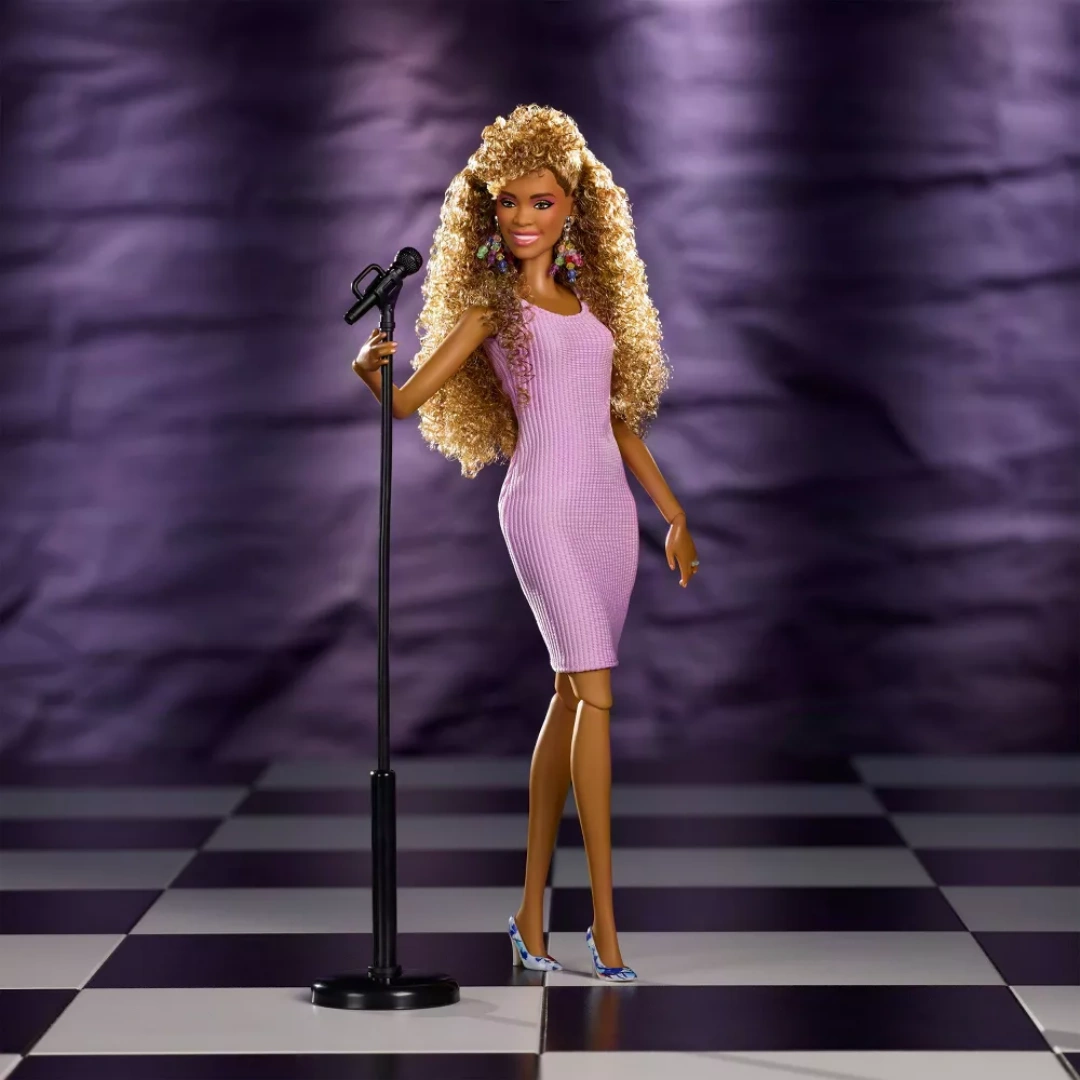
That is why the Whitney Houston Barbie doll lands as more than a collectible. It is a small, carefully styled object with a large emotional assignment: to help hold a legacy that has never been contained by one generation. For adults who grew up with Houston's music in the 1980s and 1990s, the doll can open a conversation with their own children about an artist whose range, elegance and determination changed the rules of pop music.
One important detail deserves clarity. Mattel's official Barbie Signature Whitney Houston doll was released in 2024. Houston, born August 9, 1963, would have turned 63 in 2026. A doll release should not be presented as a newly verified 63rd-birthday launch without a formal announcement from Mattel or Houston's estate. But the approaching milestone makes the larger point even clearer: Houston's influence remains vivid, marketable and deeply personal more than a decade after her death.
A tribute shaped by an unforgettable image
The official doll draws on the look Houston wore in the video for her 1987 hit I Wanna Dance with Somebody, complete with a bright, joyful stage-ready silhouette. It is an image that captures a particular kind of Houston magic. Before the mythology, before the tabloid noise, before her story became a public cautionary tale for people who had never carried the weight of her gifts, there was this: a young performer beaming into the camera, dressed for celebration and singing as if joy itself had found a microphone.
Houston had already made history by then. Her self-titled 1985 debut became one of the defining albums of its decade, while later records and performances established her as an artist of technical command and emotional immediacy. She did not merely hit notes. She made them feel inhabited. A key change in a Whitney Houston song was never just a musical device. It was a door opening.
The Barbie Signature treatment recognizes that scale. It places Houston in a long-running tradition of dolls honoring cultural figures, but it also confronts the tricky question that all celebrity memorabilia raises: can an object made for purchase carry genuine feeling? In this case, it can, provided fans understand what they are buying. The doll is not Houston herself, and it cannot reduce her life to an outfit, a pose or a packaging line. It can, however, offer a prompt to remember the full woman behind the image.
Why this doll matters to families
For many parents, the appeal of a Whitney Houston collectible is not simply nostalgia. It is the chance to make cultural memory visible. A child who sees the doll may ask who Houston was. That question can lead to the music, then to the films, the interviews, the award-show performances and the astonishing 1991 Super Bowl rendition of the national anthem that continues to define vocal confidence for generations of listeners.
This is how legacies survive in ordinary homes. Not through a lecture, and not through the brittle command that younger people must appreciate what came before them. They survive through stories: the first time someone heard "Greatest Love of All" after a hard day; the way "I Will Always Love You" seemed to live in every radio station, mall and school dance in the early 1990s; the collective disbelief of watching Houston perform live and realizing that the recording was not a trick.
A doll can sit at the edge of those stories. It can be displayed in a bedroom, placed beside records or gifted to a young fan who is only beginning to understand why Houston matters. In that sense, the Whitney Houston legacy becomes less like a museum exhibit and more like a family heirloom, something active and shared.
The music remains the center of the story
There is a temptation, especially in celebrity culture, to treat a commemorative product as the main event. It is not. Houston's artistry is the main event, and the doll works best when it directs people back to it.
Start with the obvious songs, but do not stop there. "How Will I Know" still feels buoyant and daring. "Saving All My Love for You" demonstrates how much drama Houston could create without overplaying a phrase. "The Greatest Love of All" has become an anthem of self-worth, sometimes so familiar that listeners forget how fearlessly she delivers it. Then there is The Bodyguard soundtrack, a phenomenon that turned an already enormous star into a global institution.
Her influence also reaches beyond sales figures and awards. Houston gave young singers, especially young Black women, a formidable example of what mainstream stardom could look and sound like. She brought gospel-rooted vocal power into pop's center without sanding down its force. Her success did not erase the industry's barriers, but it made those barriers harder to defend.
Houston's greatest memorial is still the sound of her voice: precise, vulnerable, enormous and unmistakably human.
Buying with care, not mythology
Collectors who want the doll should purchase through reputable retailers or official channels, including the Barbie Signature collection, when stock is available. Limited-edition dolls can attract resellers quickly, and inflated resale prices often arrive before a fan has had a fair chance to buy at retail.
It is also worth being precise about charitable claims. Fans may understandably see a purchase as a way of honoring Houston, but buying an official doll does not automatically mean that money is being donated to a Houston-related charity or foundation. Unless Mattel, the estate or a named nonprofit publicly states that a specific campaign includes charitable proceeds, shoppers should view the transaction as a retail purchase, not a confirmed donation. Those who want to support Houston's philanthropic spirit can separately research organizations aligned with causes she cared about, including children's wellbeing, education and community support.
That distinction does not make the gesture less meaningful. It makes it more honest. Celebrity legacy merchandise can be a sincere form of remembrance, but sincerity works best when it is paired with clear information.
A cultural icon, still in conversation
Houston's life was not simple, and any tribute worthy of her should resist turning it into a flawless fairy tale. She was a peerless artist who faced extraordinary pressure, intense scrutiny and painful struggles in public. To remember her fully is to make room for both the triumph and the vulnerability. It is to admire her brilliance without pretending that brilliance protects a person from being human.
That may be the quiet value of the doll. It invites an encounter with the polished image of a superstar, then leaves room for families and fans to tell a fuller story. Houston was not only a voice from the past. She is an active presence in contemporary music, fashion, drag culture, film, talent shows and the private emotional histories of millions of listeners.
For a child opening the box, it may be a beautiful doll. For a parent, it may be a memory of singing into a hairbrush. For a devoted collector, it may be one more piece of a carefully built archive. And for all of them, it can be an invitation to press play. The Whitney Houston Barbie may be made of vinyl, fabric and sparkle, but the story it points toward is made of something more durable: a voice that still teaches the world how to feel.

Comments (0)
No comments yet — be the first to share your thoughts.
Leave a comment