

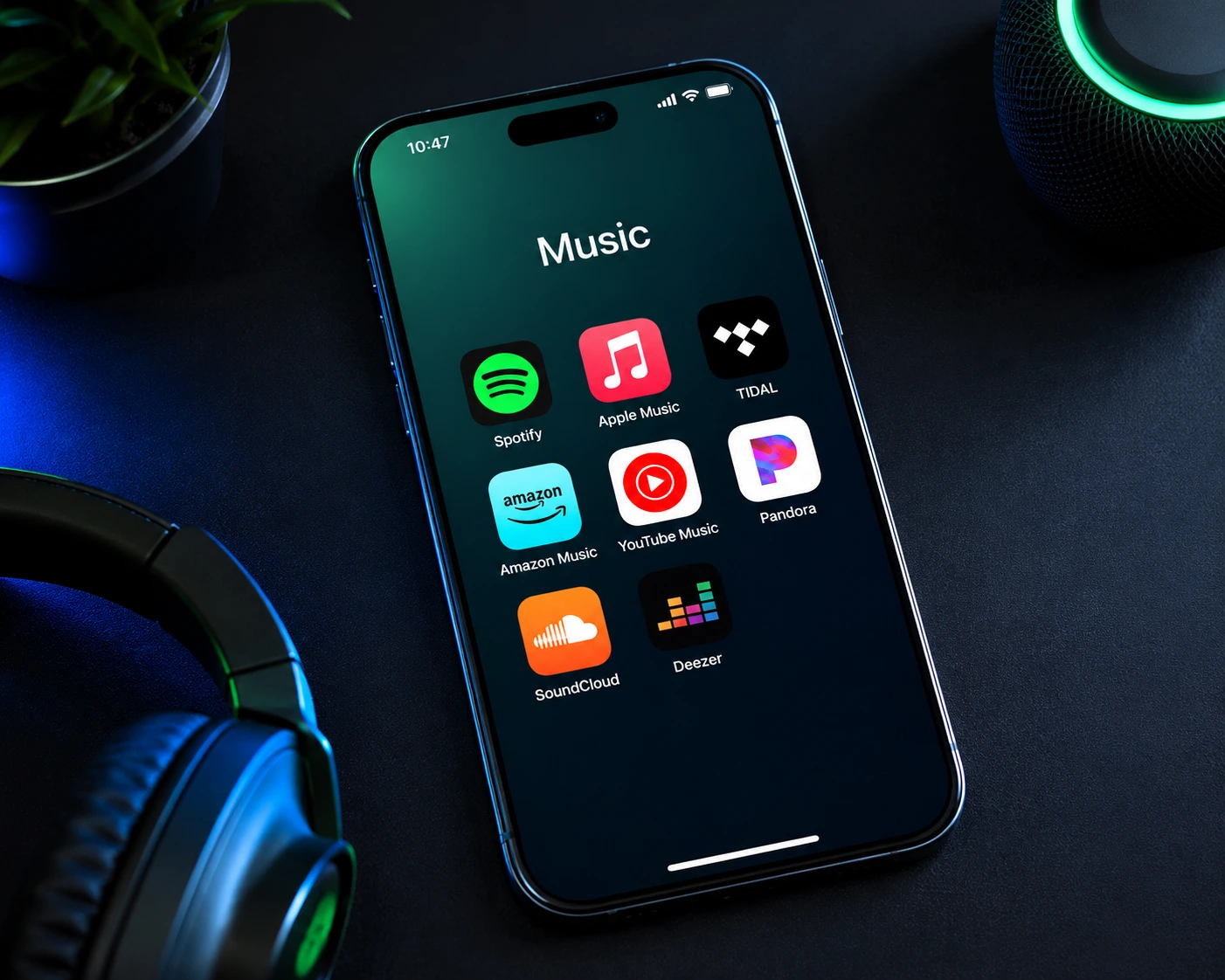
There used to be a moment, right before a song became a hit, where you couldn't quite explain why it was everywhere. It just was. Your barber was playing it. It was on the radio before school. Someone's older cousin had it on a mix CD. Discovery felt organic, almost accidental, like the culture was breathing the song into existence collectively. That moment still exists, but the machinery behind it has changed completely, and understanding that machinery is now the difference between an artist who breaks and one who disappears.
Today, two forces dominate how new music reaches new ears: playlist placement and short-form video virality. On the surface, they look like democratic tools, open systems where any artist with a great record can find an audience. But dig one layer deeper and you find something far more structured, far more controlled, and far more consequential than most fans realize.
In the streaming era, landing a major playlist is functionally equivalent to what a radio add or a label co-sign used to be. Getting placed on Spotify's RapCaviar, Apple Music's Hip-Hop Hits, or TIDAL's emerging artist features isn't just exposure. It's infrastructure. It tells the algorithm that this record matters, which triggers a cascade of additional recommendations, playlist additions, and eventually chart movement that looks organic but was seeded by a single editorial decision made by a small team of curators in a corporate office.
The difference between a human-curated playlist and an algorithmic one is significant, and it matters more than most listeners understand. Algorithmic playlists like Spotify's Discover Weekly or Apple's personalized mixes are built around your existing listening behavior. They're confirmation engines, serving you variations of what you already love. Human-curated playlists, by contrast, introduce friction. They make choices. They take bets on records that haven't proven themselves yet, which is exactly how new artists have historically broken through to audiences who weren't already looking for them.
The Streaming Trap: Why Having Millions of Plays Still Isn't Paying Most Artists' Bills
The problem is that human curation at scale is now deeply entangled with industry relationships. Labels pitch records to playlist editors. Distributors have formal partnerships with streaming platforms. Independent artists without those access points are competing in a system where the most visible on-ramps are quietly managed by the same gatekeeping structures that have always existed, just wearing different clothes.
While playlists control discovery on streaming platforms, short-form video on TikTok, Instagram Reels, and YouTube Shorts has created a parallel and equally powerful discovery engine with its own rules and its own winners. The format seems simple: a clip, a hook, a sound. But the strategy behind a song breaking on short-form video is anything but casual.
Labels and artist teams now engineer records specifically for the format. That means front-loading the most emotionally resonant or sonically distinctive moment of a song into the first 15 seconds, because that's the window before a viewer scrolls. It means identifying which lyric or melodic phrase has the highest potential to become a sound, the TikTok-specific audio unit that users attach to their own videos. It means seeding content with influencers and micro-creators before a song is even officially released, building a library of user-generated content that the platform's algorithm reads as organic momentum.
What looks like a spontaneous cultural moment, a dance trend, a meme format, a viral challenge, is frequently a coordinated campaign. Music industry analyst Cherie Hu, who has written extensively on the streaming economy, has noted that the line between authentic virality and manufactured momentum has become nearly impossible for the average fan to detect. The emotional response is real. The engineering behind it often isn't accidental.
This doesn't make the music less valid. A great record is still a great record regardless of how it was marketed. But it does change what we mean when we say something "blew up organically," and fans deserve to understand that distinction.
The Artist’s Guide to the Galaxy: How Music Royalties Actually Work in 2026
The term Playlist Industrial Complex isn't hyperbole. It's a description of a real ecosystem with real stakeholders whose financial interests are directly tied to which records get promoted. Streaming platforms benefit from having culturally credible playlists because it drives subscriptions and engagement. Labels benefit from having their priority releases on those playlists because it drives streams, which drives royalties and chart positions, which drives sync deals and touring leverage. Playlist curators, especially independent ones with large followings, have become influencers in their own right, sometimes charging for placements in ways that blur the line between editorial and advertising.
In 2019, Spotify launched a controversial program allowing artists to accept lower royalty rates in exchange for algorithmic promotion, a policy that critics argued essentially created a pay-to-play structure inside a system that was already heavily tilted toward artists with label backing. The conversation around playlist payola has been growing steadily ever since, with independent artists and advocacy organizations pushing for more transparency around how editorial decisions are made.
For fans who want to actually find music on their own terms, human-curated playlists from trusted independent sources represent the clearest alternative to the corporate pipeline. Curators on platforms like YouTube, SoundCloud, and even Substack, who have no financial relationship with labels, are surfacing records based purely on taste. They're slower. They're harder to find. But they're doing the work that algorithmic systems and commercially influenced editorial teams structurally cannot do.
The deeper issue isn't whether playlists and short-form video are good or bad for music discovery. They've undeniably created real opportunities for artists who would have had no pathway into the mainstream twenty years ago. The issue is what gets prioritized within these systems and what gets left behind as a result.
Hip-hop and R&B are particularly vulnerable to the distortions created by short-form optimization. These are genres built on layered cultural references, complex lyricism, regional specificity, and sonic evolution that often takes time to appreciate. When the primary discovery mechanism rewards the most immediately hookable 15-second moment, it creates pressure, both on artists and on the industry executives working with them, to sand down exactly the elements that make the music culturally significant in the first place.
Artists like Kendrick Lamar, whose records often unfold over multiple listens, or producers like Kaytranada, whose sonic identity rewards sustained attention, represent a category of artistry that the current discovery infrastructure is poorly designed to serve. That they break through anyway is a testament to the depth of the audience, not the efficiency of the system.
The fans who care most about the culture have always been its best curators. Long before streaming, listeners were making mixtapes, building blog followings, and passing music through personal networks in ways that the industry couldn't fully control or replicate. That instinct hasn't gone anywhere. It just needs better tools and sharper awareness of the systems it's navigating.
Understanding the playlist industrial complex isn't about cynicism. It's about becoming a more intentional listener. Follow independent curators on platforms where they have no financial incentive to push specific records. Dig into the credited producers, songwriters, and featured artists on records you love, because that network is often where the next great thing is hiding. Pay attention to regional scenes, because the most vital music in hip-hop and R&B right now is frequently emerging from cities and communities that aren't yet on the radar of major playlist editors.
Use short-form video as an entry point, not a final destination. If a sound catches you on a Reel or a TikTok, follow it back to the full record, the album, the artist's catalog. Don't let the format's architecture keep you at the surface of music that has more to offer. That's exactly what the algorithm wants. The culture deserves better than that, and so do you.
The machinery of music discovery has never been neutral. What's different now is that it's more sophisticated, more data-driven, and more capable of creating the feeling of authenticity while operating according to commercial logic. The fans who understand that, and who seek out the human-curated alternatives that still exist outside the corporate pipeline, are the ones keeping the culture honest.
Comments (0)
No comments yet — be the first to share your thoughts.
Leave a comment