

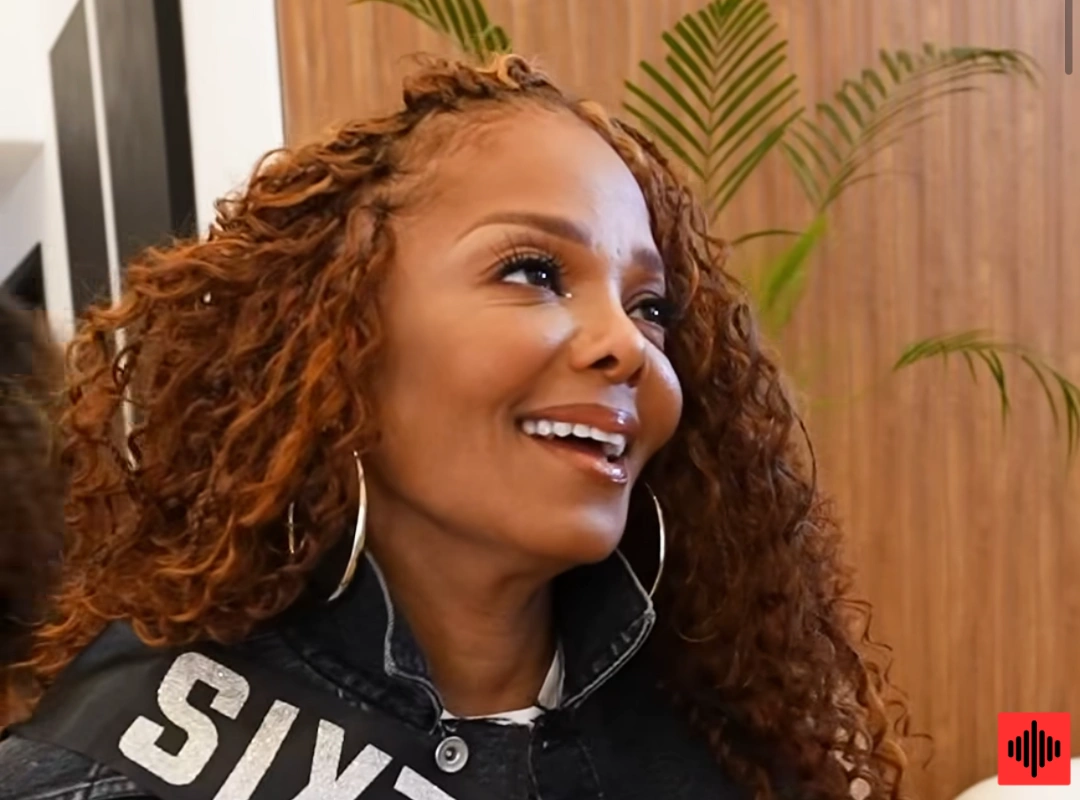
She told you her name a long time ago. Not baby. Janet Jackson. Miss Jackson, if you're nasty. And on May 16, 2026, the woman who made that declaration stepped into her 60th year with the same quiet power she has always carried. No loud announcement needed. No comeback narrative required. Just a heartfelt Instagram post, a red heart, and a reminder that she sees every one of us.
"I'm so grateful for the outpouring of love today," she wrote to her fans. "You have all made my 60th so special. Every single post, tribute, and wish touches my heart. I thank God for every additional day of life and for putting each of you in it. Wishing you all returned blessings and I look forward to seeing you soon. I love you. J"
Even at 60, her message lands exactly the way her music always has: warm, generous, and real. That is the Janet Jackson most people do not always get credit for describing. Not just the choreography. Not just the hits. The woman behind all of it.
Carving out her own identity
Janet Damita Jo Jackson was born on May 16, 1966, the youngest of nine surviving children in the Jackson household in Gary, Indiana. Growing up in that house meant sharing space with legends in the making, but it also meant carving out your own identity in a family where the spotlight was already spoken for. She did it anyway.
Before she was a recording artist, she was a child actress. She joined the cast of the hit sitcom Good Times and later appeared on Diff'rent Strokes and Fame. Those early roles gave her a comfort in front of cameras that would later translate into one of the most commanding stage presences in the history of live performance. But it was music where she would build her real home.
Her first two albums in the early 1980s, Janet Jackson and Dream Street, moved quietly through the industry without making much noise. Some artists take that as a signal to adjust course or soften their edges. Janet took it as a reason to go harder.
Control: The Album That Changed Everything
Control, released in 1986, is not just one of the greatest albums of its era. It is one of the most important artistic declarations in the history of popular music. Working alongside producers Jimmy Jam and Terry Lewis, Janet stepped into the studio as a 19-year-old woman who had just walked away from an early marriage and the management of her father, and she made an album entirely about what it feels like to claim your own life.
The production was new. The energy was new. And the statement was unmistakable. Songs like "What Have You Done for Me Lately," "Nasty," and "When I Think of You" dominated the charts and introduced the world to a Janet who answered to no one. Billboard Hot 100 success followed immediately, and so did a complete reshaping of what pop and R&B could sound like together.
What made Control even more significant was what it represented for Black women in music. Here was a young woman from a famous family who refused to be defined by that family, who walked into the conversation on her own terms and dared the industry to keep up.
Rhythm Nation 1814: When Pop Music Had Something to Say
If Control was personal liberation, Janet Jackson's Rhythm Nation 1814 was something greater. Released in 1989, the album tackled racism, poverty, drug abuse, and the fractures in American society with a directness that most pop artists would never attempt. And she wrapped it all in some of the most precise, technically demanding choreography ever put on a stage.
The Rhythm Nation World Tour that followed instantly sold out venues across the country and ranked among the top five tours of 1990. The visual identity of that era, the black military uniforms, the synchronized formations, the sheer discipline of her dancers, became a cultural reference point that artists are still drawing from today.
Rhythm Nation 1814 produced seven Billboard Hot 100 top five singles, a feat that had never been accomplished from a single album before. It remains one of the most commercially successful and critically respected projects in the history of the genre.
While the world was focused on the music, Janet was building something that outlasted every chart position. Her Virgin Records deal in 1991 was worth $32 million. When she re-signed in 1996, the Los Angeles Times reported the deal at an estimated $80 million for four albums, including a $35 million advance on signing. At the time, it was the largest music contract in history, surpassing deals held by her brother Michael and Madonna.
Her career gross revenue has been calculated at over $1.2 billion across album sales, touring, publishing, and licensing. Her Together Again Tour, completed in 2025, grossed over $106 million and drew more than one million ticket buyers. Her Las Vegas residency, which began in December 2024, extended her run as one of the most bankable live performers of her generation well into this year. In March 2026, she signed a global publishing deal with Believe Music, adding another strategic layer to a catalog that continues to generate income decades after its creation.
Janet's net worth is estimated at approximately $180 to $190 million, built entirely through her own work, her own deals, and her own decisions. That matters because Janet built her financial foundation without inheriting anything from her brother Michael's estate, which went to his children and his mother. What Janet has, she built herself.
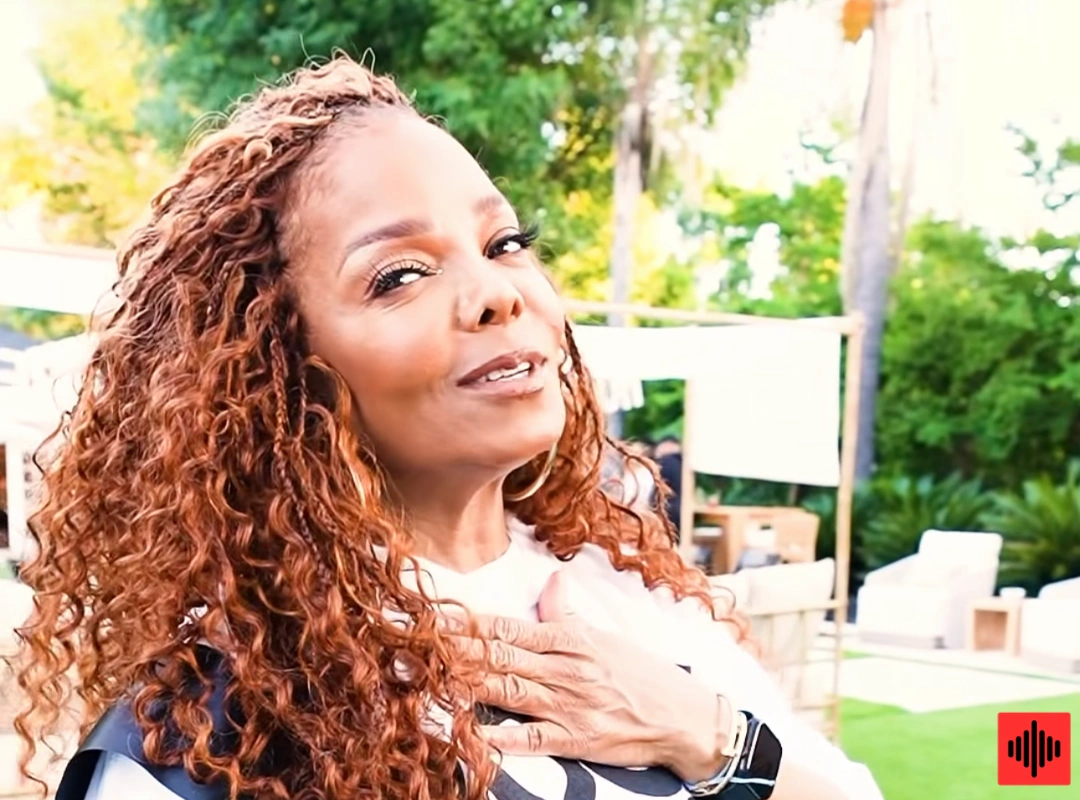
The Velvet Rope
By the mid-1990s, Janet was one of the wealthiest musicians on the planet. She was also, by her own account, one of the most quietly unhappy. The Velvet Rope, released in 1997, is the record that came out of that period, and it remains one of the most courageous creative documents any mainstream artist has ever released.
The album addressed depression, domestic violence, self-worth, sexuality, and loneliness without softening any of it for radio consumption. It became a lifeline for a generation of listeners who had never heard a pop star willing to be that honest, and it cemented her status as an icon within the LGBTQ community in a way that has never faded. She has since received the GLAAD Vanguard Award in recognition of that advocacy.
Jenna Dewan, who went on to join Jackson's team as a dancer and later starred in Step Up, has spoken about watching the Velvet Rope Tour and experiencing a defining moment. "I was two inches from my TV, literally obsessed," she said before Jackson's 60th birthday. "I had that 'a-ha' moment of, 'That's what I want to do. I want to be a Janet dancer.'" That reaction was not unique. The Velvet Rope era produced dancers, directors, and performers who credit Janet as the model they studied.
Poetic Justice and the Silver Screen
In 1993, director John Singleton cast Janet as Lucky in Poetic Justice alongside the late Tupac Shakur. The film explored grief, love, and the texture of Black American life with an authenticity that caught many by surprise. Janet's performance showed a vulnerability and depth that proved her talents had never been limited to the stage.
She later appeared in Nutty Professor II: The Klumps, Why Did I Get Married? and its sequel, and several television projects. Her screen work was never as loudly celebrated as her music, but it added dimension to a career that has always been about more than any single category could contain.
The Super Bowl and the Industry's Double Standard
No honest account of Janet Jackson's career skips this part. The 2004 Super Bowl halftime show controversy did not just create a media moment. It exposed exactly how differently the industry and the press were prepared to treat a Black woman versus her white male counterpart. CBS allowed Justin Timberlake to appear at the Grammy Awards days later while forcing Janet to withdraw from a scheduled presenter role. Radio blacklisted her singles. Projects were canceled.
The music industry's response to that moment was one of the most visible examples of racially and gendered double standards in modern entertainment history. Janet did not collapse under it. She continued releasing albums, and in subsequent years, the cultural conversation caught up with what had always been obvious to those paying attention. She was the one who paid the price for something she did not control, and she handled it with more grace than the situation deserved.
Motherhood and the Next Chapter
At 50 years old, Janet welcomed her son Eissa Al Mana on January 3, 2017. She has described motherhood as the most meaningful chapter of her life. She keeps Eissa largely out of the public eye, sharing very little of his face online, and the decision reflects the same intentionality she has always brought to protecting what matters most to her.
Eissa turned nine in January 2026. Janet is raising him in London, co-parenting with his father, Qatari businessman Wissam Al Mana, following their 2017 separation. The people who expected parenthood to slow her down have been watching her headline residencies, complete international tours, and sign major publishing deals for the past several years.
The Legacy: Everybody Lives in the House Janet Built
Joan Morgan of Essence magazine put it plainly: "Jackson's Control, Rhythm Nation 1814, and janet. established the singer-dancer imprimatur standard in pop culture we now take for granted. So when you're thinking of asking Miss Jackson, 'What have you done for me lately?' remember that Britney, Ciara, and Beyonce live in the house that Janet built."
Beyonce has cited her. Ciara studied her. Britney Spears modeled her presentation after her. Jessica Alba credited Janet as the inspiration for her role in Honey. The list of artists, dancers, directors, and performers who trace a direct line from their work back to Janet's is long enough to fill a hall of fame, and in 2019, that is exactly where she landed. Janet Jackson was inducted into the Rock and Roll Hall of Fame, a recognition that was overdue and still does not fully capture the scope of what she contributed.
In September 2025, she was featured on Cardi B's "Principal," a track that samples "The Pleasure Principle." The song debuted on the Hot 100 and made her the first Black female artist to chart new songs in five distinct decades. Five decades. That is the kind of cultural staying power that cannot be manufactured.
At 60, She Is Not Looking Back
A Japan concert tour was announced in February 2026, set for June. The Believe Music publishing deal was finalized in March 2026. She just celebrated her 60th birthday with the most gracious acknowledgment of her fans that you will find from any artist at any level. And there is reportedly still a Black Diamond album somewhere in the works, a project that has been discussed since 2020 and remains one of the most anticipated releases in contemporary R&B.
What makes Janet Jackson's 60th birthday worth more than a standard celebration is what it represents. She survived the industry. She survived family tragedy, including the 2009 loss of her brother Michael and her father Joseph in 2018. She survived a public controversy that would have ended most careers. She survived the pressures of fame that claimed Whitney Houston, Prince, and George Michael before they had the chance to reach this moment.
She made it here. And she did it on her own terms, with her son by her side, her catalog still generating, her stage presence still commanding, and her fans still showing up. That is not a career. That is a life well built.
Happy 60th birthday, Miss Jackson. Thank you for every single year of it.

Comments (0)
No comments yet — be the first to share your thoughts.
Leave a comment