

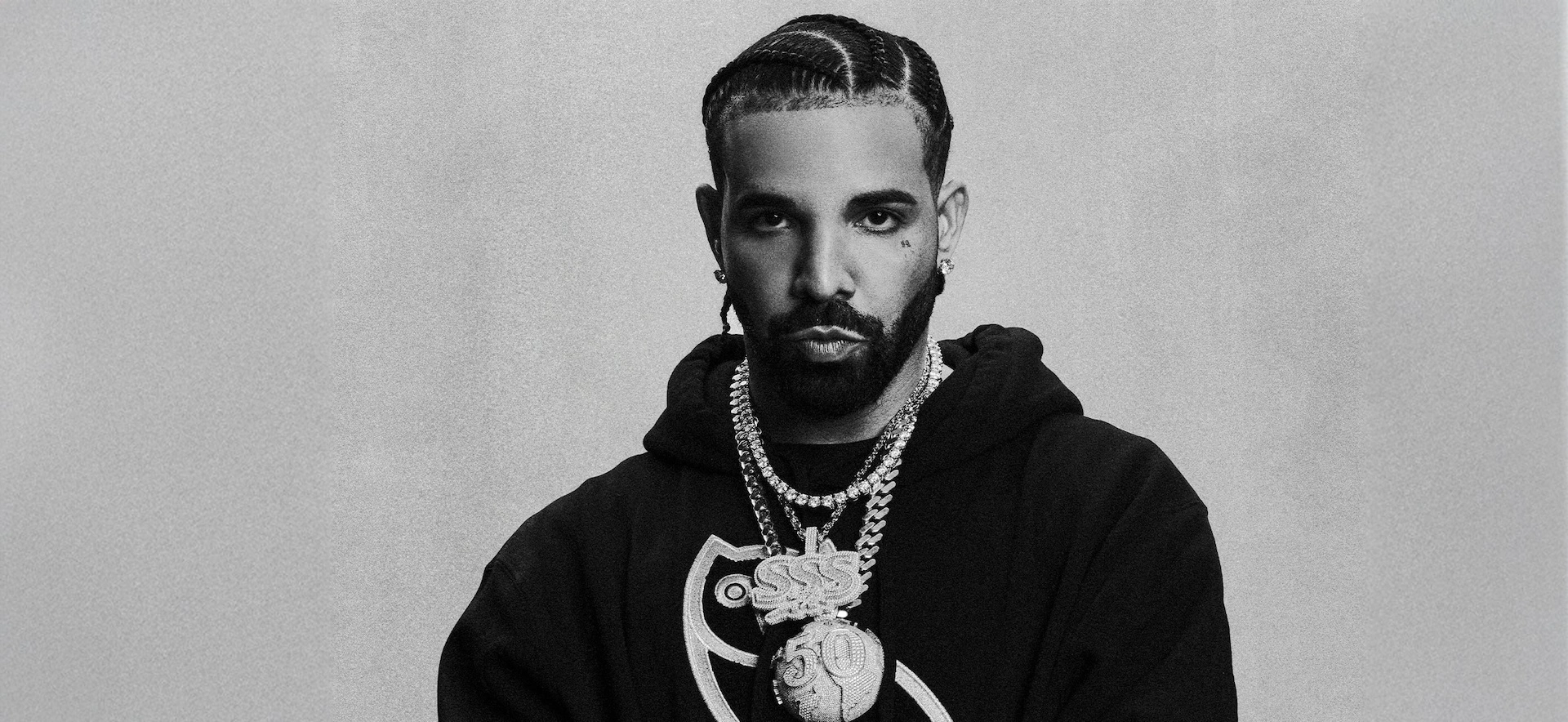
From a Degrassi kid in Toronto to the most charted artist in Billboard history, Aubrey Graham changed the rules of hip-hop. Now, with 'Iceman' dropping tomorrow (May 15th), he has a chance to change them again.
There is a version of hip-hop history where Drake does not exist. Where the genre stays hard-edged and geographically bound to New York, Atlanta, and Los Angeles. Where melodic rap is still a punchline. Where artists from Toronto do not crack the American mainstream, let alone dominate it for fifteen consecutive years. That version of history is easier to imagine than people want to admit, because what Drake pulled off was not inevitable. It was a hostile takeover of the entire culture by a kid who was not supposed to be in the room at all.
Tomorrow, May 15, 2026, Drake releases ICEMAN, his ninth studio album and first full-length solo project since 2023's For All the Dogs. It arrives after one of the most turbulent stretches of his career: a public rap battle with Kendrick Lamar that the culture largely scored against him, a failed lawsuit against Universal Music Group, and two years of loosies that mostly failed to move the needle. Iceman is not just a new album. It is a reckoning. And to understand what is at stake, you first have to understand what Drake actually built.
From Degrassi to the 6: An Origin Story Nobody Predicted
Aubrey Drake Graham was born October 24, 1986, in Toronto, Ontario, to a Black American father from Memphis and a Canadian Jewish mother. He grew up in Forest Hill, a comfortable Toronto neighborhood, and by age 13 was playing Jimmy Brooks on Degrassi: The Next Generation, a wheelchair-bound student navigating high school drama for Canadian television. It was not exactly the origin story that rap stardom is built on. There was no street credibility to lean into, no hard-luck narrative to borrow from. What Drake had instead was something scarce in hip-hop at the time: a genuine emotional range and the willingness to use it publicly and without apology.
In 2006, while still on Degrassi, he released his first mixtape independently. By 2009, his So Far Gone EP had earned co-signs from Lil Wayne and Jay-Z, and charted "Best I Ever Had" and "Successful" on the Billboard Hot 100 without a major label deal. The bidding war for his signature was described by industry insiders as one of the most competitive in years, with Atlantic Records, Interscope's Jimmy Iovine, and Universal Motown all in pursuit. He ultimately signed with Young Money Entertainment. At the MTV Video Music Awards in 2008, Lil Wayne made it plain where he stood, shouting mid-performance: "Drizzy Drake: I love you, bwoy!" It was not a co-sign. It was a coronation.
Lil Wayne's belief in Drake was not just personal. It was structural. Wayne's Young Money philosophy, built around investing in talent regardless of where it came from or how it looked, is precisely what gave Drake the platform to break every rule hip-hop had quietly enforced about who could lead the genre. By 2010, both Drake and Nicki Minaj, two artists who defied every conventional expectation of what a rap superstar looked like, had credited Wayne's model as foundational to their own approaches.
The Albums That Changed the Game
Take Care (2011): The Album That Rewrote the Rules
Drake's second studio album is the cultural inflection point. Built around producer Noah "40" Shebib's signature sound of melancholy synthesizers and late-night atmospheric production, Take Care introduced mainstream hip-hop to an emotional directness that male rappers rarely attempted. The album won the Grammy for Best Rap Album in 2013 and the BBC later observed that Drake's openness in his lyrics helped inspire an entirely new generation of what became known as emo rap, paving the way for artists like Post Malone, Lil Uzi Vert, and the late Juice WRLD. That lineage runs directly through Take Care. No album of its era did more to expand hip-hop's emotional vocabulary.
"Before I ever got the chance to meet him, Kanye West shaped a lot of what I do, as far as music goes." -- Drake, MTV, 2009
The influence moved in multiple directions. Kanye West, whose own willingness to be vulnerable on 808s & Heartbreak helped open the door Drake walked through, was so energized by Drake's early talent that people close to Drake during the Thank Me Later sessions described West as "more amped to work on Drake's project than his own." That mutual creative electricity between two artists who normalized emotion in rap is not coincidental. It was the sound of hip-hop being rebuilt from the inside out.
Views (2016) and One Dance: Taking the Culture Global
If Take Care rewrote what hip-hop could say emotionally, Views rewrote its geography. The album spent 13 non-consecutive weeks at number one on the Billboard 200, making Drake the first male solo artist to accomplish that in a decade. But the cultural story of Views is the song "One Dance" with Wizkid and Kyla. That track introduced Afrobeats to mainstream radio audiences worldwide and became one of the most globally streamed songs of 2016. Drake did not simply follow the sound. He amplified it to an audience of hundreds of millions and put a generation of African artists on the map in the process.
Scorpion (2018): A Billion Streams in a Week
Scorpion became the first album in history to reach one billion streams in its first week across all platforms. It also produced "In My Feelings," which sparked the viral Kiki Challenge and drew participation from celebrities, athletes, and millions of fans globally. The moment was a demonstration of something unique to Drake's career: his ability to generate not just hits, but self-sustaining cultural phenomena that travel far beyond the music itself.
King's Disease Energy: The Hit-Boy Era and What It Taught Drake
The collaborative Her Loss album with 21 Savage in 2022 and $ome $exy $ongs 4 U with PartyNextDoor in February 2025 showed Drake's continued ability to create genuine cultural moments even in his most contested periods. $ome $exy $ongs 4 U debuted at number one on the Billboard 200, tying the all-time record for most number-one albums by any solo artist. The lead single "Nokia" proved to have real staying power well into 2025. Even in the shadow of the Kendrick battle, the streams kept coming. Drake remained the most-streamed rapper on Spotify globally throughout 2025, pulling 10.9 billion streams across the year and 1.51 billion in November alone, the highest single-month figure of any rapper on the platform.
The Numbers Nobody Else Has
Any honest accounting of Drake's impact has to start with the statistics because they are historically unprecedented. He holds the record for most career entries on the Billboard Hot 100 with 359 charted songs, a figure that dwarfs every other artist in chart history. Taylor Swift is the closest competitor at 264. The Beatles rank 16th all-time. Drake has had 25 songs peak in the top two on the Hot 100, the most of any artist ever. He has 217 top 40 hits, also a record.
He has earned 13 Billboard Hot 100 number one singles and 13 number one albums on the Billboard 200, sharing that combination with The Beatles. He has won 39 Billboard Music Awards, including the record for most wins in a single show with 13 in 2017. Billboard named him the fourth greatest pop star of the 21st century. In March 2025, he became the first artist in history to surpass 110 billion Spotify streams. He has exceeded 500 million RIAA-certified units across albums, singles, and features. Three of his albums have now charted on the Billboard 200 for over ten years, pushing him past Michael Jackson in that specific longevity category.
"Drake is the best rapper ever by the numbers. Jay-Z is the greatest rapper ever by the inspiration." -- Kanye West, Candace Owens Interview, 2022
Kanye's framing is pointed and precise. It separates commercial dominance from cultural inspiration and grants Drake the title he has earned by the most measurable standard available. Coming from a peer who has his own legitimate claim to both categories, it lands differently than any chart statistic.
What Drake Did to Hip-Hop That No One Else Could
He Normalized Emotion
Before Drake, mainstream hip-hop had a narrow emotional range for male artists. Vulnerability was a liability. Singing was suspect. Admitting heartbreak, longing, or self-doubt in your music, without irony, was not how the genre worked. Drake dismantled that framework entirely. His willingness to be openly wounded, confused, and romantic without masking it in bravado changed what artists across the genre believed they were permitted to do. The wave of introspective, melodic rap that followed, from Drake's own catalog through the artists he influenced, is inseparable from what he made acceptable in 2011.
He Put Toronto and Canada on the Global Map
Before Drake, Toronto was not a city that hip-hop culture looked toward. He did not just represent his city. He constructed its identity for a global audience. He popularized the term "The 6" as a shorthand for Toronto. He turned OVO Fest into an annual destination that brought legendary artists to his hometown every summer. He became the global ambassador for the Toronto Raptors in 2013, a partnership credited with helping transform the team's international profile. As one cultural analysis noted, Kendrick Lamar inherited the West Coast mantle of a long tradition. Drake was an originator of the Toronto sound, building something from scratch that had no template.
He Globalized the Genre
Drake's willingness to absorb and amplify sounds from outside American hip-hop's traditional borders changed the genre's relationship with the rest of the world. His collaboration with Wizkid on "One Dance" introduced Afrobeats to a massive mainstream audience. His embrace of UK drill, dancehall, and Caribbean-inflected production on projects like More Life was not trend-chasing. It was genuine musical curiosity that carried commercial force behind it. When Drake worked with an artist or incorporated a regional sound, the world listened. That amplification made him something beyond a rapper. He became a global music curator with the reach to move entire genres into rooms they had never been allowed in before.
He Built OVO Into a Cultural Institution
In 2012, Drake co-founded October's Very Own, known as OVO Sound, a record label, fashion line, and lifestyle brand that now has flagship stores in Toronto, New York, and London. Through OVO, he signed and developed artists like PartyNextDoor, Majid Jordan, Roy Woods, and dvsn, giving Canadian R&B artists a genuine platform and global reach. OVO Fest became one of the most anticipated annual music events in North America, drawing legendary performers from Nas and Stevie Wonder to The Weeknd. His Nike collaboration on the Air Jordan 10 OVO Edition sold out in minutes. His partnerships with brands like Canada Goose were equally instant sellouts.
As one industry analysis from Trapital noted, future music labels will increasingly look like the singularly focused OVO Sound model, with artists building personal brands and infrastructure rather than traditional multi-artist rosters. Whether or not OVO developed the kind of multi-superstar roster of a Roc-A-Fella or Death Row, it functioned as something more modern: a template for how an artist could own their entire cultural ecosystem.
What the Industry Says
The peers who matter most in evaluating Drake's legacy are the ones who watched him do it. Kanye West's verdict, delivered with characteristic directness in a 2022 interview, was unambiguous: "Drake is the best rapper ever by the numbers. Jay-Z is the greatest rapper ever by the inspiration." The distinction matters. Kanye was not diminishing Drake. He was locating him precisely within hip-hop's hierarchy: the most commercially successful artist the genre has ever produced, acknowledged by one of the few peers who could make that claim with authority.
Lil Wayne, the man who gave Drake his first real stage, said it plainest at the 2008 MTV VMAs when he interrupted his own performance to shout Drake's name to the world. The co-sign that followed was not just personal loyalty. It was Wayne recognizing that Drake represented something the genre needed. He did not fit the mold, and that was exactly why he was worth backing.
J. Cole, on their collaborative track "First Person Shooter" in 2023, named Drake alongside Kendrick Lamar as part of "the big three of modern hip-hop." The placement was contested, and Kendrick famously rejected it on "Like That." But Cole's acknowledgment was a recognition of reality: in terms of sustained commercial and cultural relevance across the 2010s and into the 2020s, no one occupied more of the conversation than Drake. The Boardroom framed the arrival of Iceman as "the biggest moment in rap since Kendrick Lamar took the stage at Super Bowl LIX," a statement that says as much about Drake's gravitational pull as it does about the moment itself. Even in decline, his returns register as generational events.
Complex's Peter Berry captured the stakes of this moment precisely: "He's always had the skill. Now, he has the scars and the fury of a king trying to reclaim his kingdom."
The Kendrick Chapter: Losing the Battle, Surviving the War
The 2024 rap battle between Drake and Kendrick Lamar became, by any measure, the most culturally significant feud in hip-hop's modern era. Kendrick's "Not Like Us" won Record of the Year and Song of the Year at the 2025 Grammys. It soundtracked the Super Bowl LIX halftime show. It played at stadiums while Drake sat at the center of a lawsuit he ultimately lost. By the numbers from Billboard, the songs generated from the feud produced over $15 million in combined revenue, but the cultural verdict was clear. The 6 God lost.
What happened next is the part that actually reveals something about Drake's staying power. He did not disappear. He kept dropping music. He launched the Iceman rollout with a level of creative ambition and fan engagement that reminded everyone why he dominated in the first place: a 25-foot ice sculpture in downtown Toronto, a series of YouTube livestreams that built genuine anticipation, a reveal so cleverly constructed that it trended globally. The culture may have chosen Kendrick. The streams, as one 2026 analysis put it, chose Drake.
Iceman and the Most Important Album of His Career
Drake's ninth studio album drops tomorrow via OVO Sound and Republic Records. It is his first full solo release since For All the Dogs in 2023 and comes loaded with previewed collaborations including Central Cee, Yeat, Julia Wolf, Young Thug, and 21 Savage, among others. The four-episode livestream series preceding the drop showed an artist who is thinking about his legacy with a new kind of clarity, reflecting on fractured friendships, the weight of fame, and the kind of inward vulnerability that has always produced his best work.
The Boardroom put the stakes plainly: this is Drake's "chance to reassert himself as something more than a celebrity and hitmaking machine." It is a chance to shift the conversation back toward the art. For an artist whose entire career has been built on turning personal pain into public anthems, the last two years have given him more raw material than perhaps any period since Take Care.
"Between the perceived betrayals, life lessons, and personal faults to sort through, Drake now has the ingredients for the most compelling music of his entire career." -- Complex, May 2026
That is the version of Drake that the culture has always rewarded most. Not the chart machine, not the beef participant, not the celebrity. The one who sits down, processes what hurt him, and turns it into something that makes you feel like he is speaking directly to you at 2 AM. That Drake built this entire legacy. That Drake is the reason Iceman matters as much as it does.
The Legacy Is Still Being Written
The easiest version of the Drake story ends with the Kendrick battle as the final chapter. The culture moved on. The king got dethroned. The numbers stopped mattering. But that is not what the evidence supports. The most-streamed rapper on earth, a man who spent 2025 pulling 10.9 billion Spotify streams while also releasing a number-one collaborative album, is not a fading star. He is a complicated one. And hip-hop has always been at its most interesting when its most complicated figures decide to answer back.
Whether Iceman is the comeback album the culture has been waiting for, whether it quiets the doubters or gives them more ammunition, is a question that gets answered tomorrow. What is not a question is what came before it. The 359 charted songs. The billion-stream album. The city he built into a global music brand. The emotional vocabulary he handed to an entire generation of artists who came after him. The global sounds he carried into rooms they had never been allowed to enter.
Nasir Jones once said that great artists do not protect their legacy. They keep building it. Drake has never stopped building. Whatever Iceman turns out to be, it is one more chapter in a story that has already changed hip-hop more than almost any artist alive. The 6 God is not done. He is just getting cold.

Comments (0)
No comments yet — be the first to share your thoughts.
Leave a comment