

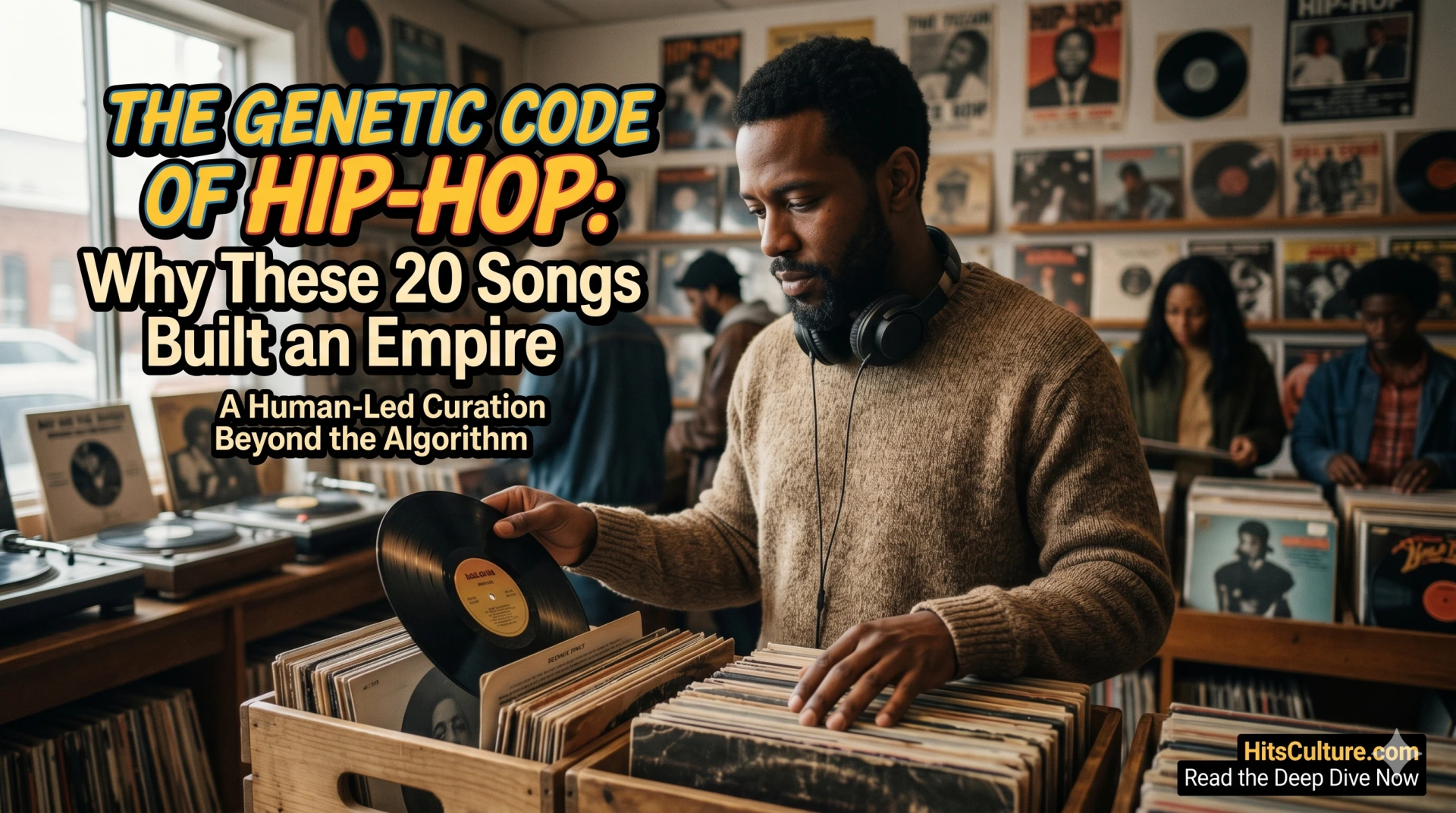
I remember hanging out in my friend's basement and watching his Pops flip through crates of vinyl like he was searching for a lost relative. He wasn’t just looking for music to listen to; he was looking for a specific feeling, a four-second drum break or a two-bar horn stab that could be chopped, looped, and reborn into something entirely new. For his generation, those records were more than just entertainment. They were the library of our collective history. Today, we call that process sampling, but back then, it was just the way we kept our stories alive.
When we talk about the top sampled songs of all time, we aren't just looking at a list of popular tracks. We are looking at the genetic code of hip-hop and R&B. These twenty songs provided the skeletal structure for thousands of hits, bridging the gap between the soul and funk of the 1960s and the digital landscapes of 2026. This is the music sampling history that the algorithms won’t tell you about. It is a story of survival, reinvention, and the undeniable power of a perfectly timed rhythm.
The Drummer Who Changed the World
You can't discuss the cultural legacy of sampling without starting with Gregory Coleman, the drummer for The Winstons. In 1969, he recorded a six-second drum solo in the middle of a B-side called "Amen, Brother." That snippet, known as the Amen Break, is the most sampled piece of music in human history. It didn't just give us hip-hop. It gave us jungle, drum and bass, and a thousand different iterations of electronic music.
I often think about how Gregory Coleman never received a dime in royalties for those six seconds. As an African-American creator, his story is a bittersweet reminder of how our contributions often build empires for others. Yet, in our community, that breakbeat is sacred. When a producer reaches for the Amen Break, they are reaching for a heartbeat that has survived decades of technological shifts. It is a testament to the urban music sound that prioritizes the "pocket," that undeniable groove that makes the soul vibrate.
The Godfather’s Infinite Reach
If the Amen Break is the heartbeat, then James Brown is the nervous system. With three entries in the top twenty, his impact is unmatched. "Funky Drummer" and Clyde Stubblefield’s legendary performance provided the grit and texture for everyone from Public Enemy to Run-D.M.C. James Brown understood something fundamental about Black music: the repetition is where the spirit lives.
When I hear "Think (About It)" by Lyn Collins, produced by James Brown, I hear the foundation of "It Takes Two" by Rob Base and DJ EZ Rock. I hear the "Yeah! Woo!" that has been the lifeblood of house parties since I was a child. These aren't just sounds. They are triggers for memory. They are the music industry trends that refuse to die because they are rooted in the authentic human experience of rhythm.
The Unexpected Architecture of Bob James
It might seem strange to some that a jazz keyboardist like Bob James would have two tracks in the top twenty. But "Take Me to the Mardi Gras" and "Nautilus" are essential for a different reason. They provided the melody and the atmosphere. While the drum breaks provided the "thump," Bob James provided the "mood."
"Nautilus" has been sampled by everyone from Wu-Tang Clan to Slick Rick. It has a mysterious, underwater quality that perfectly captured the cinematic ambition of early 90s hip-hop. This is where vinyl record culture truly shines. A producer had to have the ear to hear past the jazz exterior and find the loop that felt like the streets of New York at 2:00 AM. That kind of human-led curation is what an algorithm can never replicate. It requires a specific cultural fluency to know how a flute trill from a 1974 jazz record can make a rap verse feel more dangerous.
The Foundation: The Top 20 Most Sampled Tracks
Before we dive into the "why," we need to look at the "what." According to industry data and cultural consensus, these twenty songs have been utilized more than any others in history. They are the primary colors from which every other shade of urban music is painted.
1. "Amen, Brother" by The Winstons
This six-second drum break is the most important heartbeat in the world, carrying the weight of an entire culture in its simple, rolling rhythm. It feels like the moment a conversation turns into a movement, providing the backbone for thousands of songs across every genre imaginable. Listen on YouTube
2. "Change the Beat (Female Version)" by Beside
The ending of this track gave us the "fresh" scratch sound that defined the sonic texture of the 1980s. It is the sound of a needle finding its home in the groove, a signal to every kid with a turntable that the air was about to change. Listen on YouTube
3. "Think (About It)" by Lyn Collins
Lyn’s voice brings a fierce, feminine energy that James Brown’s production polished into a diamond. When that "Yeah! Woo!" kicks in, it feels like a family reunion where the music is loud enough to drown out every worry in the world. Listen on YouTube
4. "Funky Drummer" by James Brown
Clyde Stubblefield’s legendary performance here is the blueprint for the "pocket" in urban music sounds. It is the sound of precision meeting pure, unadulterated soul in a way that can never be replicated by a machine. Listen on YouTube
5. "La Di Da Di" by Doug E. Fresh & Slick Rick
The ultimate storytelling track, which has been quoted by everyone from Snoop Dogg to Beyoncé, captures the playful, swaggering essence of a Saturday morning in the neighborhood when everything felt possible. Listen on YouTube
6. "Impeach the President" by The Honey Drippers
With a snap that demands attention, these drums are the militant foundation of the street's roar. It feels like a protest march turned into a block party, providing a steady foundation for the voices that needed to be heard the most. Listen on YouTube
7. "The Big Beat" by Billy Squier
There is a heavy, thumping simplicity to this track that feels like footsteps echoing in an empty subway station. It's proof that a heavy rock beat could have just as much soul as a funk record if you knew where to look. Listen on YouTube
8. "Long Red (Live Version)" by Mountain
The live energy caught on this recording, specifically the crowd interaction, added a layer of human connection to the hip-hop production process. It sounds like a memory being captured in real-time, inviting the listener to join a moment that happened decades ago. Listen on YouTube
9. "Synthetic Substitution" by Melvin Bliss
A hauntingly beautiful rhythm that gave producers a way to express the grit and somber realities of life. It feels like the quiet reflection of a man walking home after a long shift, finding beauty in the shadows. Listen on YouTube
10. "Ashley's Roachclip" by The Soul Searchers
A smooth, rolling break that defined the laid-back vibe of countless West Coast and G-funk classics. Listen on YouTube
11. "Take Me to the Mardi Gras" by Bob James
Those signature bells created a celebratory atmosphere that felt both sophisticated and street-smart at the same time. It is the sound of a New York summer. Listen on YouTube
12. "Get Up, Get Into It, Get Involved" by James Brown
Pure energy that pushes you to move and think, capturing the relentless drive of our community. Listen on YouTube
13. "Apache" by Incredible Bongo Band
Often called the "national anthem of hip-hop," this track has a frantic energy that ignited the very first breakdance circles. Listen on YouTube
14. "Nautilus" by Bob James
A cinematic masterpiece that allowed rappers to feel like the stars of their own high-stakes urban films. Listen on YouTube
15. "Hook and Sling - Part I" by Eddie Bo
A dizzying display of syncopation that reminds us how technically brilliant and gifted our musical ancestors were. Listen on YouTube
16. "Bring the Noise" by Public Enemy
A wall of beautiful chaos that redefined legacy continuity by layering the past into a loud, unapologetic future. Listen on YouTube
17. "Top Billin’" by Audio Two
Stumbling, heavy drums that proved you don't need a thousand instruments if your rhythm is undeniably confident. Listen on YouTube
18. "Funky President (People It's Bad)" by James Brown
A rhythmic call to order from the Godfather, serving as a North Star for an entire generation of creators. Listen on YouTube
19. "The Humpty Dance" by Digital Underground
The perfect blend of personality and craft, bringing humor to the culture without losing an ounce of musical integrity. Listen on YouTube
20. "Good Times" by Chic
Perhaps the most famous bassline in history, a symbol of the joy that keeps us dancing through any struggle. Listen on YouTube
Why the Culture Still Needs the Sample
There is a growing debate about the role of sampling in the age of AI. Some argue that we should move toward purely original sounds to avoid legal headaches. But if we stop sampling, we lose our legacy continuity. Sampling is our way of talking to our ancestors. It is a conversation across time. When a young producer in 2026 takes a vocal chop from "La Di Da Di," they are acknowledging the greatness of Doug E. Fresh and Slick Rick. They are saying that what happened in 1985 still matters today.
This process is also taking what is available, often the discarded or the overlooked, and turning it into something of high value. Sampling is the musical equivalent of making a five-star meal out of what was left in the pantry. It is an act of defiance and creativity that defines the Black experience in America.
As we look toward the future, the top sampled songs will likely evolve, but these twenty will remain the bedrock. We are seeing a shift where 90s R&B is becoming the new "old school," being chopped and flipped by Gen Z creators. But even then, those 90s tracks were often built on the 70s funk listed above. The DNA remains the same.
For the fans who want to move beyond the "artist rankings" and understand the true movement of the culture, studying these songs is a requirement. You have to understand the source to appreciate the stream. The next time you hear a hit on the radio, listen closely to the background. Listen for the ghost of a drum kit from 1969 or a synth line from a forgotten jazz fusion album. Those are the voices of the people who built this empire, one loop at a time.
Comments (0)
No comments yet — be the first to share your thoughts.
Leave a comment