

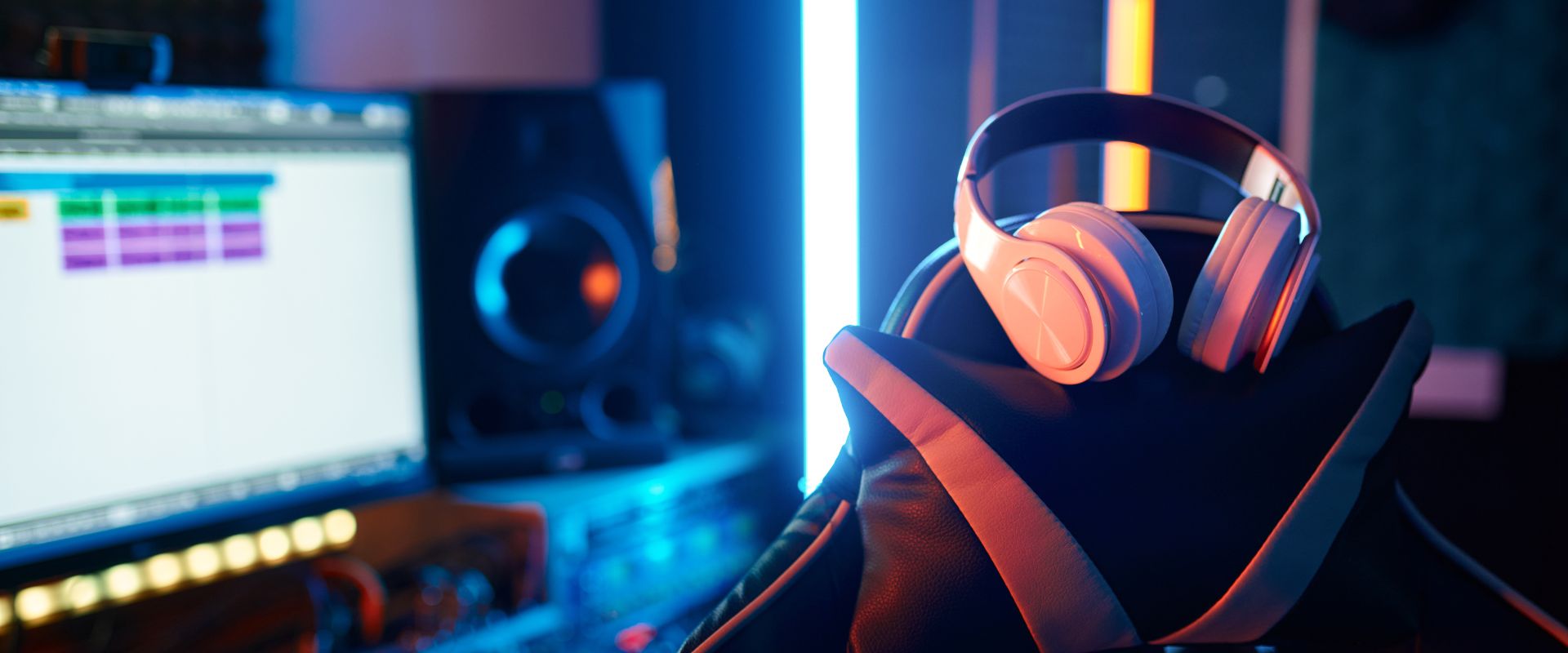
A haunting piano loop drops. The 808 thumps so deep it rearranges your heartbeat. The melody hits something in you that you cannot quite explain. Then the verse starts, and from that moment on, the world only talks about the rapper. The person who built the entire foundation? Their name is buried three lines deep in the album credits, if it appears at all. That is the quiet contract that has defined hip-hop production for decades. And right now, some of the most important people in music are finally starting to renegotiate it.
This is a cultural audit of the beatmaker economy, an honest look at how the people who build the sonic architecture of hip-hop and R&B get credited, compensated, and recognized, and why the system is still failing most of them even as a new generation of producers begins to take their names seriously.
Ask the average fan who made their favorite rap song and they will give you the rapper's name without hesitation. Ask them who produced it and you will get a shrug, maybe a "I think Metro" or "wasn't that a Mustard beat?" The cultural gap between performer and creator in hip-hop is one of the genre's most persistent blind spots. And it matters more than most people realize, because the producer is not just the background. In most cases, the producer is the song.
The 20 Most Sampled Songs: The DNA of Hip-Hop Culture
Think about what a beatmaker actually does. They set the emotional temperature of a track before a single word is written. They choose the samples, build the drums, craft the melody, engineer the atmosphere, and often coach the artist through the recording session itself. In many cases, they are in the room from the first idea to the final mix. As music industry analyst Ari Herstand has noted, today's hip-hop producers tend to do everything: make the beats, track the vocals, mix on the spot, and deliver a finished-sounding recording all in a single session. That is not a support role. That is co-authorship. And yet the billing rarely reflects it.
Throughout hip-hop history, numerous highly influential producers including Just Blaze and Madlib shaped the sound of iconic records yet remained relatively unknown to the general public. The algorithm did not create this problem. It just made it worse.
The good news is that the landscape is shifting. A generation of producers has figured out that the only way to get credit is to build the kind of brand recognition that makes your name impossible to ignore. They are doing it through producer tags, through their own albums, through social media presence, and through strategic positioning that forces the industry to treat them like the artists they are.
Metro Boomin: The Blueprint for Producer Stardom
Metro Boomin doesn’t just make beats. He built a sonic identity so distinct that even casual listeners can identify his work before a rapper says a word. His producer tag, "If Young Metro don't trust you," became one of the most recognized phrases in modern rap, transforming a simple audio branding moment into a cultural institution. His dark, atmospheric trap beats, built on sparse percussion and hard-hitting 808s, became the defining sound of a generation of Atlanta rap and beyond.
The Artist’s Guide to the Galaxy: How Music Royalties Actually Work in 2026
What Metro proved is that a hip-hop producer can be a star in their own right without compromising the behind-the-scenes craft. His 2022 album Heroes & Villains was nominated for both Producer of the Year and Best Rap Album at the 2024 Grammy Awards. He composed the entire soundtrack for Spider-Man: Across the Spider-Verse. He co-executive produced two of 2024's most acclaimed rap albums alongside Future, We Don't Trust You and We Still Don't Trust You, featuring Travis Scott, Kendrick Lamar, J. Cole, and The Weeknd. It’s safe to say that Metro set the standard for how producers step into it.
The Alchemist: Legacy, Craft, and Refusing to Slow Down
If Metro represents the new model, The Alchemist represents the proof that mastery compounds over time. Operating since the early 1990s, he has built one of the most respected discographies in the history of underground hip-hop production, with an approach rooted in meticulous sampling, soulful textures, and beats that feel simultaneously timeless and completely of the moment.
In 2024 alone, Alchemist crafted the haunting piano-driven beat for Kendrick Lamar's devastating diss track "Meet the Grahams," produced the collaborative project Black & Whites with Hit-Boy, and dropped Heads I Win, Tails You Lose with longtime partner Oh No as Gangrene. In 2025, he released the collaborative album Alfredo 2 with Freddie Gibbs, and announced a forthcoming project with Erykah Badu. His Goldfish album with Hit-Boy, released in October 2025, was executive produced by the duo and featured both producers rapping over each other's beats, blurring the line between beatmaker and artist in the most deliberate way possible.
The Alchemist's secret is not just his talent. It is his willingness to build in public. He has spent decades making collaborative albums that put his name on the marquee alongside the rappers, refusing the anonymous beatmaker role that the industry defaults to. That is a career strategy as much as it is an artistic one.
Hit-Boy: The Quiet Giant
Three-time Grammy winner. Eleven-time nominee. The producer behind "Niggas in Paris," "Sicko Mode," "Sorry," and six consecutive Nas albums. And yet if you asked ten people on the street to name a famous music producer, Hit-Boy might not make their list. That is the paradox at the center of hip-hop's production credit problem: you can have one of the most decorated resumes in the genre's history and still be invisible to the casual fan.
In 2025, Hit-Boy made one of the most significant moves of his career, exiting an 18-year publishing deal with Universal Music Publishing Group to operate independently through his own Surf Club Inc. label and publishing company. That kind of move is not just business. It is a statement about ownership, leverage, and the long-overdue recognition that producers deserve to control their own catalogs. His Goldfish collaboration with Alchemist arrived the same year, cementing a partnership between two producers who have each spent decades proving that beatmaking is a legitimate art form worthy of its own spotlight.
Mustard and the Moment That Proved Everything
Few moments in recent hip-hop history illustrated the power of a producer better than Mustard's work on Kendrick Lamar's "Not Like Us" in 2024. The track became one of the biggest songs of the year, a cultural flashpoint that dominated conversation for months. And Mustard's signature "Mustard on the beat, ho!" tag, which has been part of his brand since Y.G.'s "I'm Good" back in 2011, rang out at the top of the most-played track on the planet. His bounce-driven, West Coast production did not just complement Kendrick's bars. It gave the record its infectious, undeniable energy. The song could not have been the phenomenon it was without that beat.
Mustard has had a career that the industry loves to underestimate, going long stretches without a mainstream moment before coming back with something impossible to ignore. "Not Like Us" was a reminder that in hip-hop, the beatmaker's influence does not disappear in quiet periods. It just waits for the right artist, the right moment, and the right four bars to announce itself to the whole world again.
The Credit System Is Still Broken
Here is the part the music industry does not love to discuss. Even as a handful of producers break through to mainstream recognition, the structural problems that keep most beatmakers invisible remain largely intact.
The producer royalty and credit system in hip-hop operates on negotiated splits that are entirely dependent on the leverage each party brings to the table. In many cases, the producer who creates the entire musical foundation of a song receives a flat fee upfront, called a beat lease or sale, and a backend publishing split that can be anywhere from zero to fifty percent depending on their bargaining power. For established producers with proven track records, that split is negotiable. For emerging beatmakers selling beats online or working with developing artists, the terms are often deeply unfavorable.
Producer Brandun DeShay, who has worked with Mac Miller and Chance the Rapper, has spoken openly about struggles with unpaid royalties and inadequate recognition despite high-profile placements. This is not an isolated story. It is a structural pattern that affects beatmakers at every level of the industry below the top tier. The credits get buried. The streaming metadata is frequently incomplete. And because the performer's name is what drives playlist placement and algorithm favor, the economic gravity of the entire system pulls away from the producer.
Streaming platforms have made the problem more visible without actually solving it. When a song has over a billion plays, the financial and cultural divide between the artist on the cover and the producer in the fine print becomes even harder to justify. The music streaming economy rewards name recognition above all else, and in a world built on artist branding, the beatmaker is still fighting for a seat at the table.
The Producer Tag as Self-Defense
One of the most interesting developments in modern hip-hop production is how the producer tag has evolved from a simple branding device into an act of cultural self-preservation. When Metro Boomin drops his tag, when Mustard announces himself at the top of a record, when The Alchemist uses a stuttered drop of the track itself as his signature, they are doing something more than marketing. They are making sure that anyone who hears that song knows a human being with a name and a voice and a creative vision built the world they are about to enter.
The producer tag is, in its own way, a workaround for a broken credit system. It is the beatmaker saying, out loud, before the first bar lands: "I made this. Remember that." In a genre that has historically treated production as infrastructure rather than artistry, it is a small but meaningful act of reclamation.
Rising producers are taking this even further. RIOTUSA built mainstream recognition by producing Ice Spice's breakout hit "Princess Diana," which reached the Billboard Hot 100 Top 5. Cash Cobain pioneered an entirely new subgenre, sample drill, and made his production style so distinctive that it became a talking point in its own right, earning him a BET Hip Hop Award nomination for Producer of the Year. Pi'erre Bourne built a psychedelic trap aesthetic so singular that his beats are identifiable in seconds. These producers are not waiting to be discovered. They are engineering recognition the same way they engineer records, with intention, creativity, and a clear sense of identity.
What the Culture Owes the Beatmaker
Hip-hop has always been a genre that rewards the bold and remembers the ones who built something lasting. The MC gets the Grammy photo. The producer gets the plaque on the wall of a studio that the public will never see. That arrangement made a certain kind of sense in an era when music was consumed passively and credits were buried in liner notes. It makes no sense in 2026, when fans have more access to the making of music than ever before, when producer-led content dominates social media, and when the creative process itself has become part of the culture.
The fans who are paying attention already know. They follow The Alchemist's Instagram for beat drops. They share Mustard production breakdowns on YouTube. They debate who the best active producer is with the same passion they debate the best rapper alive. The knowledge is out there. What is missing is the industry infrastructure that reflects it: better metadata standards, fairer publishing splits, producer-forward marketing, and a willingness from labels to let the people who build the music step into the light alongside the people who perform it.
The architects of hip-hop's sound deserve more than a line in the credits. They deserve recognition, fair compensation, and a culture that understands that the beat is not the background. The beat is the beginning of everything.

Comments (0)
No comments yet — be the first to share your thoughts.
Leave a comment