

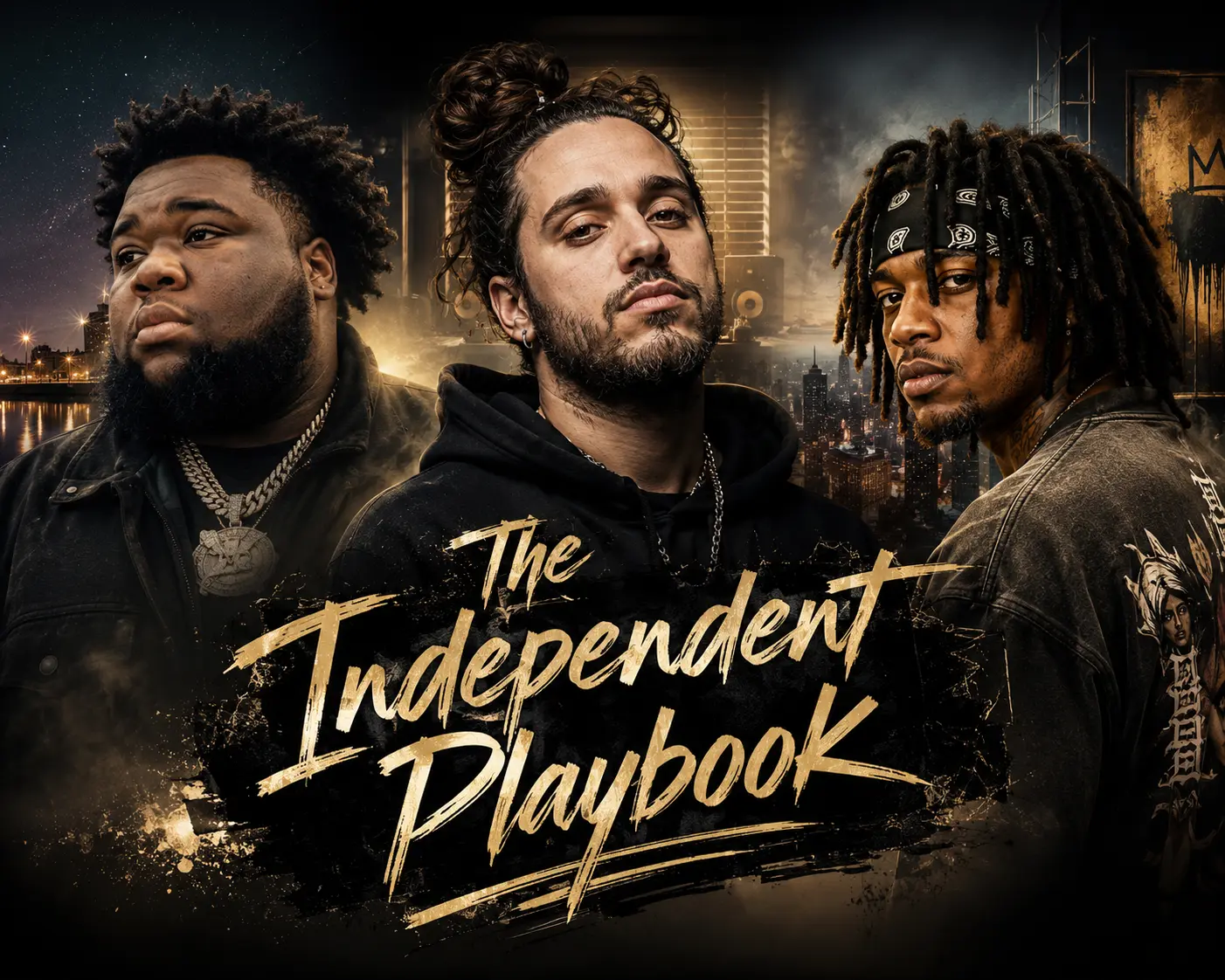
There is a version of the music industry story that most people still believe. It goes like this: you make music, you get discovered, a label signs you, and then you blow up. That story still happens. But it is not the only road anymore, and for a growing number of artists, it is not even the preferred one. Independent artists are building careers on their own terms, using platforms, strategy, and direct fan connection to reach audiences that major labels once controlled exclusively.
Artists like Rod Wave, Russ, and JID's early run did not become household names by waiting for a phone call from an A&R rep. They built audiences one stream, one post, one city at a time. And while each of their paths looked different, the underlying playbook shares more in common than you might think. Here is what that playbook actually looks like in 2026, broken down from the ground up.
Step One: Own Your Sound Before You Own Your Distribution
Every artist who successfully navigated the independent-to-major pipeline started in the same place: they had a sound that was identifiable before they had a fanbase. This is not about being genre-perfect. Rod Wave built his lane on emotional Southern rap that blended pain with melody. Russ fused production, bars, and a motivational edge that felt different from what radio was pushing at the time. JID brought lyrical density to an era that kept telling rappers to dumb it down.
The Artist’s Guide to the Galaxy: How Music Royalties Actually Work in 2026
The lesson is not to be weird for the sake of it. The lesson is to be specific. Sonic identity is what separates artists who build lasting fanbases from those who rack up streams on one song and disappear. Before you touch a distributor or pitch a playlist, spend real time on what your music actually sounds like, what it represents, and who it speaks to. That clarity is what everything else gets built on.
Step Two: SoundCloud as a Laboratory, Not a Launch Pad
SoundCloud functioned as a testing ground where you could fail cheap and learn fast. Artists dropped loosies, freestyles, unmastered cuts, and experimental records in an environment that rewarded authenticity over polish. The comment section gave real-time feedback from real listeners. In 2026, that philosophy still applies even if the specific platform has shifted.
The artists building independent careers today use a combination of SoundCloud for raw drops, YouTube for visual storytelling, and TikTok for cultural insertion. The key is treating early releases as data, not destiny. Pay attention to which songs stop people, which hooks get repeated in comments, and which records drive people to your profile to find more. That information tells you more than any industry consultant will.
Russ was famously known for dropping music relentlessly across digital platforms before he broke through. The volume was intentional. He was building catalog, developing consistency, and turning casual listeners into invested fans. By the time mainstream outlets noticed, he already had an audience that was loyal and a body of work that proved his range.
Step Three: Distribution and the Business of Owning Your Masters
Tools like DistroKid, TuneCore, and UnitedMasters give any artist access to every major streaming platform for a fraction of what it once cost to get a record into stores. But distribution is not the win. It is just the infrastructure.
The real strategic move is master ownership. When you distribute through an independent service and retain your rights, every stream you earn builds equity in your catalog. This is the conversation the industry spent decades making artists feel was too complicated to have. It is not. If you release music through a distributor that lets you keep 100% of your rights, you own something that compounds in value over time. That is a business, not just a music career.
JID's deal with Dreamville was not a traditional major label arrangement in the way that phrase used to mean. It preserved creative space and was built on an existing body of work that gave him leverage. The lesson there is that when artists arrive at the table with a proven audience and owned catalog, they negotiate from a position of strength. That leverage is built long before any deal conversation happens.
Step Four: Playlists Are a Tool, Not a Strategy
Getting on a Spotify editorial playlist can change your numbers overnight. That is real. But artists who build sustainable careers treat playlist placement as one source of discovery, not the foundation of their business. The problem with relying on algorithmic or editorial playlists is that you are building your audience on someone else's infrastructure. The moment the algorithm shifts or the editorial team moves on, your visibility can evaporate.
The smarter play is to use playlists to drive listeners to your own ecosystem. That means a strong artist profile on streaming platforms, an active social presence, and ideally some form of direct communication with your fans, whether that is an email list, a Discord community, or consistent engagement on the platforms where your audience actually lives. Fan retention is the metric that playlist plays cannot tell you, and it is the one that actually determines longevity.
Step Five: The Live Circuit as a Revenue and Relationship Engine
Rod Wave's rise came with a relentless touring schedule through cities that major label promo machines often bypassed. He built loyalty in markets like Tampa, Atlanta, and smaller Southern cities before he was a household name everywhere else. The live performance circuit did two things simultaneously: it generated direct revenue and it converted casual listeners into committed fans.
In 2026, the independent artist's touring strategy has expanded to include headline shows, festival slots, pop-up events, and even virtual performances for global audiences. The principle is the same regardless of format. Every time you perform in front of people who came specifically to see you, you are deepening a relationship that no streaming algorithm can replicate. Those are the fans who buy merchandise, who show up to every city on the next tour, and who tell other people about your music because they feel personally connected to it.
Step Six: When the Major Label Call Comes, Know What You Actually Want
For some artists, the goal was never to stay independent forever. It was to arrive at the major label conversation from a position where they could dictate terms rather than accept them. When you walk into a label meeting with a proven fanbase, owned masters, and touring revenue, you are not asking for an opportunity. You are evaluating whether this partnership serves your existing business.
The rise of artist-friendly deals, joint venture arrangements, and licensing structures instead of traditional 360 deals reflects the fact that independent artists now have options that previous generations did not. Some artists, like Russ, made the decision to stay independent and built a career that challenged the assumption that major label money is necessary for major impact. Others, like many of the Dreamville roster, found partnership structures that preserved ownership while adding resources. There is no universal right answer. The point is that when you have built something real, you get to choose.
The Playbook in Practice
The independent music landscape in 2026 is more competitive and more accessible than it has ever been at the same time. The barrier to release has dropped to near zero. The barrier to standing out has never been higher. That tension is where the real work lives.
What separates the artists who break through from the ones who plateau is not talent alone. It is the combination of a defined sound, strategic use of platforms, ownership consciousness, direct fan relationships, and the discipline to build consistently before the moment arrives. The pipeline from SoundCloud to streaming giant was never just about going viral. It was about building something durable enough that when people finally paid attention, there was already something substantial there to find.
The artists who understood that early are the ones writing the new rulebook. And the good news is that rulebook is open source.
Comments (0)
No comments yet — be the first to share your thoughts.
Leave a comment