

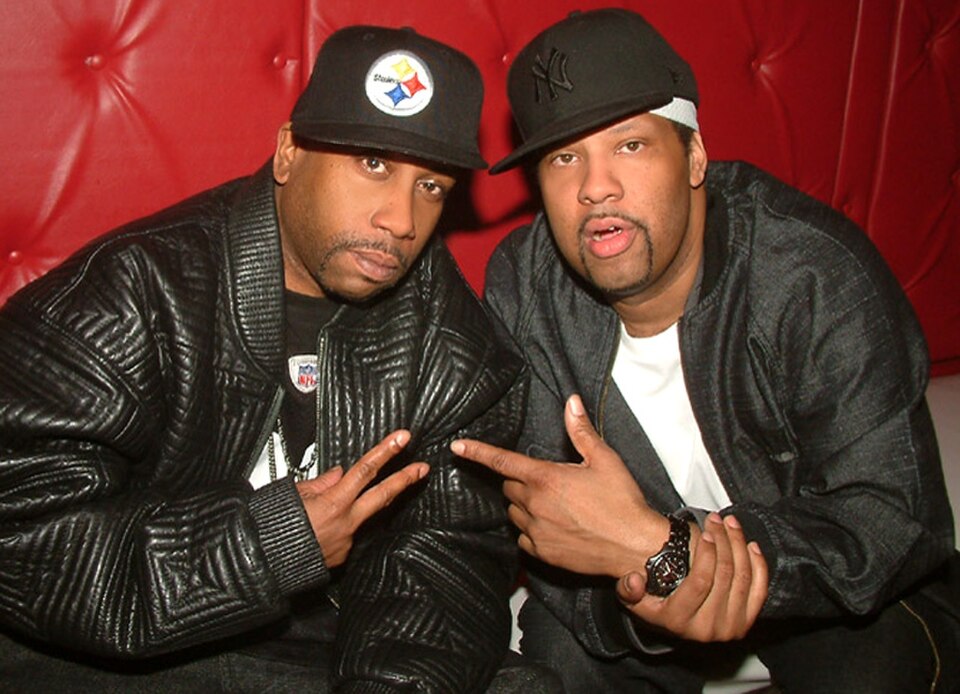
He only needed one line to stop a room! "It takes two to make a thing go right" -- and just like that, a party froze, a crowd turned, and everyone became part of something bigger than themselves. Rob Base had that kind of power. Not the manufactured kind. The real kind. The Harlem kind.
On May 22, 2026, the hip-hop world lost Robert Ginyard, known to the world as Rob Base, at just 59 years old, after a private battle with cancer. He passed peacefully, surrounded by family, just days after celebrating his birthday. His son, Rob Ginyard Jr., posted a simple farewell on Instagram that said everything: "Sleep in peace dad. I love you."
For millions of fans across generations, those words hit like a gut punch. Because Rob Base was not just an artist. He was a feeling. A frequency. A moment in time that somehow never ended.
Rob Base grew up in Harlem, New York, during an era when the streets were the stage and your block was your record label. Hip-hop culture was not yet a global industry, it was a local language, a survival tool, a creative outlet for kids who had everything to say and very little outlets to say it through. Young Robert Ginyard spoke that language fluently from the start.
Who's Really Next? The 2026 Artists That Deserve Your Playlist Add
He and his future partner, DJ E-Z Rock, born Rodney "Skip" Bryce, had been friends since the fourth grade. They grew up together in Harlem, watching the city experiment with sound, watching DJs transform turntables into instruments and MCs turn street poetry into anthems. By the time Rob Base reached fifth grade, he was already performing with a local group called the Sureshot Seven. By high school graduation, it was down to just the two of them, and that was all they needed.
In 1986, the duo released their first track, "DJ Interview," on a compilation for World to World Records. It was raw, hungry, and exactly right for its moment. The buzz they built on that record earned them a proper deal with Profile Records in 1987. From there, everything accelerated fast.
In the summer of 1988, Rob Base and DJ E-Z Rock dropped a single that did not just climb the charts, it redefined what a hip-hop record could be. "It Takes Two" was released on June 1, 1988, built on a brilliantly flipped sample from Lyn Collins' 1972 James Brown-produced track "Think (About It)." The combination was electric. The vocal hook was unforgettable. And the energy was absolutely undeniable.
The record started as a regional hit, the kind of grassroots underground movement that defined authentic hip-hop culture. Then it spread, block by block, city by city, club by club, until it could not be ignored. It peaked at number 36 on the Billboard Hot 100 and hit number three on the Hot Dance Music/Club Play chart. Both the single and the debut album of the same name went platinum, certified by the RIAA in 1989.
Music publication Spin ranked "It Takes Two" number one on their "100 Greatest Singles of All Time" list in 1989. AllMusic critic Stephen Thomas Erlewine called it, simply, one of the greatest hip-hop singles ever cut. It is hard to argue with that. The song has been sampled by Snoop Dogg, covered internationally, licensed across films and television for decades, and it still moves bodies at sporting events, weddings, and parties in 2026. That kind of staying power is not luck. That is legacy.
The debut album, released August 9, 1988, delivered more heat alongside the title track, including "Joy and Pain," which became a minor hit, and "Get on the Dance Floor," which climbed all the way to number one on the dance chart in January 1989, staying there for two weeks. Rob Base was not a one-hit wonder. He was a one-of-a-kind talent who happened to create a record so perfect it overshadowed everything around it.
Success in hip-hop, especially in the late 1980s, rarely came without cost. Rob Base navigated a complicated road after the explosive debut. There were vicious rumors about his personal life circulating in the industry, the kind of noise that would have broken a lesser artist. There were legal battles too, a copyright infringement lawsuit filed by Frankie Beverly of Maze over "Joy and Pain" added serious stress to what should have been a victory lap.
He responded by going solo. His 1989 project, "The Incredible Base," showed range and resilience, though none of its singles carried the same seismic impact as "It Takes Two." The music industry has a way of demanding lightning in a bottle twice, immediately, on cue -- and almost no one can deliver that. Rob Base was human, navigating the machine, and doing it largely without the kind of label infrastructure that today's artists take for granted.
The duo's career went through more downs than ups through the 1990s. But Rob Base never disappeared. He kept performing, kept connecting with fans, and through nostalgia tours like the "I Love the 90s Tour," he reminded audiences exactly why they fell in love with that era of authentic hip-hop storytelling in the first place. He was still a headliner. Still a draw. Still that guy.
In his later years, Rob Base remained active in ways that showed his creative instincts never dulled. He developed work through Funky Base Inc., his own creative vehicle, and mentored younger artists who were navigating the same pressures he once faced. He served as executive producer on the 2025 independent horror film "Urban Flesh Eaters," stepping into a new medium and proving there was still more Robert Ginyard had to offer the world.
Just four days before he passed, he posted on Instagram to celebrate turning 59. "Happy 59th Birthday to me. God thank you for allowing me to see another year," he wrote. There was no announcement about his illness. There was no public battle. There was just a man, grateful, still standing, still connecting with the people who loved his work. That quiet dignity was characteristic of who he was.
What Rob Base built cannot be measured purely in platinum certifications or chart positions. "It Takes Two" became the kind of cultural touchstone that belongs to everybody -- the kid discovering hip-hop for the first time, the parent who danced to it in a Harlem club in 1988, the DJ who still drops it to guarantee a reaction at 2 AM. The song crossed genre lines, demographic lines, geographic lines. It was the rare piece of art that did not ask permission to matter.
His family's statement said it plainly and powerfully: "Rob's music, energy, and legacy helped shape a generation and brought joy to millions around the world. Beyond the stage, he was a loving father, family man, friend, and creative force whose impact will never be forgotten."
That is the full picture of Rob Base. Not just the hit. Not just the hook. A man from Harlem who started performing in fifth grade, stayed true to his block, built something with his best friend, and sent it out into the world without knowing it would still be playing 38 years later. He made a moment that never stopped looping.
Rest in peace, Rob Base. Thank you for the energy, the culture, and the proof that sometimes it really does take two.
You gave us your half. We will hold the other one forever.
Comments (0)
No comments yet — be the first to share your thoughts.
Leave a comment