

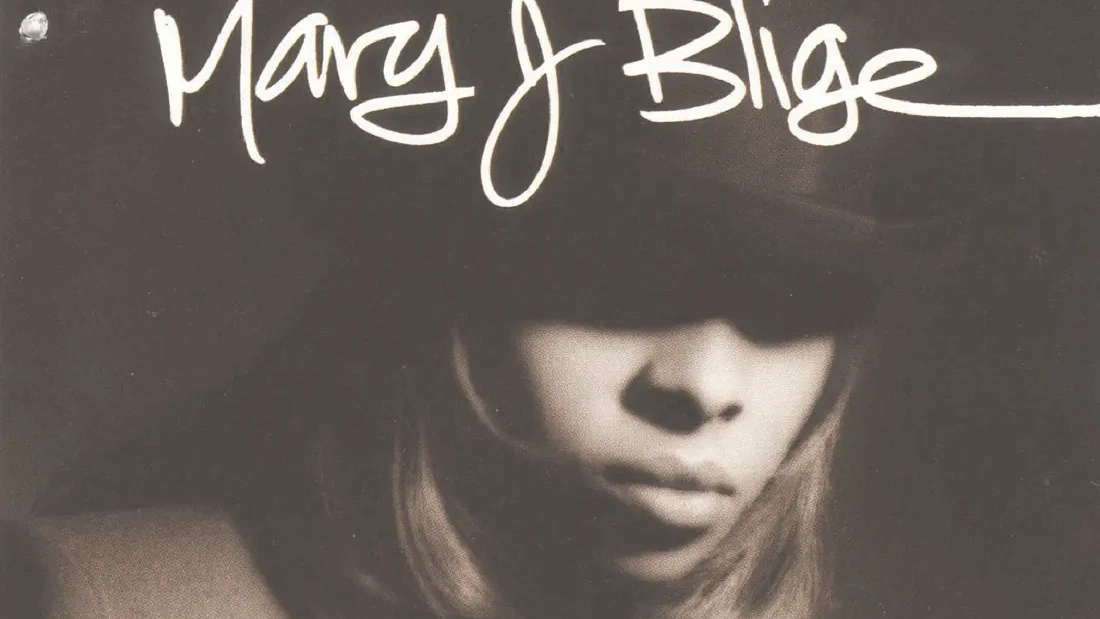
A federal appeals court on Monday (Nov 23) turned away Tuff City Records' copyright claim against Mary J. Blige's "Real Love," affirming the dismissal of a suit that tried to trace the 1992 hit back to the Honey Drippers' 1973 protest record "Impeach the President." The U.S. Court of Appeals for the Second Circuit issued an unsigned summary order upholding the September 2025 ruling by U.S. District Judge Dale Ho, who had thrown the case out and refused to let Tuff City try again. Blige was never a defendant. The case was brought against Universal's publishing arm, and Songs of Universal, the entity that took over as defendant, did not dispute that copying had happened.
That concession is what makes the ruling worth slowing down for. Tuff City's theory ran through three records: the drums from "Impeach the President" were sampled on Audio Two's 1987 single "Top Billin'," and "Top Billin'" was then sampled on "Real Love," the single from Blige's debut album What's the 411? that reached No. 7 on the Billboard Hot 100. Nobody on the Universal side argued that the drums were not there. The court held that even with the copying conceded and the percussion assumed to be protectable, "Real Love" was not substantially similar to the song Tuff City owns.
The panel wrote that "the songs differ in their lyrics, melody, genre, subject matter, and overall sound." It set the two records side by side to show why: "Impeach the President" is a group vocal in call-and-response with horns and guitars, while Blige sings over piano and percussion. Judge Ho had been more specific about how little was at issue, noting that the drum segments compared in Tuff City's own complaint "each amount to less than one second of the respective compositions."
Two copyrights live inside every sample
The ruling only makes sense once the drum break is split into its two legal halves. Every recorded song carries a copyright in the composition, meaning the melody, harmony, rhythm and lyrics that a songwriter writes and a publisher administers, and a separate copyright in the sound recording, meaning the specific performance captured on tape and usually owned by a label. A direct sample lifts both at once, which is why HitsCulture's guide to clearing a sample tells artists to get a master use license from the label and a separate license from every publisher with a share before the track goes to a distributor.
Tuff City owns both halves of "Impeach the President," the Honey Drippers recording and the underlying composition, and the "Real Love" fight had already been settled on one side. Its complaint said the company had "reached an agreement with UMG Recordings, Inc. with respect to the presence of the uncleared sample" on the "Real Love" master. Tuff City has been claiming a piece of the song for years, too. In 2014 it sued UMG and its then-parent Vivendi over a "Real Love" sample in Frank Ocean's "Super Rich Kids," asserting that agreements tied to "Impeach the President" gave it a share of the "Real Love" composition. The suit that reached the Second Circuit this year was about that other half, the composition, and it asked the court to treat a fraction of a second of drumming as a piece of songwriting that Universal's publishing company had to pay for.
That is a much harder claim to win, because the part of a drum break that makes producers reach for it is usually the sound itself: the snap of the snare, the room it was cut in, the swing of the kick against the hi-hat. Those qualities belong to the recording. What is left for the composition is the pattern, and a pattern of drum hits is about as close to a basic building block as music gets. The appeals panel said so directly.
The Sheeran case set the rule on rhythm
The panel leaned on its own November 2024 decision in Structured Asset Sales v. Sheeran, the case that cleared Ed Sheeran's "Thinking Out Loud" of copying Marvin Gaye's "Let's Get It On." In that opinion, Judge Michael Park wrote that a four-chord progression paired with a syncopated harmonic rhythm was too unoriginal to protect even in combination, and the Supreme Court declined to hear the case in June 2025. Quoting that decision on Monday, the "Real Love" panel wrote that "basic musical building blocks like notes, rhythms, and chords are generally not copyrightable," and added that "similarity in some rhythmic elements alone is legally insufficient for a copyright infringement claim."
Put those two holdings next to each other and the shape of the law in the Second Circuit, which covers New York, Connecticut and Vermont and hears a large share of the music industry's copyright fights, comes into focus. A shared groove, a shared chord pattern or a shared drum figure will not carry a composition claim on its own. The plaintiff has to show that the protectable expression in the older song, the melody and the words above all, turns up in the newer one. That is a high bar for any case built on a sample, because producers usually loop a break precisely so a new song can sit on top of it. "Real Love" shares a beat with "Impeach the President" and almost nothing else.
The order is a summary order, which under Second Circuit rules carries no precedential effect, so it does not bind the next panel the way the Sheeran opinion does. It does show how the court reads Sheeran when a sampled drum break, rather than a written chord progression, is the thing in dispute.
Why Tuff City says the business is at stake
Tuff City, whose legal name is TufAmerica Inc., has spent decades pursuing claims over "Impeach the President," and its record in court has been mixed. Suits involving Jay-Z and the Beastie Boys were dismissed by New York federal courts in 2014 and 2015, while a claim against Kanye West ended in a settlement. The same panel on Monday also left in place orders keeping parts of a separate settlement between Tuff City and an unnamed Universal affiliate under seal, finding that Tuff City had waived the challenge by not opposing the sealing when Universal first asked for it.
Hillel Parness, the label's lawyer, told Rolling Stone that Tuff City was "very disappointed" and "will be seeking further judicial review." His argument is that the ruling upsets settled law and a long industry habit of paying the owners of a sampled song even when the sample has been chopped, filtered or reworked beyond easy recognition. From Tuff City's seat, a drum break that gets cleared on the master side and then pays nothing on the publishing side has only been half licensed, and the label is defending a version of the business in which both halves get paid.
Further review can mean asking the full Second Circuit to rehear the case or petitioning the Supreme Court, and neither path is quick. The Supreme Court already passed on Sheeran, the case this order rests on, which leaves Tuff City arguing that the justices should take up a narrower version of a question they declined last year.
What the ruling means for the next flip
None of this makes sampling free. The ruling says nothing about the sound recording, because that half of the "Real Love" dispute never reached the court, and the master side is where the strictest rules still live. The Sixth Circuit's 2005 Bridgeport Music decision held that even a tiny piece of a recording needs permission, while the Ninth Circuit took the opposite view in its 2016 Madonna case. Either way, producers who lift a break from a record still owe the label that owns it. What has narrowed, at least in the Second Circuit, is the publisher's claim on a beat when the beat is all that was taken. The clearest beneficiary may be the producer who replays a classic drum pattern instead of sampling it, since a replay never touches the original master, and Monday's order suggests that a rhythm alone gives the original songwriter's publisher very little to collect on.
The same court is weighing a very different question about the same split between songs and masters. On Sept. 23, Judges Joseph Bianco, Gerald Lynch and José Cabranes heard Salt-N-Pepa's appeal of the dismissal of their bid to reclaim their master recordings from Universal under the Copyright Act's 35-year termination right, a case about who owns the recording rather than what a composition protects. Between the two, the Second Circuit is drawing the line that every hip-hop and R&B catalog depends on, from the label side and the publishing side at once.
A drum break can be a recording somebody owns outright and still not be a song anybody owns, and on Monday the Second Circuit said so about one of the most borrowed breaks in hip-hop. If you are building tracks from old records, keep clearing the master, and keep paying publishers when you take their melody or their words. Then watch the docket for Tuff City's next filing, because the label has already said one is coming.

Comments (0)
No comments yet — be the first to share your thoughts.
Leave a comment