

On April 10, 2023, Murray's Cheese posted a video to Instagram with Bill Withers's "Lovely Day" playing underneath it, and pushed the same clip to a second account it runs. Withers had been dead three years. According to the complaint Sony Music Entertainment filed on August 21 in the Central District of California, that recording appears in the advertising of Murray's parent company, Kroger, at least seven times.
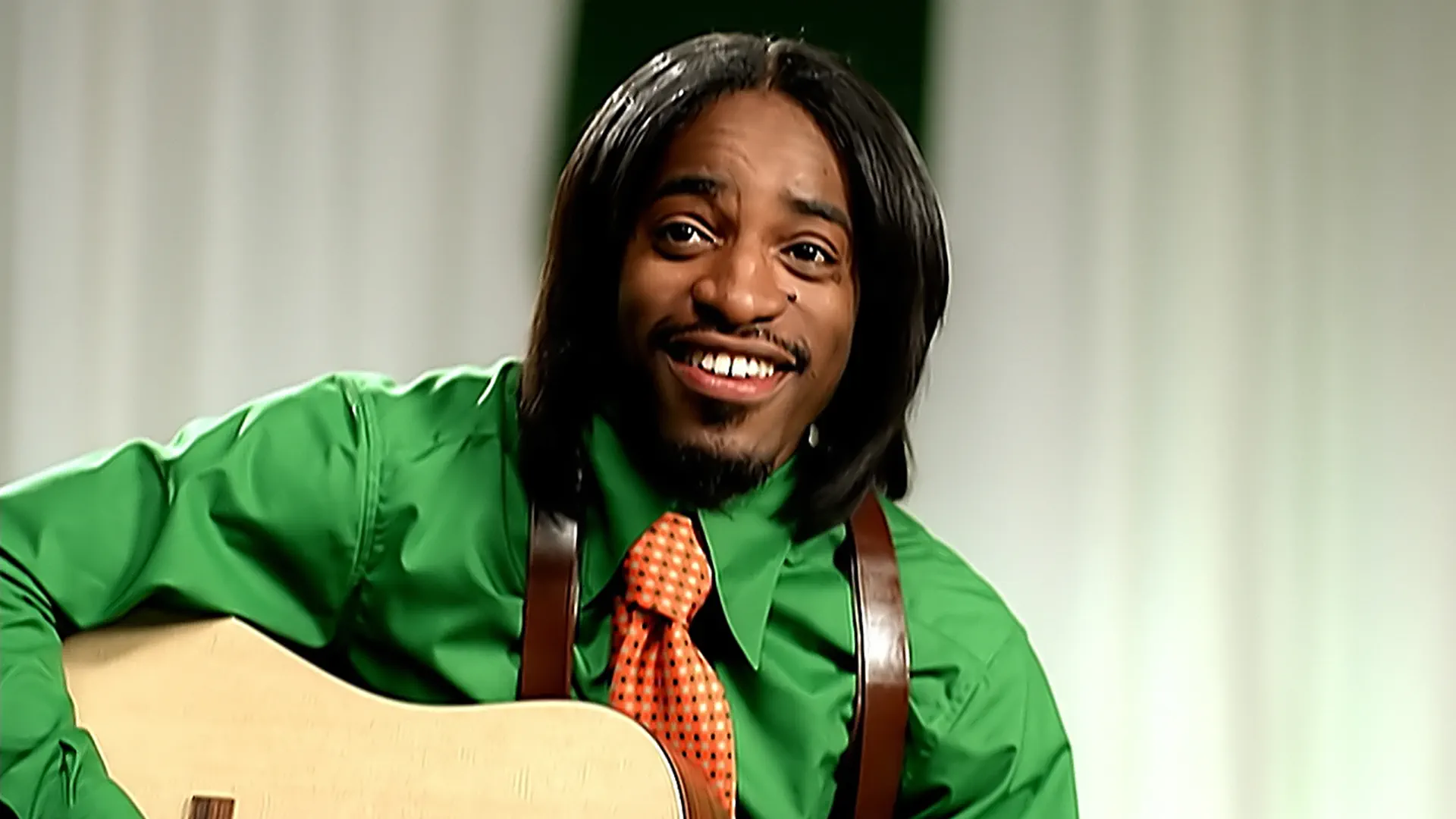
The same complaint counts at least twelve uses of OutKast's "Hey Ya!" and at least twelve of Mariah Carey's "All I Want for Christmas Is You," spread across six accounts including Ruler Foods, Fred Meyer Jewelers and Vitacost. Run-DMC's "Peter Piper" ran on a May 2025 post that Ralphs, Kroger and Fred Meyer Stores published jointly. Beyonce's "CUFF IT" went up as a Mariano's Instagram Story, SZA's "Chill Baby" came through influencers tagging three Kroger banners at once, and Harry Belafonte's "Jump in the Line" appeared on the Murray's Cheese account on July 20 of this year. Sony and nine affiliated labels allege 392 unauthorized uses in total across The Kroger Co. and eighteen current and former subsidiaries, and they are asking for as much as 150,000 dollars per infringed work.
That number is the federal ceiling for willful infringement, six times the ordinary statutory maximum, and Sony devotes much of sixty-nine pages to establishing why this case qualifies. Kroger, the complaint says, signed at least fourteen licenses with Sony between 2017 and 2025 covering internet and social media use of its recordings, and disclosed roughly 1.18 billion dollars in advertising costs in the fiscal year that ended in January. Sony says it first put the company on notice on June 30, 2025, that Kroger refused to enter a tolling agreement so the two sides could negotiate, and that new infringing posts went up as recently as August 12, 2026.
"the Kroger Parties cannot claim ignorance of the licensing requirement," the complaint states.
The license that never covered this
Platforms license music from labels so that ordinary users can post personal, non-commercial video. That license runs to the platform and covers a graduation clip set to "Hey Ya!" It does not follow the recording into a corporate account advertising a grocery sale, which is why every major platform maintains a separate, free, pre-cleared catalog for business pages. TikTok's own advertiser documentation states the rule without hedging:
"Businesses cannot use the general music library for commercial usage."
Sony's theory is that the pre-cleared libraries could not do the job Kroger wanted done, because the value of the recordings was the point. The complaint alleges that the Kroger companies selected specific tracks for their cultural and seasonal associations, then used those associations to move product, and it supports the claim with dates. Mariano's posted a video using Miley Cyrus's "Flowers" on January 21, 2023, nine days after release and during the week it debuted atop the Hot 100, and another using Harry Styles's "Music For a Sushi Restaurant" seven days after that single arrived. Murray's Cheese Bar used Beyonce's "TEXAS HOLD 'EM" within three weeks of release and days after it reached number one. A Kroger TikTok post promoting holiday cocktails ran Carey's Christmas record with lyrics from the song quoted in the caption.
One episode in the filing shows the licensing line more clearly than any of the trending-audio posts. In November 2020, Kroger held a genuine seven-week Sony license for The Lovin' Spoonful's "Do You Believe in Magic?" for a holiday campaign, running from November 13 through December 31 of that year. Seven Kroger banners, among them City Market, Baker's, Dillons, King Soopers, Fry's, Pick 'n Save and Ralphs, posted their own branded versions and then left them up. Sony says the Ralphs video was still viewable on August 17, 2026, more than five and a half years after the license expired.
Two copyrights, and only one is in play
Every recorded song carries two separate copyrights that are cleared through two separate transactions. The sound recording, meaning the particular performance captured in the studio, is controlled by the label and cleared through a master use license. The composition, meaning the melody and lyric underneath it, is controlled by the publisher and the songwriters and cleared through a synchronization license. There is no compulsory rate for either one, so both are negotiated at whatever the market will bear.
The Kroger action is a master recording case and nothing else, brought by ten label entities including LaFace, which is OutKast's label. Publishers have been litigating the composition side separately, and their record is instructive: Kobalt Music Publishing America, Artist Publishing Group, MXM Music and Prescription Songs sued fourteen NBA teams in the Southern District of New York in July 2024 over songs by Jay-Z, Cardi B, Migos and OutKast, seeking the same 150,000 dollar statutory ceiling. The teams pushed back publicly, pleading fair use and describing the suits as extortion, and after roughly a year of litigation they settled anyway.
Apply that structure to "Lovely Day." The recording was released on Columbia in 1977, from Menagerie, and Columbia belongs to Sony, so Sony owns the master and Sony is the plaintiff. Withers wrote the song with Skip Scarborough, and the publishing has been administered on behalf of his family. Sony's complaint asserts no claim on the composition, which means the seven counted uses generate a claim only on the side of the copyright the Withers estate does not control.
A campaign, not a lawsuit
Kroger is the newest entry in a docket that now runs across all three majors and several dozen brands. Sony sued Marriott over 931 alleged uses and the two sides jointly moved to dismiss with prejudice in October 2024 on undisclosed terms. Sony settled with the University of Southern California in March over 283 athletics posts featuring 170 of its songs. Warner sued Crumbl in April 2025 and sued Designer Brands, the parent of DSW, on May 1 over more than two hundred recordings and compositions. All three majors sued Bang Energy over TikTok videos, and judgments followed for Universal and Sony.
Designer Brands is the case worth reading closely, because the company tried the one argument every defendant in this campaign would want to make. Facing a Sony suit filed in August 2025 over at least 122 recordings across more than 170 promotional videos, it went to federal court in Ohio seeking a declaratory judgment that its posts were covered by the labels' own licensing deals with Instagram and TikTok. Judge Michael Watson dismissed the claims against Sony earlier this month as an anticipatory filing, without reaching the argument itself. On August 17, the two sides told the California court they had reached a settlement in principle. Terms were not disclosed. Four days later, Sony filed against Kroger in the same court.
Every resolution in this campaign has landed the same way, which leaves no public record of what unlicensed commercial use of a hit record actually costs a company, or of what happens to the payment afterward.
The question nobody has answered
Searching the filings and the trade record turns up no statement by Sony, or by any major label, describing whether recoveries from the brand-advertising campaign are shared with the featured artists whose recordings fill the exhibits.
Contract language cuts against it, and there is a recent ruling that shows how. When Black Sheep sued Universal in January 2023 over the label's Spotify equity, the case turned on a net receipts clause in the duo's 1990 Polygram deal entitling them to half of amounts received that were solely attributable to their master recordings. Judge Jennifer Rochon dismissed the suit in November of that year, finding the Spotify stock was "not solely attributable or traceable to the actual exploitation" of any particular artist's recordings.
A lump sum resolving 392 uses of dozens of recordings owned by ten corporate entities, paid on sealed terms, fits that description almost by construction. Most legacy artists also carry unrecouped balances, so a flow-through would be applied as a credit against debt rather than issued as a check. Both facts follow from how record label contracts are drafted rather than from anything hidden.
A label can choose otherwise, and one did. After the majors and ABKCO settled with SiriusXM for 210 million dollars in 2015 over pre-1972 recordings, Warner Music Group committed to sharing its allocation with artists on the same basis as ordinary statutory SiriusXM revenue, paid out through SoundExchange. Warner's SEC filings put its cash distribution from that settlement at 33 million dollars and confirm the artist share went to SoundExchange. Nothing comparable has been announced by any label in connection with the brand advertising cases.
What the exhibit list is made of
Read the Kroger song list as a cultural inventory instead of a legal one. "Hey Ya!" and "Lovely Day" and "Peter Piper" and "Ain't No Stoppin' Us Now" and "CUFF IT" and "Jump in the Line" are the records a grocery chain reaches for when a video needs to feel warm, communal and a little celebratory, and Black artists made all of them. Their commercial utility was consumed for years and the licensing bill was skipped. The bill has now arrived as a corporate asset dispute between a record company and a supermarket chain, with the artists appearing as line items in Exhibit 1.
Sony is protecting an asset it owns, which is its right, and the principle it is enforcing benefits everyone downstream: a record used to sell something gets paid for. Our reporting on who owns Black music has never suggested otherwise. Enforcement and compensation simply run on separate tracks, and only one of them files public documents.
What an artist should take from this
Know which half of your copyright the label controls and which half you or your publisher control, because the two generate money through different channels and one can be enforced at full statutory value without the other collecting anything, a point we laid out in detail in our guide to how music royalties actually work. Read the net receipts language in your agreement, and if you are negotiating one now, ask that infringement recoveries be addressed by name rather than left to a general clause that a court can read narrowly, since Black Sheep lost on the word "solely." Statutory damages are a lever only the registered copyright owner can pull, which is what separates a claim worth 150,000 dollars a work from a grievance.
Kroger has not responded publicly to the complaint, which demands a jury trial and states that Sony's investigation is continuing. Sony's own filing says the infringements deprived its artists of revenue. No settlement in this campaign has yet shown what any of those artists received.

Comments (0)
No comments yet — be the first to share your thoughts.
Leave a comment