

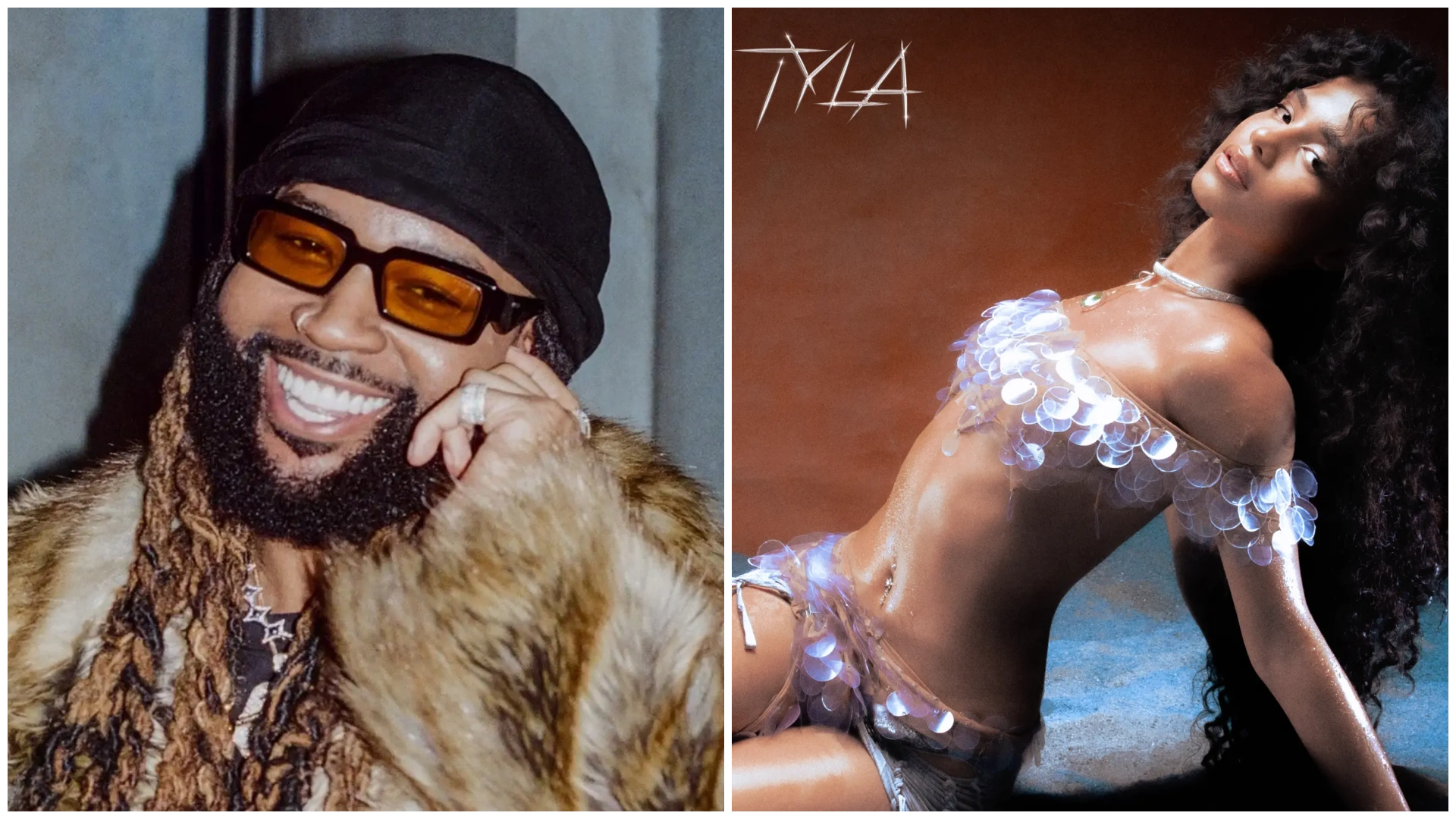
Tyla and PARTYNEXTDOOR took home the two fan-voted trophies Friday night (Nov 27) as the 2026 Soul Train Awards returned to television for the first time since 2023, airing on BET and, for the first time in the show's history, simulcast on CBS. Anthony Anderson hosted the ceremony, which was taped on November 5 at the Harris Theater for Music and Dance in Chicago, the city where Don Cornelius launched Soul Train as a local broadcast in 1970.
Tyla won R&B/Soul Song of the Year for "Chanel," with Chicago native LisaRaye McCoy presenting the award. The South African singer has spent the past few years folding amapiano's log-drum bounce into a pop and R&B hybrid that travels well. On "Chanel," she settles that sound into a sultrier, mid-tempo pocket than "Water," the record that won her the first Grammy for Best African Music Performance in 2024. Because fans decided the category, the win says less about industry gatekeepers than about how fully her audience has come to hear her as an R&B singer rather than a crossover novelty.
PARTYNEXTDOOR became the inaugural winner of Spotify's RNB X International Artist Award, which Chance the Rapper presented on a night when Chicago's own handled nearly every handoff. Spotify users chose the winner. As a first name on a new trophy, the Mississauga, Ontario, singer and producer makes sense, since the moody, minor-key slow jams on his own records and his writing for Drake and Rihanna helped define the sound of Toronto R&B for more than a decade. Neither he nor Tyla attended the taping in Chicago.
That left the room to the honorees, and the three special awards were built to tell a single story. The fan vote looked outward toward a global audience that streams South African amapiano and Canadian slow jams with equal ease, while the honors looked back to the music's foundations and forward to the voices that will carry it.
Chaka Khan received the Classic Soul Honor from Common, the South Side rapper and actor, who opened his presentation with a brief freestyle. Khan grew up in Chicago and was fronting the local band Rufus by 1971, which made the honor something closer to a homecoming than a lifetime salute. It caps a year in which she received a Grammy Lifetime Achievement Award and released Chakzilla, her 13th album, three years after her induction into the Rock and Roll Hall of Fame. HitsCulture framed the Chicago staging as a homecoming when the honorees were announced in October, and the broadcast leaned into that idea from the first frame to the last.
"Soul music is more than something we sing. It's our history. It's our joy. It's our pain. It's our churches. And our love for one another," Chaka says in her speech. "This is what the world needs now. To the young people coming up, stand strong. Keep your voice and follow your heart. I've been so blessed to share my music with the generations of people around the world for a long, long time, 50 years. We've still got so much music to make and so much love to give, and we're not finished yet."
Khan closed the show herself, running from "Through the Fire" to "I'm Every Woman" in a set that reached across both ends of her solo catalog. "I'm Every Woman," her 1978 solo breakout, has been a closing number at weddings and cookouts for nearly 50 years, and it gave a Chicago homecoming the only ending it could have had.
Durand Bernarr accepted the Soul Personified Honor and performed, capping a long night of work that also had him co-hosting the red carpet preshow, "Soul Train Awards Red Carpet Show: Back on Track," alongside Brian McIntosh, Tierra Marsh and Kevin Shephard. The Cleveland-born Grammy winner spent years singing background for Erykah Badu before his own records caught up with his reputation. His range, which runs from a chesty growl to a bright, fluttering head voice within a single phrase, is the kind of showmanship this award was designed to recognize.
British Sudanese singer Elmiene received the New Soul Honor, which BET reserves for a rising artist whose voice points toward where R&B goes next. He also performed, and for a newcomer still introducing himself to American audiences, sharing a bill with Khan and Bernarr is its own kind of endorsement.
The musical program opened with Kirk Franklin performing "This Time," a gospel start that Anderson interrupted with a comedic bit of his own. Lucky Daye led a medley joined by Muni Long that included their collaboration "Knockin'," pairing two singers who have each built their recent careers on grown, slow-burning love songs.
El DeBarge delivered the night's first tribute, honoring Freddie Jackson, who died in October, with a performance of "You Are My Lady." BET had not named the song when HitsCulture reported the booking last week, and the choice of the 1985 ballad that made Jackson a fixture of quiet storm radio set DeBarge's light falsetto against a melody Jackson sang from the chest. The pairing honored two men who ruled R&B radio in the same mid-1980s stretch without asking either one to sound like the other.
A second tribute honored the late Dolly Parton, with Mickey Guyton, the first Black woman nominated as a solo artist in a country Grammy category, and Brittney Spencer, who sang on "Blackbiird" from Beyoncé's Cowboy Carter, performing "Jolene" while Robert Randolph played steel guitar. Putting a country tribute on a soul stage was a pointed choice, since both singers have spent their careers arguing that the line between the two genres was always thinner than radio formats suggested.
The 2026 Badu Cypher, produced and directed by Erykah Badu, brought together Rapsody, CeeLo Green, Dave Hollister and Avery Wilson, with RC Williams on keys. Badu built the segment around artists who move easily between rapping and singing, pairing Rapsody's dense, rhythmic writing with the church-schooled voices of Hollister and Wilson. For Green, it was a return to national television about a month after the cancellation of his Gnarls Barkley tour dates.
BET's Amplified showcase gave two rising artists their own moments. Actor Larenz Tate introduced JayDon, who performed "Velvet Revolver" and "The Way You Move," and LeToya Luckett-Coles introduced Jai'Len Josey, who sang "Won't Force You."
Chicago itself was the show's loudest presence. Comedians DeRay Davis and Deon Cole, both from the city, co-presented awards, Mayor Brandon Johnson addressed the crowd about the city's music history, and historian Shermann "Dilla" Thomas appeared in a video segment that toured local businesses and famous residents. The script found room for Harold's Chicken and Lake Shore Drive, and two audience members were invited onstage to demonstrate classic Chicago street dances. BET President Louis Carr, a West Side native who leaves the network at the end of the year, had promised a show with local flavor, and the broadcast delivered it in nearly every segment.
The format was the clearest change from earlier editions, which handed out a long slate of competitive categories across a full evening. This year's show presented just two competitive awards and gave the rest of its time to honors, tributes and performances, a trade that suited a revival more interested in reintroducing the brand than in settling a season's worth of races. The red carpet preshow carried some of the competitive energy instead, revealing a fan-voted countdown of the 20 greatest R&B songs of the 2020s that put Wizkid and Tems' "Essence" in the top spot.
BET will air an encore presentation Sunday night (Nov 29) at 8 p.m., Eastern time. Anyone who watches it will see a show that handed out only two competitive trophies and still felt complete, because its strongest moments belonged to Khan, Bernarr and the tributes rather than to the envelopes. The Soul Train Awards came home to Chicago and remembered that the show was always about who gets to stand on the stage.
Watch more performances and moments here!

Comments (0)
No comments yet — be the first to share your thoughts.
Leave a comment