

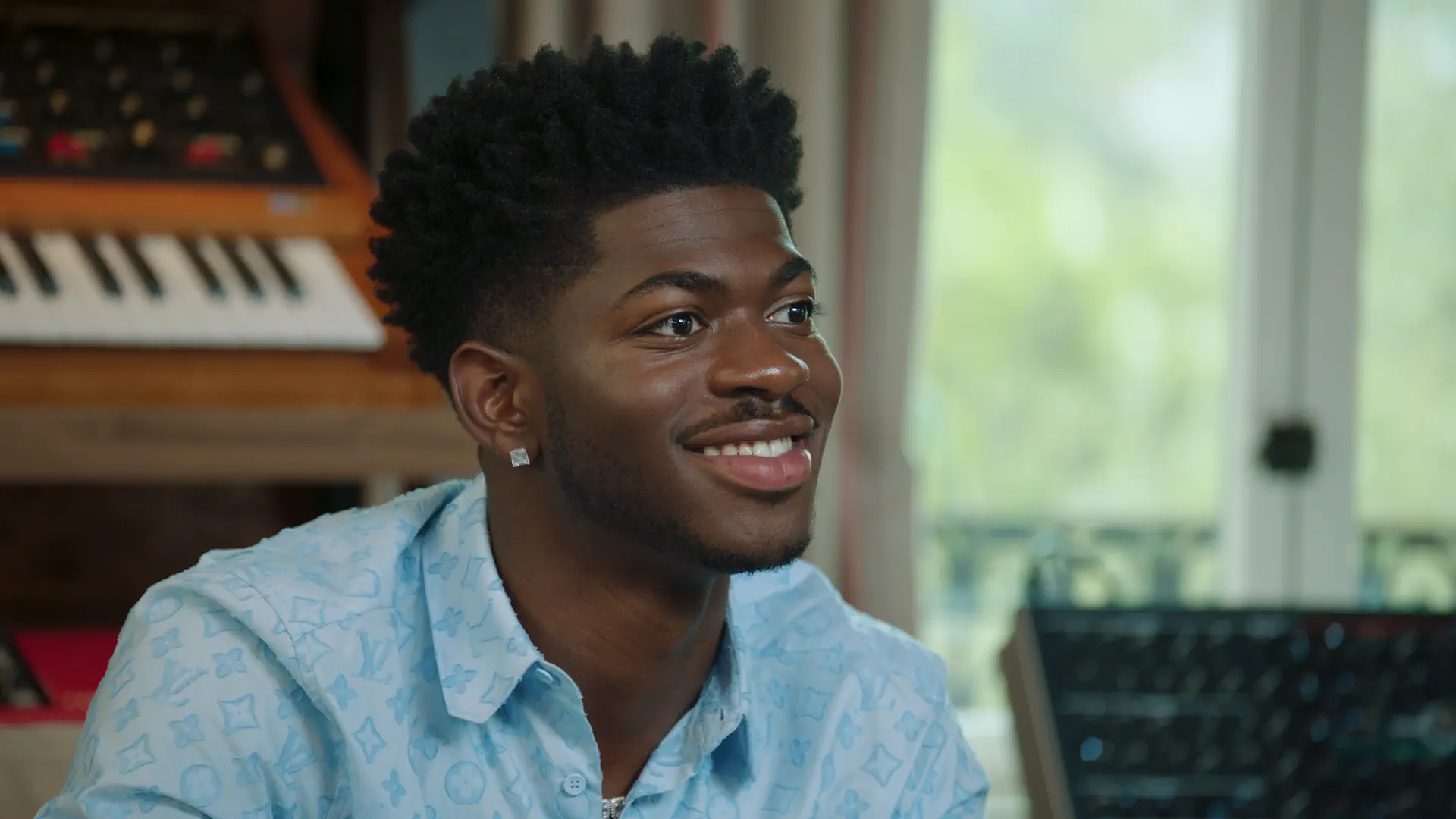
YoungKio was a teenager in the Netherlands when he uploaded a banjo loop to BeatStars and priced it at thirty dollars. A Georgia rapper bought it, cut a vocal over the top, and put the record out himself. Kio later told Splice he had come across the song "when it still had like 8,000 plays on SoundCloud", and the record was Lil Nas X's "Old Town Road." Thousands of artists complete that same thirty-dollar transaction every night, and most of them never open the document attached to it.
What you pay for on a beat marketplace is permission to use a piece of music that somebody else continues to own, on terms that producer wrote personally, and the price on the button tells you almost nothing about those terms. A cheap capped lease and an expensive unlimited one can carry identical publishing demands, and the expensive one can take half your master.
Here is the short version before the long one. A non-exclusive beat lease gives you a license, not a copyright. An exclusive purchase usually gives you a better license and still leaves the composition with the producer. Ownership moves only through a signed written assignment, and a PayPal receipt is not one.
A marketplace that has paid out $450 million and standardized almost nothing
BeatStars told Music Business Worldwide in January 2026 that it had paid creators more than $450 million and passed ten million users, up from $325 million in June 2024 and $150 million in 2021. In March 2026 the company said its scanning of streaming services had already identified more than forty million songs built on beats sold through the platform. That is the scale of the pipeline feeding modern rap and R&B, and it runs on contracts nobody negotiates.
Sellers keep their sales revenue, which the company advertises at zero commission, and the platform instead adds a twelve percent service fee to the buyer's subtotal. The marketed thirty-dollar beat clears checkout at $33.60. Producers may absorb that fee for their customers, and most do not.
More important than the fee is what the platform does not do. BeatStars supplies license templates with a term-years variable and lets sellers set their own ceilings on monetized streams, monetized music videos, for-profit performances, free downloads and radio play, then offers full customization on top. There is no such thing as the BeatStars license. There is only the contract that one producer typed on the page you are looking at.
The cap that only you are watching
Capped leases are the default at the entry tier. One live store on Gumroad sells a basic lease at twenty-five euros with a fifty-thousand-stream ceiling, a premium tier at one hundred euros with stems and a hundred-thousand-stream ceiling, and an exclusive at seven hundred. Another producer's recording lease runs unlimited streams, unlimited copies and no expiration, and takes half the publishing and half the sound recording in exchange. Both are sold as leases. Only one of them is cheap.
Chris Dampier, vice president of TuneCore Publishing, describes what happens when a record outruns its ceiling in TuneCore's licensing guide: "Once that cap is hit, the artist is no longer entitled to collect any master royalties until the license has been renewed. The distributor doesn't know this, so it's on the artist to track usage and renew accordingly."
Nothing in the chain enforces that. Your distributor keeps paying, your dashboard keeps counting, and the breach sits there accruing until somebody with a lawyer notices. The artists who get caught are the ones whose records worked.
Exclusive is a sales term before it is a property term
An exclusive purchase removes the beat from the marketplace and stops the producer selling it again. It does not hand you the song. Dampier puts the correction plainly: "It is important to note that even if you are selling an exclusive license, you are not transferring ownership of the composition rights." BeatStars says the same thing in its own explainer, where exclusive buyers own the master while the producer keeps composition ownership and publishing.
That distinction explains the most common panic on the non-exclusive tier, where producers typically retain YouTube Content ID rights and claim the video of the artist who paid them. That claim is usually contractually correct rather than theft, which is the more uncomfortable finding.
What the law actually requires to move ownership
Copyright vests in the author the moment the work is fixed, under 17 U.S.C. 201. A work made for hire is the exception, and Section 101 allows it in only two situations: work by an employee inside the scope of employment, or a commissioned work falling into one of nine listed categories, agreed in a signed writing. Those categories cover translations, atlases, tests and contributions to motion pictures. Sound recordings are not among them.
Congress briefly changed that. Language adding sound recordings to the definition went in during late 1999 and came out again the following year, and the Copyright Office recorded that the repeal was meant "to restore status quo as it existed prior to Nov. 29, 1999", with instructions that neither the addition nor the deletion be given weight by any court interpreting the section. The work-for-hire stamp on a beat-store contract with an independent producer is doing very little work.
What does move ownership is Section 204(a), which voids any transfer of copyright ownership unless there is a written instrument signed by the owner of the rights conveyed. Read your receipt again with that sentence in mind.
The publishing split hiding inside the tier you can afford
The convention across producer deals is a fifty-fifty writer split, and TuneCore lays out two versions that look nearly identical on the page. In the first, the producer takes half the writer's share and the entire publisher's share. In the second, producer and artist split writer's and publisher's shares evenly down the middle. One of those is materially worse than the other and the difference is a single clause.
On the master side, attorney Glenn T. Litwak writes in Music Connection that the standard producer royalty is three percent of top-line record pricing, with superstar producers receiving four. Attorneys Adam Freedman and Alyssa Minnec put the industry standard at three to four percent and add the detail artists skip past, which is that producer fees are recoupable advances the label earns back before anyone sees another dollar.
Where the money goes when the paperwork does not exist
A split sheet is the cheapest document in music and the one most often skipped. Fourscore Business Law's Peter D. Singh Jr. states the default that applies in its absence: "Without an agreement in place, the rule of thumb is that any contributor to the song's creation has an equal right to it."
The Mechanical Licensing Collective received roughly $427 million in accrued unmatched royalties from streaming services in February 2021, a figure now carried at $397,286,418.71. By its October 2025 membership meeting the organization reported distributing more than $225 million of that historical pool, or fifty-seven percent, alongside a current match rate near ninety-two percent. The remaining forty-three percent is money with a rightful owner and no registration pointing at them. Our earlier reporting on how streaming fraud can cost artists their royalties covered the other end of the same plumbing.
The sample you did not know you bought
Beat marketplaces put the warranty on the seller and the exposure on the buyer. BeatStars' terms require licensors to represent that no liens or encumbrances sit against the master or composition, "including, without limitation, any Samples incorporated therein," and simultaneously state in capitals that the platform is not a party to any agreement between licensor and licensee. The producer gives the warranty, the artist distributes the record, and the artist is the one a rights holder sues.
Attorney John Seay told DJBooth that artists should insist on representations and warranties "stating that the producer actually owns the beat and that he or she will indemnify you, i.e., reimburse you for damages, if someone sues you based on your use of the beat." An indemnity is worth exactly what the person giving it can pay, and the person giving it is often anonymous and overseas.
The clearest lease dispute on the public record still belongs to 2016, when Danish songwriter Lazar Lakic sued over a beat he said he had bought exclusively from producer Tony Fadd, music that surfaced in Fetty Wap's "Trap Queen." Fetty Wap's attorney Navarro Gray told Complex that his client "legally bought the beat from Fadd and has the paperwork to prove that the beat is rightfully his." The case settled privately in June 2017. Two buyers, two sets of paper, one diamond-selling single.
Register the right asset, not the obvious one
Producer Eddie Richardson learned the cost of the composition distinction in the Seventh Circuit last October. Richardson posted an instrumental online without registering it, heard its shape inside French Montana's "Ain't Worried About Nothin," then registered the sound recording rather than the underlying composition and sued. The court affirmed summary judgment against him on 16 October 2025, holding that a sound recording plaintiff must show actual copying of the specific digital sound elements rather than musical similarity.
Producer forums still repeat that registration is optional because copyright arises on creation. Half of that is right. The Supreme Court held in 2019 that a claimant may commence an infringement suit only once the Copyright Office has registered the claim, which turns a skipped filing into a closed courthouse door.
The 2026 problem: beats nobody can own
BeatStars bought the generative startup Lemonaide in January 2026 and launched its own model in March, trained on opted-in creator music, with chief operating officer Sean Gorman telling MBW that "creators who train the models continue to get ownership in the outputs." The marketplace's code of conduct bars using artificial intelligence to scrape material from the platform and says nothing about listing AI-generated beats for sale.
That gap runs into the Copyright Office's registration guidance, effective 16 March 2023, which holds that "copyright can protect only material that is the product of human creativity" and that material whose expressive elements were determined by an AI system is not the product of human authorship. A producer selling an exclusive on that material is selling exclusivity in something no one can exclude anyone from, the composition may be unregistrable, and the mechanical money then has nowhere to land.
The practical defense has not changed since T-Pain explained on Twitch why he sold his catalog. Read the specific contract on the specific product page. Screenshot it at purchase. Note the cap, the term, the publishing language and the Content ID clause. Fill out the split sheet the day the session ends, register the composition, and treat the receipt as what it is, which is proof of payment and nothing else.
Comments (0)
No comments yet — be the first to share your thoughts.
Leave a comment