

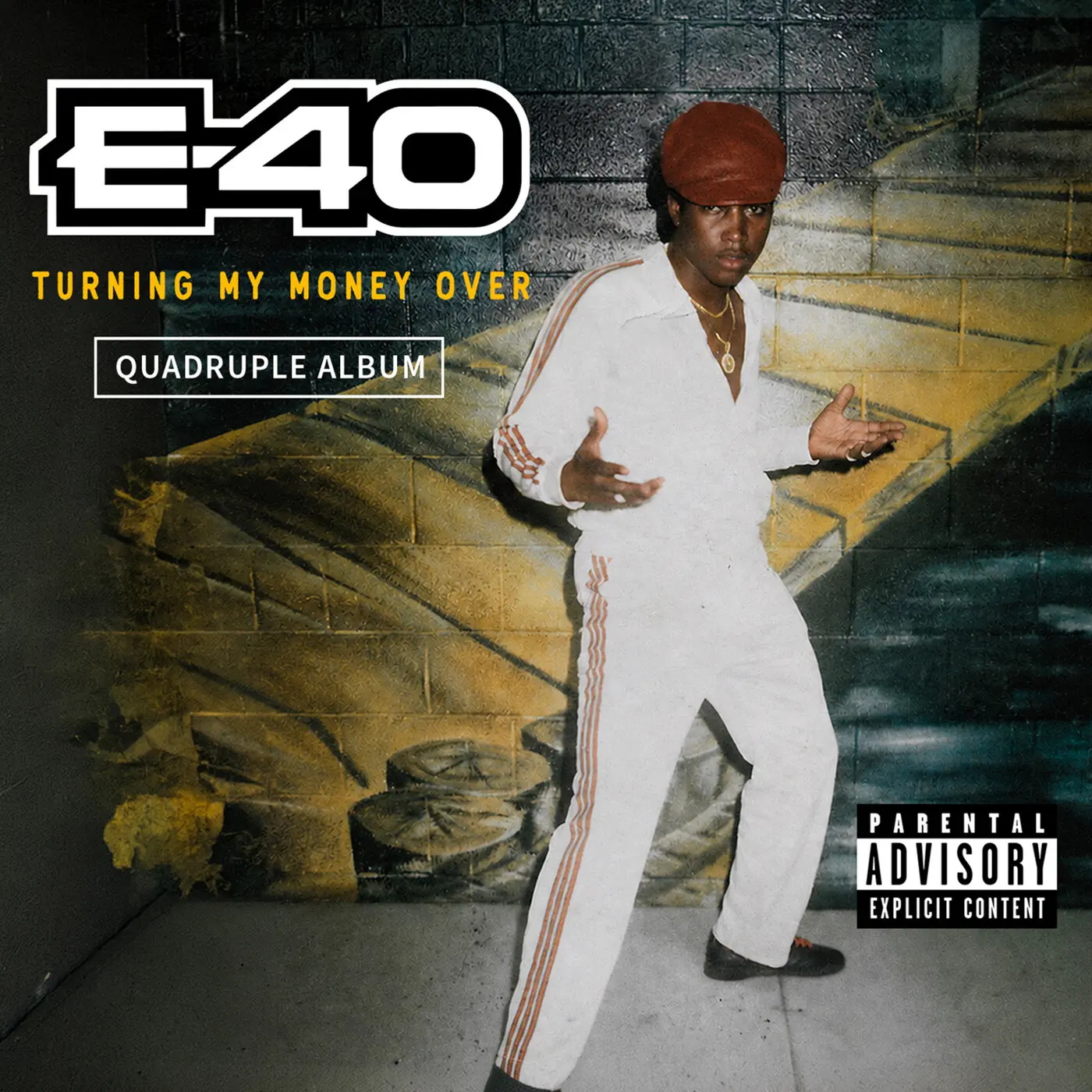
Turning My Money Over, the forty-song album E-40 released on August 28 across four discs through Virgin Music and Heavy On The Grind, cannot be entered into the federal record in a single filing. The group option for an album caps out at twenty works, and it requires the recordings and the underlying compositions to travel on separate applications, so a project that size takes four claims to cover from front to back. Those four claims cost $260 today. Under the fee schedule now sitting with Congress, the same four claims cost $430.
The Copyright Office submitted that schedule on July 14, and the statute permits the Register to implement the new prices 120 days later, which falls in the second week of November, unless Congress passes a law saying it does not approve. The Office has said it wants the fees working by the fall of 2026. No hearing is scheduled, no vote is required, and the default outcome is that the prices change.
The increases are unevenly distributed, which disproportionately affects individuals who release recorded music compared to those who release sheet music. A standard electronic application rises from $65 to $85, and the single application, which covers one work by one author, moves from $45 to $55. The group registration of musical works on an album goes from $65 to $85, a jump of roughly thirty-one percent. The parallel filing for the sound recordings on that same album goes from $65 to $130, which is double. Group registration of unpublished works climbs from $85 to $130, and expedited processing, the option a lawyer reaches for when litigation is already moving, runs from $800 to $1,100.
In a genre where ownership changes hands constantly, the line drawing the least attention may be the one that matters most. Electronic recordation of documents, the filing that puts a transfer, an assignment or a producer agreement on the public record, rises from $95 to $215. That is the paperwork behind every catalog sale, every administration deal and every split sheet somebody finally decides to formalize, and its price is climbing by more than any other item on the list.
The Office last adjusted its fees in 2020. In the notice that opened the comment period, it's said that "the cost of providing services has increased significantly because of inflation and other factors," and said the revision would "allow the Office to recover a portion of its costs closer to the historical level of about 60 percent, while still keeping services accessible." When it sent the schedule to Congress in July it described the package as carrying "a reasonable inflation adjustment," and said it had modified the original proposal "based on its consideration of stakeholder concerns."
Registration is not what creates a copyright, which exists the moment a work is fixed, but it is what makes a copyright enforceable in the way that pays. A rights holder cannot bring an infringement suit in federal court until the Office has acted on the application. Section 412 goes further and bars any award of statutory damages or attorney's fees for infringement that begins after publication and before the registration takes effect, "unless such registration is made within three months after the first publication of the work." An artist who files four months after a release and then finds a hook lifted is left with actual damages, which on an independent record often round down to a number nobody will litigate over.
Ten organizations filed against the increase together on May 4, the last day of the comment window. The American Association of Independent Music led the group, joined by the Artist Rights Alliance, Music Managers Forum US, the Recording Academy, the Society of Composers and Lyricists, Songwriters of North America, the Songwriters Guild of America, the Music Artists Coalition, the American Federation of Musicians and the Future of Music Coalition. They put the average increase across the schedule at 43 percent, and pointed out that the independent sector accounts for more than 35 percent of the American market.
"Registration is the gateway to enforcement, and if we price independent creators out of that gateway, we are dismantling the very infrastructure that makes copyright meaningful for the people who need it most," said Ian Harrison, the chief executive of A2IM. Lisa Hresko, the organization's chief operating officer, put the arithmetic in plainer terms. "Independent artists and the labels and managers who support them have always had to do more with less," she said.
The Copyright Alliance filed separately the same day with survey figures that read less like a complaint about price than a forecast of behavior. Forty-four percent of the creators it surveyed had not registered a work in the previous five years, and expense was the leading reason they gave. Seventy-seven percent said the twenty dollar increase on the standard application by itself would push them to file fewer registrations. "Increasing fees now will prematurely drive away professional creators and copyright owners from the registration system, perhaps altogether," the filing argued.
A marketing cycle has already grown up around the deadline. Digital Music News published a piece on August 28, created in collaboration with its partner Cosynd, telling labels and catalog owners they have a window and naming September 10 as the day to get catalog data submitted. September 10 is a vendor's intake cutoff rather than a government date. The only clock the statute recognizes is the 120-day period that started on July 14, and an application the Office receives before the new schedule takes effect pays the old price regardless of who filed it.
The Office has signaled that it understands how badly a flat per-claim fee fits the way music gets made now. Alongside the March notice it said it would open a separate inquiry into "possible alternative fee structures for registration services, such as tiered fees or subscription options." A subscription would sit very differently on a producer who finishes forty beats a year than a per-claim charge does. Nothing in the schedule headed for November reflects that inquiry, and the Office has not said when it expects to finish.
The gap between the two album filings is the detail most likely to change behavior first. A songwriter registering compositions pays $85 for twenty works, while a performer registering the recordings of those same twenty songs pays $130. For a rapper who writes and records everything, both bills arrive on the same day, and the cost of covering one album completely moves from $130 to $215 in a single step.
What the increase threatens is less any single filing than the habit of filing at all. Our reporting on how streaming fraud can cost artists their royalties turned on the same underlying mechanic, which is that the remedies available to an independent rights holder depend on paperwork completed before anything goes wrong. The licensing fight examined in our deep dive on how Black catalog became retail's free soundtrack was, at bottom, an argument about who controls a body of work and on what documented terms.
A group claim requires that every work be first published on the same album on the same date, and that the claimant be identical across the group, and the Office's guidance states that an applicant "may submit at least two but no more than twenty musical works" in one application. An artist releasing a twelve-track project in October can cover both the recordings and the compositions for $130 if the applications go in before the schedule turns over, and $215 if they go in after. A four-disc release costs $260 now and $430 later.
Congress has taken no public action on the schedule since July 14, and no hearing appears on the calendar. Artists sitting on a backlog of unregistered releases have until the 120-day clock expires in the second week of November, and after that the sound recording filing that costs $65 today costs $130.


Comments (0)
No comments yet — be the first to share your thoughts.
Leave a comment