

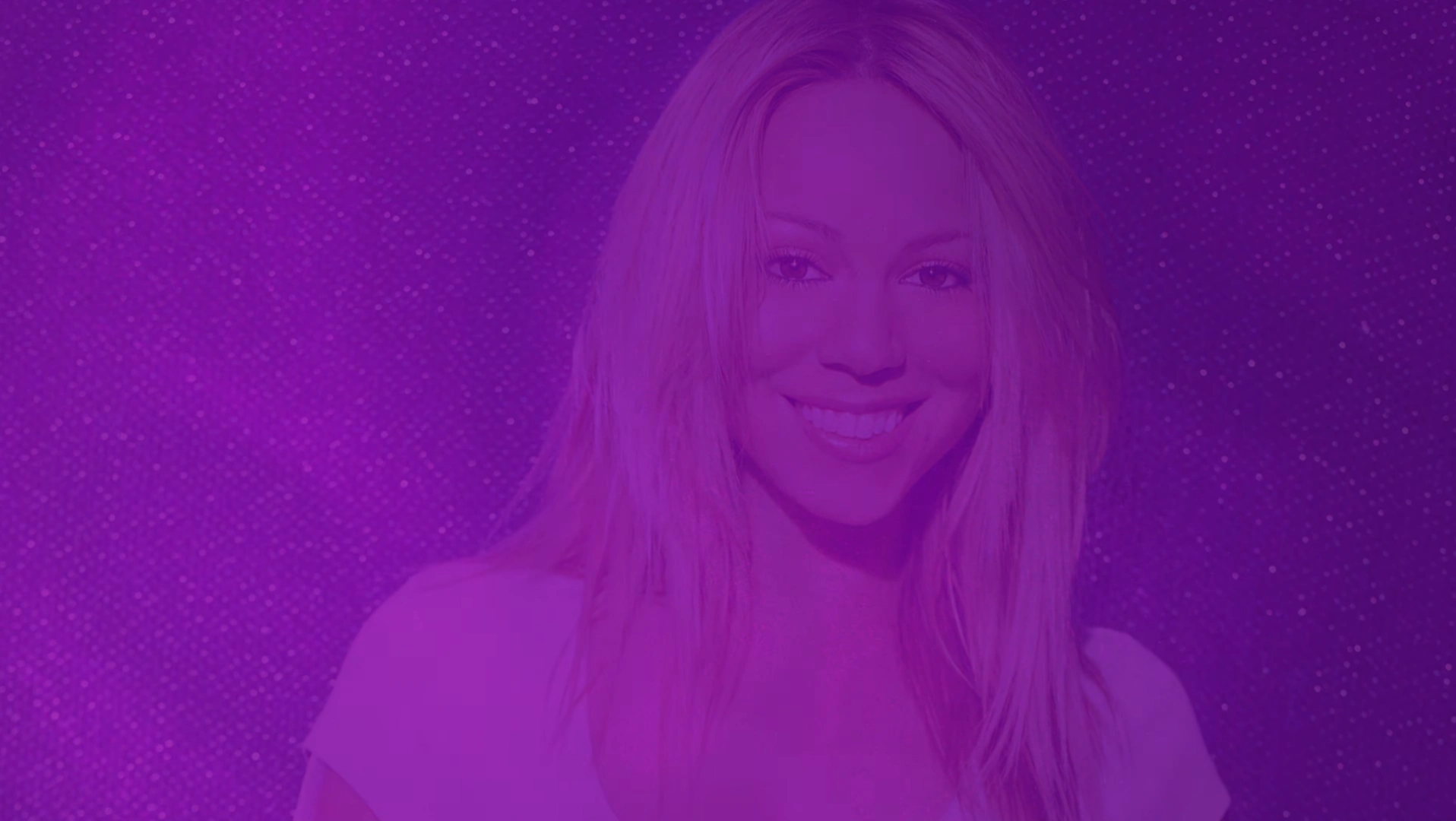
Mariah Carey opened the Glitter anniversary campaign this week (Aug 20) with a rebuilt version of "Didn't Mean to Turn You On," cut with the British-Canadian singer Rochelle Jordan. It is the first music released from the Glitter 25th Anniversary Edition, due October 30, and it doubles as confirmation that the album is returning to streaming.
"The Glitter Anniversary Era begins!!! Here’s something fun I worked on with ROCHELLE JORDAN to whet your appetites" Carey wrote on Facebook, framing the collaboration as something to hold fans over until the album lands. She also promised unspecified surprises when the record returns to the major platforms.
That last part answers a question the Lambs have been asking since winter. Glitter disappeared from Spotify, Apple Music and every other major service in late January, a removal fans clocked within hours and that Carey's camp never publicly explained at the time. Asked about the anniversary by Variety soon after, she said there were plans for a deluxe, a reissue, or possibly one release doing both jobs at once.
The song Carey chose to reopen the campaign with has a longer history than the Glitter tracklist suggests. Jimmy Jam and Terry Lewis wrote "I Didn't Mean to Turn You On" for Cherrelle in 1984, and it became her debut single. It reached number eight on the soul chart and number 79 on the Hot 100. Robert Palmer covered it two years later and carried it into the top 10 in both the United States and the United Kingdom. Carey recorded her own version for the soundtrack with Jam and Lewis producing alongside her, which is why the track sits so comfortably inside the album's early-1980s frame.
Jordan is a less obvious partner than a campaign of this size usually attracts, and that is most of what makes the pairing interesting. Born in London, raised in Toronto and now based in Los Angeles, she has spent more than a decade running R&B vocals through UK garage, drum and bass and deep house. Those are not the formats that make a singer an obvious pick for a legacy campaign. Her 2021 album Play With the Changes, released through TOKiMONSTA's Young Art label, earned some of the strongest reviews any independent R&B album received that year. She followed it with a full remix companion in 2022 and with Through the Wall, released through Empire last September. Her working circle includes Machinedrum, Kaytranada and the producer KLSH.
Putting her on the first release from a major-label anniversary campaign is a choice with a point of view attached. Carey could have handed the song to a chart artist and bought herself a guaranteed news cycle. She went instead to a singer whose audience overlaps almost exactly with the listeners who spent two decades arguing that Glitter was mishandled rather than bad.
The physical half of the reissue is the first vinyl pressing the album has received since its original release. A numbered double LP on glittering pink vinyl, packaged with a signed lithograph, is listed at $89.98, and a Midnight Purple two-LP edition at $37.98, both selling through Complex. The vinyl carries three bonus tracks, among them "Out Here on My Own," the Irene Cara staple from Fame that Carey performed in the film.
Anniversary reissues have become one of the steadiest plays in catalog music, and Carey has been running the strategy for years. The Rarities arrived in 2020 under the #MC30 banner, and a five-LP twentieth-anniversary box for The Emancipation of Mimi followed in 2025. Both Daydream and Merry Christmas II You have since received anniversary pressings of their own. HitsCulture examined a sharper-edged version of the same playbook in July, when Parkwood built a countdown around a song whose recording history did not match the album it was promoting.
Carey's version is more direct. Pull the record from streaming, let its absence do the marketing, commission a new recording to reopen the story, then press vinyl for an album that never got any. The Glitter reissue is being built for an audience that already decided the album deserved better, which removes most of the persuasion work a campaign like this normally has to do.
Pulling a catalog title offline is a functional decision as much as a symbolic one. An album sitting on streaming accrues plays quietly and permanently, which makes any later relaunch look flat against its own history. Take it down for nine months and the return reads as an event, with fresh listening data and a chart window that behaves more like a debut than a reissue. Labels have been running that sequence on legacy titles for several years, usually without announcing that it is happening.
The original release remains one of the more difficult release stories in modern pop. Glitter arrived on September 11, 2001, and the film followed ten days later on September 21, grossing roughly $5.3 million worldwide against a wide release and a full studio push. The soundtrack still debuted inside the top 10 of the Billboard 200, and "Loverboy," built on Cameo's "Candy," peaked at number two on the Hot 100. Its remix carried Da Brat, Ludacris, Shawnna and Twenty II. Jam and Lewis co-produced much of the album with DJ Clue and Carey, shaping a post-disco sound to match a film set in 1983.
The film followed Billie Frank, a young singer working her way up through the New York club circuit of the early 1980s, a story Carey has described as partly her own. Reviewers at the time treated that parallel as an easy target, and the soundtrack, marketed as a single release alongside the film, absorbed the damage regardless.
Virgin Records bought out the remainder of Carey's contract in January 2002, months after signing her to one of the largest recording agreements the industry had ever written. The album's reputation hardened around that outcome rather than around the songs, a pattern this publication has traced through decades of R&B contract history. For most of the following decade, Glitter functioned less as a record than as shorthand for an artist's public collapse.
The correction came from listeners rather than from the industry. In 2018, a fan campaign under the hashtag #JusticeForGlitter pushed the soundtrack to the top of the iTunes album chart 17 years after its release. Carey addressed it on Good Morning America that November, telling the show she had rarely performed the songs because the period around them "almost ruined my life." The Mariah Carey catalog has absorbed a great deal of revision since, but no other title in it moved from punchline to protected text quite so completely.
The film has also been hard to find, having dropped off streaming services around the same stretch as the soundtrack. The October date reads accordingly, less like a vinyl repress with a single attached than like a coordinated reset.
The Glitter 25th Anniversary Edition arrives October 30 on streaming and on two vinyl variants.



Comments (0)
No comments yet — be the first to share your thoughts.
Leave a comment