

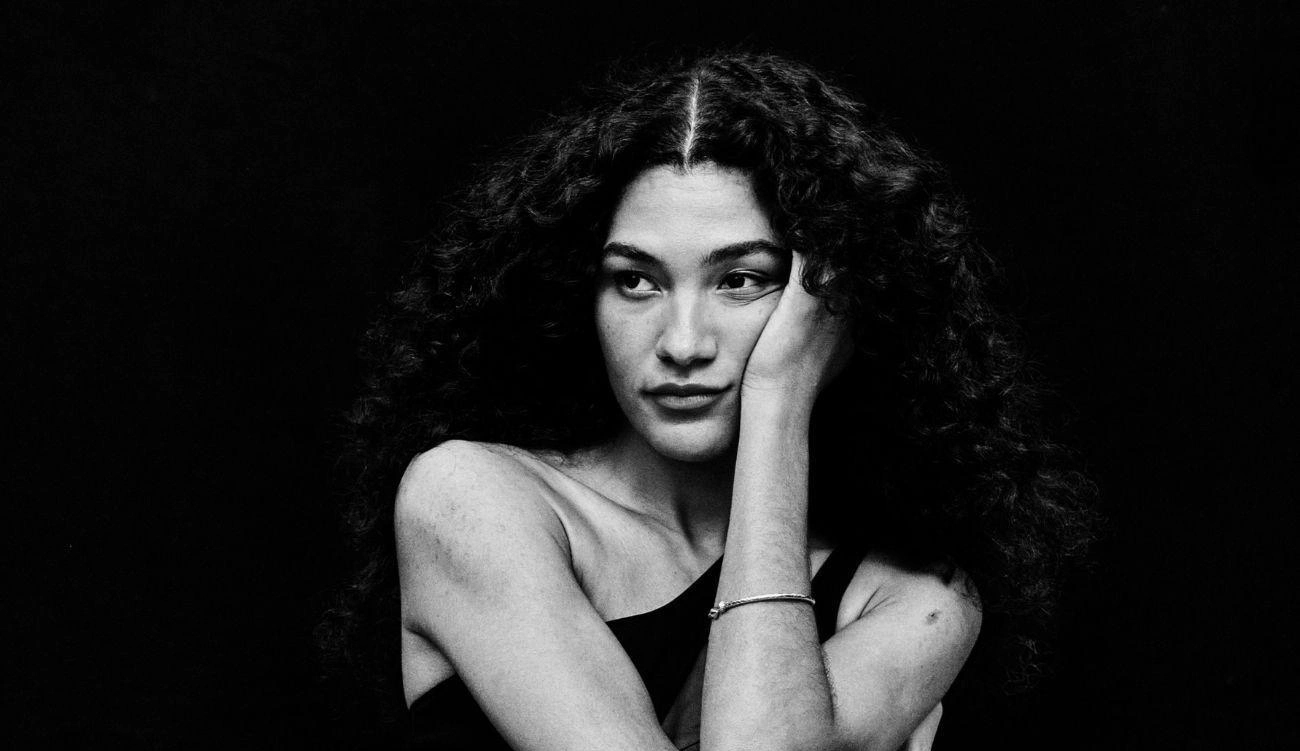
Olivia Dean closed The Art of Loving with "I've Seen It," a quiet ballad that also rode on the flip side of her "So Easy (To Fall in Love)" single. Sometime in early August, according to a federal complaint filed Thursday (Oct 1) in Los Angeles, representatives of Bill Withers' publisher played that track several times. They concluded it had taken the melody of "Just the Two of Us," the 1981 hit Withers sang over Grover Washington Jr.'s saxophone.
The company, Mattie Music Group, which does business as Bleunig Music, sued Capitol Records, Universal Music Group, Sony's U.S. publishing company and Kobalt Music Publishing America. Dean is not a defendant, and neither are Bastian Langebæk and Max Wolfgang, the two writers credited beside her. The suit, case number 2:26-cv-11383, seeks damages and the defendants' profits in amounts to be proven at trial. It also asks for a permanent injunction and an order allowing infringing copies to be seized or destroyed.
For working writers, the case sits in territory a clearance checklist cannot reach. Nobody on the credits of "I've Seen It" says anything was sampled or interpolated, so there was never a license to request. The first conversation about the song's paperwork arrived as a written notice on August 17, nearly eleven months after the album came out.
Seven Pages and One Melody
The filing runs seven pages, and its musical case rests on two paragraphs. One describes what the publisher's representatives concluded after their own listening in August. The other summarizes a preliminary comparison by the musicologist Alexander Stewart, who the complaint says also searched for similar prior art before finding substantial similarities in protectable expression. The phrase the complaint keeps returning to is "distinctively protectable melody," yet it never says which notes, bars or moments in either recording carry the overlap.
On the question of access, the complaint leans on fame. It cites the song's Billboard run, its Grammy, decades of radio play, streaming availability and a long list of covers as reasons Dean and her co-writers had a reasonable opportunity to hear it. A separate paragraph calls the shared features "so striking" that they point to copying even without that history. Stewart will eventually have to carry that inference with a full report rather than a preliminary one.
The focus on melody reflects what the 1981 record means to musicians. Its chord loop, a major seventh sliding into a dominant seventh before settling on a minor chord, is taught by name as the Just the Two of Us progression. Japanese players nicknamed it after Sheena Ringo's "Marunouchi Sadistic," one of dozens of pop records built on those changes. Chord progressions on their own generally fall outside copyright protection, so a claim against a soul-leaning 2025 ballad has to rest on the tune sung over the top.
Why the Writers Are Not in the Caption
The complaint divides the defendants by function, saying Capitol and UMG distributed and exploited the recordings while Sony and Kobalt licensed and exploited the publishing rights. Wolfgang is signed to Kobalt worldwide, which explains one of the publishing defendants without much argument.
Sony's place is harder to trace. Music Business Worldwide reported in April that Langebæk signed a global deal with Sony Music Publishing UK and the joint venture Second Songs, after an earlier stint at Universal Music Publishing Group. That agreement covers works written from that point forward. The complaint never says which company administers which writer's share, and "I've Seen It" came out on or about September 26, 2025, more than six months before the deal was announced. The filing also lists 50 unnamed Doe defendants, which leaves room to bring in the right administrator once the paperwork surfaces.
Leaving the writers out of the caption does not keep them away from the money. Songwriter and recording agreements commonly pair a warranty of originality with an indemnity clause. That language lets a label or publisher recover defense costs and judgments from the writer, and it often allows royalties to be held back while a claim is pending. Dean's contracts are not public, but the clause is common enough that any writer with a deal should find it in their own agreement before a demand letter forces the question.
A Publisher With a Record in Court
Mattie Music Group is named for Withers' mother and run by his widow, Marcia Johnson. Withers, who died in March 2020 at 81, wrote "Just the Two of Us" with Ralph MacDonald and William Salter while under contract to the company. The single reached No. 2 on the Hot 100 in 1981 and won the Grammy for Best R&B Song.
Bleunig is one of three publishers credited on the song, alongside Antisia Music and BMG Ruby Songs, and neither co-publisher has joined this suit. The Withers side has pursued a younger star before. In 2016, Billboard reported that Mattie Music Group sued Kendrick Lamar and Top Dawg over "I Do This," an early Lamar track. That complaint described the song as new rap lyrics laid over the music of Withers' 1975 record "Don't You Want to Stay."
Melody fights between two hits have broken both ways in recent memory. In 2015, a Los Angeles jury awarded Marvin Gaye's family nearly $7.4 million after finding that "Blurred Lines" copied "Got to Give It Up." Ed Sheeran, by contrast, defeated the claim that "Thinking Out Loud" took from "Let's Get It On," and the win held when the Supreme Court declined to hear the appeal in June 2025.
What Working Writers Can Take Into the Next Session
Clearance works when you know what you borrowed. A sample needs sign-off from both the master owner and the publisher. An interpolation, where a melody or lyric is replayed instead of lifted from the record, runs through the publishing side alone. That was the route Tone Capone took on the Luniz's "I Got 5 On It" when he rebuilt a Club Nouveau melody by hand.
A case like this one begins after both of those doors have closed, because the allegation is that a melody arrived without anyone naming it. The defense against that charge is evidence of how a song was actually made. Dated voice memos, session files, early lyric drafts and the order in which parts were written are what lawyers use to show independent creation. Every one of them is easier to keep than to reconstruct a year later.
Stewart's method points to a second habit, since the complaint says he ran a prior-art search before offering his opinion. A writing camp can run its own version before release by booking an hour with a musicologist, especially when the chords under a topline belong to a famous loop. In this case, the notice came after the song carried a Best New Artist winner's name and nearly a year of streams. That is the stretch when the profits the publisher now wants had grown largest.
None of the four companies had responded publicly when trade outlets first reported the filing on Friday. Under federal rules, defendants generally have 21 days after formal service to answer or move to dismiss. A motion aimed at the complaint's missing musical detail would be the first sign of how hard UMG, Sony and Kobalt plan to fight over a closing track.


Comments (0)
No comments yet — be the first to share your thoughts.
Leave a comment