

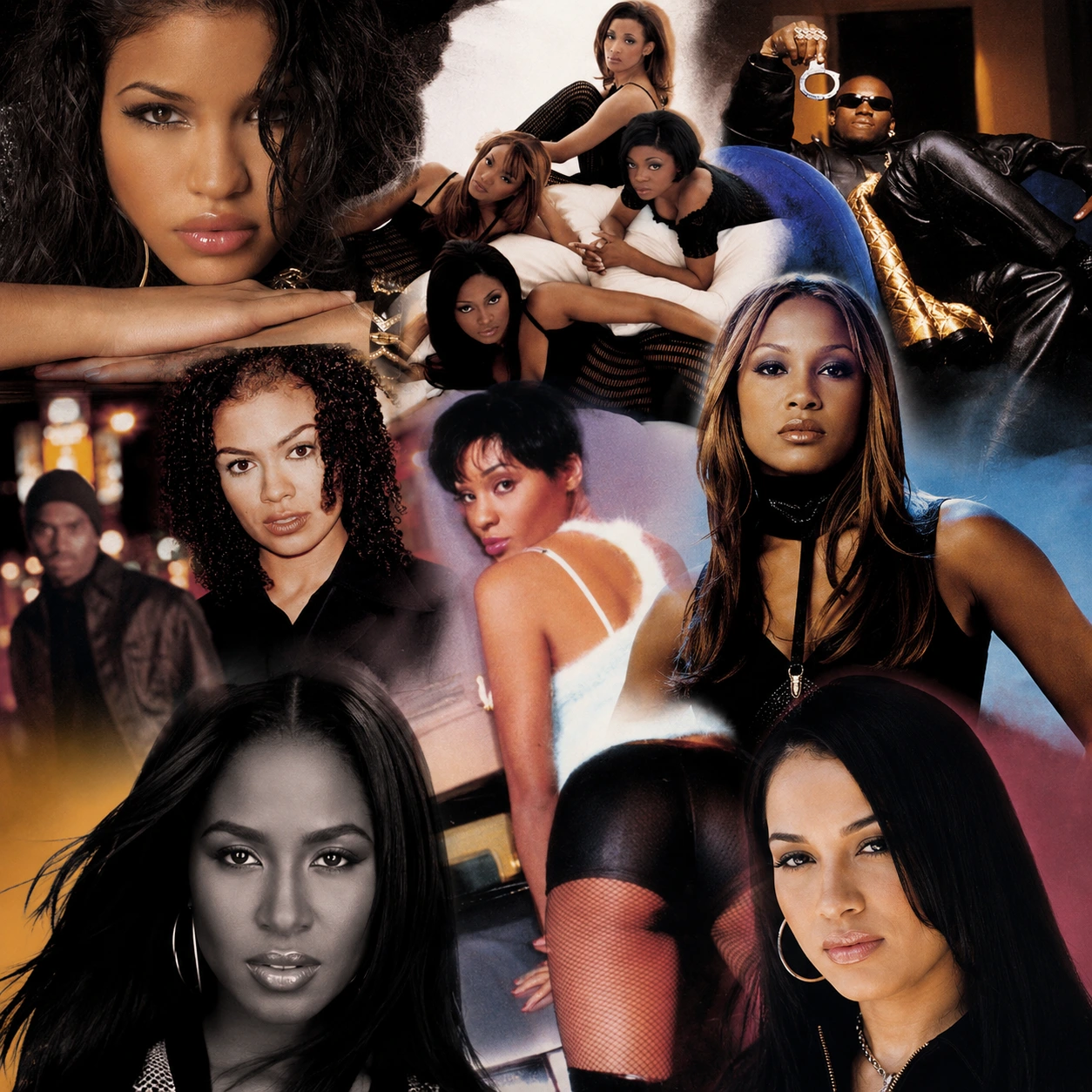
One perfect record. Sometimes that is all an artist gets, and sometimes that is all an artist needs. Here is the journey, from 1984 to the mid-2000s, through the singers who burned bright once and then handed the song over to history.
There is a particular kind of immortality reserved for the R&B one-hit wonders, and it is more generous than the label suggests. The phrase sounds like a put-down, but think about what it actually describes: an artist who made something so complete, so cemented to a moment, that it outlived their entire career and kept playing long after the follow-up singles were forgotten. Most musicians who release a dozen albums never get one of those. These twenty-five got exactly one, and that one still moves a cookout, a wedding, a late-night drive, decades later.
A note on the math before we start, because the comment section will check us. A few of these artists technically charted a second time. "One-hit wonder" here means the record that became their whole legacy, the one everybody remembers while the rest faded into discography footnotes. We are honoring the song that refused to die, not pretending the others never existed. We have arranged them chronologically on purpose, because lined up in order they tell a story: the slow rise, the mid-90s flood, and the last great run before the radio model that made them all possible quietly disappeared.
The Eighties Holdouts
Rockwell, "Somebody's Watching Me" (1984)
The ultimate inside job. Rockwell was Kennedy Gordy, son of Motown founder Berry Gordy, and he got the label's biggest star to sing the hook in secret: that unmistakable "I always feel like somebody's watching me" is Michael Jackson, at the absolute peak of his powers, doing a favor. The paranoid synth-pop groove still soundtracks every Halloween playlist on earth. Rockwell never came close again, but when your one hit has Michael on the chorus, you have already won.
Jermaine Stewart, "We Don't Have to Take Our Clothes Off" (1986)
A genuinely radical message smuggled inside a featherlight pop confection. In the middle of a decade that sold sex on every channel, Stewart's signature record gently insisted that intimacy could wait and that a cherry wine conversation was its own kind of romance. The hook is indestructible. Stewart, who came up as a dancer and a Soul Train regular, died far too young in 1997, but the song remains one of the most quietly subversive love records of its era.
The Mid-Nineties Flood
H-Town, "Knockin' da Boots" (1993)
Three teenagers from Houston, signed by Luther "Luke" Campbell of 2 Live Crew, made one of the steamiest slow jam records of the decade and rode it to number three on the pop chart. Nothing they released afterward came within shouting distance, but "Knockin' da Boots" did not need a sequel. It is a complete thought. The group's story carries real tragedy too, with founding member Dino Conner killed in a 2003 car accident, which only deepens the way that one record now plays like a time capsule.
Adina Howard, "Freak Like Me" (1995)
A grenade tossed into the polite living room of mainstream R&B. At a moment when women in the genre were mostly cast as the heartbroken or the virtuous, Howard arrived demanding exactly what she wanted in plain language, and the culture was not ready. The record's afterlife is wild: a UK group turned it into a number one smash years later, proving the hook was bulletproof. Howard's defiance predicted an entire lane of R&B that took another decade to catch up to her.
Groove Theory, "Tell Me" (1995)
The most sophisticated record on this entire list, and it is not close. Amel Larrieux's voice floats over a Bryce Wilson groove with a lightness that sounds effortless and is anything but. "Tell Me" is the rare crossover smash that loses nothing to age, all silk and restraint. Larrieux went on to a beloved, critically adored career in independent neo-soul, which means "Tell Me" is less a one-hit wonder than the gorgeous front door to a much deeper house.
Mokenstef, "He's Mine" (1995)
A trio named for its three members, with a hook built around the most petty and relatable sentiment in the R&B canon: he might be yours, but he is also mine, and we are apparently fine with this arrangement. "He's Mine" rode a hypnotic west-coast G-funk bounce and a deeply quotable chorus into permanent rotation. It is the sound of mid-90s confidence, unbothered and ice cold.
Subway, "This Lil' Game We Play" (1995)
A showcase for the kind of layered vocal-group harmony that defined the era, lifted by a guest spot from a young 702. The interplay between the two acts is the whole appeal, call and response stacked into something lush and grown. Subway never found a second moment in the sun, but for one single they captured exactly what mid-90s new jack swing aspired to.
The Class of the Late Nineties
Mark Morrison, "Return of the Mack" (1996)
The greatest comeback song by an artist who had nothing to come back from yet, which is part of its perfect, cocky charm. The British singer built a slinking, unkillable groove and a chorus so quotable it became its own meme decades later, sampled and interpolated and shouted at karaoke across continents. "Return of the Mack" is arguably the most globally recognized record on this list, which makes the absence of a follow-up almost poetic. He returned, then he vanished, exactly on theme.
Christión, "Full of Smoke" (1997)
A deep-cut classic with a heavyweight footnote: this Bay Area duo was the first R&B act ever signed to Roc-A-Fella Records, back when Jay-Z and Dame Dash were building the empire. "Full of Smoke" is hazy, blues-soaked, and ahead of its time, the kind of record that sounds more modern now than it did then. A label built for rappers never figured out how to market a soul duo, the partnership dissolved, and the song became a quiet legend traded between heads who know.
Somethin' for the People, "My Love Is the Shhh!" (1997)
One of those records where the title is also the choreography, the whole room going quiet on cue for that hook. The production collective leaned on a featherlight vocal feature to build a summer-radio staple that still detonates the second it drops. It is the platonic ideal of a late-90s feel-good single, sunshine compressed into four minutes.
Rome, "I Belong to You (Every Time I See Your Face)" (1997)
Pure, undiluted longing. Rome's signature record is built around a chorus that does not so much ask for love as surrender to it completely, sung with a vulnerability that made it a slow-dance fixture. It is the kind of record that lives forever on the quiet storm radio formats, the late-night programming where heartbreak goes to feel understood. One song, but what a song to be remembered by.
Allure, "All Cried Out" (1997)
A girl group signed to Mariah Carey's label, reviving a Lisa Lisa classic and pulling in a guest verse from 112 to turn it into a duet of exhausted heartbreak. The blend of the women's harmonies against the male counterpoint is what sells it, two sides of a breakup talking past each other. "All Cried Out" became the version a whole generation grew up on, which is its own kind of victory.
Playa, "Cheers 2 U" (1998)
Here is where this list reveals a secret architecture. Playa was a trio orbiting Timbaland's camp, and one of its members was Stephen "Static Major" Garrett, one of the most quietly important songwriters in modern R&B history. "Cheers 2 U" is feather-soft, intricate, and impossibly smooth, a singer's singer record. Static would go on to write era-defining hits for other artists before his death in 2008, and his fingerprints show up again later on this very list. Remember that.
Imajin, "Shorty (You Keep Playin' With My Mind)" (1998)
A teenage vocal group and a Keith Murray guest verse, packaged into one of the most charming puppy-love records of the late 90s. The harmonies are sweet, the beat bounces, and the whole thing radiates that specific end-of-summer innocence the era did so well. It came and went in a season, but for that season it owned every cookout speaker in the country.
The Millennium Turn
Lucy Pearl, "Dance Tonight" (2000)
Technically a supergroup, which complicates the one-hit framing in the most prestigious way possible. Lucy Pearl united Raphael Saadiq of Tony! Toni! Toné!, Dawn Robinson of En Vogue, and Ali Shaheed Muhammad of A Tribe Called Quest, three legends in one room. "Dance Tonight" is a effortless, retro-leaning groove that should have launched a dynasty. Instead the lineup splintered almost immediately, leaving behind one shimmering record and a thousand what-ifs.
Ruff Endz, "No More" (2000)
A Baltimore duo and a masterclass in the dignified kiss-off. "No More" is the sound of a man calmly packing his bags, delivered with enough wounded restraint to make it an anthem for anyone who has ever reached their limit. The vocal performance is genuinely excellent, the kind of controlled ache that defined turn-of-the-century R&B. They never topped it, but they nailed it once, perfectly.
Profyle, "Liar" (2000)
An accusation set to a beat. "Liar" works because it channels a very specific feeling, the moment betrayal curdles into something colder, into the audacity to call it out directly. The group harmonized their hurt into one of the more underrated 90s R&B hangover records of the new decade, a slow-burn that found its audience and then quietly receded. The song still hits anyone who has caught someone in the act.
The Last Call
Sunshine Anderson, "Heard It All Before" (2001)
The sound of a woman who has run completely out of patience, and it is glorious. Anderson's signature record turns exhaustion into power, every "I've heard it all before" landing like a door closing. Built on a tough, no-nonsense groove, it became an instant anthem for everyone tired of the same recycled excuses. Anderson kept recording, but this remains the one, a perfect distillation of being thoroughly, righteously done.
Jimmy Cozier, "She's All I Got" (2001)
Smooth to the point of hypnosis. Cozier's lone hit is an ode to devotion sung in a warm, unhurried tenor over a beat that practically lounges. "She's All I Got" lived on mixtapes and slow-dance sets, the kind of record that feels like a private conversation. It never had a sequel in the public imagination, but it secured Cozier a permanent spot in the early-2000s R&B time capsule.
Olivia, "Bizounce" (2001)
A debut so promising it makes the career arc that followed genuinely frustrating. Olivia arrived fully formed with "Bizounce," a confident, swaggering exit anthem that announced a major new voice. She later signed to G-Unit and stayed visible without ever recapturing this lightning. As a one-hit wonder she is an outlier, an artist whose problem was never talent, just timing and circumstance.
Tweet, "Oops (Oh My)" (2002)
The great misunderstanding in R&B history, and the joke is better than people realize. Everyone assumed Tweet's slinky, Missy Elliott-assisted hit was about a lover, when the lyrics are actually about, well, self-appreciation in the mirror. That cheeky double meaning, wrapped in one of the most seductive grooves of the decade, made it inescapable. "Call Me" charted afterward, but "Oops" is the one tattooed onto the era's memory.
Truth Hurts, "Addictive" (2002)
And here is Static Major again, because he wrote this one too. "Addictive" paired Truth Hurts with a Rakim verse over a hypnotic Bollywood sample lifted from a 1981 Lata Mangeshkar recording, a sample so uncleared it triggered a half-billion-dollar lawsuit and an injunction. The record peaked at number nine and then got legally muzzled, which is possibly the most dramatic one-hit-wonder origin story ever. A masterpiece and a cautionary tale in the same three minutes.
Glenn Lewis, "Don't You Forget It" (2002)
The title became a grim prophecy. Lewis arrived sounding so uncannily like vintage Stevie Wonder that critics could not stop making the comparison, and "Don't You Forget It" is a warm, classicist gem that deserved a long career behind it. Industry delays and label limbo stalled everything that should have come next. The song endures precisely because it sounds timeless, a beautiful record orphaned by bad business.
Lumidee, "Never Leave You (Uh Oooh, Uh Oooh)" (2003)
The perfect place to close, because it points straight at where the story goes next. Lumidee was a teenager from Spanish Harlem, and her lone smash was an R&B vocal draped over Lenky's Diwali Riddim, the same dancehall beat powering Sean Paul's "Get Busy" that same summer. It became the most requested record on the radio, climbed to number three on the Billboard Hot 100 at home, and topped the charts across five European countries. Then Lumidee, like everyone else here, slipped out of the spotlight. Except the beat never did: two decades later Nicki Minaj built a hit around that exact loop, which is the whole thesis of this list arriving right on cue.
Cassie, "Me & U" (2006)
The perfect note to end the countdown on, because it is the sound of one era ending and another one starting. A model and dancer from Connecticut, Cassie cut "Me & U" with a young producer named Ryan Leslie, and its icy, minimalist synth pulse and snake-charmer whistle sounded like almost nothing else on the radio. What makes it the ideal closer is how it spread: the record went viral on MySpace before radio ever caught up, a preview of the internet-driven world that was about to make the whole one-hit-wonder machine obsolete. It climbed to number three, its lone follow-up stalled, and the song became a permanent mood, still hypnotic two decades and hundreds of millions of streams later.
Bonus Round
Two more the comment section would never forgive us for leaving off, both from 2004, both born in New York, both proof the well had not quite run dry.
Nina Sky, "Move Ya Body" (2004)
Call this one Lumidee's twin, almost literally. Nicole and Natalie Albino were teenage sisters from Queens, and "Move Ya Body" ran the exact playbook that put Lumidee on the map a year earlier: a young New York voice draped over a Jamaican riddim, in this case Skatta Burrell's irresistible Coolie Dance. It climbed to number four, the twins never returned to the top forty, and the beat proved more immortal than the moment. Beyonce revived that same riddim on her Renaissance tour two decades later, which tells you everything about how a truly great groove refuses to die.
Eamon, "F**k It (I Don't Want You Back)" (2004)
And now for the pure curveball. Eamon was a Staten Island kid raised on doo-wop, the son of an actual doo-wop singer, and he took that vintage sweetness and married it to the filthiest breakup lyric radio had ever waved through. The record went top twenty in America and number one across Europe, earned a genuine Guinness World Record for the most expletives in a chart-topping single, and spawned its own answer song when a mystery woman calling herself Frankee fired back with a note-for-note reply. It is more doo-wop than R&B and more spectacle than either, but as the loudest possible entry in this list's long tradition of the kiss-off, it had to be here.
The Afterlife of a Single Song
Line them all up and a quiet tragedy comes into focus. Almost all of them landed in a roughly fifteen-year window because that window was the last great age of the radio single, when a song could be discovered by an entire country at once and a single broadcast could make a career. That ecosystem is gone. The artists chasing a breakout today are doing it in a far more fragmented world, which is part of what makes the current resurgence of ambitious modern R&B so striking by comparison.
But here is the redemption in the story. None of these records actually died. They went to sleep and woke up somewhere new: in a film needle-drop, in a wedding playlist, in a producer's crate, in a TikTok sound that suddenly has teenagers asking who sang the original. The one-hit wonder is not a failure. It is a seed. And in an era where catalog has become the most valuable currency in music, where the genre's whole history now sits one tap away and old songs routinely outpace new ones, these singers turn out to have been holding lottery tickets all along. We wrote recently about how thoroughly Black music owns the streaming era, and these records are part of that inheritance. One song was never a small thing. Sometimes it was the only thing that needed to last.

Comments (0)
No comments yet — be the first to share your thoughts.
Leave a comment