

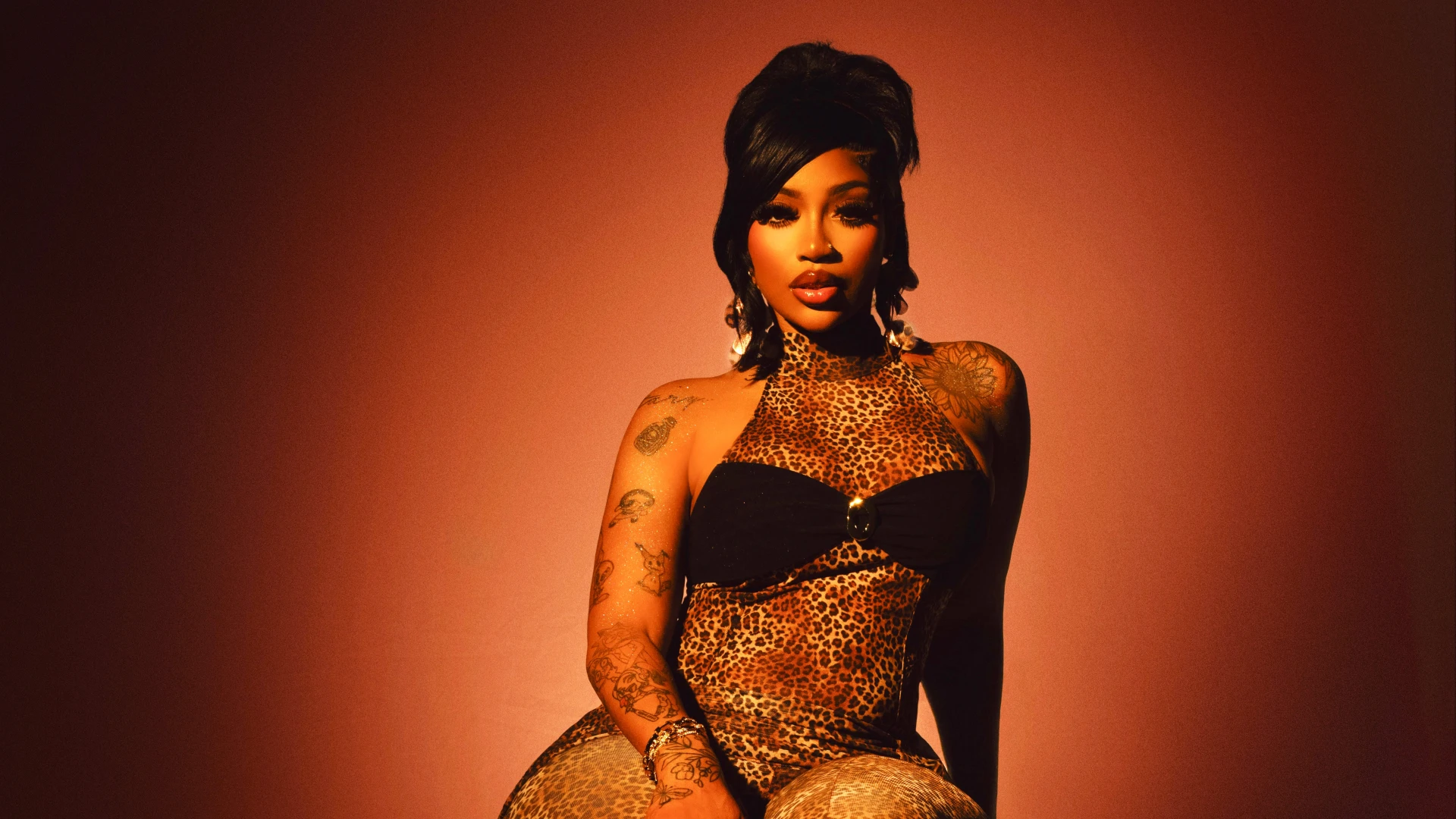
Two Caribbean Music Award nominations, a genre-detonating single, and a back-to-back run of EPs have turned a Bull Bay kid into one of the most important crossover bets in the room. We called it. Here is why she pays out.
There is a moment, in the life of an artist who has been good for a long time, when the rest of the world finally catches up to what the diehards already knew. For Jada Kingdom, that moment is now. The Jamaican singer landed two nominations at the 2026 Caribbean Music Awards, Song of the Year for the genre-melting single "G.A.D" and Female Dancehall Artist of the Year, in a fourth-annual field that drew more than 250 nominees with public voting open through August 10. That is the headline. The story underneath it is more interesting.
Here is our position, stated plainly: Jada Kingdom is one of the most complete crossover talent dancehall has produced since the genre started shaking hands with pop radio, and she got there without trading her accent, her geography, or her nerve. The nominations are not a coronation. They are a receipt.
Start with the record that put her in the Song of the Year conversation. "G.A.D" should not work. On paper it is a collision: electric guitar riffs that belong to early-2000s rock radio, the bounce and swagger of dancehall, and a provocative hook delivered in unbroken patois. Most artists who reach for that many genres at once end up with a costume. Jada ended up with an anthem. Produced by Yo Christon, a board hand who has worked with Vybz Kartel, Sizzla, and Buju Banton, the track takes a phrase that could have been a throwaway and turns it into a thesis on control, confidence, and feminine authority.
The internet understood it before the radio did. "G.A.D" was teased into a frenzy of fan-made clips, then detonated on release, picking up serious streaming traction and a viral On The Radar performance that did what those sessions do best: stripped the song to its studs and proved the voice was the special effect, not the production. What matters about "G.A.D" is not that it went viral. Plenty of songs go viral. What matters is that it expanded the map of what a Jamaican woman is permitted to sound like, and it did so on her terms. You can hear the full arc of dancehall going global, from Sean Paul through the Caribbean-inflected production Drake built into the mainstream, in our deep dive on how the genre crossed over, and "G.A.D" is the next link in that chain.
Stream "G.A.D" on Apple Music
If "G.A.D" was the spark, the back half of her recent run is the fire. In January she released Just A Girl In A Money Man's World, a project that does exactly what its title threatens. It takes the oldest setup in popular music, a woman positioned in proximity to a man's wealth, and flips the camera around until the woman is the subject and the money is the scenery. Tracks like "Don't Talk To Me," "Maxine," and the Damian Marley-honoring "Still Searching" are not pleas. They are verdicts.
Then, weeks later, she pivoted hard into New Religion, a four-track collaborative EP with Foggieraw that trades the armor for intimacy, leaning into romance, desire, and the kind of emotional vulnerability the first project deliberately withheld. Put the two side by side and you get the whole argument. One artist, two opposite emotional registers, the same unmistakable voice anchoring both. That range is the thing rivals cannot fake. A lot of singers can do power. A lot can do tenderness. The number who can do both inside a single season, and make each feel like the truest version of themselves, is very short, and Jada is at the top of it.
This is also the exact lane we built HitsCulture to protect. The algorithm will eventually flood your feed with Jada Kingdom. The point of human curation is to get you there first, the same instinct behind our guide to the 2026 artists worth your playlist before they go mainstream. Consider this your early entry.
Stream New Religion on Apple Music
None of this arrived overnight, which is the part casual listeners tend to miss. Jada Kingdom grew up in 7 Mile Bull Bay on the east side of Kingston, writing poetry by the age of eight, raised on a diet of Nina Simone, Sade, Minnie Riperton, and Amy Winehouse. You can hear all four in her phrasing, the jazz singer's patience and the soul singer's ache smuggled inside a dancehall delivery. She debuted in 2017 with "Love Situations," broke through with "Banana," and along the way landed a feature with John Legend on his 2022 album, the kind of cosign that does not get handed to artists the industry considers disposable. By now her catalog counts its streams in the hundreds of millions across platforms, with collaborations spanning Popcaan, Vybz Kartel, Davido, and Skillibeng.
The next checkpoint is a big one. This Labor Day weekend she performs at Afro Plus Fest, the fast-rising Afro-Caribbean festival running September 4 to 6 at Northwest Stadium just outside Washington, D.C., where she shares a bill headlined by Davido, Wizkid, and Alkaline and projected to draw enormous crowds across its three days. Sharing that stage matters. It places her precisely where she belongs, in the conversation about global dancehall and Afrobeats and hip-hop bleeding into one another, not as a regional act invited to fill a slot but as a name the lineup needed.
It would be easy to treat the Female Dancehall Artist of the Year nod as a formality. It is not. Jada has been nominated in that category before and walked away empty-handed, which is its own kind of education. What is different in 2026 is the body of work standing behind the nomination. Two EPs in opposite directions, a crossover single reshaping the genre's borders, a festival booking among the biggest names in Black music worldwide. The nomination is no longer measuring potential. It is measuring output.
And the crossover question, the one that follows every dancehall artist who flirts with pop, finds an unusually clean answer in her. Crossover usually costs something. The accent softens, the riddim thins out, the cultural specificity gets sanded down for the export market. Jada has done the opposite. The more global her ambition gets, the more Jamaican her music sounds. That is not a contradiction she stumbled into. It is a strategy, and it is the reason her ceiling is so much higher than the average viral moment.
The Caribbean Music Awards will hand out their trophies later this year, and Jada Kingdom may or may not be holding one when the night is over. Either outcome is almost beside the point. The artist who showed up to earn these nominations is not chasing a category anymore. She is building a lane, and the rest of the genre is going to have to learn to drive in it. We have been telling you about her. Now the awards are telling you too.

Comments (0)
No comments yet — be the first to share your thoughts.
Leave a comment