

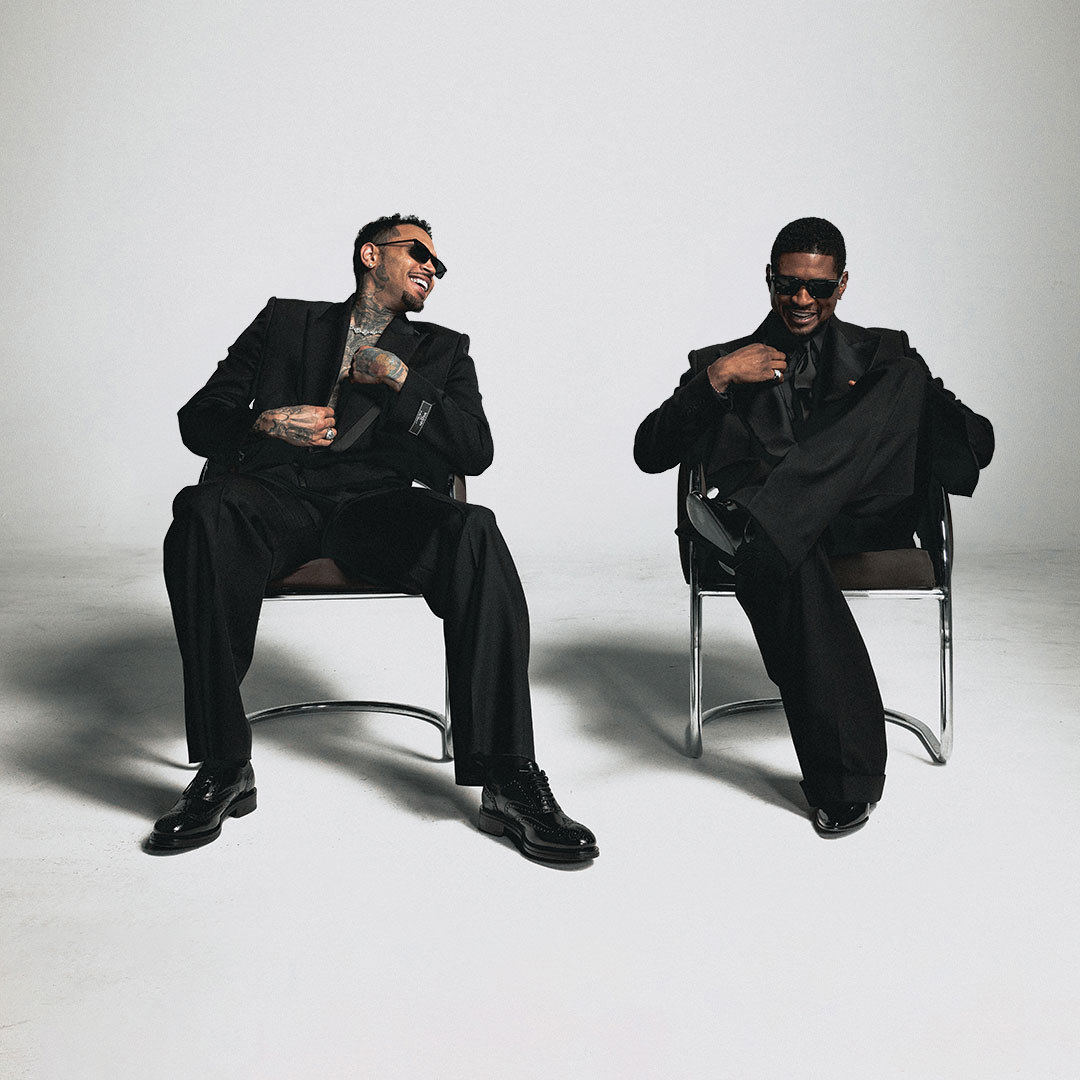
Halfway through his set at Nissan Stadium on July 25, in front of a sold-out audience, Usher did the thing he has done at nearly every stop of the Usher and Chris Brown tour. He reached into the crowd, picked a woman, and pulled her up to be serenaded. A bed prop waited under the lights. He went shirtless. He knelt. He started "Can U Handle It?", the slow burn from Confessions, and leaned in close.
For a few seconds she played along. Then her body told the truth. Her shoulders squared, her smile flattened, and she folded back into herself the way anyone does when a moment they agreed to in theory shows up in a form they did not sign off on. Usher, to his credit, read it in real time. He stopped, stood, stepped back, and turned to the crowd with a shrug. He told the audience he did not think she wanted to be up there, then waved her off. The whole on-stage serenade lasted under a minute.
Here is the part worth sitting with. When it was over, the crowd did not turn on the man who chose a stranger, stripped down, and mimed seduction at her on a stadium jumbotron. The crowd turned on her. Within hours, the woman, later identified as Gabrielle Cheyenne, was the villain of the internet: ungrateful, cold, a girl who fumbled the fantasy of a lifetime. She fired back on social media, and her defense only sharpened the contradiction at the center of the whole spectacle. She said plainly that she had come up hoping to be serenaded by Chris Brown, not Usher, and that nobody tells you who you are walking toward when a staffer taps you and upgrades your seat. She had floor tickets. Someone moved her to VIP. She did not know the assignment.
None of this is new, and that is the point. Bringing fans on stage for a mock seduction is not an accident of the moment; it is a set piece, rehearsed and repeated, a fixture of the modern R&B stadium tour. Usher has been doing versions of it for years. He even serenaded Issa Rae during his Las Vegas residency. He was filmed feeding cherries to women in the crowd in Detroit, a clip that ricocheted around the internet for a week. The Confessions-era ballad, the single chosen woman, the invitation to sit and be sung to: this is a signature, as much a part of the show as the choreography and the costume changes.
Chris Brown runs his own version, and his carries a heavier charge. His "Take You Down" routine, in which he selects a woman, sits her in a chair, and performs a lap dance, has been a tour staple for more than a decade. On the 2023 European run, footage showed him holding female fans by the neck during the segment, prompting a British domestic violence charity to say publicly that the woman's discomfort was plain to see even on a stage she had walked onto willingly. Reasonable people can debate whether the routine is playful or predatory. What is not up for debate is that a man with Brown's record enters that moment carrying context most performers do not. HitsCulture has documented the full ledger of Brown's career wins and legal entanglements, including the guilty plea he entered in a London courtroom this month, and that record does not disappear when the house lights drop and the ballad starts. Readers can weigh it in our running account of Brown's on-again, off-again reckoning.
So we are not talking about one awkward night in Nashville. We are talking about a ritual, staged nightly, in which the performer holds every lever. He chooses the woman. He sets the tempo. He decides when it starts and, as Nashville proved, when it ends. She gets a chair and a spotlight and roughly forty seconds to perform the correct amount of desire. That is the machine. The Nashville clip is simply the rare night the machine visibly jammed.
The argument!
Every time one of these clips goes viral, the same argument surfaces, and it deserves a fair hearing. A large chorus insists that women in relationships have no business climbing on stage to be pawed at by a superstar, that doing so is a betrayal of a partner at home, that the respectable move is to stay in your seat. There is a coherent value underneath that position. Fidelity is real. Boundaries are real. Plenty of couples would, and should, talk through what is and is not okay before the lights go down.
But look closely at where that argument places the responsibility. It puts the entire moral weight on the woman, and none of it on the man who designed the bit or the tour that stages it night after night. It treats her as the only agent in a room where she has the least power. And it quietly assumes a script that the Nashville video blew apart: that every woman pulled from the crowd knows what she is signing up for. Cheyenne did not. She was upgraded and escorted and pointed toward a stage, and the specifics arrived only once she was already sitting on a bed in front of a stadium. The idea that concert etiquette requires women to preemptively decline an experience they cannot fully see coming is not a rule about respect. It is a rule about control, dressed up as one about respect.
Too eager, or not eager enough
Now hold the two criticisms side by side, because together they reveal the trap. When a woman clearly enjoys the serenade, the verdict is thirsty, desperate, doing too much, embarrassing her man (if not single). When a woman visibly does not enjoy it, as Cheyenne did not, the verdict is stuck up, ungrateful, wasting a spot a thousand others would have killed for. There is no way to sit in that chair and be judged kindly. Lean in and you are cheap. Lean back and you are cold. The scoring rubric is rigged so that the only acceptable outcome is the one the crowd wants to see, which is a woman performing exactly the level of arousal that flatters the star and entertains the stadium.
That double bind is the tell. When a critique punishes a woman for both enjoying something and not enjoying it, the critique was never really about the behavior. It was about keeping her performance of desire under someone else's management. This is where the honest word for a large share of the backlash is slut-shaming, and its stingy cousin, ingratitude-shaming, both pointed at the person in the room who happened to be selected and neither pointed at the person who did the selecting. The man who staged a simulated sex act on a jumbotron walked off to cheers. The woman who declined to fake enthusiasm got a week of strangers picking apart her face.
Strip away the aesthetics and this viral concert moment is, at its core, a story about consent in live performance, and about how thin the version of consent operating in these moments really is. Agreeing to come on stage is not the same as agreeing to be straddled, sung to inches from your mouth, or filmed doing either for millions of phones. Consent given without information is barely consent at all, and a woman escorted to a bed prop without being told what waits there has not been given much information. The tour manufactures a moment that looks consensual because she walked up on her own feet, while withholding the details that would let her actually choose.
Which is exactly why the most defensible thing in the entire Nashville clip is the thing Usher did. He watched her body close off and he stopped. He did not push, did not coax, did not try to salvage the fantasy for the crowd. In a genre and an era not known for reading the room, a headliner clocked a woman's discomfort and released her from it inside a few seconds. That instinct is worth naming, because it is rarer than it should be. The failure in Nashville was not his. The failure belonged to a crowd that watched a woman decline and read her refusal as a personal insult rather than as a person exercising the smallest possible amount of agency in a setup engineered to make refusal look like ingratitude.
Entertainment or slut-shaming? Both, and the second one is on us
So here is the verdict, because a Voices piece owes you one. The serenade itself is entertainment. It is old Vegas showmanship, the lounge singer and the lucky lady, updated for the stadium era and the algorithm. As theater it is mostly harmless, corny and hot in equal measure, and the crowds that pay hundreds of dollars for the Usher and Chris Brown tour know exactly what they are buying. If a couple decides together that this particular chair is off-limits, that is a healthy conversation and nobody's business but theirs.
The aftermath is where entertainment curdles into something nastier. The pile-on that follows every one of these clips is not a debate about performance. It is a live demonstration of how little room women are given to say no in public without being punished for it. The lesson the internet tried to teach Gabrielle Cheyenne is that the correct response to being chosen is gratitude, and the incorrect response is anything resembling her own preference. That is a lesson about power, and it has almost nothing to do with music.
The most radical thing to come out of Nashville was not Usher's smirk or the bed prop or the shirtless kneel. It was a woman who found herself in the single most coveted seat in a stadium of fifty thousand people and simply declined to perform a desire she did not feel. She would not fake it. For that, the culture called her every name it had. What that says about her is nothing. What it says about the rest of us, and about the concert culture we keep building around these moments, is the story worth telling.



Comments (0)
No comments yet — be the first to share your thoughts.
Leave a comment