

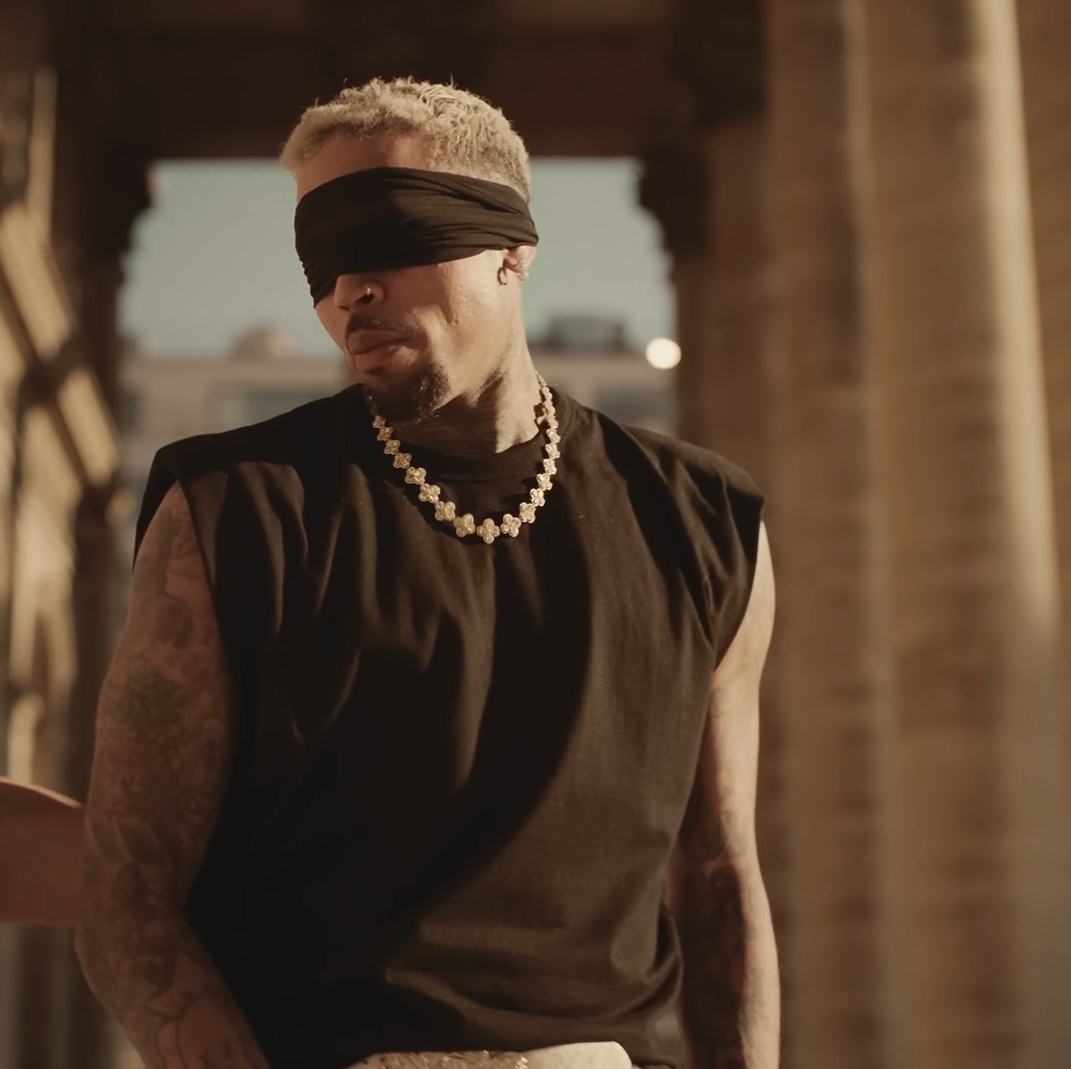
On the morning of July 24, 2026, Chris Brown stood in the dock at Southwark Crown Court in London and pleaded guilty to an altercation. It took less than a minute. He confirmed his name, confirmed his plea, and was gone by lunch, freed on bail again to await sentencing on October 26. In the scheme of a legal saga that began three years earlier in a Mayfair nightclub, it was almost anticlimactic. But set against everything else happening in Brown's life this year, that hearing reads less like a single news event and more like the newest line item in a ledger that has been running, in both directions, for eighteen years.
That is the only honest way to write about the Grammy-award wining entertainer in 2026. Two months ago he stood on a stage in academic regalia accepting an honorary doctorate. Two months before that he released a 27-track album that debuted in the Billboard 200's top ten. In April, he became a father for the fourth time. And in July, a Crown Prosecution Service lawyer stood in front of cameras and described him, once again, as a man who used a bottle as a weapon on another human being. Both things are true at once. Hits Culture's position here is not to pick a side. It is to lay out the full account and let the numbers speak.
The Plea in Southwark
The Chris Brown guilty plea resolved a case that had been building toward an October trial. Prosecutors had originally charged Brown, 37, with attempting to cause grievous bodily harm, assault causing actual bodily harm, and possession of an offensive weapon, all connected to a February 2023 altercation at Tape nightclub in Mayfair. In exchange for Brown's guilty plea to the lesser charge of affray, prosecutors dropped the three more serious counts. His longtime friend and vocal coach, Omololu Akinlolu, entered the same plea. Both men had denied the original charges for more than a year and were due to stand trial on October 26, the date now reserved instead for sentencing.
Prosecutors did not soften their account of what the surveillance footage inside the club showed. Senior Crown Prosecution Service lawyer Claire Campbell called it a "vicious and unprovoked attack," and said Brown used a glass bottle to strike the victim, music producer Abraham Diaw, twice in the head in front of a packed club. Affray carries a maximum sentence of three years, though actual outcomes for a first-time guilty plea of this kind in the UK frequently fall well short of that ceiling. Brown remains free on the five million pound ($6.6M U.S.) bail package that has allowed him to keep touring throughout the case, including the European and North American dates that ran through last summer.
It helps to be precise about what affray actually is, since the word does a lot of work in headlines without much explanation. Under English law, affray covers the use or threat of unlawful violence toward another person in a way that would cause an ordinary bystander to fear for their safety. It does not require proof of who struck the first blow or exactly how badly the victim was hurt, which is precisely why it functions as a common landing spot for plea deals: prosecutors can secure a conviction on the underlying violence without having to prove the more specific and harder-to-establish elements of grievous bodily harm. For Brown, pleading to affray meant accepting responsibility for the violence itself while avoiding a finding that he intended to cause the more serious injury prosecutors had originally alleged.
The underlying incident dates to February 2023, when Brown and Diaw crossed paths at Tape. Brown was not arrested at the time; British authorities did not catch up with him until May 2025, when he was detained at a Manchester hotel while preparing for a UK tour. He was released after posting the security bond and pleaded not guilty to the original charges that June and July, with a trial date set for late October 2026. The case sat in that holding pattern, not guilty pleas on the books and a trial calendared, for more than a year before Friday's reversal collapsed it into a single admitted charge.
What changed in the interim was not the evidence, which prosecutors said had not moved from the original surveillance footage. What changed was the calculation every defendant eventually runs: risk three to sixteen years on the original charges at trial, or take a guaranteed three-year ceiling on a lesser plea. Brown and his legal team chose the ceiling.
The Ledger's Oldest Debt
None of this reads in isolation, and Brown knows that better than anyone. The reference point every story about him eventually returns to is February 2009, when Brown, then 19, assaulted his then-girlfriend Rihanna in a car the morning of the Grammy Awards. He was charged with felony assault and later pleaded guilty, a plea deal that carried five years of probation, community labor, and mandated domestic violence counseling. He did not serve that sentence cleanly. He was later removed from a court-ordered rehabilitation program and, after a probation violation years later, spent more than two months in a Los Angeles County jail before his release in June 2014. His probation in the case did not formally end until 2015, six years after the assault.
The Rihanna assault case is the debt against which every subsequent headline about Brown gets measured, fairly or not, and the years that followed did little to close the account.
2013: The Probation Violation
Brown violated the terms of his 2009 probation after prosecutors found he had falsified his community service records, claiming to be completing labor hours he was not actually performing.
2016: Two Separate Incidents
In May, Brown's former manager sued him, alleging an assault during what the lawsuit described as a drug-fueled altercation; the case was later settled out of court. In August, police responded to an hours-long standoff at Brown's Los Angeles home after a woman told officers he had threatened her with a gun. Brown was arrested and released on bond; the case did not move forward for lack of evidence.
2017: The Karrueche Tran Restraining Order
Brown's ex-girlfriend, model Karrueche Tran, was granted a temporary restraining order after alleging he had threatened her; a judge made the order permanent for five years that June.
2018: Wildlife Charges
Brown was charged with illegally possessing an exotic capuchin monkey without a permit, after California wildlife officials seized the animal from his home.
2019: The Paris Investigation
French police questioned Brown after a woman accused him of aggravated rape following a night out in Paris. He was held for two days and released without charge; he has consistently denied the allegation.
Add the 2023 Tape nightclub incident and this year's guilty plea, and the pattern is not a single mistake amplified by tabloids. It is a recurring line in the ledger, one Brown's team has never fully been able to zero out, even during the years his music was selling better than almost anyone else's in R&B.
The Credit Side of the Ledger
And the music has been selling. In December 2025, new RIAA certifications pushed Brown's cumulative U.S. total past 163 million units, edging past Michael Jackson's longstanding mark and making Brown the highest-certified Black male vocalist in RIAA history. HitsCulture has made this argument before about other chart milestones: a certification record measures the durability of a catalog across format changes and re-releases, not a single era's dominance, and Brown's RIAA certification record belongs in that more careful category rather than the flattened "biggest of all time" framing it often gets online.
Then came the recognition that had nothing to do with sales math. On May 23, 2026, Harvest Christian University in Dallas awarded Brown an honorary doctorate, a Doctor of Philosophy in Visual and Performing Arts, citing more than two decades of influence on music, dance, and live performance. Brown announced it himself on Instagram with four words: "I did a thing." The moment deserves a plain-eyed look rather than pure celebration or pure mockery. Harvest Christian University has handed out honorary degrees to a long list of entertainers, including Busta Rhymes, T.I., Cedric the Entertainer, and Bernie Mac, and it is worth saying plainly that no accrediting body recognized by the U.S. Department of Education has accredited the school itself. The honor is real in the sense that Brown holds a certificate with his name on it. It is not the equivalent of an earned academic doctorate, and treating it as such misses what the university itself says it is: a recognition of cultural impact, not scholarship.
The professional momentum around the honor is real, though. Brown's twelfth studio album, BROWN, arrived on RCA earlier this year as a sprawling 27-track project featuring Bryson Tiller, Tank, Lucky Daye, GloRilla, and Fridayy, and debuted in the top ten of the Billboard 200 despite a mixed critical reception. He is now more than a month into the Raymond & Brown Tour, a co-headlining stadium run with Usher that stretches across more than thirty cities from June through December, a run that has continued without interruption through his London court dates.
The family side of the ledger has grown too. Brown is now the father of four. His oldest, daughter Royalty, was born in 2014 to model Nia Guzman; the two co-parent and have been photographed together at Royalty's birthdays in recent years. His son Aeko, born in November 2019 to Ammika Harris, has appeared with Brown at the Grammys. His daughter Lovely, born in January 2022 to Diamond Brown, marked her fourth birthday earlier this year. In April 2026, Brown welcomed a fourth child, a son, with Jada Wallace, a relationship the couple had kept almost entirely private before the birth announcement. Whatever else sits in this ledger, the Chris Brown children entries are consistently described, by the mothers themselves, as a father who shows up.
What the Ledger Doesn't Actually Balance
Here is where the framing matters. This is not a story about redemption, because redemption implies an ending, and Brown's file is still open; October 26 is still on the calendar. It is also not simply a story about a serial offender, because that framing erases four kids who by every account have an involved father and a catalog that keeps landing on Billboard's top ten nearly two decades after his debut. The honest Chris Brown timeline is neither of those clean stories. It is a career that keeps generating credits and debits in the same calendar year, sometimes the same month, without either column ever fully clearing the other.
What is notable, and worth naming directly, is how little friction that produces. The industry that quietly has stayed conspicuously silent on other artists' unresolved legal histories has extended Brown the same courtesy: RCA released his album mid-case, Usher co-headlined a stadium tour with him mid-case, and a university handed him a doctorate two months before his change of plea. None of those decisions required anyone to defend the underlying conduct. They simply required treating the legal proceedings as background noise rather than a business risk, which is its own kind of verdict on what the culture is actually willing to hold against a hitmaker.
What Comes Next
Sentencing is set for October 26, 2026, the same date once reserved for a trial that will now never happen. Affray carries a maximum three-year term in the UK, though guilty pleas to lesser charges rarely draw maximum sentences, and Brown's legal team will likely argue for a non-custodial outcome given his lack of a UK criminal record and the substantial bail conditions he has already observed for over a year. Judges weighing an affray sentence typically look at the degree of premeditation, the number of people involved, and whether a weapon was used, all factors that cut against Brown here given prosecutors' account of a bottle used twice against Diaw's head. Akinlolu faces sentencing on the same date, and how the court treats the two men relative to each other will say something about whether Brown's fame worked for or against him in the room.
Whatever the judge decides in October, it will not be the final word on how this period of Brown's career gets remembered, because the ledger does not stop running just because a court date arrives. The doctorate stays on his wall. The album stays on the charts. The tour keeps selling tickets through December. And somewhere in a family album, four children keep growing up with a father who, by every account from the mothers involved, keeps showing up for them. None of that erases what happened to Abraham Diaw in a Mayfair club in February 2023, and none of it should. It just means the ledger, eighteen years after Rihanna's car and three years after a bottle inside a Mayfair nightclub, still refuses to close.
Comments (0)
No comments yet — be the first to share your thoughts.
Leave a comment