

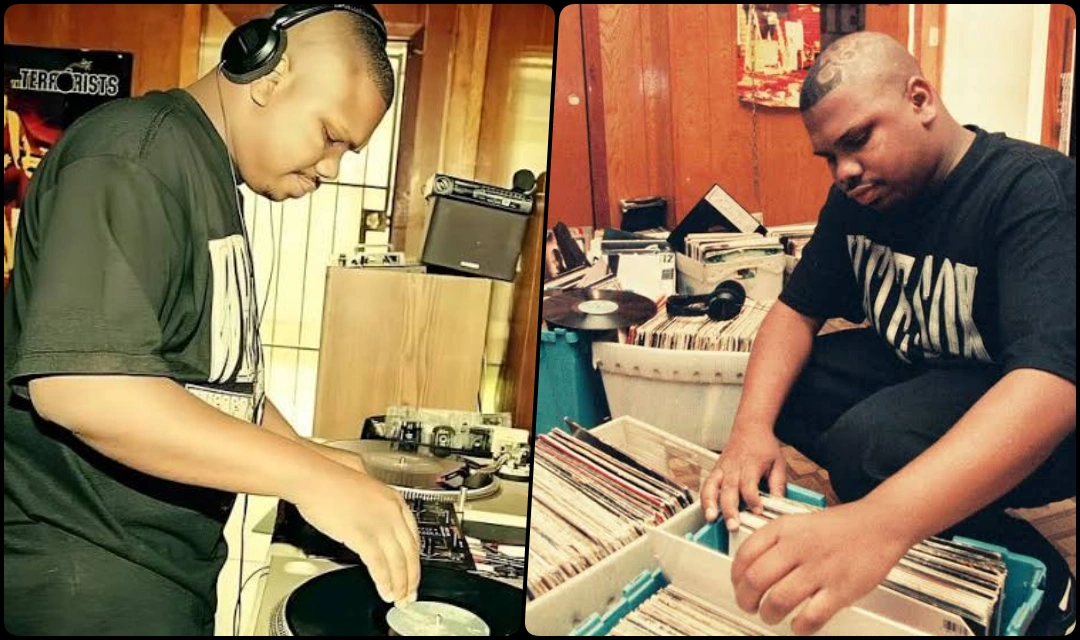
On the Southside of Houston, a teenager named Robert Earl Davis Jr. used to put two copies of the same record on two turntables and ride the crossfader between them. He repeated a beat, a word or a phrase until the song stretched into something slower and heavier than the one the label had pressed. The University of Houston's DJ Screw Collection records that each session produced a master cassette, and that he sold copies of these "screw tapes" or "grey tapes" from his home. In 1998 he opened Screwed Up Records and Tapes to sell them over a counter, and he died on November 16, 2000, at 29.
Twenty-six years later, slowed-down and sped-up versions of hit records crowd streaming search results, and on Tuesday, Sept. 15, Universal Music Group put them at the center of a federal case. UMG Recordings, Capitol Records and Capitol CMG sued DistroKid and two of its holding companies in the U.S. District Court for the District of Delaware, alleging in the stamped complaint that the distributor delivers remixes and "speed-altered versions of popular sound recordings" to streaming services without holding any rights in them.
For working artists, the UMG lawsuit against DistroKid is an attempt to move liability up the chain. Universal is not chasing the anonymous account that uploaded a slowed Ellie Goulding song; it is chasing the company that ingested the file, delivered it and billed the uploader for the privilege. If that theory survives a motion to dismiss, every flat-fee distributor will have to decide how much it checks before a track goes live. The independent rappers and singers who depend on those services will feel that decision first.
What Universal Filed in Delaware
The complaint pleads five counts, the first under the Delaware Deceptive Trade Practices Act, resting on the claim that "consumers are misled into believing they are listening to genuine music" when they stream mass-produced filler. The other four are copyright counts, direct and vicarious infringement of sound recordings under 17 U.S.C. 501, with parallel counts for pre-1972 recordings under Section 1401, which the Music Modernization Act added in 2018. For each work infringed, Universal asks for statutory damages of $150,000.
Exhibits A and B list 1,000 Universal recordings, and the filing says the label's investigation has turned up "nearly 2,000 infringing DistroKid-distributed recordings." It describes four DistroKid tracks titled "Favorite Song," the same title as Toosii's platinum-certified single. Universal Music Canada reported in June 2023 that the record was number one at rhythm radio and inside the top five of the Billboard Hot 100. The filing names a track called "Judas Sped Up" and describes uploads that copy the official cover art of the songs they imitate. One carries the same ISRC, the code that identifies a specific recording, as Juice Newton's "Angel of the Morning."
The volume accounts come next: according to the complaint, one of DistroKid's highest-volume "artists," operating as Lofi Chill, "released 4,562 tracks in a single twelvemonth period," with Chill Flow Radio and Mellow Vibes Radio named beside it. Universal alleges DistroKid delivered nearly twelve million tracks to a single unnamed streaming service in the six months before the suit. The complaint also cites DistroKid's own claim to distribute 30 to 40 percent of all new music.
The Slowed-Down Problem Has a Houston Address
Paragraph 12 is the one hip-hop should read twice. It says DistroKid "distributes tracks that are merely remixes or speed-altered versions of popular sound recordings," and paragraph 103 adds that Universal holds "the exclusive right to modify or adapt copies of the sound recordings they own." That is an accurate statement of the derivative-work right in Section 106, and it is also a fair description of what Davis did with a crossfader on the Southside more than thirty years ago.
The grey tape lived in a cassette economy that labels rarely saw and seldom policed. Its value traveled with the man who made it, the Screwed Up Click members who rapped over it and the neighborhood that bought it, and it never shared a shelf with the original pressing. A slowed-and-reverbed upload sits in the same search results as the record it alters, draws on the same royalty pool and, according to Universal, sometimes wears the original's artwork to win the click.
The complaint is careful about what it leaves alone, and a footnote says the suit "is not about the distribution of AI-generated music when clearly disclosed as such." Another footnote says Universal does not challenge artists using AI as one tool among many. Nowhere does the filing say whether Universal sells slowed or sped-up editions of its own catalog, and nowhere does it separate a fan's pitch-shifted copy from a DJ's transformative mix. Our read is that a screw tape uploaded today without a license would land on the wrong side of paragraph 103 either way.
Twenty Dollars and Unlimited Uploads
The business-model sections are where the case reaches independent artists directly. DistroKid account holders, the complaint says, pay a monthly or annual subscription at one of three tiers, and the company "promises to ingest, copy, and distribute an unlimited number of sound recordings." Universal alleges that DistroKid "allows unlimited uploads as a strategy to gain users and volume," and it quotes a customer testimonial calling the service "[a] million dollar record label for $20."
Each of those details feeds the vicarious infringement count, which requires a right and ability to supervise the infringer plus a direct financial interest in the infringing activity. Universal builds the first element from DistroKid's own paperwork, citing the distribution agreement's clause that lets the company pull a recording "if we receive any legal claims regarding the particular Recording(s)." It adds the company's power to terminate accounts engaged in infringement, while the subscription tiers and per-track add-ons supply the second element.
The Leave a Legacy Fee
One add-on draws particular attention: for $29 per track, the complaint says, an account holder can buy Leave a Legacy, which keeps a recording on streaming services after the subscription lapses. Universal cites the practice again inside two of its counts. A rapper who buys it to protect a catalog against a missed renewal is purchasing insurance. In the complaint, the same purchase becomes proof that DistroKid controls what stays live and gets paid to keep it there.
What the Complaint Leaves Out
Across the five counts we reviewed, through the final damages paragraph, neither the Digital Millennium Copyright Act nor its DMCA safe harbors appear, though that framework usually shields platforms that respond promptly to takedown notices. The silence fits a direct-infringement theory that casts DistroKid as the party making and delivering copies, rather than a host storing what users post. The company's own published guidance already speaks the DMCA's language, telling artists whose music was removed "as a result of a misidentification or mistake" that a counter-notice is available. It adds that DistroKid is "obligated to wait 10 business days before reinstating any content."
Removals have already begun. Amanda Ferri, DistroKid's vice president of artist services, told The Verge, "A very small number of recordings distributed through DistroKid have been removed in response to claims made by UMG." She added, "We strongly dispute the allegations underlying UMG's lawsuit and regret the disruption to affected artists," and said the company is "working to minimize that disruption while protecting artists' ability to release their music." DistroKid has published no count, and its guidance warns that streaming services "may choose not to reinstate content" even after a counter-notice succeeds.
Where This Leaves the Independent Rapper
Pressure on distributors was building before September, and DistroKid had not signed on to the IFPI's Streaming Integrity Initiative when it launched. The initiative asks labels and distributors to run know-your-customer checks on clients and to "implement measures to identify AI-generated content and vet for potential associated issues, including streaming fraud." CVC Capital Partners, meanwhile, agreed to a ten-figure deal for majority control of DistroKid, a transaction expected to close in the third quarter. That leaves a new owner weighing six-figure statutory exposure per work against the cost of slower ingestion.
For independent artists uploading original music, the practical risk is collateral. A tighter filter will flag remix tags, speed-altered titles and borrowed artwork, and those markers also describe legitimate releases such as the licensed remix, the producer's official slowed edit and the interpolation cleared through a publisher. Our sample clearance guide walks through the two licenses a borrowed record needs, and that paperwork is what a cautious distributor will start asking to see. Clean metadata belongs in the same folder: a correct ISRC, agreed splits and a registration with The MLC, which begins dividing unclaimed mechanicals by market share in April 2027, as our deep dive on that change laid out.
Davis put his name on the music and sold it from his own front door, and the University of Houston now keeps four linear feet of what he left behind. The accounts at the center of Universal's complaint are called Lofi Chill, Chill Flow Radio and Mellow Vibes Radio.

Comments (0)
No comments yet — be the first to share your thoughts.
Leave a comment