

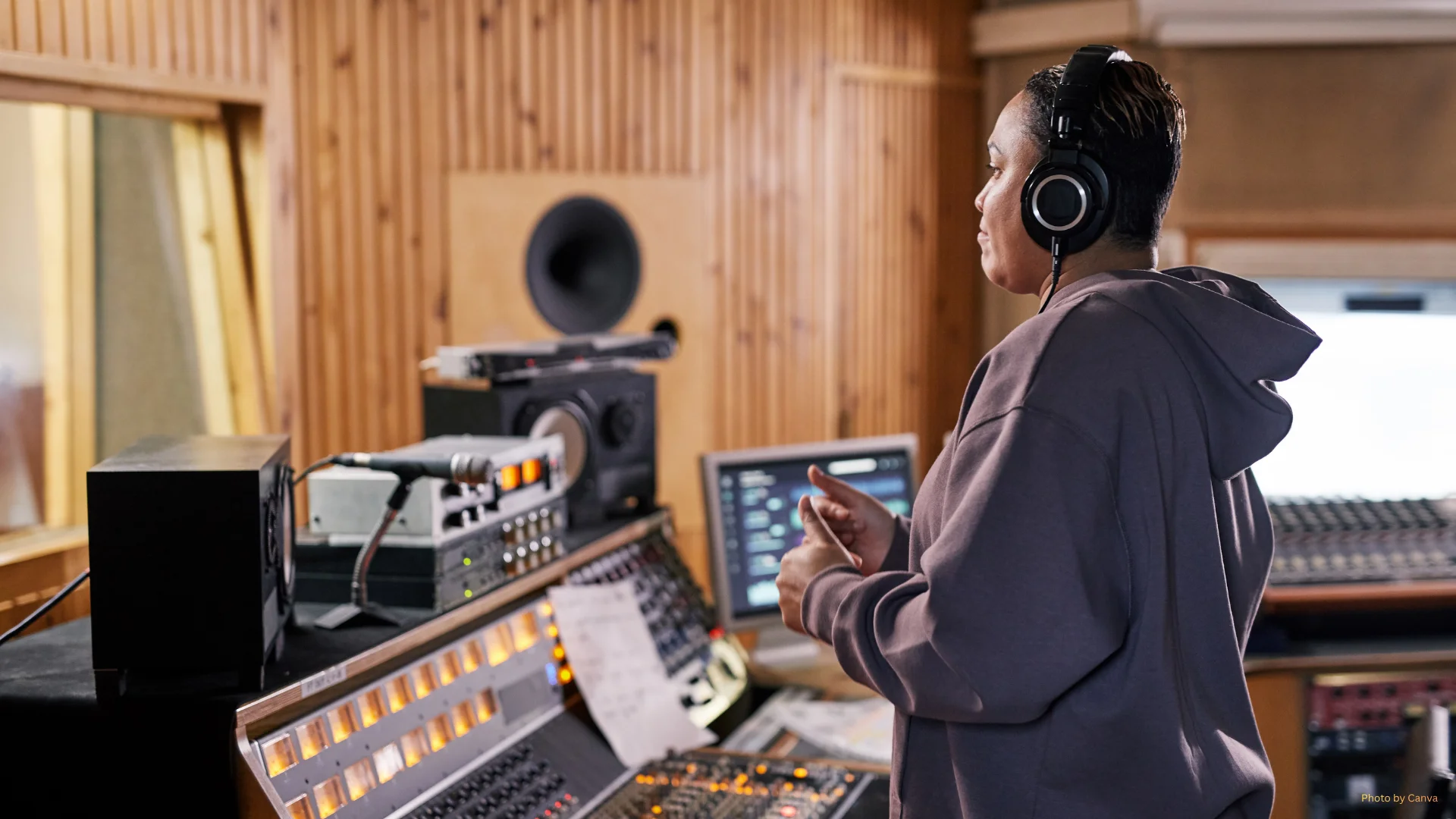
A producer in Atlanta cuts a beat in a Thursday session, a second producer adds drums the following week, and two rappers trade verses over it before anyone has typed a split sheet. The song goes to streaming services on a Friday, the percentages get settled in a group chat sometime in the spring, and the co-producer with 12.5 percent of the publishing never registers his share anywhere. That scenario is hypothetical, and anyone who has worked in a rap studio will recognize every step of it.
Starting in April, the money attached to that missing registration stops waiting. The Mechanical Licensing Collective is the nonprofit Congress created to license and pay streaming mechanicals in the United States. It announced last Wednesday (Sept 30) that it will begin market share distributions of unclaimed royalties with its April 2027 payout, beginning with usage from January 2021. Unclaimed shares will be divided among the rightsholders whose songs earned money that month, in proportion to what each one earned.
The plain consequence for working artists is that a mechanical royalty nobody claims does not disappear. It goes to the people who already collect the most, and the clock on the first month of that money has about six months left on it.
What The MLC Announced, and What It Has Paid So Far
The collective made the announcement at its annual membership meeting and published the figures in a release dated Sept 30. Since opening in January 2021, it says, it has processed nearly $5 billion in royalties and distributed more than $4.2 billion to rightsholders, with a match rate above 92 percent for everything processed through the September distribution. Its membership passed 100,000, with more than 27,000 members added so far this year, and its public database now holds data on more than 60 million works.
Kris Ahrend, the collective's chief executive, kept his statement to the milestone. "We're proud of the progress The MLC has made since beginning operations in 2021 and we're grateful to our Members and industry partners for their continued engagement and support," he said in the release.
The schedule is the part that matters for anyone with an unfinished registration. The MLC will distribute the remaining eligible royalties from 2021 usage one month at a time, starting with January 2021 inside the April 2027 distribution. By then, it notes, it will have spent more than six years trying to match that first month. Music Business Worldwide reported Tuesday (Oct 6) that the collective's own website showed just over $6 million in unmatched and unclaimed royalties still held from January 2021 usage once the September distribution was complete.
Unmatched Versus Unclaimed: Two Different Holes
The collective sorts its leftover money into two buckets, and the difference decides which kind of artist is exposed. An unmatched royalty is tied to a recording The MLC has not been able to link to any song in its database, which usually means nobody registered the composition at all. An unclaimed royalty is tied to a song the collective has identified but whose ownership shares have not all been claimed by a member.
The second bucket is where collaborative records live. A song can be registered by the publisher of one co-writer, matched to the recording, and paying out on schedule. Meanwhile the slice belonging to a second producer or a featured rapper sits uncollected because that person never joined, never claimed, or registered a different percentage than everyone else filed. The money flowing to the song makes the problem invisible to the people who did their part.
The U.S. Copyright Office saw this coming. Its July 2021 report on unclaimed royalties listed among the data problems the "late finalization of splits, perhaps decided close to or after the release date of a track." It also flagged the reconciliation trouble that follows when several co-writers each pick their own publishing administrator. That same report recommended that the first distribution of unclaimed money not occur for at least five years from the date the claiming portal opened to the public. The April 2027 start lands more than six years after the January 2021 usage it will distribute.
How Market Share Divides the Money
The MLC will allocate the remaining unclaimed blanket royalties on a pro rata basis for each streaming service and offering reported in a given month, using its actual distribution data rather than estimates of market share. Every song that earned royalties in that month, whether on the first pass or through later reprocessing, receives its proportional cut of the leftover pool.
A publisher that collected 20 percent of the mechanicals paid on a given service in January 2021 receives roughly 20 percent of that service's unclaimed January balance, while a self-administered songwriter whose catalog earned a sliver of a percent receives a sliver. Interest calculated at the statutory rate rides along, as the Music Modernization Act requires.
The statute does include one protection for writers signed to publishers. Under 17 U.S.C. 115(d)(3)(J)(iv), a publisher or administrator receiving these funds must pay or credit each of its songwriters at least 50 percent of the amount attributable to that writer's works. That floor helps a writer whose catalog is already registered under a large publisher, and it does nothing for the co-producer whose share was never registered in the first place, because his share is the money being redistributed.
The collective is explicit that there is no opt-out. The only way to keep a share out of the market share pool is to register the work, claim the share, or link the recording to the song before the month in question is distributed.
Why Rap Catalogs Should Be Checking First
Our desk's read of the mechanics is that hip-hop's working habits line up almost exactly with the failure the Copyright Office described in 2021. Beats travel by email and file-sharing links, sessions add contributors as they go, and splits get negotiated after a single is already climbing, sometimes after a sample or interpolation clearance reshuffles everybody's percentage. Each of those habits produces a song that can be matched and paying while one share of it is orphaned. No public dataset breaks unclaimed royalties down by genre, so the exposure can only be measured one catalog at a time.
Sample clearance is the most common place those percentages move late. When an interpolation is cleared after release, the original writers take a share of the new composition and every other share shrinks, which is the process our sample clearance guide for working artists walks through step by step. A registration filed before that settlement and never corrected is the exact mismatch that leaves a share unclaimed.
Mechanicals are also the royalty stream rap artists tend to understand least, partly because the performance side gets paid through ASCAP, BMI or another performing rights organization while the mechanical side runs through a different pipe entirely. Membership in a PRO does not register a song with The MLC. An independent producer with a BMI account and no publisher can collect performance money on a record for five years while the mechanical share of the same record waits in the collective's unclaimed pool. That gap belongs in the same conversation about streaming pay that Meek Mill's complaint about payouts reopened.
The Historical Money Is a Separate Story
None of this touches the older pile the collective inherited. When it launched, streaming services transferred the historical unmatched royalties they had accumulated before 2021. The MLC says it has now distributed nearly $239 million of that money, more than 60 percent of what the services were unable to match and pay before handing it over. Music Business Worldwide put the original transfer at $424.38 million. The market share schedule announced last week applies to the blanket-license royalties reported to the collective from January 2021 onward.
What an Artist Can Do Before April
The collective's own guidance names three tools, and each corresponds to one of the holes described above. Members can use its Works Registration Tools to register missing songs, its Claiming Tool to claim a share of a song another member registered first, and its Matching Tool to review unmatched recordings and suggest matches to songs in their catalog. A self-administered songwriter can join directly, while a writer with a publishing administrator needs to confirm that the administrator has registered every co-written title at the agreed percentages.
The practical priority is the oldest material. Streams from January 2021 sit first in line for the April distribution, with February 2021 usage following in the next monthly payout. Features, loosies and deluxe tracks from that era, which rarely got the paperwork attention of a lead single, are the likeliest gaps. A producer who spent 2021 sending beats to a dozen artists has a dozen split sheets to check against the database before the money from those months is divided.
The MLC will distribute that first month of leftover 2021 money in April 2027.
Comments (0)
No comments yet — be the first to share your thoughts.
Leave a comment