

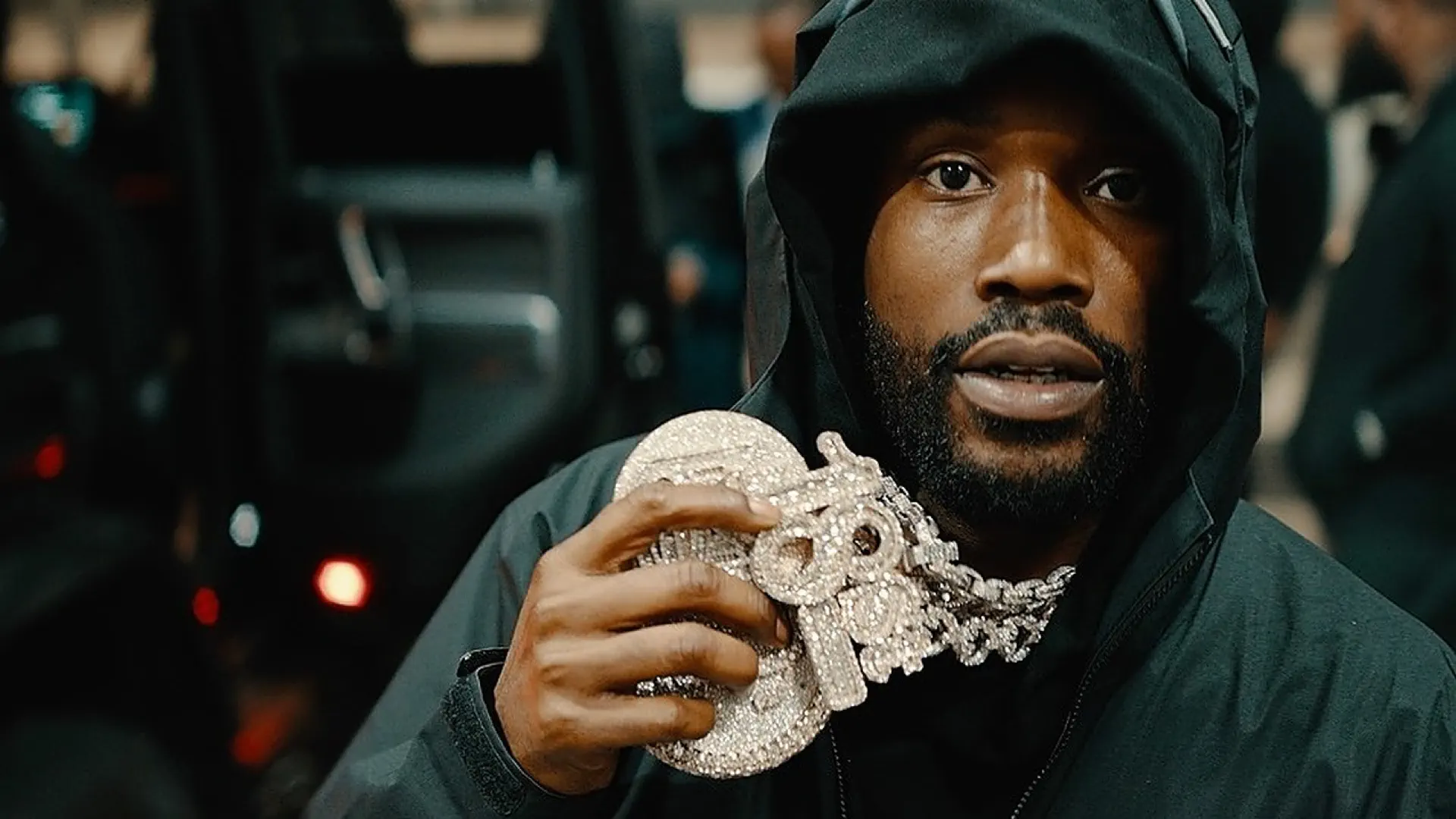
Meek Mill has been doing streaming calculations in public for years, and on Wednesday (Sept 30) he went after the equation he blames most. In a post on X, the Philadelphia rapper wrote, "Whoever made up 1500 streams a sale is insane." He added that anyone in the room when it was decided helped set the music ecosystem back 10 years "for the artist and consumer," then ended with a question: "How did that come about?"
That question has a plain answer, and so does the larger one sitting under it. The 1,500 figure came from Billboard and Nielsen SoundScan in late 2014, it has been rewritten twice since, and it never set what anyone gets paid. The complaint Meek has been building toward for years is that a fan's loyalty now converts into fractions of a cent. That one holds up when you follow the money, although the streaming services turn out to be only one of several hands taking a cut before it reaches the person who made the record.
Where the 1,500 Came From
In November 2014, Billboard announced that its flagship album chart would stop ranking pure sales and start measuring consumption, equating 1,500 song streams or 10 track downloads from an album with one album sold. The chart's director at the time, Silvio Pietroluongo, pitched the change as a way to see past the checkout counter. "We were always limited to the initial impulse, when somebody purchased an album," he told The New York Times. "Now we have the ability to look at that engagement and gauge the popularity of an album over time."
The number Meek is quoting has been retired for years. Billboard began weighting paid streams above free ones in 2018, and by late 2025 one album-equivalent unit equaled 1,250 subscription streams or 3,750 ad-supported plays. Since the charts dated January 17 of this year, the bar sits lower still, at 1,000 paid streams or 2,500 ad-supported ones, a change Billboard tied to rising streaming revenue. YouTube objected to the remaining gap between free and paid plays strongly enough that it stopped sending its data to Billboard's charts after January 16.
None of those revisions touched a royalty statement. Chart units exist to rank one album against another in a given week. A plaque built on them can reward listening that paid very little, which is what we found when we broke down what a certification actually counts. The pay side runs on a separate track, and that track is the one Meek has been describing since at least 2023.
Five Dollars a Copy
In November 2023, he put numbers on it. "It's not possible to make money off .003 a stream from your favorite fans," Meek wrote. He recalled selling hard copies at a $5 wholesale price when the going rate was $2.50, and moving 35,000 copies across two arena shows. In the same thread he announced, "I own 100% of my masters and publishing now."
Run his own figures through the old chart formula and something strange turns up. At three-tenths of a cent, 1,500 streams generate about $4.50, which sits within a couple of quarters of the $5 he says he charged for a CD. For an artist who owns the recording, the chart equivalence and the payout roughly match. The math breaks for everyone else. A major-label streaming royalty typically runs from about 13 percent to a little over 20 percent, which turns that same $4.50 into 60 cents to a dollar. Even that is owed only after the label recoups the advance, the recording budget and the video.
Even the three-tenths of a cent is a convenience rather than a rate. No major service pays a flat amount per play. Spotify pools a month of subscription and advertising revenue, sends roughly 70 percent of it to rights holders, and divides that share by each rights holder's portion of total streams. That's why outside estimates of its payout land between $0.003 and $0.005 and why a play from a subscriber is worth several times more than a free play from a smaller market.
Follow the Subscription
Spotify's own books make it hard to cast the platform as the only villain. The company says it paid out more than $11 billion to the music industry in 2025, up more than 10 percent from 2024, with independent artists and labels collecting half of those royalties. Charlie Hellman, Spotify's head of music, took direct aim at CD-era nostalgia in January. "There are now more artists generating over $100k/year from Spotify alone than were getting stocked on record store shelves at the height of the CD era," he wrote.
The platform keeps about 30 percent, and the next hand belongs to whoever owns the master recordings. For most of the artists who built hip-hop's streaming era, including Meek through his Maybach and Atlantic years, that meant a major label. Warner Music Group disclosures in 2019 suggested an average digital royalty rate of around 25 percent across its roster. A study by the French label body SNEP and Ernst & Young found labels collecting 45.5 percent of subscription revenue while performing artists took 6.8 percent.
That split is the backdrop for the October 2021 tweet in which Meek wrote, "I haven't get paid from music, and I don't know how much labels make off me!!" The post was deleted along with a threat to leak his contract. Dream Chasers ended its Roc Nation partnership in July 2022, and Meek has released as an independent since, which he says came with a visible drop in his streaming numbers. "When I went independent they tried to kill my name," he wrote this spring. He pointed to a sold-out Barclays Center date and a Meek and Friends show that sold out Madison Square Garden, though he named no label and offered no evidence of interference.
A Crowded Pool
The other half of the squeeze comes from sheer volume. American listeners played 732.7 billion on-demand audio streams in the first half of 2026, up from 696.6 billion over the same stretch of 2025, according to Luminate's midyear report. More listening grows the pie, but the pro-rata model divides it by every stream on the platform, so each new track and every fake play trims the value of all the others.
Deezer, which tags AI-generated uploads, was receiving around 10,000 fully synthetic tracks a day in January 2025. By June 2026 the monthly average had peaked at 90,000 a day, more than half of everything delivered to the service. "AI-generated music is now far from a marginal phenomenon," Deezer chief executive Alexis Lanternier said in April, calling on the rest of the industry to help safeguard artists' rights. At the time, the company reported that AI tracks drew 1 to 3 percent of its streams and that 85 percent of those plays were flagged as fraudulent and demonetized.
Spotify's answer to the clutter, rolled out in 2024, was a 1,000-stream threshold that cut off recorded-music royalties for any track under 1,000 plays in the previous 12 months. The company says those tracks were earning about $0.02 a month, money that rarely cleared distributor payout minimums. When the plan was announced, Damon Krukowski of the indie duo Damon and Naomi stated that it would "move an estimated $40-$46 million annually from artists like Damon & Naomi to artists like Ed Sheeran." Fraud pulls from the same pool. That is the core of the class action filed by Long Beach rapper RBX, born Eric Dwayne Collins, who alleges Spotify allowed bot-driven streams that diverted royalties from real artists. Those claims have not been proven in court.
What Meek Is Really Asking For
Read beside those numbers, Wednesday's post is less about a chart formula than about control. "The business of music has gotten far from our hands," Meek wrote in the same thread, adding that the decisions shaping it "do not align with talent at all just a viral moments!" Earlier this month he floated a venture under the name Dream Chasers streaming, pitched as an alternative to DJ Akademiks' online content, with no launch date or format attached. It echoes a 2020 push, when he went looking for Silicon Valley engineers to build a music platform that he, Lil Baby and Lil Durk could majority-own. In a follow-up post, he said 21 Savage was on board too.
Hip-hop has more riding on that argument than any other genre. R&B and hip-hop still account for nearly one in four U.S. on-demand streams. The genre's share of album-equivalent consumption fell to 30 percent in the first half of 2026 from 41 percent in 2023, a slide we have tracked through this year's data. The genre adopted streaming first, when the terms of what a play would be worth to the artist were being written into contracts signed long before the streams arrived.
The 1,500 formula was the industry's answer in 2014 to how records should be ranked once people stopped buying them. The question Meek asked on Wednesday is about who gets paid when fans press play. His own math puts the gap at roughly $4.50 for an artist who owns the recording against well under a dollar for one who signed it away. He says he owns his masters and publishing now, so the next 1,500 streams of anything he releases will land a lot closer to that old $5 wholesale price.

Comments (0)
No comments yet — be the first to share your thoughts.
Leave a comment