

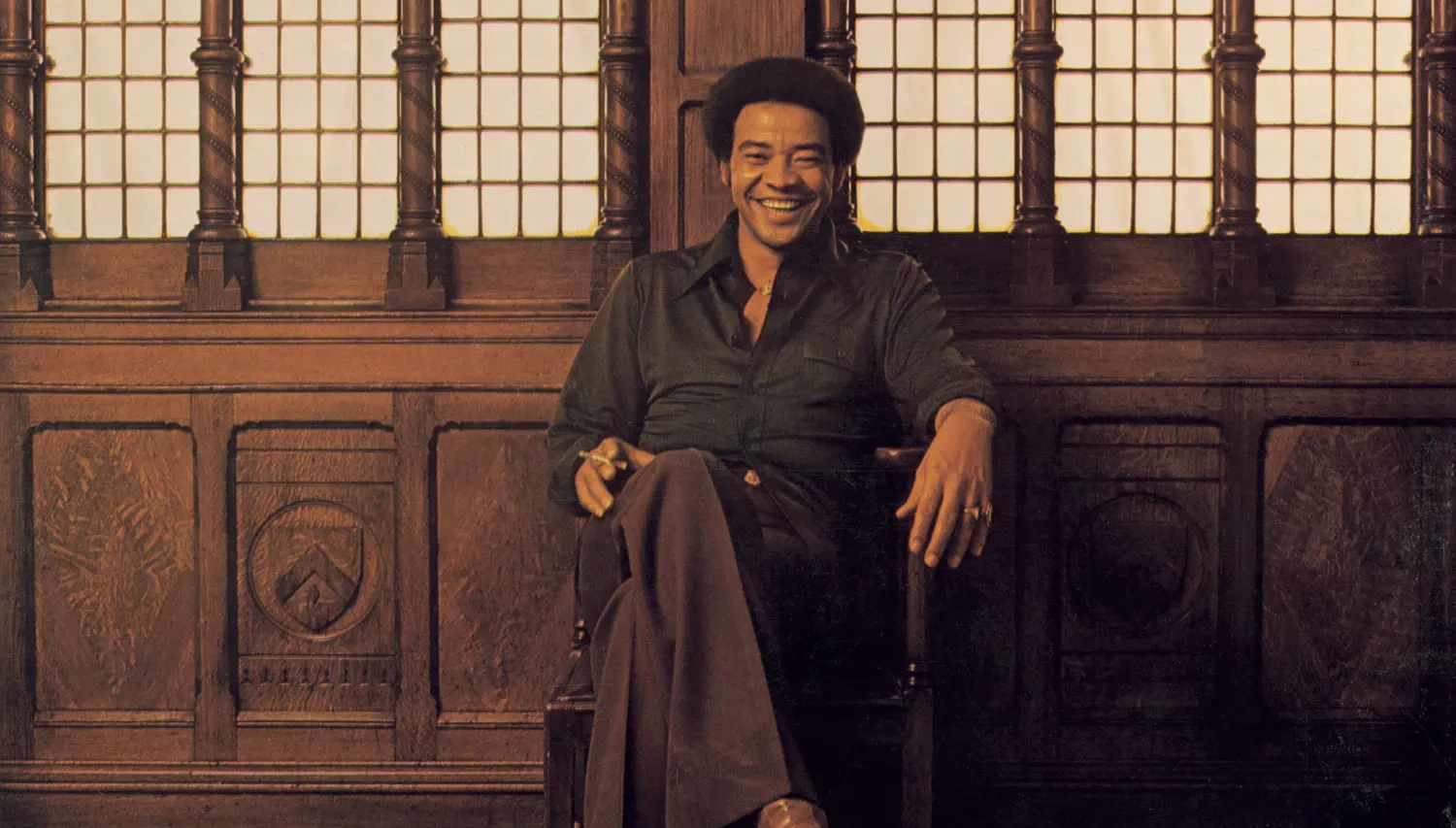
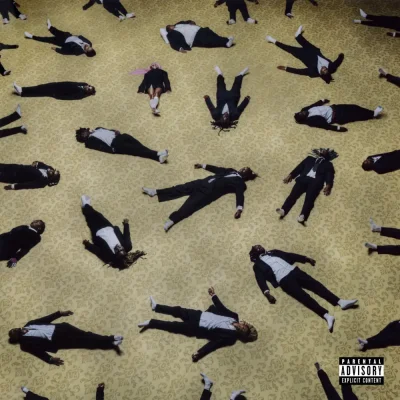
The song at the center of the newest fight over Bill Withers' catalog runs two minutes and six seconds. "I've Seen It" closes Olivia Dean's The Art of Loving, the Capitol album that arrived September 26, 2025. The record went gold in February and carried the London singer to Best New Artist at the 68th Grammy Awards on February 1. It was never released as a single, and on Thursday (Oct 1) it became the subject of a seven-page complaint in federal court in Los Angeles, case number 2:26-cv-11383.
The plaintiff is Mattie Music Group, the company named for Withers' mother and run by his widow, Marcia Johnson, which says Dean's closer copies "Just the Two of Us," the 1981 Grover Washington Jr. record that Withers sang and wrote with Ralph MacDonald and William Salter. That record climbed to No. 2 on the Hot 100 and won the Grammy for Best R&B Song. As our Saturday report on the filing laid out, Dean and her co-writers, Bastian Langebæk and Max Wolfgang, are not defendants.
The complaint names the primary businesses monetizing the track: Capitol Records, Universal Music Group, Sony's U.S. publishing arm, and Kobalt Music Publishing America. In HitsCulture's view, the lawsuit stands on solid ground by targeting the one element modern courts still protect and holding accountable the corporations that continued sales after receiving fair warning. Whether the melodies actually match, however, remains a technical determination reserved for expert musicologists.
A Complaint Built on Melody
The filing does not say "I've Seen It" sounds like the 1981 record, or that it borrows its warmth, its tempo, or its famous chord loop. According to the complaint, the publisher hired musicologist Dr. Alexander Stewart, who "conducted a preliminary musicological comparison and a search for similar prior art and concluded that the works contain substantial similarities in protectable musical expression, including repeated copying of the distinctively protectable melody."
That last phrase carries the whole case. A protectable melody is the single piece of a pop song that copyright law has continued to guard through a decade of verdicts that swung wildly in both directions. The complaint leans on it twice. It also reaches for the doctrine of striking similarity. In the publisher's words, "the number, character, and arrangement of the shared musical features are so striking that they support an inference that the similarities did not result from coincidence, independent creation, or reliance on common musical elements."
Mattie Music says it sent written notice to each defendant on or about August 17, identifying its copyright registration. It alleges that the companies "continued reproducing, distributing, licensing, publicly performing, and commercially exploiting" the song afterward. It asks for actual damages and profits, or statutory damages of up to $150,000 per work if the infringement is found willful, along with a permanent injunction and attorney fees.
The Courts Already Drew the Map
Songwriters have reason to flinch at any copyright infringement lawsuit involving a beloved soul record, because the Blurred Lines verdict taught them to. A Los Angeles jury in 2015 awarded Marvin Gaye's family roughly $7.4 million against Robin Thicke and Pharrell Williams, a figure the trial judge cut to $5.3 million. The Ninth Circuit affirmed it 2 to 1 in March 2018 over a dissent from Judge Jacqueline Nguyen, and the final judgment that December came in just under $5 million. That case was fought over groove, texture and the feel of an era, and it left a generation of producers nervous about sounding like their influences.
The years since have narrowed the target considerably. In March 2020 the full Ninth Circuit, ruling on Led Zeppelin's "Stairway to Heaven," threw out the inverse ratio rule that had let strong proof of access lower the bar for proving similarity. The judges wrote that "we take this opportunity to abrogate the rule in the Ninth Circuit and overrule our prior cases to the contrary." In 2022 the same court upheld the ruling that erased a $2.8 million jury award against Katy Perry over "Dark Horse," holding that "the ostinatos at issue here consist entirely of commonplace musical elements." Capitol Records was a defendant in that case as well.
Ed Sheeran's long fight over "Thinking Out Loud" finished the job on the East Coast. A Manhattan jury cleared him on May 4, 2023. In November 2024 the Second Circuit held that the four-chord progression in dispute, "even coupled with a syncopated harmonic rhythm, is too well-explored to meet the originality threshold." The Supreme Court declined to hear the appeal on June 16, 2025. The Sheeran ruling does not bind a court in Los Angeles, but the Ninth Circuit's own cases point the same way.
Read against that record, the Withers complaint is built for the courts as they stand in 2026. It leaves the chords alone, and it never argues that a mood or a groove belongs to anyone. What it claims is that a specific line of notes, the part a listener hums back, was taken, and that is the single claim a songwriter's estate is still entitled to bring.
Withers' Songs Have Always Traveled With His Name
Few catalogs in R&B have been borrowed as openly or as profitably. Blackstreet built "No Diggity" on an altered sample of "Grandma's Hands," and the 1996 record went to No. 1 on the Hot 100 with Withers listed among its songwriters. Will Smith turned "Just the Two of Us" itself into a 1997 father-and-son single. Kendrick Lamar drew on "Use Me" for "Sing About Me, I'm Dying of Thirst."
Mattie Music has gone to court before when a credit was missing. In April 2016 it sued Lamar over "I Do This," a 2009 mixtape track, with the complaint calling it a "direct and complete copy" of the 1975 song "Don't You Want to Stay." Both cases rest on the same demand, that a Withers composition carry Withers' name and share wherever it turns up.
Working artists should treat that history as instruction. Every interpolation that reaches streaming without a cleared publishing split is a bill that arrives later, often after the record has done its best business. The mechanics of getting ahead of that bill are laid out in our artist guide to sample clearance and interpolation. An interpolation never touches the original master, but it still owes the songwriters their share of the publishing.
The Right Defendants, and the Seven Weeks in Between
Leaving Dean off the caption is the most telling choice in the filing. She is 2026's Best New Artist, a singer whose public image rests on warmth and sincerity, and a suit with her name on the first page would have generated louder headlines. The publisher went after the four companies that manufacture, license and collect on "I've Seen It," which are also the four companies that, by the complaint's account, received a written warning in mid-August.
That stretch of roughly seven weeks between the August 17 notice and the October 1 filing is the part of this story the defendants will eventually have to explain. The complaint says the song stayed on sale and its credits did not change. None of the four companies had publicly addressed the suit by Saturday.
A credit conversation in August would have cost Capitol and its publishing partners a share of a deep album cut. A federal case in October puts the album that made her Best New Artist in front of a judge, with statutory damages on the table if a court finds the copying was willful. Labels have every incentive to settle a melody claim quietly. They have very little incentive to let a jury with headphones decide whether a closing track borrowed from one of the most recognizable choruses of 1981.
What Comes Next
The defendants will answer, most likely with their own musicologist and a search of the prior art for melodic shapes older than either song. If that search turns up the same contour in a hymn, a standard or a jingle from decades earlier, the claim weakens fast, because a melody that belongs to everyone belongs to no one. If it does not, the case turns on a side-by-side comparison of two vocal lines, the narrow question the last ten years of appellate law have left standing.
HitsCulture will report the expert filings when they reach the docket. For now, the case sits in Los Angeles federal court under number 2:26-cv-11383, with Capitol, Universal, Sony and Kobalt listed as defendants and 50 Does still unnamed.


Comments (0)
No comments yet — be the first to share your thoughts.
Leave a comment