

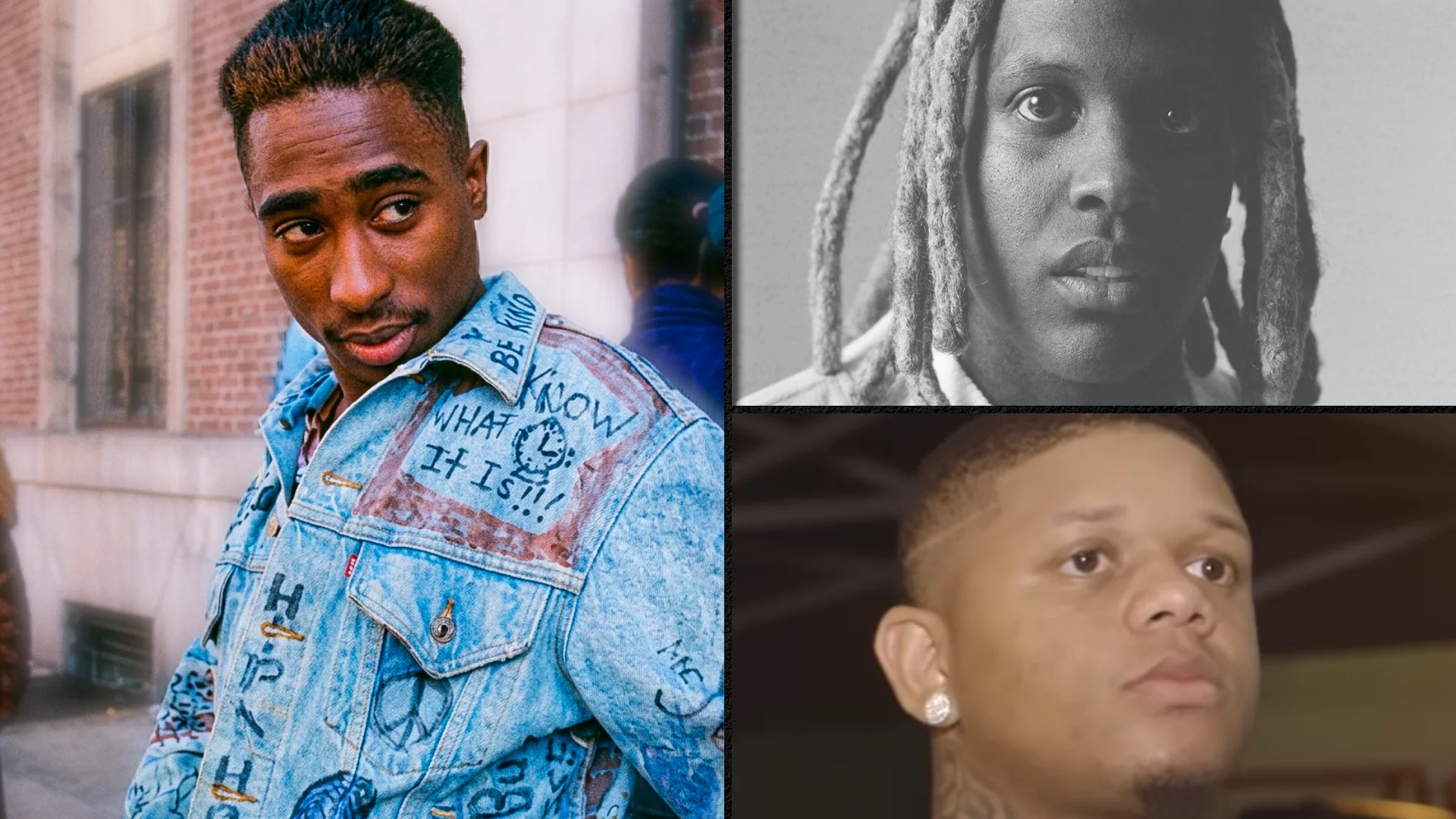
On a Monday morning at the Regional Justice Center in downtown Las Vegas, prosecutor Marc DiGiacomo stood before 12 jurors and four alternates. His opening task was to explain what a 63-year-old man had written about himself in a paperback memoir.
Nevada has spent nearly 30 years trying to resolve the killing of Tupac Shakur. The development that finally produced a criminal case was not new ballistics evidence, a cooperating gunman, or a fresh eyewitness account. It was a 2019 memoir, Compton Street Legend, followed by interviews in which Duane Davis described his version of the night of September 7, 1996.
Davis has pleaded not guilty and has remained jailed since his arrest in September 2023. He faces one count of murder with a deadly weapon with intent to promote a criminal gang. In June, Judge Carli Kierny ruled that the memoir could be admitted at trial. David Roger, the former head of the Clark County district attorney's office, summarized its importance: “This book will be the focus of the trial.”
Three days later, on August 20, Durk Banks aka Lil Dirk is scheduled to go to trial in federal court in Los Angeles. Judge Michael Fitzgerald has ruled that prosecutors may show music and video to the jury. Four days after that, on August 24, Markies Conway, who performs as Yella Beezy, is scheduled to appear before Judge Chika Anyiam in Dallas County on a capital murder with remuneration charge.
In late July, Anyiam admitted Conway's song “Keep It in the Streets,” as well as “On Ya Head” in redacted form after another artist's vocal was removed. She excluded 10 other tracks and also allowed prosecutors to introduce a recording by the man Conway is accused of killing.
Across eight days, three courtrooms, and three states, creative work will sit at the center of criminal prosecutions. In each case, a major exhibit is something the defendant made, wrote, recorded, or performed.
The short version
Rap lyrics as evidence are not a new courtroom tactic, and the practice will not disappear simply because some states have enacted laws limiting the use of artistic expression in criminal cases. What is new is the concentration of high-profile cases.
Between August 17 and August 24, American courts are handling three separate prosecutions involving Black music figures in which creative output may be presented as evidence of criminal conduct. The most consequential example does not involve a lyric. It involves a memoir, a co-author, and a published book with an ISBN.
Courts generally must determine whether a creative work has a direct connection to the alleged crime or merely reflects a person's style, persona, or storytelling. Readers and observers should focus on that question: Is the material being offered to establish a specific fact in the case, or simply to shape the jury's impression of the defendant?
Why the memoir is the hardest case
Yella Beezy's evidentiary hearing is easier to understand at a glance. The judge divided songs into categories: 10 excluded, one admitted, and another admitted only after redaction. That kind of line-drawing can appear arbitrary, particularly when courts rarely evaluate literary fiction or other genres in the same way.
The Duane Keffe D Davis trial presents a more difficult question. A memoir marketed as nonfiction is legally and culturally different from a verse. Davis put his name on claims about his own life and accepted payment for the book. The defense argues that co-author Yusuf Jah embellished the account to increase sales. It also says Davis initially discussed the shooting with investigators under a limited-immunity proffer while facing federal drug charges in California.
Those issues may both become part of the trial. Jah appears on the state's witness list, meaning jurors may hear not only what the memoir says, but also how it was written, edited, and marketed.
The central point remains difficult to avoid. A case that had gone unsolved for 27 years became prosecutable after Davis publicly narrated his own account for money. The state did not announce a breakthrough based on newly discovered physical evidence. It relied on a public statement that prosecutors say connects Davis to the killing.
Whatever conclusion the jury reaches, the legal theory has broad implications. If a published account can help establish criminal responsibility, investigators and prosecutors may increasingly examine memoirs, interviews, documentaries, podcasts, and social media posts as potential evidence. The practical question for courts will be whether those materials contain reliable admissions or merely stories shaped for an audience.
How the Tupac Shakur murder case frames the wider debate
The witness list in the trial runs 11 pages and includes roughly 200 names. Prosecutors expect to call between 35 and 45 of them. Marion 'Suge' Knight, the only other surviving occupant of the BMW in which Shakur was riding, is listed as a witness.
Also on the list are Joe Lombardo, now Nevada's governor, who responded to the scene as a Las Vegas police sergeant, and Oscar Goodman, the former Las Vegas mayor. Sekyiwa Shakur and Maurice Shakur are listed as well. The jury consists of six men and 10 women, selected on August 13 after four days of jury selection. The court has estimated that the trial will last four to five weeks.
Maurice Shakur expressed the expectation of a family that has waited three decades: “I hope that the trial is fair, and we find out the truth.” That hope deserves to be taken seriously. The memoir may prove to be the evidence that finally gives the family an answer.
The concern is not that a memoir can never be relevant. It is that the method used in Las Vegas could influence how prosecutors approach artistic and autobiographical material elsewhere. Courts must distinguish a concrete admission from a performance created to sell a book, build a reputation, or entertain an audience.
Los Angeles and the evidence a judge addressed directly
The Lil Durk murder for hire trial offers the clearest example of how the same evidentiary strategy can move beyond Nevada. Prosecutors sought to combine Chicago racketeering allegations with the Los Angeles murder-for-hire charge. Fitzgerald severed the cases.
When the government argued that combining the charges would make its overall case stronger, Fitzgerald rejected that reasoning in unusually direct terms: “You treat that as a feature. I treat that as a bug.” His statement identified the concern before trial: evidence that strengthens a narrative may also create unfair prejudice if it encourages jurors to decide a murder charge based on unrelated allegations.
At an August 13 hearing, prosecutors asked Fitzgerald to seal the government's witness list. They cited threats against the court that had followed the case since 2024 and said 35 witnesses were prepared to testify, including approximately 20 key witnesses.
The court's ruling on lyrics and video remains in place. Jurors are expected to see those materials alongside wiretap recordings and financial evidence. That combination makes the case a useful test of how prosecutors connect music to conduct without asking jurors to treat performance as proof of character.
For observers, the key issue in all three trials is not whether music or memoirs are inherently admissible. It is whether prosecutors can establish a specific, reliable connection between the creative work and the charged crime. That standard will determine whether these exhibits clarify the facts or simply amplify the story the state wants the jury to believe.
Dallas puts the sorting process on display
The Yella Beezy Mo3 case illustrates the central problem in debates over rap lyrics in court: deciding which recordings are evidence and which are performance. Prosecutor Anyiam reportedly reviewed the material song by song, excluding ten recordings, admitting one, and allowing another only after removing a feature verse. The process shows how much interpretation can shape the evidence before a jury hears it.
The volume of potential testimony has also become an issue. On August 10, defense attorney Toby Shook filed a motion asking the state to reduce its witness list, which had expanded from 194 names to 264 in a single week. Shook argued that the list did not provide “meaningful notice.” For a defense team preparing for trial, 264 names create more than an administrative burden. They make it harder to determine which witnesses and claims require immediate investigation.
Texas has also drawn attention for the use of rap lyrics in capital cases. Reporting in April documented prosecutors using a man’s lyrics to help secure a death-row sentence. The broader pattern is clear: in the same state, creative expression can become evidence in cases involving the most serious possible punishment.
The law has not caught up with rap lyrics in court
The RAP Act federal bill, introduced during the 119th Congress, would restrict the use of creative expression in federal criminal proceedings. It has not become law, and there is no clear indication that Congress will pass it soon. California and Louisiana have enacted artistic expression shield laws, while Maryland has followed with similar protections. Those measures cover only a small part of the country.
As a result, defendants in most jurisdictions may find the question decided during a pretrial hearing. Judges must determine whether a verse is relevant evidence, fictional performance, or protected expression, often without a statute designed specifically for that task. The result can be a record where ten songs are excluded and one is admitted, even though the distinction may depend on subjective judgments about authenticity.
There is a meaningful difference between Compton Street Legend memoir pages, which present themselves as factual accounts, and a verse written from a persona designed for an audience that may reward bravado. Prosecutors have an incentive to minimize that distinction. Jurors may struggle with it as well. First-person lyrics can sound like direct admissions, even when the speaker is a character rather than the artist.
Other forms of entertainment receive more consistent protection from that kind of confusion. Country songs frequently describe fictional murders, and films routinely portray violence without treating the script as evidence of the writer’s conduct. The legal system should apply the same basic question to rap: does the material prove a disputed fact, or does it demonstrate only that an artist can create a convincing narrative?
Why lyric evidence affects artists who are not on trial
The practical consequences extend beyond defendants. If artists believe their catalogs may later be read as statements against interest, they may change what they write. Some may remove specific details, create more distance from their subjects, or avoid writing about their neighborhoods altogether. That chilling effect is a cultural cost, not merely a courtroom issue.
We have argued before that the value of this music often rests on human specificity, whether the subject is a finished tape that outlived the man who made it or a joke that was clipped in half before it reached the internet. Context is central to both meaning and credibility. Courts, however, often isolate a line, image, or verse from the work around it.
Nothing in the current record establishes whether Davis, Banks, or Conway committed the acts alleged by prosecutors. Three juries will assess those claims, and they should do so based on admissible evidence. But the larger issue is already visible: hip hop and the courts have developed an uneasy relationship in which the work itself can become part of the prosecution file. A memoir may offer prosecutors their strongest argument for treating lyrics as testimony, but a legal system that routinely reads Black narrative as confession risks finding confirmation for the assumptions it brings to court.
Opening statements begin Monday in Las Vegas. We will examine the transcripts, not simply repeat the headlines.
Comments (0)
No comments yet — be the first to share your thoughts.
Leave a comment