

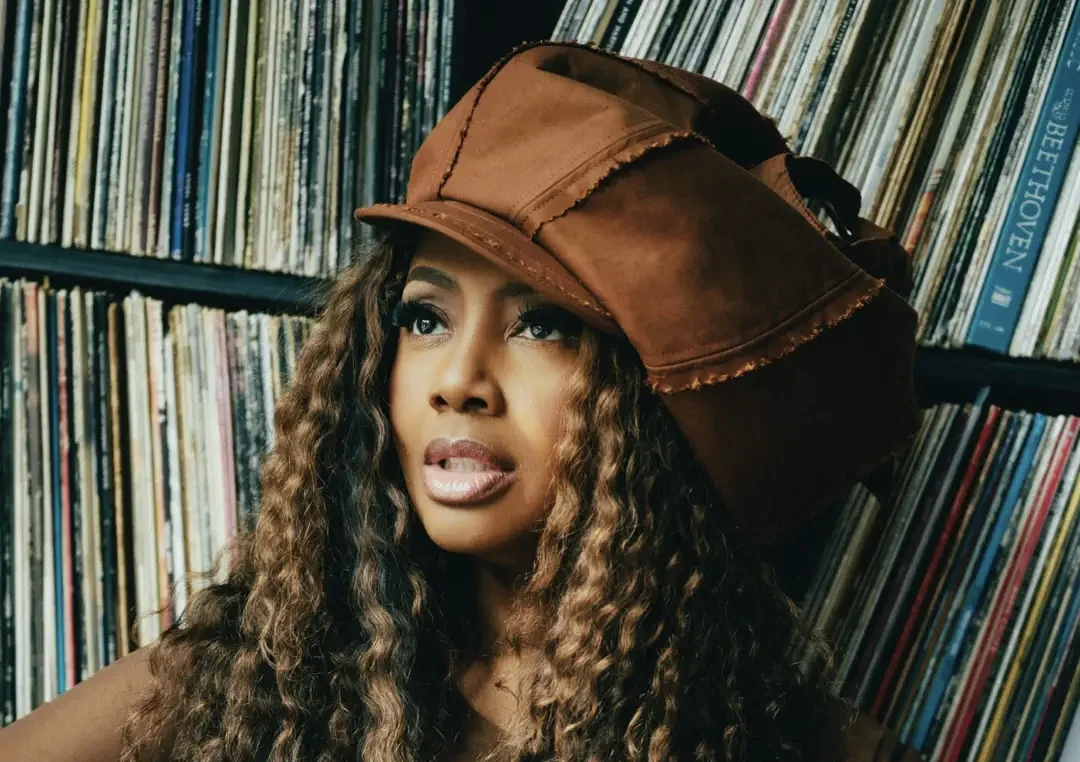
For Lalah Hathaway, Chicago is not being reduced to a skyline or a hometown slogan. It is a family address, a school-bus memory, a late-night radio frequency and a set of stories that stretch backward before she was born. That is the theme around Made In Chicago, the nine-song album she will release October 1 through Hathaway Entertainment and SRG/ILS.
October 1 would have been the 81st birthday of her father, Donny Hathaway, who was born on that date in 1945. But the project does not come off as an attempt to stand inside his shadow. The more interesting idea is that Lalah is treating inheritance as geography, tracing what Chicago gave her family and what her family carried into the city. The label's August 28 announcement describes Made In Chicago as a personal record about her past, present and future, rooted in the city and in Donny Hathaway's influence.
The newest piece is “Can’t Let Go,” a slow-burning ballad that gives the album another brick into memory. Hathaway has called it her “quiet storm”, and the phrase is more than genre shorthand. The song reaches toward the after-hours radio tradition associated with soft-edged R&B, romantic tension and singers who could make restraint feel as dramatic as a belt. Rather than recreate that era, Hathaway uses its emotional temperature as a way into a relationship she is still trying to release.
Made In Chicago is being built around memory that is musical as much as familial. Rollout materials describe Hathaway riding the bus to school with a Walkman and absorbing music without much concern for genre borders, while longtime collaborator Phil Beaudreau serves as co-producer on the album. Saxophonists Amber Navran and Hailey Niswanger and flutist Elena Pinderhughes also contribute, giving the project a live-musician foundation that fits Hathaway's long history of moving between R&B, jazz and soul without treating those categories as separate rooms.
The album's first single, “47th Street,” makes the historical argument more explicitly. Released in August with J. Ivy, the song reaches into Hathaway's family history on Chicago's South Side. Hathaway explains that her father's family lived there and recalls her grandfather Hosea as part of the neighborhood memory that the song revives.
J. Ivy's contribution invokes the Great Migration and the Black metropolis that grew in Chicago as families arrived from the South, while Hathaway brings the story back to the block itself. The result is not simply a song about where she grew up. It places one family's address inside a larger movement of Black people, labor, art and ambition that reshaped the city.
Lalah Hathaway has never needed an introduction through her father alone. The Recording Academy credits her with five Grammy wins, including awards for Lalah Hathaway Live, “Angel,” “Little Ghetto Boy,” “Jesus Children” and her collaboration with Snarky Puppy on “Something.” Her own catalog is already substantial enough to carry the weight of a retrospective.
So when Donny Hathaway appears in this new album's theme, he functions less as a credential than as part of a family map. The record is arriving on his birthday, “47th Street” names the neighborhood where his family lived, and the album's Chicago focus places both generations inside the same cultural landscape. That is a more complicated proposition than tribute because it asks what gets transmitted alongside talent: neighborhood memory, musical vocabulary, migration history and the sounds that become normal before a child even knows they are learning them.
The current digital track listing runs from “47th Street” through “So Smart,” “Follow,” “Can’t Let Go,” “Every Little Thing,” “Rainbo,” “Someday,” “Time” and “Magic.” On paper, the titles reveal little about how far the concept will travel beyond the two singles. The strongest early material is not selling Chicago as scenery. It is using the city as an organizing principle for memory.
There is also something fitting about Hathaway reaching for Quiet Storm in the same project that reaches for the Great Migration. One is a radio format and the other is a vast historical movement, but both are systems through which Black life traveled. People carried sound, style and memory from one city to another, then radio carried new versions of that culture back into homes, cars and bedrooms. Hathaway's album appears interested in what remains after those transmissions become personal.
That is the promise of Made In Chicago heading into October 1. The album is not asking listeners to choose between Lalah Hathaway's own story and the legacy attached to her last name. Its more compelling move is to show how both were formed by the same city, then follow that history from a South Side block into a voice that has spent more than three decades refusing to stay inside one musical category.
Comments (0)
No comments yet — be the first to share your thoughts.
Leave a comment