

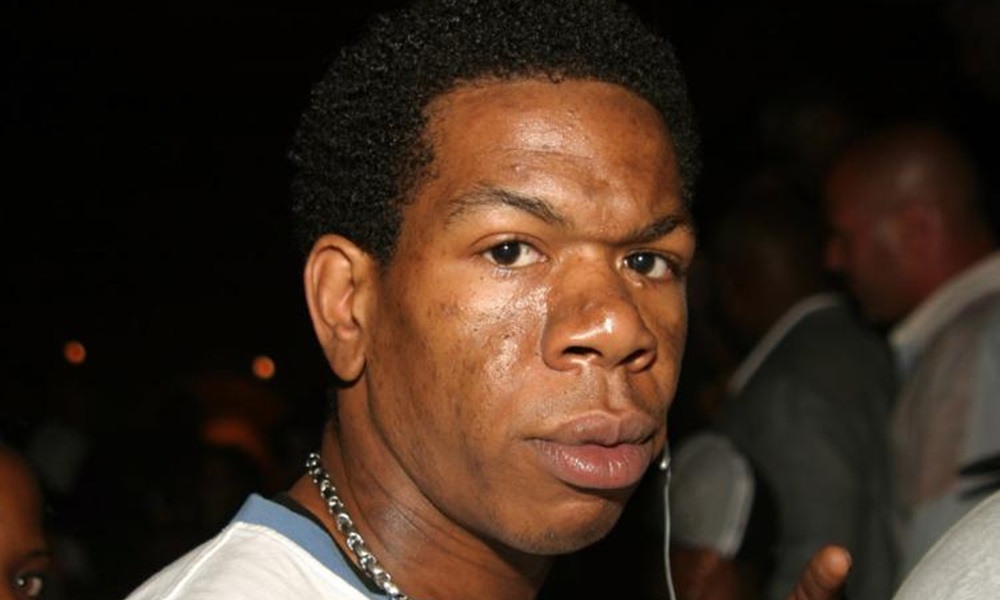
Every March, the collective consciousness of hip-hop undergoes a ritualistic grieving. For decades, the ninth of March has served as a solemn milestone, a day dedicated to honoring the monumental life and tragic demise of Christopher Wallace, famously known to the world as The Notorious B.I.G. Yet, the calendar holds a secondary, quieter grief just three days later. On March 12, 2018, Craig Mack, the man whose eccentric brilliance provided the literal foundation for the Bad Boy empire, passed away at the age of 47. His death from heart failure in a small South Carolina town did not generate the explosive global media coverage that followed Wallace's assassination in 1997, but its cultural resonance was felt deeply by those who understand the true lineage of urban music. To look closely at the Craig Mack legacy is to look at the fragile architecture of sudden fame, the ruthless evolution of commercial rap, and the profound peace that can be found when an artist decides to walk away from the commercial machine entirely.
The original reporting from the New York Daily News revealed that the pioneering artist succumbed to heart failure after admitting himself into a hospital near his home in Walterboro, South Carolina. For many casual listeners, the news was a sudden reintroduction to a name they had not heard in years, a momentary disruption in the endless stream of modern automated playlists. But for historians of the genre, it was an emotional reckoning. Mack was not merely a footnote in the story of nineties rap; he was the primary catalyst. His passing, arriving so closely on the heels of the annual commemorations for Biggie Smalls, created a poignant poetic symmetry. Two artists from the same stable, who once stood shoulder to shoulder at the dawn of a musical revolution, were finally reunited in the quiet beyond the spotlight.
The Proof of Concept: How 'Flava in Ya Ear' Built an Empire
Before Bad Boy Records became a multi-million-dollar cultural monolith defined by shiny suits, champagne-soaked music videos, and pop-chart dominance, it was a desperate gamble. Sean Combs had been unceremoniously fired from his position at Uptown Records, and he needed a definitive statement to prove that his new imprint could survive independently in a fiercely competitive market. That statement did not arrive wrapped in the cinematic street realism of Biggie Smalls, nor did it arrive in the smooth R&B packages that the label would later master. It arrived in the raw, idiosyncratic cadence of a Long Island rapper who sounded like absolutely nobody else on the radio. When Craig Mack released his seminal single in the summer of 1994, he provided the Sean Diddy Combs imprint with its first foundational triumph and established its corporate viability.
The song was an immediate anomaly in the landscape of classic 90s hip-hop. Produced by the legendary Easy Mo Bee, the track stripped away the lush soul samples and heavy funk loops that were beginning to dominate West Coast G-funk at the time. Instead, the production relied on a sparse, mechanical, almost industrial beat that sounded like a metallic pulse. It was a rhythmic conveyor belt over which Mack laid a vocal delivery that was entirely his own: animated, gravelly, off-kilter, and wildly unpredictable. His opening exclamation, a boisterous shout, became an instant auditory trademark that cut through the airwaves. The single climbed the Billboard charts, eventually achieving platinum status and earning a Grammy nomination for Best Rap Solo Performance. More importantly, it established the sonic and commercial viability of the label itself. In the grand narrative of Bad Boy Records history, Mack was the pioneer who cleared the brush so that others could build castles. He proved that Combs possessed an ear for hits that extended beyond traditional R&B formatting into the core of hardcore street lyricism.
During this golden era, the rap landscape was undergoing a massive civil war of style and geography. New York was fighting to reclaim its crown from the dominant West Coast sound popularized by Dr. Dre and Snoop Dogg. Within New York itself, artists were grappling with different modes of expression, from the dense, literary street poetry of Nas to the cinematic grime of the Wu-Tang Clan. In this high-stakes environment, Mack offered something entirely distinct: pure, unadulterated performance energy. His style was deeply rooted in the foundational tenets of the masters of ceremonies from the late eighties, emphasizing rhythm, vocal projection, and a sense of larger-than-life showmanship. He did not need to construct complex narratives of drug empires to capture the listener; his vocal performance alone was the spectacle.
The Magnificent Eclipse of the Remix
The tragedy, or perhaps the supreme irony, of Mack's career is that his greatest creative triumph simultaneously set the stage for his commercial marginalization. As the original version of his hit single dominated the airwaves, Combs made a brilliant tactical maneuver that would redefine the marketing of urban music forever. He assembled a stellar lineup for the Flava in Ya Ear remix, drafting a roster of heavyweights and rising stars that included LL Cool J, Busta Rhymes, Rampage, and a waves-making newcomer from Brooklyn who was preparing his own debut album.
The resulting track became an undisputed masterpiece of the era, an elite posse cut that remains a gold standard for the format. However, it also functioned as a literal changing of the guard right before the public's eyes. From the moment The Notorious B.I.G. uttered his historic opening lines, the center of gravity within hip-hop shifted permanently. The effortless, conversational flow, the razor-sharp wit, and the vivid street imagery of the Brooklyn rapper effectively stole the spotlight from the track's original architect. While Mack's closing verse on the remix was technically sound, full of his signature kinetic energy and unique vocabulary, the culture had already chosen its new monarch. It was a clear demonstration of how a single guest verse could alter the trajectory of multiple careers.
When Wallace released his masterpiece album shortly thereafter, the narrative of the label pivoted permanently toward Brooklyn. Mack's debut full-length album, Project: Funk da World, was a critical and commercial success, achieving gold certification and spawning further hits. Yet, it was quickly overshadowed by the cultural earthquake of Wallace's rapid ascent to superstardom. The music industry, with its insatiable appetite for the next big thing and its preference for cinematic street narratives, began to treat its foundational artist as a secondary priority. The Notorious B.I.G. debut reordered the hierarchy of the entire genre, leaving Mack in a complex position where his own success had provided the capital and momentum to fuel the engine that ultimately bypassed him.
The South Carolina Sanctuary and the Rejection of Fame
How an artist responds to the cooling of the commercial spotlight is the ultimate test of character. For Mack, the response was a radical departure from the expected script of rap stardom. After a sophomore album with a different label failed to replicate his initial multi-platinum success, and following a quiet departure from the mainstream industry, Mack chose not to spend his remaining years chasing past glory through desperate independent releases, nostalgia tours, or reality television appearances. Instead, he staged an intentional, absolute vanishing act from public life.
He relocated to Walterboro, South Carolina, a quiet, deeply religious town far removed from the hyper-accelerated chaos and corporate pressures of the New York music scene. There, he embraced an ultra-conservative Christian lifestyle, joining a strict religious commune known as the Overcomer Ministry. To external observers, secular music journalists, and former peers, this transition was often framed with pity or confusion, viewed as a fallen star seeking refuge in isolation. But a closer examination reveals a man undergoing a profound spiritual recalibration. Mack had tasted the absolute pinnacle of commercial validation, walked the red carpets, and felt the intoxicating rush of fame, and he had found it ultimately hollow. In the quiet fields of South Carolina, he traded the volatile adulation of the crowd for the absolute certainty of faith.
His long-time friend and music industry veteran, Alvin Toney, visited Mack at the commune not long before his passing. Toney later recounted that Mack was fully aware of his deteriorating health due to Craig Mack heart failure, but he possessed a serene, completely unflinching composure regarding his mortality. He knew his time on earth was short, yet he was entirely devoid of fear or regret. According to reports, Mack was spiritually prepared to go home to his creator, explicitly telling his inner circle that he was ready for whatever was to come. He was not scared; he was ready. This final chapter of his life reflects a rare form of radical autonomy. In a culture that often demands its icons burn out spectacularly, chase youth into old age, or fade into bitter nostalgia, Mack chose a quiet, deliberate path of personal salvation.
A Quiet Departure and a Loud Legacy
When Mack passed away on Monday, March 12, 2018, his departure served as a painful reminder of the mortality that haunts the architects of our youth. He was survived by his wife and two adult children, leaving behind a family that shielded his private life from the predatory nature of modern celebrity gossip. His death forced a collective pause across the musical landscape, prompting public expressions of grief and profound respect from figures like Sean Combs, LL Cool J, and Biz Markie, all of whom recognized that the history of modern music would look vastly different without his contributions.
The true scale of the hip-hop cultural impact generated by this singular Bad Boy recording artist cannot be measured solely by Billboard charts, streaming algorithms, or platinum plaques. Craig Mack's contribution was systemic and architectural. He was the vital, missing link between the raw, localized street tape era of the early nineties and the polished, global corporate industry that hip-hop would soon become. His vocal style reminded listeners that rap was at its best when it allowed for eccentricity, individuality, and unvarnished character. He showed that an artist with an unorthodox flow could command the attention of the entire world, if only for a season. HitsCulture sends its deepest respect and condolences to the family and friends of Craig Mack. As the culture continues to celebrate the life of Biggie Smalls every March, it must always reserve space for Craig Mack. They are forever bound by the history they created together in a smoky New York studio in 1994, two titans who altered the course of American music: one who died in the blinding light of the world, and another who found his peace in the quiet shadows of grace.

Comments (0)
No comments yet — be the first to share your thoughts.
Leave a comment