

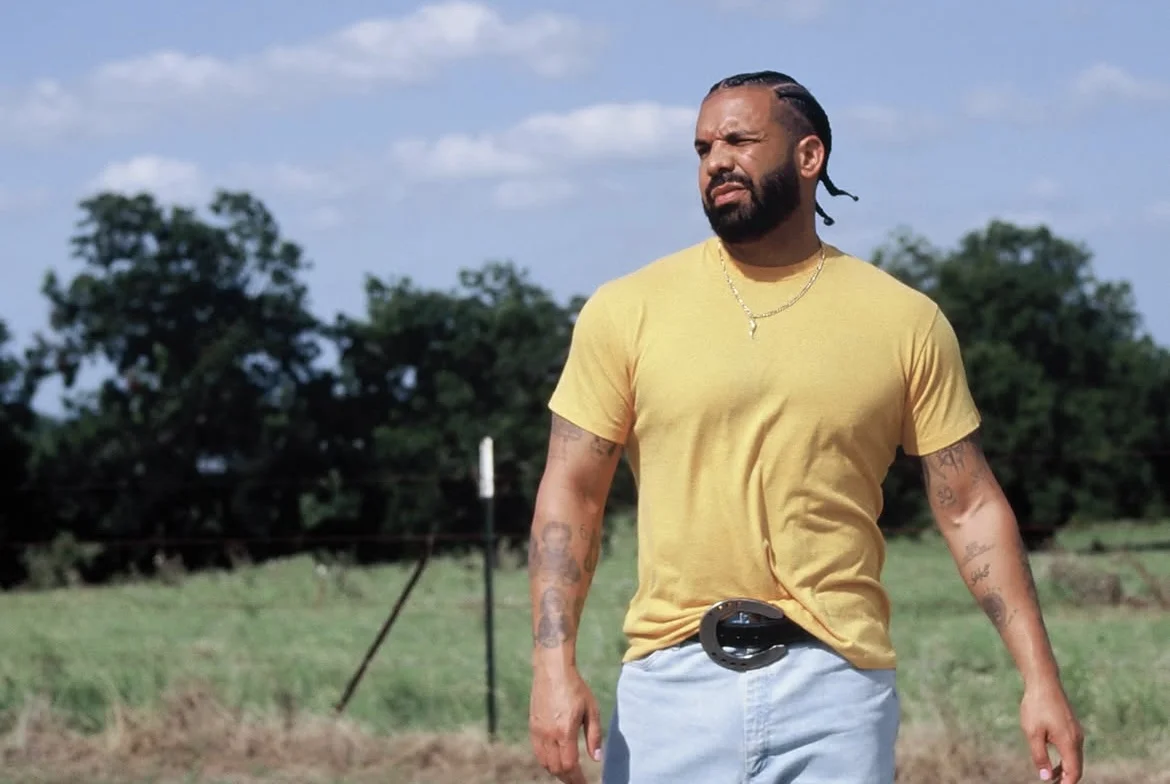
The headline version of Drake’s OVO transaction is that he sold his brand. The Securities and Exchange Commission filing shows a more specific deal: Authentic Brands Group owns 51% of ABG OVO, a newly created company holding October’s Very Own trademarks and licensing rights. Drake owns 44%, while Vince Holding Corp. owns the remaining 5% and operates OVO’s stores, website and wholesale business.
According to Vince Holding Corp., the three-party transaction closed on Aug. 27. The executed purchase agreement filed with the SEC values OVO’s intellectual property at $117,647,058.82. That figure has since been widely reported as Drake’s $117.6 million payday.
However, the agreement does not identify the amount as money paid directly to Drake. Instead, it assigns a price to OVO’s trademark portfolio and outlines several forms of consideration. The filing therefore supports a valuation of the intellectual property, not necessarily a personal cash payment to the artist. Readers assessing the Drake OVO deal should distinguish the transaction’s asset value from Drake’s individual proceeds.
Where the $117.6 Million Actually Goes
The purchase agreement allows the price to be satisfied several ways. Those include equity issued to the seller, payments to convertible noteholders, repayment of funded debt, transaction expenses, cash to the seller and a holdback. Each is a different economic event, and only one of them puts money in the hands of the people who started the company. A brand carrying debt into a transaction of this shape retires that debt out of the proceeds before anyone counts a personal windfall.
Two smaller figures in the same filing help calibrate the first. Vince paid $6 million for its 5% interest in ABG OVO, which values the whole trademark entity at roughly $120 million and sits close to the stated asset price. The purchase agreement then assigns $3 of consideration to Vince's acquisition of the equity in OVO's operating companies. That nominal figure follows the recapitalization and debt repayment steps, and it is not a market judgment about what the stores, the website and the wholesale book are worth.
Vince acquired all of OVO's existing operating companies, assets and liabilities, which is the phrase carrying the most weight in the announcement. Liabilities transferred alongside the inventory and the store leases, and a portion of the proceeds from the trademark sale went to strengthening the operating company's balance sheet before Vince took it on.
Vince Already Ran This Play on Itself
The structure now governing OVO was not improvised for a rapper. In May 2023, Vince contributed its own intellectual property to an Authentic subsidiary called ABG Vince, taking $76.5 million in cash and a 25% membership interest while Authentic took the other 75%. Vince then licensed its own name back under an initial ten-year term with eight ten-year renewal options, and used the cash to repay a $27.7 million term loan in full.
Three years later the same company has done the same thing to a second brand, standing this time on the operator's side of the table instead of the seller's. The investor presentation Vince filed alongside the deal lays the model out in a single diagram. Authentic holds 75% of ABG Vince and 51% of ABG OVO, while Vince holds 25% and 5% respectively. Royalties flow up from the operating company to both trademark entities, and distributions flow back down. Vince calls OVO the first expansion of its multi-brand platform strategy and describes the operating model as repeatable, which is language aimed at a third brand and a fourth.
Jamie Salter founded Authentic in 2010 and moved from chief executive to executive chairman in May, when Matt Maddox was promoted to president and chief executive. Salter has described the acquisition logic without much decoration, telling The Robin Report, "We don't buy distressed brands. We buy distressed companies." Authentic's portfolio now spans more than 50 brands generating roughly $38 billion in system-wide retail sales across 150 countries. Roughly 1,700 licensing and distribution partners carry that volume, and Authentic manufactures almost none of it.
Drake Joins a Roster
The celebrity column of that portfolio started with Shaquille O'Neal in 2015, added David Beckham in 2022 and brought in Kevin Hart earlier this year. Those partnerships share a shape in which the personality supplies recognition and creative direction, Authentic supplies the licensing apparatus, and an operating partner manufactures the product while absorbing the inventory risk.
Drake enters that structure with a larger position than most of the names around him. A 44% stake in a trademark holding company carries a standing claim on royalty income, which an endorsement fee does not. It also makes him a minority partner in a company whose majority owner holds approval rights over marketing, category expansion and licensee selection.
The License Is the Real Business
Ownership percentages describe who collects, and the license agreement describes what has to happen before anyone collects anything. ABG OVO and a Vince affiliate signed that agreement on Aug. 24, three days before the public announcement. The 8-K summary of the license states that the initial term runs through the end of Vince's 2036 fiscal year. Three consecutive renewal options of seven years each push the outer edge of the arrangement past 2050.
Vince pays a royalty on net sales of licensed products and has committed to an annual guaranteed minimum royalty that increases over the initial term, along with annual minimum net sales figures. Miss those thresholds or fall short on store requirements and ABG OVO gains termination rights. Retail and e-commerce royalties run at a single-digit percentage of net sales, while wholesale royalties reach as high as 10%. That makes the department store channel the most expensive one for Vince and the richest one for Authentic and Drake.
The OVO terms sit above what Vince pays on its own name. Under the 2023 arrangement, Vince committed to a mid-single-digit royalty on wholesale net sales and a low-single-digit rate on direct-to-consumer sales. It also collects quarterly distributions equal to 25% of ABG Vince's net cash. Wholesale royalties reaching 10% set a higher bar for every OVO dollar sold. Vince also holds a 5% claim on the entity collecting that money rather than a 25% one.
The pricing explains the growth plan rather than merely accompanying it. Vince told investors it will expand OVO stores and e-commerce in the United States, then launch an OVO wholesale business through its existing relationships with national department store partners. OVO operates 12 stores today, eight in Canada, three in the United States and one in London. Every additional door and wholesale account raises the royalty stream flowing into the entity Drake owns 44% of.
What Vince Gets Out of It
Vince is not doing this for the owl alone. The company gains a Canadian operating base it did not previously have, and chief executive Brendan Hoffman told WWD that Vince will explore opening its own stores and entering the wholesale channel there. It also buys entry into streetwear, a category forecast to approach $500 billion in global sales by 2028 and one where Vince had no presence at all.
The financial framing is careful, and Vince expects the deal to be earnings neutral in fiscal 2026, net of transaction fees, and accretive to earnings per share in fiscal 2027. The company credits the wholesale ramp, store expansion, margin improvement and shared back-office costs. It separately told investors it expects second quarter fiscal 2026 results at the high end of the outlook issued on June 16, excluding any benefit from tariff refunds.
OVO's existing team continues to operate from Toronto, and the two brands keep separate creative functions. A contemporary womenswear label and a streetwear house will not be designed in the same room, which is the concession that makes the arrangement legible to OVO's audience.
The Debt That Came Before the Deal
OVO arrived at this transaction carrying a lender dispute. Applied Real Intelligence, a Los Angeles firm that lends against growth-stage companies, financed OVO through a senior secured credit facility in May 2025. Five convertible promissory notes followed that July and August, with aggregate principal near $5.2 million.
On June 11, 2026, an A.R.I. affiliate filed suit in the Supreme Court of British Columbia against October's Very Own ULC, alleging at least $4,609,455.72 remained owing. The complaint describes a default, a written forbearance agreement in which OVO acknowledged the debt, a partial repayment and a subsequent dispute over a contractual make-whole fee. It further alleges that OVO was pursuing a $30 million equity financing at the time. Drake, Oliver El-Khatib and Noah "40" Shebib had personally guaranteed obligations under a Royal Bank of Canada facility, according to the complaint. Repaying roughly $10 million of existing debt and releasing those guarantees ranked among the stated objectives of that raise.
Those are allegations from one side of an active case, and OVO has disputed the amount claimed. Two things the SEC filings independently establish sit outside that dispute. The closing sequence required OVO's debt to be satisfied in full and the related liens released before Vince took the operating companies. The purchase agreement separately names payments to convertible noteholders as a permitted use of the price.
The public record does not establish that the lender dispute forced the sale, and turning the sequence into causation would be its own reporting error. The record does show a company that entered the summer with convertible notes outstanding, personal guarantees attached to bank debt and a claim filed in Vancouver. It left the summer with that debt retired, the balance sheet recapitalized and the trademarks held by a licensing platform.
What Drake Keeps
Drake, El-Khatib and Shebib founded October's Very Own in 2008. The brand grew from a blog and a release cycle into a golf collection, a UFC collaboration and an earlier partnership with Dsquared2. Under the new structure Drake keeps 44% of the trademark company, continues shaping creative direction and remains the reason the label carries a premium over ordinary celebrity merchandise. In Authentic's announcement, he described the founders as the same Toronto kids with "bigger dreams."
Vince's investor deck is more clinical about the arrangement. It assigns Drake "brand personification and global storytelling," names OVO itself as the brand and product engine, gives Authentic the work of maximizing intellectual property value and gives Vince execution. The deck lists him as one function among four, each with a defined contribution and a defined boundary.
Artists have landed on far worse terms in deals that looked similar from outside. HitsCulture has reported on what it looks like when a founder ends up owning none of the work. Drake's 44% is a real position. It also sits downstream of decisions that Authentic and Vince now make about where OVO product appears, how much of it exists and which retailers carry it.
The Line the Filing Draws Around OVO Sound
The disclosed acquisition documents name October's Very Own IP Holdings along with OVO merchandising companies in Canada, the United States and the United Kingdom. They do not list OVO Sound, the record label Drake and Shebib built alongside the apparel business. Nothing in the public filings indicates the label changed hands. The transaction reads as a restructuring of the lifestyle, trademark and merchandise operation rather than a sale of Drake's music company.
The Scarcity Problem
OVO built its value on limited drops, controlled collaborations and proximity to Drake's release calendar. A hoodie that takes effort to obtain carries a different charge than one folded on a department store table. Authentic's model exists to multiply points of sale, and Vince's growth case depends on wholesale expansion into exactly those tables. The two logics are not obviously compatible.
Authentic has managed that tension before with Reebok and Champion, brands that absorbed wide distribution by leaning on decades of heritage rather than on scarcity. OVO has less heritage and considerably more heat, and the guaranteed minimums written into the license create pressure to convert that heat into volume on a fixed schedule. Whether the owl can turn up in a few hundred more doors and still mean what it meant in twelve is a question Vince's fiscal 2027 numbers will begin to answer.
Comments (0)
No comments yet — be the first to share your thoughts.
Leave a comment