

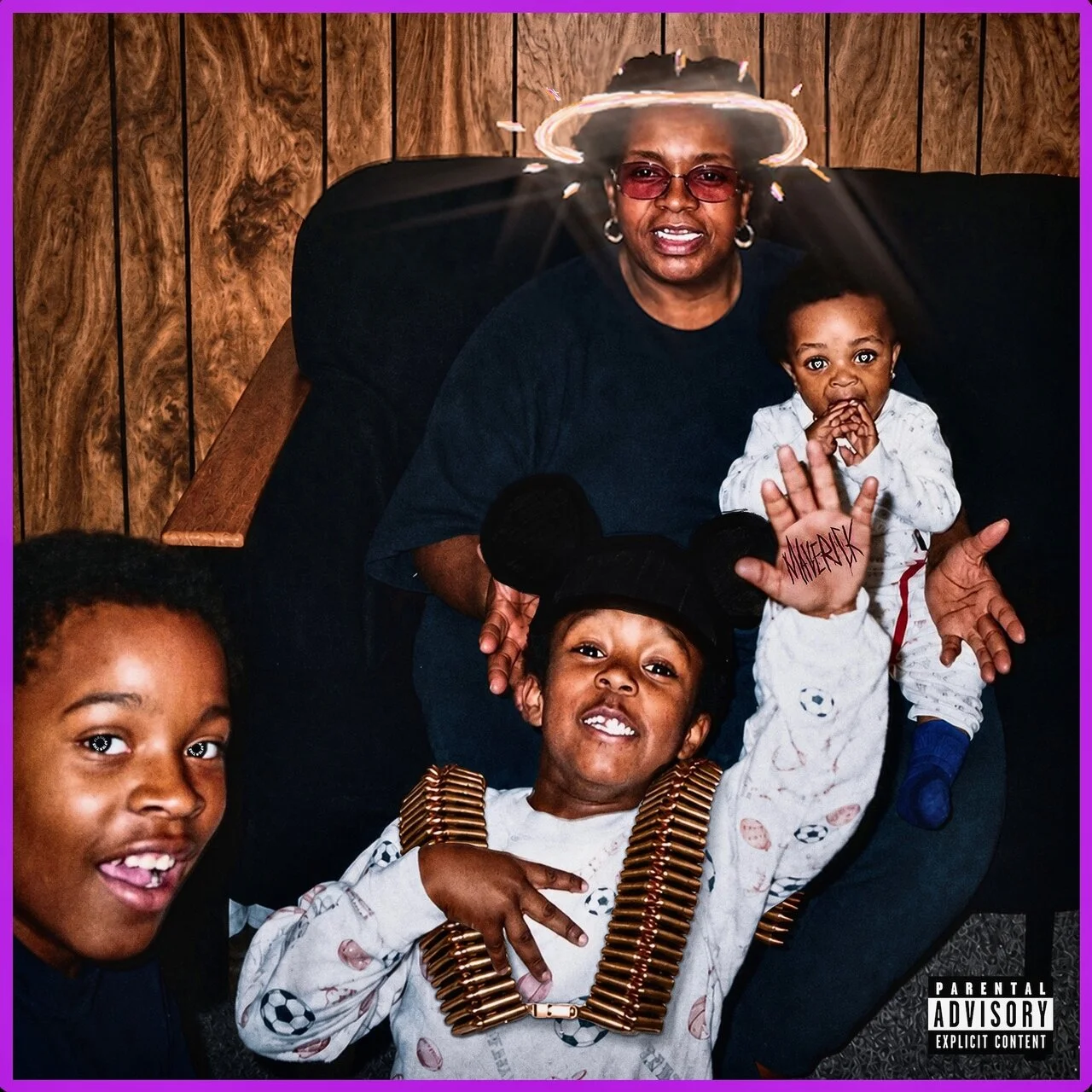
For most of the first day, you could not stream rapper Lil Uzi Vert's new EP on Spotify. Maverick "Almost Forever" went up on Apple Music and Audiomack on Friday, July 31, with no announcement, no single, no snippet campaign, and no press embargo, and the rest of the platforms filled in behind it. Eight tracks, twenty-three minutes, zero features. That staggered rollout is the detail almost nobody wrote about, and it is the one that actually explains the offering.
The story every outlet ran was the birthday. Uzi turned thirty-one that day, the Lollapalooza set in Chicago had been scrapped hours earlier, and the EP got filed as a consolation prize for stranded fans. That reading is tidy but it is mostly wrong. This surprise release is not a gift or a stunt. It is what a release calendar looks like when there is no label marketing department left to run one, and Uzi has been operating that way for eight months now.
In November 2025, Uzi left Atlantic and signed with Roc Nation Distribution, a structure that let artists stay independent and keep full ownership of their master recordings. It is a rarer arrangement than the headlines suggested. Per the announcement, Uzi became one of only three artists both managed by Roc Nation and signed to its distribution arm, next to Jay-Z and Rihanna. There is also a Roc Nation Publishing deal attached.
Look at what has happened since. "Relevant" and "Chanel Boy" both arrived the same day the deal went public, unannounced, no lead time. Now an eight-track EP lands the same way. Three releases into the independent era, the pattern is not a series of clever ambushes. It is the default setting of an artist who now writes the check for their own campaign and has decided the campaign is not worth the money.
That difference matters more than it sounds. A major label surprise drop is a choice made from a position of surplus, an artist declining resources they could have used. An independent artist skipping the rollout is a cost decision, and the fact that Uzi can prepared it without visible damage is the flex. The audience shows up on the strength of the name. Nothing needs to be warmed up to receive them.
Eight songs and no guests. Features mean clearances, splits, label coordination, and legal timelines, all of which drag a release into a calendar. A record with no outside voices on it can be finished on a Tuesday and released on a Friday because there is nobody else's paperwork to wait on. The absence of features on this EP is a scheduling document as much as a creative one.
Musically, the project walks back toward the melodic trap that built the catalog, after Pink Tape spent 2023 chasing rock textures and metal features into territory that split the fanbase. "Maverick Intro" sets the register and the rest of the run holds it - songs that live in the two to three minute range and mostly resolve before they develop. Some of these will feel like offcuts in six months. "Yoko" and "Gas. Brake." will not. An eight-track burst is allowed to be uneven in a way a fourth studio album is not, which is precisely why the format keeps appealing to artists at this stage of a career.
The Lollapalooza story everyone got half right
The Friday set at Grant Park did fall apart. Festival organizers projected a cancellation notice on the stage citing weather, Zara Larsson took the 6:40 p.m. slot, and Chicago spent the day under heavy rain. That much is settled.
What almost nobody followed up on is that Uzi got the crowd anyway. The Fader reported that he crashed Major Lazer's set the next day and ran through "Just Wanna Rock" and other material. So the consolation-prize framing collapses on contact. Uzi did not release an EP because a stage was taken away. He released an EP, then went and took the stage back.
The date carries its own weight too. July 31, 2016 is when The Perfect LUV Tape arrived, a project that peaked at No. 55 on the Billboard 200 and has since gone gold. Ten years to the day. In 2020, the Future collaborations "Over Your Head" and "Patek" landed on the same date. This is a decade-old ritual, not an improvisation, and treating it as a reaction to a rained-out festival gets the reasoning backward.
The math underneath
Here is the part that makes independence look less like romance and more like arithmetic. Eternal Atake 2, the last full-length, opened at No. 3 on the Billboard 200 with 59,000 album-equivalent units in November 2024. For an artist with Diamond certifications and a career stream count north of thirty-one billion, that is a soft number, and under a major label deal a soft number is a real problem, because the recoupment clock does not care how the record was received.
Own the masters and the same 59,000 units behave completely different. Fewer hands touch the money on the way through, and the ceiling on a modest performance rises considerably. This is the same ledger logic we walked through when Salt built a new catalog after a federal court confirmed she owned none of her Salt-N-Pepa recordings, and it is why ownership keeps surfacing as the defining fight of this era rather than chart position.
None of which means streaming revenue alone carries an operation this size. It does not, and we have broken down that math before. Recorded music opens the door and the road pays for everything behind it, which is exactly why a canceled festival slot and a self-released EP belong in the same story. One is the revenue and the other is the advertising.
Maverick "Almost Forever" cover art
The artwork is a stylized childhood photograph of Uzi with his grandmother, which reads as an unusually soft gesture from a rapper who spent a decade building an unpinnable persona. Fans found a message hidden in it within hours: ALBUM AFTER THIS.
That changes the terms of engagement. Maverick "Almost Forever" is a placeholder with a receipt attached, an artist keeping the room warm while something larger finishes. Judged as a major work it would disappoint. Judged as what it announces itself to be, it does exactly the job.
The broader hip-hop release strategy question sitting under all of this is whether the traditional album rollout survives the decade at all. Teasers, snippet leaks, playlist lobbying, and a six-week runway all exist to buy attention an artist cannot otherwise command. Lil Uzi Vert can command it. Most artists cannot, which is why the copycat version of this move usually ends in silence. The strategy is not the surprise. The strategy is a decade of building an audience that treats a random Friday upload as an event, and then declining to pay anyone to remind them.
The album is the real test. Ease is cheap at eight tracks.
Comments (0)
No comments yet — be the first to share your thoughts.
Leave a comment