

On February 1, 2026, at the 68th Annual Grammy Awards, Anthony Hamilton stood shoulder to shoulder with Raphael Saadiq and Leon Thomas inside the D'Angelo portion of the night's In Memoriam tribute, easing through "Lady" and "Devil's Pie" while Lauryn Hill anchored a lineup built to send off a friend the industry lost too soon. Five months later, Hamilton turned up somewhere much smaller: a barn on the edge of Charlotte, North Carolina, cookout smoke curling behind him, cruising through a laid back record called "Slide" with a rapper who used to open shows for him. Both rooms wanted the same thing from Hamilton. They just wanted it at a different volume.
That range, comfortable behind a soul giant on the game's biggest stage and just as comfortable at a Carolina farm party, is not a coincidence or a late career flex. It is the whole career. Hamilton has spent three decades proving that showing up for people matters more than showing up on the charts, and "Slide" is the clearest, funniest, least self-serious version of that argument he has made in years.
The Hamilton origin story gets repeated so often it risks sounding like folklore, but the details hold up. He grew up in Charlotte cutting hair and singing in the shop between clients, learning early how to hold a room that ranged from grandmothers to their grandkids. He signed to Andre Harrell's Uptown Records in the early 1990s, watched that deal collapse, and finally released a debut album, XTC, through MCA in 1996 that came and went without much notice.
Then, in 2000, came the invitation that actually changed things. D'Angelo brought Hamilton into the Soultronics, the touring band assembled for the Voodoo World Tour, and for eight months Hamilton sang backup behind an artist rewriting what modern soul was allowed to sound like. D'Angelo called him Ant-eezy. The two stayed close for the next twenty five years, close enough that when D'Angelo died in October 2025 after a private battle with cancer, Hamilton later told Rolling Stone that his old friend had called him two weeks before, a conversation he never got to finish. Hamilton has said of what he took from those Voodoo tour nights, "I come from a good school."
That is the context that makes Hamilton's spot in this year's D'Angelo tribute mean something more specific than a respectful guest slot. He was not brought in because he is famous enough to fill a stage. He was brought in because he was there at the beginning, one of the people who watched D'Angelo build the sound the whole tribute existed to honor.
Hamilton is not simply a supporting player in other people's soul renaissances. He has his own, and it came with hardware. In 2009, at the 51st Grammy Award ceremony, he won Best Traditional R&B Vocal Performance for "You've Got the Love I Need," a duet with Al Green that arrived the year after Hamilton's fourth studio album, The Point of It All. He keeps the trophy on a bedroom shelf next to a pile of hats, not on display, which tells you most of what you need to know about how Hamilton wears his own résumé.
"Slide" Is a Reunion, Not an Introduction
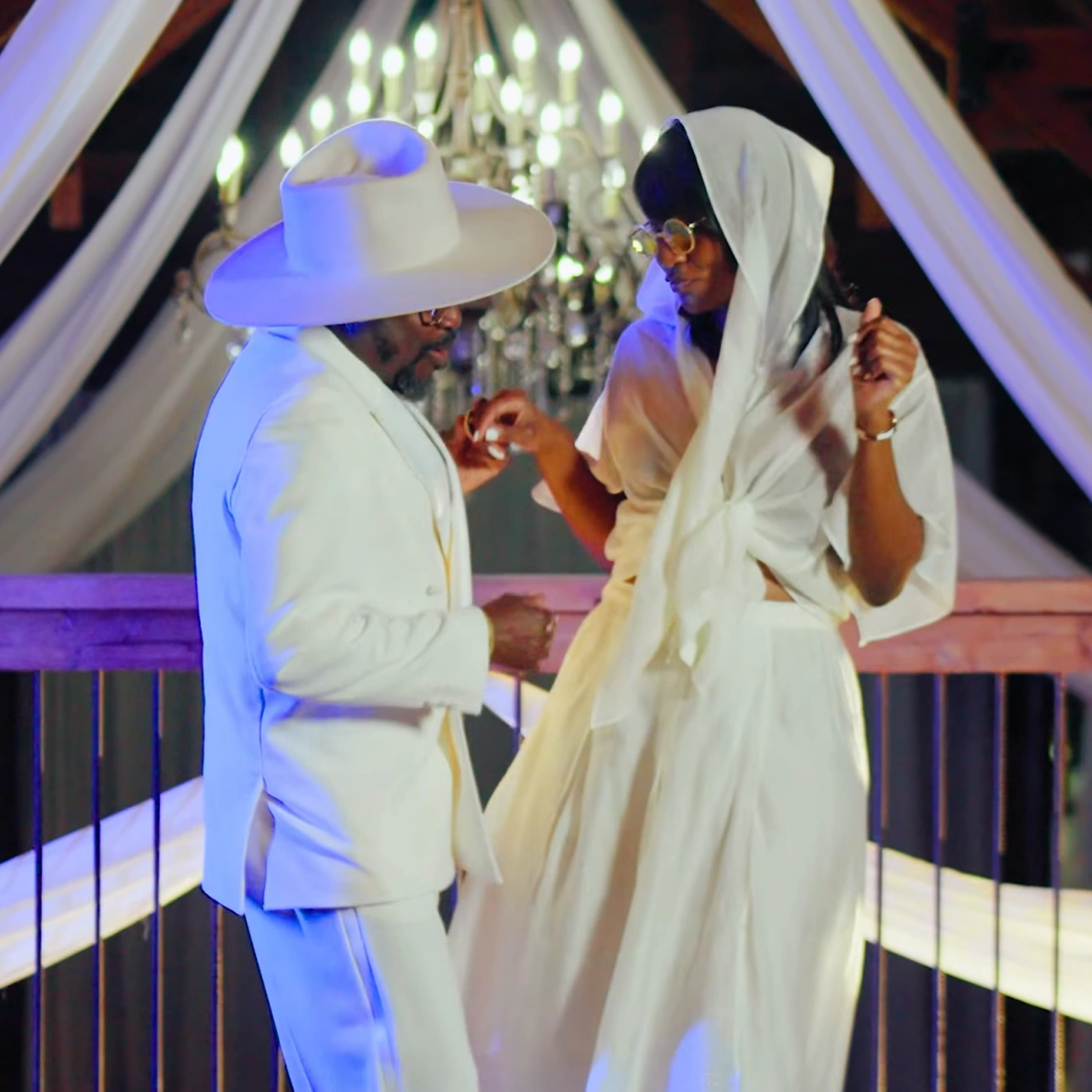
The Charlotte artist now going by 704, previously known to fans across the Carolinas as Mr. 704, relaunched his career this year under the streamlined name, and "Slide" is the record leading that rebrand. Built on a smooth, unhurried groove, the song is being marketed straightforwardly as a Southern Soul anthem, the kind of record made for cookouts, family reunions, and steppers sets rather than for chasing a specific chart position. Hamilton takes the chorus, 704 handles the verses, and the pairing reads less like a strategic feature than two hometown friends finishing a thought they started years ago.
They had, in fact, started it before. In 2018, 704 released "Live the Life" featuring Hamilton through Hussle Block Association, part of a catalog that also includes "All Im Tryna Say," "Better Dayz," and the 2020 album Forevereal. "Slide" picks that thread back up eight years later, and the official video, filmed around Charlotte, leans hard into the reunion feeling: Hamilton poolside taking a phone call, then a farm full of guests in white party wear, a soul food spread, and a steppers line dance that the song's groove practically demands. Hamilton put the collaboration in plain terms when the video dropped. "704 is home," he said. "He's a good dude from the hometown."
What "Slide" understands, and what a lot of coverage of R&B's supposed comeback keeps missing, is that Southern soul and steppers culture never actually left. The audience for cookout records, line dance grooves, and grown folks anthems has been packing regional arenas and family reunions the entire time the mainstream conversation insisted the genre needed saving. Hamilton's own catalog, from "Charlene" through "Sista Big Bones," was built for exactly that room. His willingness to show up on records with 2Pac, Chaka Khan, and Santana over the years says the same thing from a different angle: Hamilton has never treated genre lines as anything more than furniture to be moved around.
That same instinct runs through the broader wave of veteran soul artists using 2026 to look backward on purpose rather than by necessity, a pattern HitsCulture has tracked in its reporting on R&B's Sequel Summer, where legacy acts are treating their own histories as the strategy rather than the fallback.
Judge Hamilton purely by his solo album release calendar and you would assume a quiet stretch. His most recent proper solo record remains Love Is the New Black, released September 24, 2021, through his own My Music Box label in partnership with BMG, a 14 track set that pulled in Rick Ross and Lil Jon for hip hop flavored features and paired Hamilton with Jennifer Hudson for a duet on "Superstar." Five years earlier had been What I'm Feelin', so the gap itself was not unusual for him.
What breaks the quiet narrative is PAGES, an 18 track, hour long project released in August 2025 with actor, poet, and longtime collaborator Omari Hardwick. Described by Hardwick as a journal the two built together, the record is less a conventional album than a spoken word and soul hybrid, following two earlier one off collaborations between them. It is not the follow up to Love Is the New Black. It is proof Hamilton has been working the entire time, just not on the album cycle people were watching for.
Still a Touring Act, Not a Nostalgia Act
The live calendar backs that up. Hamilton and Leela James play Bon Secours Wellness Arena in Greenville, South Carolina on October 2, then reconvene with Raheem DeVaughn for a stop at Van Andel Arena in Grand Rapids on October 16, with further James dates carrying into Tupelo and Columbus, Georgia in November. Hamilton also has a solo date booked for October 22 at Flagstar at Westbury Music Fair on Long Island, a theater in the round setting well suited to a catalog that swings from "The Point of It All" to "Pray for Me" without needing much production behind it. A separate date with The Ton3s is on the books for October 25 at DPAC in Durham, keeping Hamilton close to home for the back half of the fall.
What "Slide" Actually Proves
There is no comeback narrative to attach to any of this, and that is the point. Hamilton did not disappear and resurface. He spent the winter honoring the friend who gave him his start, spent the spring and summer finishing an old collaboration with a hometown artist rebuilding his own name, and kept a touring schedule busy enough to fill a fall calendar without leaning on any of it. "Slide" is not Hamilton reintroducing himself. It is Hamilton doing what he has done since he was twenty nine years old standing behind D'Angelo: making somebody else's moment sound better, from a spot close enough to home that he can still hear the barbershop from here.
Comments (0)
No comments yet — be the first to share your thoughts.
Leave a comment