

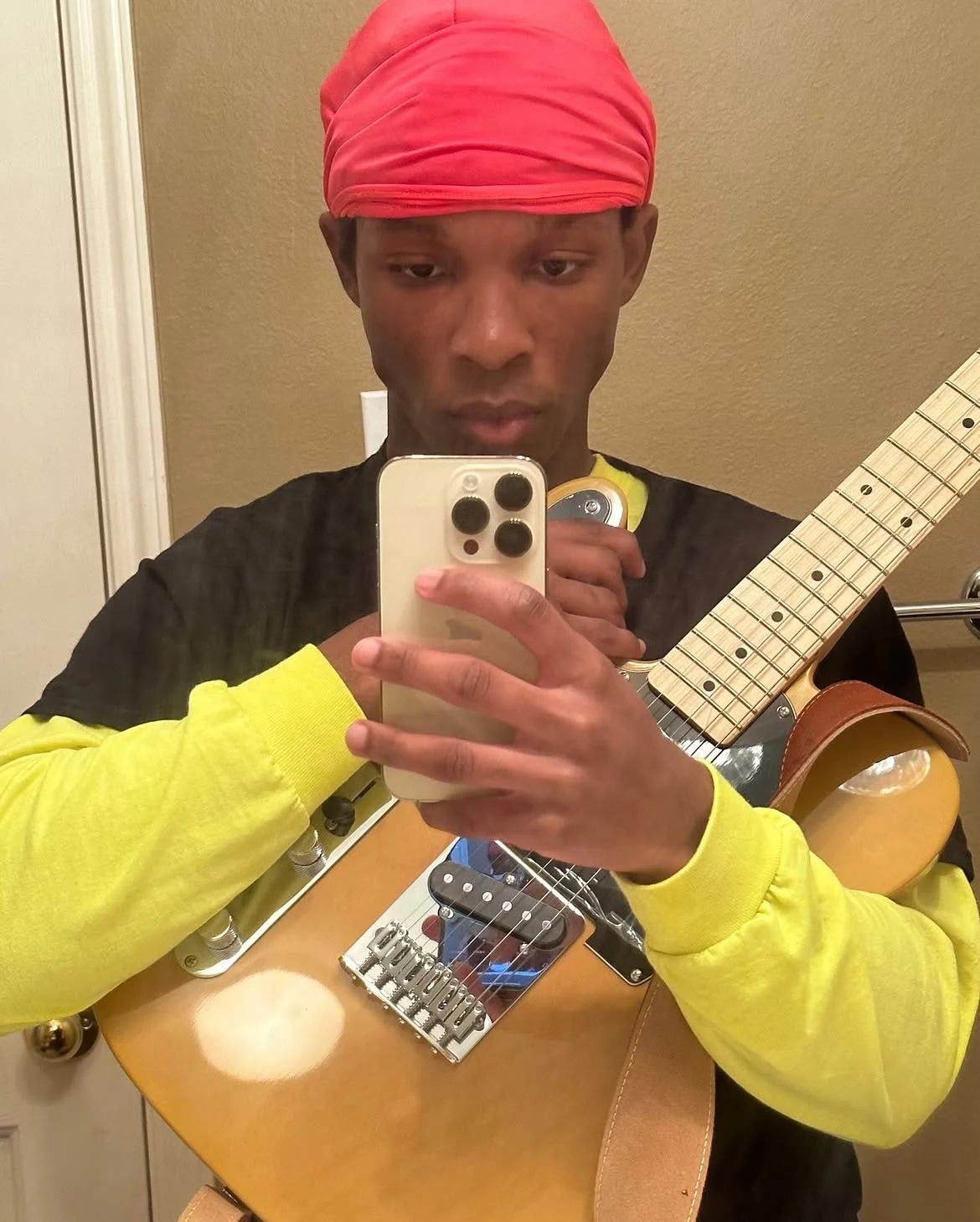
Two days after prosecutors say he stabbed a fourteen-year-old girl to death in his rented Hollywood Hills home, D4vd released his debut album. It was called Withered. The video for one of its songs, "One More Dance," showed the singer loading a bloodied body into the trunk of a car. According to prosecutors, the real body of Celeste Rivas Hernandez was in the front trunk of his Tesla the whole time, and it stayed there through a world tour and five more months of streams until a tow yard worker smelled it.
That is the shape of the D4vd murder case, and it is worth laying out in order, because the order is the argument. What follows is a timeline drawn from court filings, the medical examiner, and testimony given under oath, tracing how a streaming prodigy became a defendant accused of killing a child. He has pleaded not guilty. Nothing here has been proven to a jury. On July 27 a judge ruled it can go to one.
Before: a child, a phone, and a paid intermediary
Prosecutors say David Anthony Burke first made contact with Celeste Rivas Hernandez in 2022, when she was eleven and he was a teenager still uploading music over Fortnite clips. By November 2023, according to a court filing, the two had begun a sexual relationship. She was thirteen. He was eighteen, and about to become famous.
Celeste's family reported her missing from Lake Elsinore in February 2024. When Riverside County deputies traced a number in her phone to Burke, he told them he had met her once and did not know she was a minor. She came home days later. Then, prosecutors allege, her family took her phone away, and Burke paid a classmate a thousand dollars to slip her a new one he had bought so they could keep talking. Over the next year they spent weekends at his Hollywood Hills house and traveled together to Las Vegas, London, and Texas. She was reported missing a second time in April 2024. In March 2025, prosecutors say, she sent him a message saying she wanted more for herself than what they had.
April 23, 2025: the last night
The day before she died, prosecutors say, the two argued, and Celeste threatened to expose the relationship in a way that would end his career. The next evening Burke allegedly sent an Uber to bring her from Lake Elsinore to his house. She arrived around 10:10 p.m. Twenty minutes later he texted to ask where she was, a message prosecutors describe as staged, because they believe she was already dead. The theory is that he stabbed her soon after she walked in and watched her bleed out, then drove toward Lake Cachuma in Santa Barbara County while still calling and texting her phone.
Presale tickets for his world tour went on sale that same night.
The weeks after: a fake name and an Amazon cart
The prosecution's account of what came next is what turns this from a killing into a case built for first-degree murder. On April 24 Burke gave a radio interview to promote the album and ordered a shovel from Home Depot. On the 25th, Withered came out. In early May, prosecutors say, he ordered two chainsaws, a body bag, heavy-duty laundry bags, and an inflatable pool through Amazon under the alias Travion Davis, the same name a detective testified he had used with Celeste. They allege the body was dismembered on May 5, that two of her fingers were never recovered, and that one of them had been tattooed with his name. In July, prosecutors say, he bought a "burn cage" to destroy evidence. Later that month he parked the Tesla on the Hollywood Hills street where it would eventually be towed.
September 2025: the tow yard
The car was reported abandoned and towed on September 8, 2025. At the yard, LAPD detectives opened the front trunk and found a cadaver bag covered in insects, and beneath it a second bag holding severed limbs. Eight days later the remains were identified as Celeste through dental records. She had a tattoo on her index finger reading "shhh," close to one Burke has. A search of the home he had been staying in turned up material in the garage that tested positive for blood matching her DNA. Burke was on tour when she was found. Within days he canceled the rest of his U.S. dates and disappeared from the Grammy Museum's calendar.
The medical examiner ruled the death a homicide that December, caused by penetrating injuries to the torso. Because of decomposition through the summer heat, a precise cause took months to pin down.
The road to charges
For a while the case moved underground, through grand jury subpoenas and a fight in the Texas courts, where Burke's parents tried and failed to avoid testifying. Sealed filings that surfaced in February 2026 named him the "target" of the investigation. On April 16, 2026, he was arrested at a Hollywood Hills residence and booked without bail. Four days later the Los Angeles County District Attorney, Nathan Hochman, charged him.
The counts are severe. Alongside child sexual abuse charges covering years of alleged conduct, Burke faces murder with special circumstance allegations of lying in wait, killing for financial gain, and murdering a witness to a crime, plus a count for mutilating human remains. Those special circumstances are what make this a potential capital case. Hochman has said his office has not decided whether to pursue the death penalty. Prosecutors also say Burke's phone held a significant amount of child sexual abuse material. He pleaded not guilty and has been held without bail since.
July 2026: the preliminary hearing
The preliminary hearing opened on July 21, 2026, in downtown Los Angeles, and it has run longer and harder than the four days court officials expected. There is no jury. Judge Charlaine Olmedo has a single question to answer: whether prosecutors have shown enough to send the case to trial. Burke, twenty-one now, has sat shackled in an orange jumpsuit while his attorneys, Blair Berk and Marilyn Bednarski, test the state's evidence for the weaknesses they would attack later.
What the hearing surfaced was brutal. A deputy medical examiner, Dr. Grant Ho, testified about the fatal injuries and the dismemberment. A detective walked the court through iCloud data that prosecutors say maps the relationship from 2022 to the night she died. Investigators testified that Celeste had been pregnant and had an abortion roughly a year before her death, and that her toxicology showed presumptive positives for benzodiazepines (anxiety, seizures, and insomnia) and a methamphetamine compound (recreational drug). On one day, graphic photographs went up on a courtroom screen and prosecutors quietly suggested her parents step out. They left in tears.
On Monday, July 27, after five days of testimony and closing arguments, Olmedo ruled that prosecutors had met their burden on every count, including the special circumstances, and ordered Burke held to answer. The defense had asked her to throw out the murder charges, arguing there was no proof of a deliberate intent to kill. She declined. Burke is set to be arraigned on August 31 and stays jailed without bail, with a trial date still to come.
What the culture is actually reckoning with
The easy frame here is art versus artist, the debate that surfaces every time a musician is accused of something terrible. It does not fit. The disturbing thing about the David Anthony Burke case is not that his songs are hard to play now. It is how smoothly the machinery around him kept moving while a child was missing, and then dead. The tour presale went live the night prosecutors say he killed her. The album shipped two days later. The billion-plus streams on his 2022 breakout, a song called "Romantic Homicide," never slowed. On July 17 a new track, "Marcescence," sat on his Spotify page for about eight hours before someone took it down.
There is a second defendant in this story, and it will never see the inside of a courtroom. Darkroom and Interscope, the Universal-owned labels that signed Burke in 2022 when he was seventeen, did what any company does with a product that sells. They put real money behind him and took their share of what came back. An Interscope finance executive testified this week that the label paid Burke and entities tied to him more than five million dollars between 2022 and 2025, with options that could have pushed the deal toward nineteen million, on top of a cut of his endorsements with Bose, Hollister, Crocs, and AMC. The label did not cut him loose when Celeste vanished, or when her remains turned up in his Tesla in September. It let him go quietly that December, roughly eight months after prosecutors say he killed her, and Universal then helped other artists strip their collaborations with him off streaming to protect the rest of the catalog. When a carmaker ships a faulty part, it pays for the recall. When a food brand poisons someone, the corporation answers, not just the person on the line. The record business wrote itself a softer rule, one where the artist is the product when the money is good and a private individual the instant that product does something monstrous. No fine touches the label. It moves the money to the next name and trusts the culture to forget whose logo was on the sleeve.
None of that apparatus is built to notice a fourteen-year-old from Lake Elsinore. The algorithm does not check IDs. Tour routing does not ask questions. So the noticing falls to people: reporters in a courtroom that allows no cameras, a family that chose to sit through photographs of their daughter's remains rather than look away. Through their attorney, they have called Celeste "a beautiful, strong girl who loved to sing and dance." She was fourteen. The rest belongs to the court.
Comments (0)
No comments yet — be the first to share your thoughts.
Leave a comment