

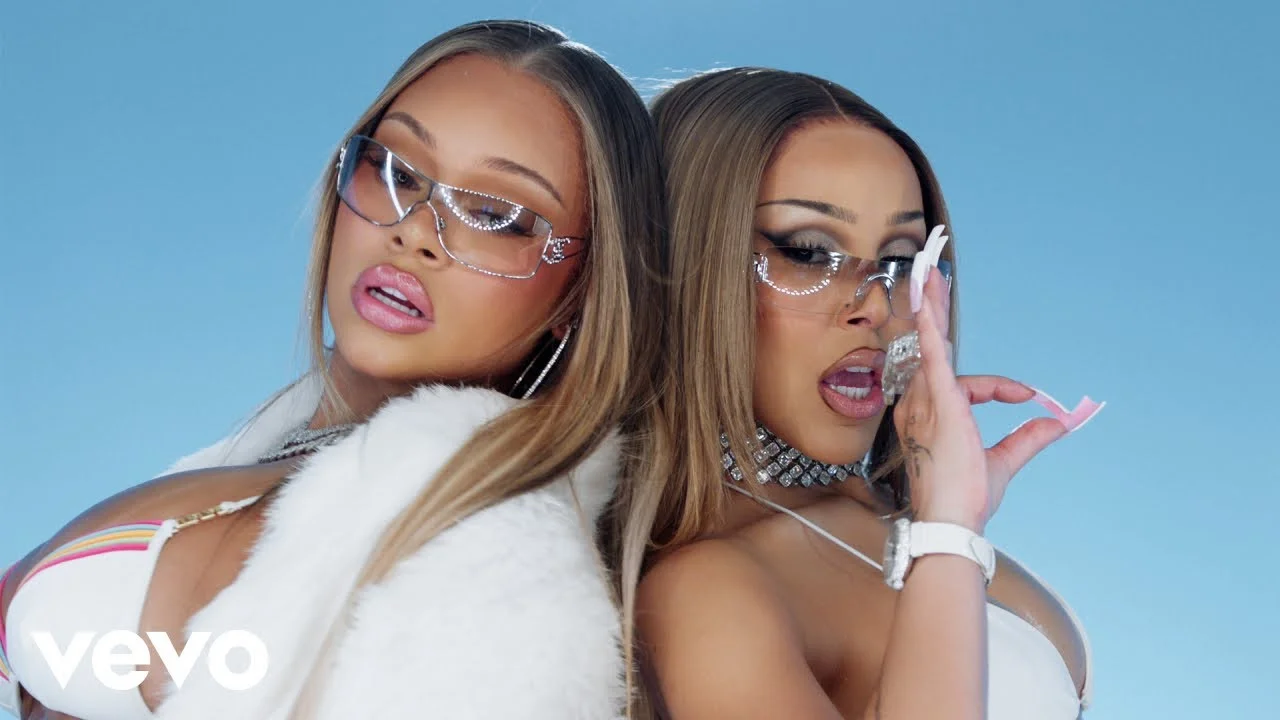
Part pop star, part troll, and part rapper, who still wants the bars respected. That's Doja Cat, a Grammy-award winning artist, who spent the last five years proving she can bend a room by herself. Doja does not need an opening act to fill an arena. So when she announced that femce Latto would ride shotgun on the North American leg of the Tour Ma Vie World Tour, we read it as a friendship move, a co-sign, a nice look for two women at the top of their game.
Along with all of that, It is also a receipt, the kind that shows you where the money actually moves. Interpret the tour like a ledger instead of a headline and you get a map of how rap and R&B get paid in 2026, and that map does not run through your streaming app.
On July 22, the run was made official: thirty-one arena dates, promoted by Live Nation, opening October 1 in Detroit at Little Caesars Arena and closing December 1 in New York at Madison Square Garden, with Latto in support the whole way. Look past the headline pairing and the framework tells the story. The stage, not the stream, is where the real live-music revenue sits now, and putting a rising woman in front of thirty-one arena crowds is worth more to her career than anything a playlist could hand her.
Start with the money nobody likes to say out loud. Streaming payouts are pennies stacked into dollars, and it takes a mountain of plays to clear a number that a single sold-out arena beats in one night. We have broken this down before, in our piece on why millions of plays is not paying most artists, and nothing about that math has softened since. If anything, the streaming share of hip-hop has been sliding, which turns the concert calendar into something more serious: the actual business.
That changes how you should decipher arena tour economics. A thirty-one-night run is not a promotional expense meant to move an album. It works the other way around: the release exists to sell the tickets. Concert ticket sales, the merch table, the VIP packages, the sponsor money riding along, that is the paycheck. The music is the flyer.
What set this all in motion...
The song that set all of this in motion is worth your three minutes. "Okayyy," the Doja and Latto collaboration tucked into Latto's fourth album Big Mama, landed its official video on July 21, and the release was plainly engineered to double as a tour announcement. The visual leans all the way into a 2000s aesthetic, camcorder footage and coordinated white outfits and a cast of bodybuilders who never break character, the kind of shared-universe styling that only lands when two artists actually trust each other on camera. That trust is the whole argument. The record proves the pairing has real chemistry rather than label math, which is exactly why building a thirty-one-night arena run on top of it reads as a bet worth making instead of a gamble.
Here is where the collaboration materializes. For Latto, standing in front of thirty-one arena crowds she did not have to build herself is a masterclass in artist brand building that no run of viral singles can buy. She walks into rooms full of committed fans, warms them up, and walks out with a slice of that loyalty transferred to her name. Doja is not simply being generous. She is handing a peer the one asset the internet cannot fake, a live audience at scale, and betting the culture remembers who opened the door.
This is how the pipeline is supposed to work, and it is worth pausing on because it so rarely runs this cleanly. A headliner who lifts an opener is doing legacy work, the kind that pays forward. It is the same dynamic we tracked when we looked at the pressure on rising women closing in on their second acts, like GloRilla and the sophomore squeeze. The touring stage is where that hand-off actually happens, in public, night after night.
Do not skate past the obvious. Two women anchoring a thirty-one-date arena tour, top billing and support, is still not the arrangement the industry treats as the safe bet, and that is exactly why it registers. Women in hip-hop have spent years being pitted against each other by blogs that could only imagine one seat at the table. A headliner who deliberately puts another woman on her biggest stage is answering the noise, quietly. The seat, she is saying, is a couch, not a throne with room for one.
It is smart business on top of being a good look. The audience for this bill is broad, pop-leaning and rap-literate at once, exactly the crossover crowd that fills arenas rather than clubs. Doja has always lived in that overlap, which is what makes her a rare headliner able to move real touring income at this scale. Pairing with Latto widens the net without diluting it.
The move also lands inside a longer pattern. For most of the last decade, the touring poster for this music defaulted to a male headliner with a male opener, and women were slotted in as the exception a promoter had to be talked into. A bill where the biggest name in the building and the act warming it up are both women does more than make a single night. It nudges what the next promoter assumes will sell, and those assumptions are how careers get built or stalled long before an album ever drops. Change the default on a stage this size and you change the math for the women coming up behind them.
At HitsCulture, we push a simple habit: when an announcement lands, ask who gets paid and how. The Doja and Latto news is a clean teaching case in music industry economics. The album cycle you see, the singles and the videos and the chart week, is increasingly just the marketing layer sitting on top of the real product, which is a person on a stage in your city charging you to be in the room. This is where the value went once recorded music stopped paying the way it used to.
For fans, that shifts what support actually means. Streaming a song a hundred times is affection, not funding. If you want an artist to keep making the music you love, the ticket and the shirt do far more than the playlist ever will. The artists already understand this, which is why they are placing their biggest bets of the year on the calendar rather than the tracklist.
The clearest signal will come during the on-sale. Watch how fast the top markets go, the Detroit opener, Los Angeles at the Kia Forum, the Madison Square Garden close, because arena runs live and die on their first and last nights and the big-city dates in between. Watch the resale market too. A tour with real demand holds its face value on the secondary market, while a propped-up one slumps. And watch whether Latto's own numbers climb in each city right after she plays it, because that is the co-sign paying off in real time, the audience she borrowed becoming an audience she keeps.
The routing itself tells the story, if you read it like an insider instead of a fan waiting for a link. The center of gravity in this music has moved to the floor of the arena. Doja Cat putting Latto on that floor for thirty-one nights is a favor, and it is also her showing everyone paying attention exactly where the money lives now.
Here's the full North American routing for the Tour Ma Vie World Tour, Latto in support on all 31 dates, Live Nation promoted:
| # | Date | City | Venue |
|---|---|---|---|
| 1 | Thu, Oct 1 | Detroit, MI | Little Caesars Arena |
| 2 | Sat, Oct 3 | Chicago, IL | United Center |
| 3 | Sun, Oct 4 | Minneapolis, MN | Target Center |
| 4 | Tue, Oct 6 | Kansas City, MO | T-Mobile Center |
| 5 | Thu, Oct 8 | Denver, CO | Ball Arena |
| 6 | Sat, Oct 10 | Salt Lake City, UT | Maverik Center |
| 7 | Tue, Oct 13 | Vancouver, BC | Rogers Arena |
| 8 | Thu, Oct 15 | Seattle, WA | Climate Pledge Arena |
| 9 | Sat, Oct 17 | Portland, OR | Moda Center |
| 10 | Mon, Oct 19 | San Francisco, CA | Chase Center |
| 11 | Tue, Oct 20 | Sacramento, CA | Golden 1 Center |
| 12 | Thu, Oct 22 | Los Angeles, CA | Kia Forum |
| 13 | Tue, Oct 27 | San Diego, CA | Viejas Arena |
| 14 | Thu, Oct 29 | Phoenix, AZ | Mortgage Matchup Center |
| 15 | Sat, Oct 31 | Las Vegas, NV | T-Mobile Arena |
| 16 | Tue, Nov 3 | Austin, TX | Moody Center |
| 17 | Wed, Nov 4 | Dallas, TX | American Airlines Center |
| 18 | Fri, Nov 6 | San Antonio, TX | Frost Bank Center |
| 19 | Sat, Nov 7 | Houston, TX | Toyota Center |
| 20 | Wed, Nov 11 | Miami, FL | Kaseya Center |
| 21 | Fri, Nov 13 | Tampa, FL | Benchmark International Arena |
| 22 | Sat, Nov 14 | Orlando, FL | Kia Center |
| 23 | Tue, Nov 17 | Atlanta, GA | State Farm Arena |
| 24 | Wed, Nov 18 | Charlotte, NC | Spectrum Center |
| 25 | Fri, Nov 20 | Baltimore, MD | CFG Bank Arena |
| 26 | Sat, Nov 21 | Washington, DC | Capital One Arena |
| 27 | Mon, Nov 23 | Boston, MA | TD Garden |
| 28 | Wed, Nov 25 | Toronto, ON | Scotiabank Arena |
| 29 | Fri, Nov 27 | Montreal, QC | Bell Centre |
| 30 | Sun, Nov 29 | Philadelphia, PA | Xfinity Mobile Arena |
| 31 | Tue, Dec 1 | New York, NY | Madison Square Garden |

Comments (0)
No comments yet — be the first to share your thoughts.
Leave a comment