

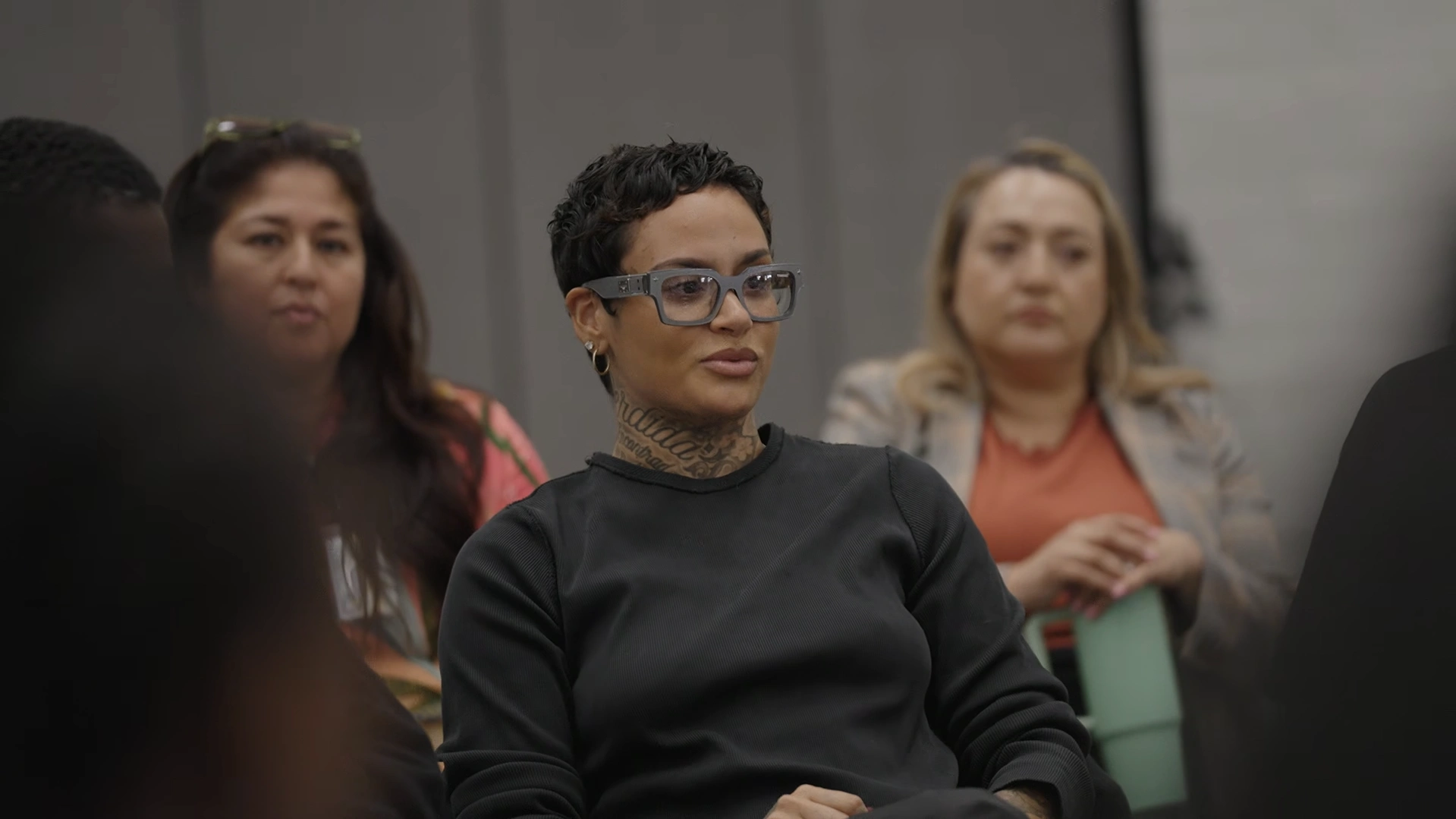
Kehlani spent much of her childhood in an aunt's Oakland home because her mother was locked up. On Monday (Oct 12), the Grammy-winning singer walked through the gates of the California Institution for Women in Corona, the prison where her mother served time. The visit opens Live from the Hole, a new digital series now streaming on YouTube.
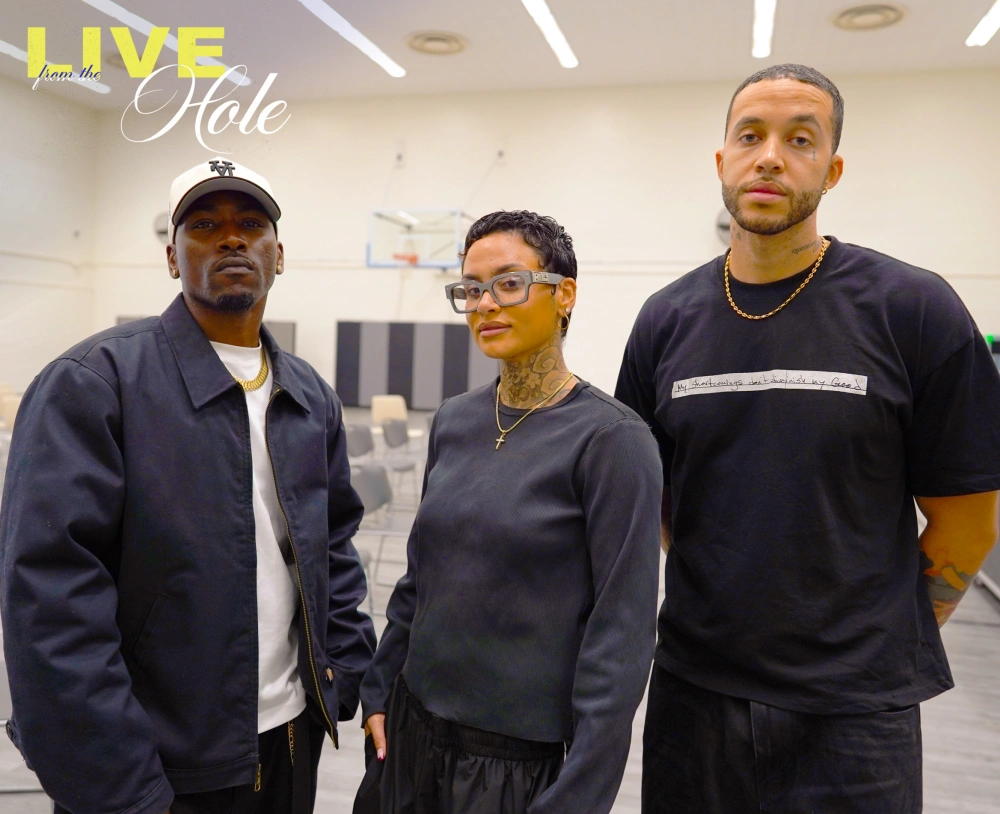
The show comes from Question Culture, the worker-owned creative cooperative behind Songs from the Hole, the documentary visual album that won a News & Documentary Emmy in May. Each episode brings an artist who has survived violence, incarceration or revenge into a prison tied to their own life. The film screens for the people held there, and then the conversation runs. Kehlani executive produces the series with her manager, David Ali. JJ'88 and richie reseda, the formerly incarcerated writer and producer of the original film, sit in as co-hosts.
In the statement released alongside the episode, Kehlani did not soften what the building means to her. "There isn't anything closer to home for me in many ways," she said. Then she named the institution directly: "The prison system orchestrated my life, and its impact on the world continues to shape me and everyone around." She closed by asking for a free world full of second chances and safe long lives, signing it on behalf of "We, The People."
The biography underneath that statement has been on the public record since before she could legally drink. Her father, who struggled with addiction, died when she was a toddler. Her mother, fighting the same addiction, went to jail, and Kehlani was adopted and raised by her aunt. She addressed those years on the intro to her 2015 mixtape You Should Be Here, the project that earned her a first Grammy nomination. A decade of near misses with the Recording Academy followed.
The episode places her in a circle with incarcerated women at CIW, with JJ'88 and reseda guiding the exchange. According to Question Culture, the talk moves through family, accountability and forgiveness. It settles on motherhood, on generational trauma, and on the way a sentence handed to one person lands on children, partners and whole neighborhoods. Reseda co-directed the episode with Antwan "Banks" Williams, a formerly incarcerated filmmaker, and Contessa Gayles, who directed the original film, edited it.
The film itself refuses the usual documentary grammar. There are no talking-head experts and no narrator standing outside the story. Instead there is JJ'88's voice on scratchy prison phone recordings, pages of his handwritten notes and lyrics, and a run of original hip-hop and soul songs that carry the plot forward. His father was a pastor, and the church that raised him keeps returning as the frame through which he tries to account for his life.
Songs from the Hole began as music recorded behind bars. James "JJ'88" Jacobs took a life when he was 15, and three days later his own brother was killed in a separate incident. Sentenced to 40 years to life in an adult prison, he wrote the songs while held in solitary confinement. He built them out with reseda inside, while Gayles worked with both men across the walls one 15-minute phone call and one mailed letter at a time.
The man who wrote those songs in a solitary cell now walks back out of the prisons he visits. Question Culture bills both co-hosts as formerly incarcerated, which changes the room in a way a celebrity guest cannot. When JJ'88 and reseda sit down at CIW, the women across from them are looking at two men who made a film together while serving their own time inside a California prison.
Netflix released the film worldwide on Aug. 13, 2025, after it won the Visions Audience Award at SXSW in 2024. At the 47th News & Documentary Emmy Awards in New York this May, it took Outstanding Art Direction for a documentary, with Gayles and reseda credited as art directors. It was also nominated for writing, music composition and arts and culture documentary. Before any of that, reseda and JJ'88 had already carried the film into more than 30 prisons.
"Songs from the Hole is a tool for healing to make revenge a thing of the past, in the streets and the courts," reseda said in the series announcement. He described Live from the Hole as the natural next step for the healing workshops the team had been leading around the country. The episodes give people at home a way to watch and take part, and he called Kehlani "a real one" for coming on as an executive producer.
Popular music has a long habit of walking into prisons, and for most of its history the format has been a concert. Johnny Cash recorded At Folsom Prison in 1968, and B.B. King cut Live in Cook County Jail in Chicago two years later. Those records put the incarcerated in the audience and the star on the stage. Live from the Hole trades the stage for a screening and a circle of chairs, and the women who live at CIW get the floor alongside the famous guest.
The timing gives the episode weight it would not have carried a year ago. Kehlani won her first two Grammys in February, taking Best R&B Performance and Best R&B Song for "Folded." In September she and Cardi B shared Best Hip-Hop at a VMAs ceremony that, as HitsCulture reported from the show, kept its R&B and rap trophies off the telecast. Over the summer, "Back and Forth" paid tribute to Missy Elliott, Monica and Aaliyah, a record we read as part of R&B's long habit of honoring its own lineage.
She has never treated a podium as neutral ground. Accepting the first of those trophies on Feb. 1 in Los Angeles, she told the room it was the first award she had ever won. She thanked the people who had stayed through ten years of nominations, then ended the speech with a two-word message to Immigration and Customs Enforcement that had to be bleeped. The prison episode comes from the same instinct to name the institutions that shaped her.
Those wins handed her the kind of leverage artists usually spend on tours, fragrances and deluxe editions. She used part of it to return to Corona as a producer, with her own name on the credits and her mother's history on the agenda. Across from her sat women whose children are growing up the way she did.
For the cooperative, the series is also a distribution argument. Netflix carried the film to a global audience, but the prison screenings that followed reached people who could not stream anything, and the workshops that grew out of them stayed mostly inside those rooms. Posting full episodes free on YouTube puts the conversations in front of families on the outside. Many of them have spent years in visiting rooms like the one Kehlani remembers.
Question Culture has posted a step-by-step Healing Plan on its website for viewers who want to work through the same questions at home, built from the exercises the team has run inside. Future episodes will bring other artists into prisons connected to their own stories, each paired with a new group of incarcerated participants. The full Kehlani episode and the series trailer are both streaming now on YouTube.

Comments (0)
No comments yet — be the first to share your thoughts.
Leave a comment